As preparations for the Gen-G movement were already widespread on social media, the National Investigation Department submitted a 30-page ‘detailed weekly briefing’ to the government on 19 Bhadra. This report, obtained by Kantipur, includes speeches by almost every political leader. However, there is no discussion of the much-hyped Gen-G movement. The report submitted to the government by the military-led National Security Council also does not assess the likely course of events.
We use Google Cloud Translation Services. Google requires we provide the following disclaimer relating to use of this service:
This service may contain translations powered by Google. Google disclaims all warranties related to the translations, expressed or implied, including any warranties of accuracy, reliability, and any implied warranties of merchantability, fitness for a particular purpose, and noninfringement.
Information is the most effective weapon for a country's security apparatus, but the events of the Gen-G movement have also made clear the competence, capacity and effectiveness of the mechanism for collecting information for the state. Kantipur has obtained a report submitted to the government by the National Investigation Department and the military-led National Security Council on the eve of the movement, which does not assess the possible course of events.
In Nepal, the National Investigation Department (NID) has been given internal responsibility with about 2,200 employees. The department submits daily and weekly reports to the Prime Minister, Home Minister, Chief Secretary, Home Secretary, National Security Council and the army's intelligence agency DGMI (Directorate of Military Intelligence).
At a time when preparations for the Gen-G movement were widespread on social media, the department submitted a 30-page weekly 'briefing' report to the government on 19 Bhadra, which included the activities of every political party. The 'detailed weekly briefing' received by Kantipur does not mention the much-hyped Gen-G movement at all. Similarly, knowledgeable officials say that the daily reports of 21 and 22 Bhadra did not mention the movement in detail.
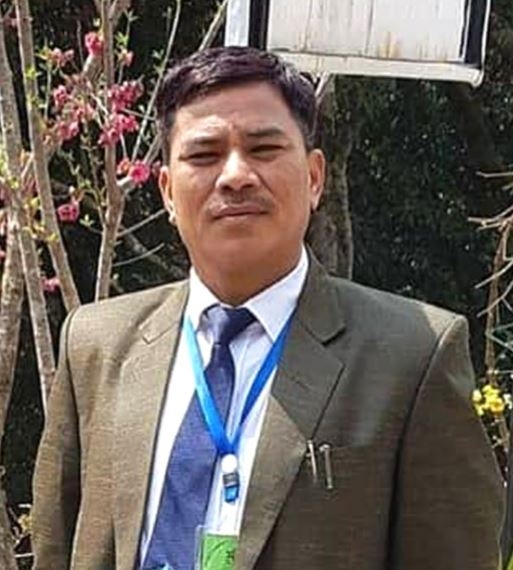 In intelligence, not only information but also its correct analysis is considered important. There is an 'Analysis Branch' led by a Joint Research Director at the department's headquarters. The department did not have access to the 'digital space' where preparations for the Gen-G movement are taking place.
‘The security analysis was done based on the statements made by Durga Prasai in the media and social media. Apart from that, there were comments and statements made by the general public, such as the widely discussed statement that Nepal could become Bangladesh. Other security mechanisms were also briefing on this basis,’ says a Home Ministry official. According to the official, apart from the meeting of all security chiefs and formal ‘briefings’, the then Chief Investigation Director of the department, Hutraj Thapa, did not get time to ‘brief’ with Prime Minister Oli.
‘The department head had to report to the Prime Minister’s Chief Political Advisor or Chief Secretary. How can strong information be expected when the party that needs information does not give priority?’ says the official.
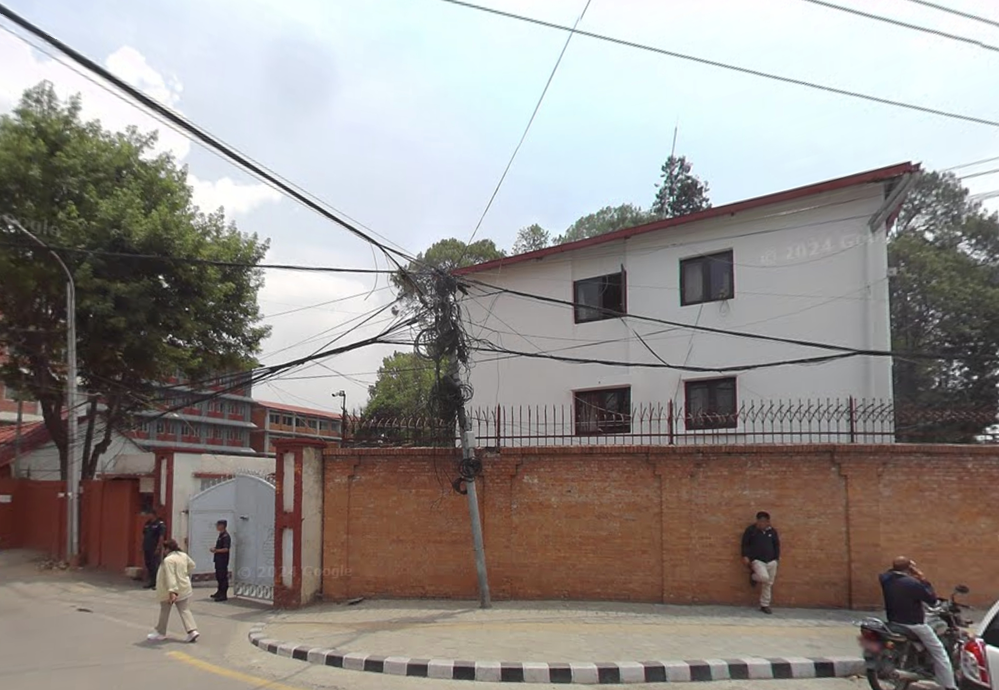
While the intelligence chief of his own country always finds it difficult to meet the Prime Minister, there is an example of a foreign intelligence chief being warmly welcomed in Baluwatar even in the middle of the night. The then chief of the Indian intelligence agency ‘RAW’, Samanta Goyal, met Prime Minister KP Sharma Oli on the night of 6 Kartik 2077. The meeting between Oli and Goyal had created a stir when there was a dispute within the then NCP.
 Similarly, the National Security Council, which is responsible for the overall security and defense of the country, also submits a ‘unified security report’ to the government on a daily and weekly basis. The report submitted by the council, which consists of officers from the Nepal Police, Armed Police Force and National Intelligence Agency under the leadership of the army, since 20 Bhadra, was also pending in the Office of the Prime Minister and Council of Ministers. There was no serious analysis of the Gen-G movement in those reports.
The report sent by the council to 17 bodies, including the Prime Minister’s Office, on 22 Bhadra, a day before the Gen-G movement, did not analyze the nature of the Gen-G movement. A confidential report received by Kantipur states that 99 protests, sit-ins, processions and rallies were held across the country in 24 hours. However, the incident was not specifically analyzed. Instead, it is said that a special central meeting was organized on 20 Bhadra in the presence of 60/70 people, including members of the Durga Prasai secretariat.
This report was prepared by Rajan Upreti, co-research director of the Situation Analysis Division of the National Intelligence Agency. ‘Most of the analysis of both the Security Council and the National Intelligence Agency is no different from the information that comes in the newspapers, that is why it is not viewed with importance,’ says a high-ranking official of the Home Ministry.
Officials say that the Prime Minister and the Home Minister do not open the sealed reports given by the intelligence apparatus. ‘They do not have the time to look at not only intelligence, but also the reports of the Nepal Army, Nepal Police or Armed Police Force,’ says Shripurush Dhakal, former additional chief research director of the department. ‘Leaders talk about foreign exercises, but they do not care that the US President always reads the reports of the CIA and FBI with breakfast. That is why security lapses like those on 23 and 24 Bhadra keep recurring.’
The DMI, the intelligence agency of the Nepal Army, has been analyzing the growing anger towards the government in society and that it can be expressed at any time and in any form. According to military sources, Chief of Army Staff Ashok Raj Sigdel had also been analyzing the possibility of a major movement at the top level from a royalist group, a group of youths affected by corruption, or those trying to disrupt religious harmony.
Sigdel had repeatedly briefed the then Prime Minister Oli after the Chaitra 15 incident that the agitation would not stop immediately. But a senior military officer says that later Oli stopped listening to the Chief of Army Staff's briefings. To some extent, Chief of Army Staff Sigdel had to wait for hours in Baluwatar to meet the Prime Minister. "That shows how much he (Oli) ignored the analysis of the security mechanism," said a senior military officer.
Chief of Armed Police Force Raju Aryal had also been briefing the then Prime Minister Oli for a year, stating that activities that were disrupting religious harmony were taking place and that a plan should be made to work against it. He had also submitted a report in Baluwatar. ‘However, the consequences of not taking any information seriously were seen on 23 and 24 Bhadra,’ says a senior officer of the Armed Police Force. ‘Those who led the government would have had time to meet the middlemen but would not have had time to listen to us.’
Officers of the department accuse the government of never investing in intelligence. ‘The leadership always says to bring information, but for that, they had to find sources, show greed, and there is no budget to invest in it,’ says an officer. ‘How does information come without any involvement? That is our main problem.’
Everyone should understand that intelligence must be strong to protect a geopolitically sensitive country like Nepal from foreign influence and secret activities. - Narayan Adhikari, counter-terrorism expert This is not the first time that the department’s capacity has been questioned. The National Intelligence Service has also failed in collecting information on major incidents in the past. Experts say that the main reason behind the ineffectiveness of the country’s only intelligence organization is the surprising role of political parties.
The government and the Home Minister formed between 2051 and 2060 have a history of making the department a cadre recruitment center. At that time, Govinda Raj Joshi, Khum Bahadur Khadka, and Bamdev Gautam recruited their cadres into the intelligence service through random recruitment. Since then, the department has often been used by the political leadership to collect information from opposition party leaders and conduct surveys during elections.
Narayan Adhikari, an expert on counter-terrorism matters, says that strong internal as well as external intelligence means being able to prevent external interference. ‘Investment in intelligence collection should be done to identify and control internal and external security threats,’ he says. ‘Everyone should understand that intelligence should be strong to protect a geopolitically sensitive country like Nepal from foreign influence and secret activities.’
He says that it is more important than just collecting intelligence information, how it is used. On the eve of the Gen-G movement that overthrew the government in two days, the then Prime Minister Oli was busy with the statutory general convention of his party UML. He had heard of the Gen-G movement announced for 23 Bhadra against the ban on some social media platforms and corruption, but was unaware of the preparations for it.
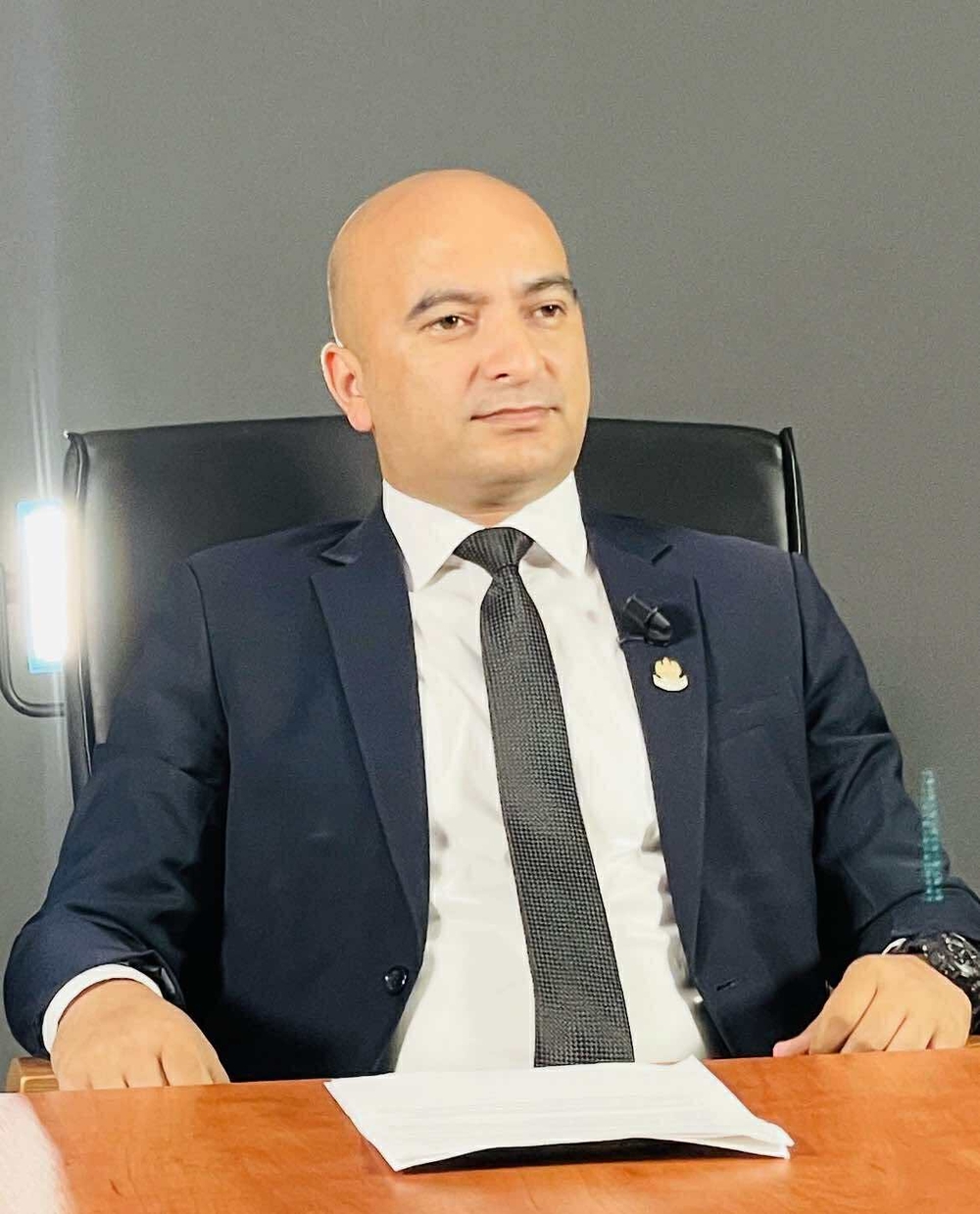 Oli called the then Home Minister Ramesh Lekhak along with members of the security committee to Baluwatar at 8 pm on 22 Bhadra. Lekhak, who arrived from his home district Kanchanpur at 6 pm that same evening, told the meeting that the students were going to hold a general demonstration. The ‘briefing’ of Nepal Police Chief Chandrakuber Khapung, Armed Police Force Chief Raju Aryal, and National Investigation Department Chief Hutraj Thapa also said that ‘there is no need to panic’. ‘There was a representative of the army in the meeting, he also agreed to it,’ Oli said on Kantipur TV’s program Fireside, ‘They said that various elements can infiltrate, we will pay attention to that.’ He said that he was reassured by the ‘briefing’ of security officials.
The situation changed on 23 Bhadra. However, the security presence was weak. The protesters easily broke through the restricted area and moved towards the Parliament building. ‘It did not seem like they (the security chiefs) had any information about such preparations, their report did not say so,’ Oli said. The then Home Minister Lekhak also sat silently in the parliamentary committee meeting on 23 Bhadra, calling the Gen-G movement a normal protest like any other. When the situation started to deteriorate, Oli called him. After that, Lekhak finally left the meeting going on at Singha Durbar and went to the Home Ministry.
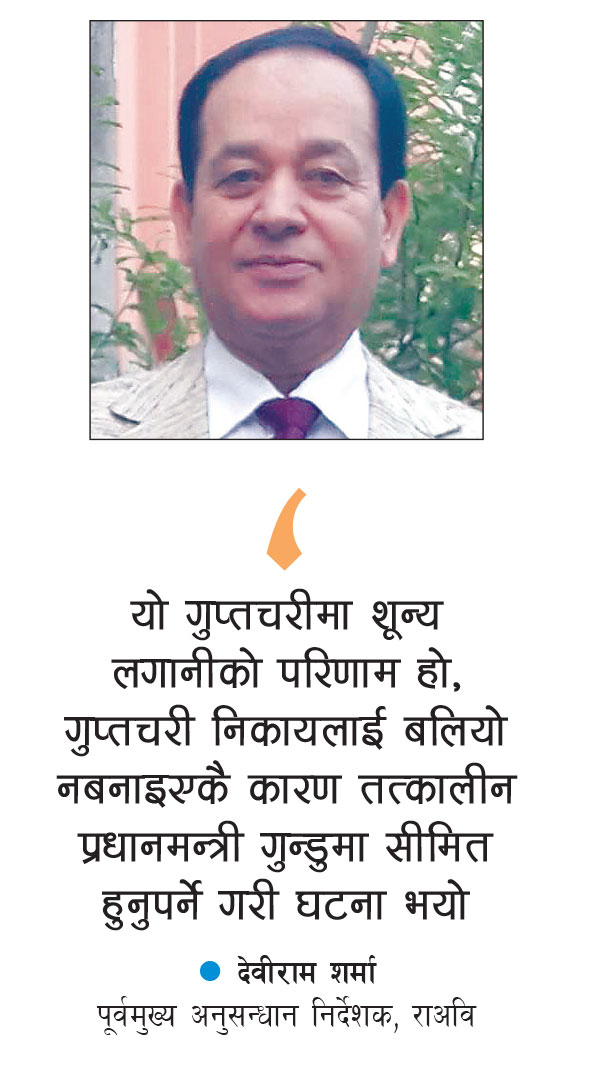
Why did Oli, who is leading the government, and the then Home Minister Lekhak, downplay the movement that had been widely publicized on social media and supported by various political groups, including Kathmandu Metropolitan City Mayor Balendra (Balen) Shah? ‘This is the result of zero investment in intelligence, otherwise why would we have had to resort to the army within 24 hours?’ Deviram Sharma, former head of the National Investigation Department, says, ‘The incident happened because the intelligence agencies were not strengthened, which led to the then Prime Minister being confined to a gangster.’

