The 'Sagarmatha Dialogue' was organized in Kathmandu last month with the aim of drawing the world's attention to the damage caused by the climate crisis in Nepal. Nepal is preparing to raise the 25-point declaration adopted by the conference, which was attended by representatives of 12 countries.
We use Google Cloud Translation Services. Google requires we provide the following disclaimer relating to use of this service:
This service may contain translations powered by Google. Google disclaims all warranties related to the translations, expressed or implied, including any warranties of accuracy, reliability, and any implied warranties of merchantability, fitness for a particular purpose, and noninfringement.
Representatives from nearly 195 countries have gathered in the Brazilian city of Belém, on the banks of the Amazon River, to discuss the shared global challenge posed by climate change. Their gathering comes at a time when the international system is being disrupted by political polarization, military and trade wars, and populist nationalism. The Conference of Parties (COP-30) begins on Monday.
The city has already hosted the summit of heads of state on Friday and Saturday. 33 years ago, the UN Framework Convention on Climate Change was signed by the participating countries at the Earth Summit held in Rio de Janeiro, Brazil. Since then, the UN has been regularly organizing the COP conference to mitigate climate change. Brazil has interpreted the occasion of COP 30 as a return to its roots. The conference will discuss energy, industry and transport, forests, oceans and biodiversity, agriculture and food systems, cities, infrastructure and water, human and social development, climate finance, technology, capacity building, and protection of vulnerable areas. The conference is also expected to be important for proposing new resolutions, as scientists have confirmed that the 1.5°C threshold set by the 2015 Paris Conference will not be met.
According to a report released this year by the European Commission, Joint Research Centre, China, the US, India, Russia, the European Union and Indonesia account for 61.8 percent of the world's total greenhouse gas emissions. 'These countries are home to 51.4 percent of the world's population.' These countries account for 62.5 percent of the world's gross domestic product and 64.2 percent of global fossil fuel consumption.'
Greenhouse gas emissions had decreased due to the global economic recession in 2009 and the lockdown caused by the coronavirus in 2020. In addition, emissions have been increasing every year for the last 25 years,' the report said. A team led by Vice Premier Ding Xuxiang from China participated in the Heads of State Conference held on Friday and Saturday. He said that green technology and industry should be promoted through international cooperation and that developed countries should maintain their commitments.
“They should take the lead in committing to reducing carbon emissions and investing in the climate crisis,” he said. Last September, President Xi Jinping said China had set a target of reducing greenhouse gas emissions by 7 to 10 percent by 2035. India sent Environment Minister Bhupendra Yadav to the conference, but no ministers from the United States or Russia were represented.
Ruslan Idelgeriev, an aide and environmental adviser to President Vladimir Putin, is attending from Russia. Independent experts and state representatives from the United States are attending the conference. But President Donald Trump has not sent any participants from the federal government. He had previously called the issue of climate change a “fraud” and a “scam” after he was elected president last year. Similarly, he has already decided to withdraw the United States from the 2015 Paris Climate Agreement for the second time. The United States will formally withdraw from the agreement next January. The US had previously withdrawn from the agreement in 2017, during Trump's first term.
During the Paris climate conference, participants signed a commitment to limit global warming to 1.5 degrees Celsius above pre-industrial levels. Although 195 countries signed it, the ambitious plan has failed due to weak implementation.
Scientists have confirmed that the Earth's temperature will exceed the threshold of 1.5 degrees Celsius above pre-industrial levels by around 2030. They predict that the impact of extreme temperatures will be significant. United Nations Secretary-General Antonio Guterres, addressing a gathering of heads of state on Thursday, described the situation as a fatal negligence and moral failure. 'Countries are spending huge sums of money on fossil fuels every year.' Rising temperatures mean more hunger, more migration and more deaths. Now is the time to think whether to take the lead or go towards destruction,' he said.
What are the issues that Nepal will raise?
The Conference of the Parties (COP) is the United Nations' largest conference on climate change. Its importance is increasing at a time when increasing greenhouse gas production is causing climate change globally, especially affecting underdeveloped countries.
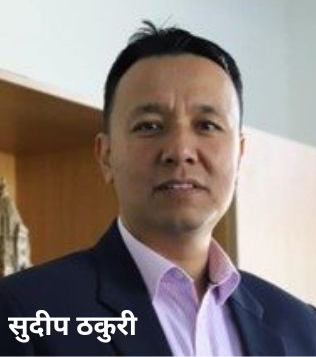
Snow in Nepal's mountains has been melting rapidly in recent years. Irregular rainfall has further increased the level of floods and landslides. There is a problem in crop production. Sometimes there is drought, sometimes excessive rainfall washes away houses and fields. But these problems are due to greenhouse gas production by industrialized countries, and they should play a leading role in managing the resources needed to reduce emissions and adapt to the current challenges, said Sudeep Thakuri, associate professor at the Central Department of Environmental Sciences, Tribhuvan University.
‘This conference is important to create pressure on them. Least developed countries, including Nepal, are constantly raising this issue,’ he said, ‘but, powerful countries, although they are on different levels in other matters, are seen to be the same in ignoring this issue.’ According to him, the least developed countries have had to struggle with border disputes, political divisions and instability. He said that since they do not have their own resources to face these challenges, they are also forced to suffer the problems caused by developed countries.
 Nepal has been participating in the COP since the beginning. Out of these, one of the Presidents or Prime Ministers from Nepal participated in 5 conferences. Madhav Kumar Nepal, Bidya Devi Bhandari, Sher Bahadur Deuba, Pushpa Kamal Dahal have led Nepal in this conference. Last year, Nepal participated in the conference held in Baku, Azerbaijan under the leadership of President Ram Chandra Poudel. This time, the nine-member Nepali delegation is being led by Agriculture Minister Madan Pariyar. Similarly, representatives from various ministries, representatives of NGOs and independent experts are also participating in it. Some of the delegation members have already reached Belam.
The ‘Sagarmatha Dialogue’ was organized in Kathmandu last Jestha with the aim of drawing the world’s attention to the damage caused by the climate crisis in Nepal. Nepal is preparing to raise the 25-point declaration adopted by the conference, which was attended by representatives from 12 countries, in Belam. The dialogue concluded that human civilization could be in danger if glaciers and snowfields continue to decline.
‘We will raise issues such as the deepening crisis in the Himalayan region, the problems caused by erratic rainfall in Nepal, the issue of increasing climate finance, the work to be done by developed countries for climate adaptation and capacity building in this conference,’ said Maheshwar Dhakal, Chief Joint Secretary of the Climate Change Management Division, in a telephone conversation with Kantipur from Belam. ‘This conference will also be taking a historic decision on the issue of losses and damages tomorrow. The announcement that losses and damages can be claimed from 5 million to 25 million will be made on Monday.’
The first biennial transparent report prepared by Nepal and submitted to the United Nations states that a total of 47.4 billion US dollars is required for the National Adaptation Plan (2021-2050) in 2025. The report mentions that this amount is required for work in areas such as agriculture and food security, forest diversity and watershed conservation, drinking water and health, disaster risk reduction and management, industry, transport and physical infrastructure, tourism and cultural heritage conservation.
 ‘Human livelihoods and the ecological cycle have been disrupted in various parts of Nepal.’ However, the locals lack the resources and capacity to deal with this, said Shiva Khanal, Deputy Secretary of the Climate Change Management Division, Emission Measurement Branch, who coordinated the report.
Opportunity to highlight commitment to forest conservation
The world’s largest tropical rainforest is in Brazil. This vast heritage is known for its herbs and wildlife. The Amazon region is also home to various indigenous peoples.
The Western community has also accused Brazil of clearing the Amazon forest to provide local people with housing and farming facilities and setting up factories. Brazil, one of the world's leading exporters of food, needs to demonstrate its will to conserve nature by reducing deforestation in the Amazon rainforest, along with its productivity. Deforestation was high when Jair Bolsonaro was president, and some Western countries reduced food imports from Brazil for this reason. But in 2023, Luiz Inacio Lula da Silva won the presidential election, and has been prioritizing forest conservation. Brazil has chosen the city of Belém, near the Amazon rainforest, as the event venue to demonstrate this commitment to the world.
Brazilian President Lula has said that while his priority is social development, people must stop energy conversion and deforestation. 'Despite our difficulties and contradictions, I am convinced that we need a clear and well-planned roadmap,' he said, 'we must move beyond our dependence on fossil fuels.' Deforestation must be stopped and the necessary resources must be mobilized for this.' Welcoming world leaders on Thursday, President Lula said, 'Brazil is not afraid to participate in the energy transition debate. We have been in a leading role in this area for decades.' According to him, Brazil was the first country to invest heavily in renewable options in the 1970s.
Will raise the issue of climate finance: Dhakal
Joint Secretary Maheshwar Dhakal 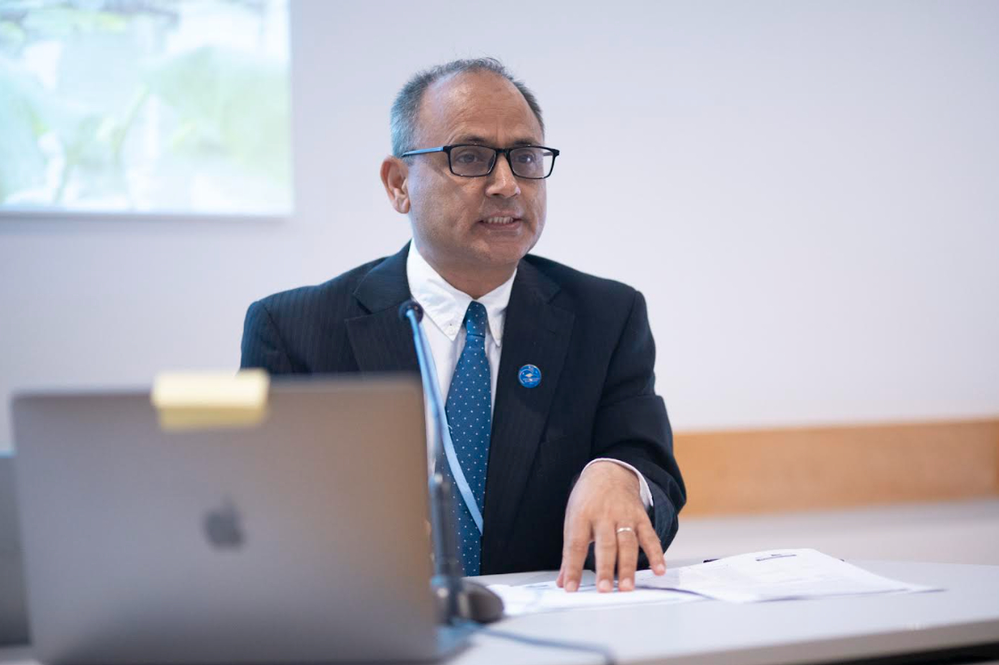 Nepal will specifically raise the issue of climate justice, that is, finance, said Joint Secretary Maheshwar Dhakal, Head of the Climate Change Management Division.
According to him, this is also an issue that has always been raised by the least developed countries. He said that all the least developed countries are demanding that countries that emit large amounts of greenhouse gases should increase their investment in climate protection and finance.
‘During COP29, developed countries had committed to allocating $300 billion per year for developing countries as per the climate finance target from 2035,’ he said, ‘but this amount is not enough to address the challenges seen now and in the future. Developing countries like us are demanding $1,300 billion per year.’ However, big countries have been reluctant to do so and have sought assurance that this amount will not be misused.’
According to Dhakal, they have also proposed to provide loans at low interest rates instead of grant aid. He said that developing countries have not been able to accept the proposal to create problems and instead charge interest by giving loans to solve them. ‘Because, it is the right of developing countries to receive this grant.’ We will also raise the issue of mountain conservation, challenges caused by irregular rainfall, problems seen in women, children and indigenous communities, and increasing their capacity to adapt to them,’ he said, ‘The issue of climate adaptation indices has also been under discussion for a long time.’
Last year, the index was 9,000, but it has been reduced to 1,000 and now to 500. The conference aims to reduce it to 100. According to him, the conference will also discuss the losses. “Probably, some important announcements will be made on Monday itself,” he said.

