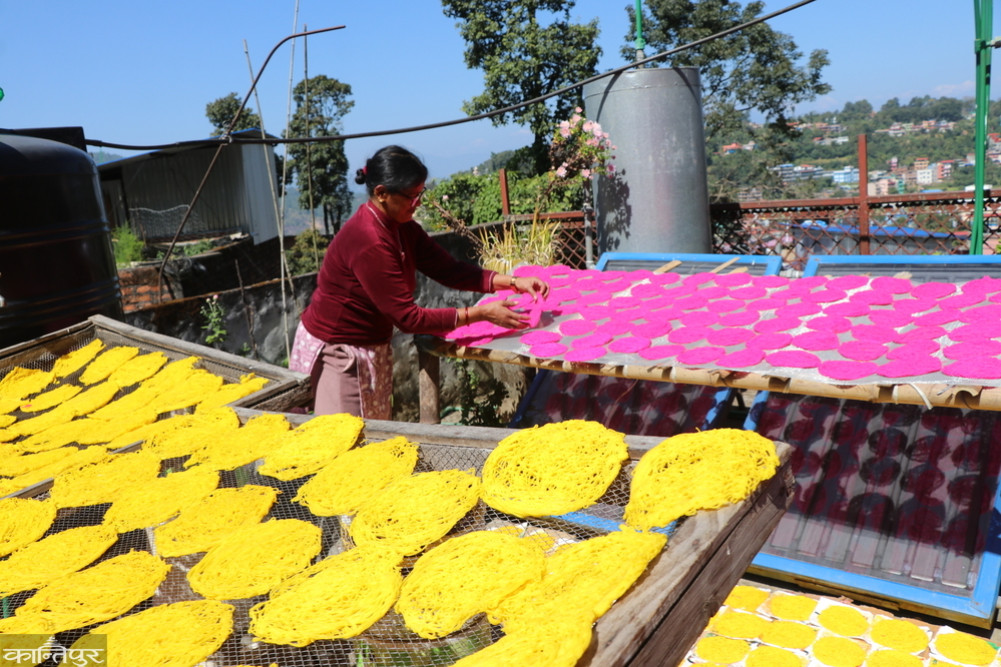
Jhiniya, made from rice flour, is naturally dried in the sun and prepared for frying in oil.
We use Google Cloud Translation Services. Google requires we provide the following disclaimer relating to use of this service:
This service may contain translations powered by Google. Google disclaims all warranties related to the translations, expressed or implied, including any warranties of accuracy, reliability, and any implied warranties of merchantability, fitness for a particular purpose, and noninfringement.
Jhiniya or Jhilinga Roti, a Tihar dish that was limited to the Newar community, has recently started being cooked in the kitchens of other communities as well. Jhiniya Roti, which is mainly sold during Dashain and Tihar, has now become a favorite dish for guests at almost all festivals.
Yamakumari Shrestha of Bhagwati Mandir, Resunga Municipality-8, introduced jhiniya roti commercially in Tamghas in 2059. Before that, she had brought jhiniya, which was prepared only in a few homes here, to the market commercially. She has experience that jhiniya roti, which can be started with low investment, can generate good income.
Jhiniya, made from rice flour, is naturally dried in the sun and prepared for frying in oil. Yamakumari says that the best season for jhiniya is mainly in the months of Baisakh, Jeth, Bhadau, Asoj and Kartik. Yamakumari said that she has prepared more than 1,300 dozen jhiniya, which can be prepared when the sky is clear, this year. Jhiniya is made in different colors.
Her husband Rupesh Shrestha and her children are also helping her prepare jhiniya. Yamkumari said that jhiniya roti, which was previously limited to Tihar, is now sold on all festivals. ‘Now, there is a little demand for it on all festivals throughout the year,’ she said. ‘Jhiniya, which was limited to Tihar, is now becoming a favorite of guests.’
She said that she used to use jhiniya as a snack even before. She said that she earns two lakh rupees annually and invests only 50 percent. She says that it takes a lot of effort to prepare jhiniya. Until now, she had to prepare the jhiniya by hand using a machine and drying it in the sun, which made the process tedious.
The jhiniya roti she prepared, along with Tamghas, reaches various places in Gulmi, Birbas, Balithum and Arghakhanchi. She said that the wholesale price of zinnia per kilogram varies from 100 to 140 rupees depending on the size.
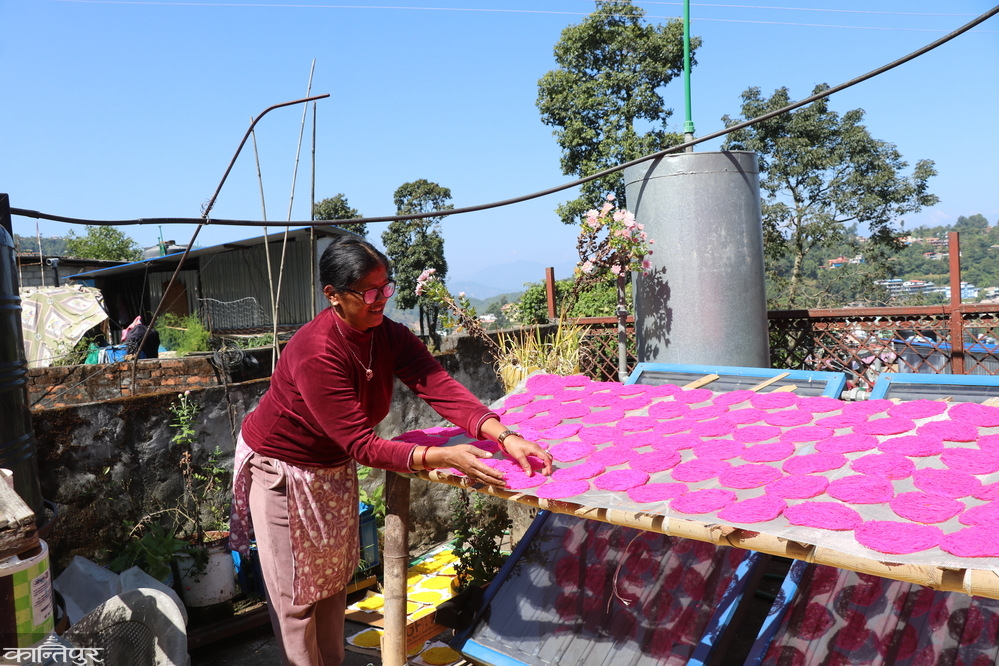
Those who prepare zinnia say that the demand is double the production. Yamakumari said that the demand in the market is double due to the low production due to the weather. ‘If you have no other means of earning a living, you make zinnia,’ she said, ‘If you prepare zinnia, you will earn a good income. There is no market problem.’ She said that although it takes a lot of effort to make zinnia roti, the investment is modest.
Samiksha Shrestha of Putalibazaar, Resunga Municipality-2 has prepared zinnia worth four hundred thousand rupees to take to the market this year. The zinnia she prepared in Falgun, Chaitra and Tihar is now in high demand for sale. Samiksha said that it is an investment of 150,000 rupees and that three people are working on it.
Samiksha also said that it is sent to Butwal and sold in neighboring Arghakhanchi and Gulmi Tamghas Asfas. She said that although it is sold more during Tihar, it also finds a lot of market in previous and subsequent festivals.
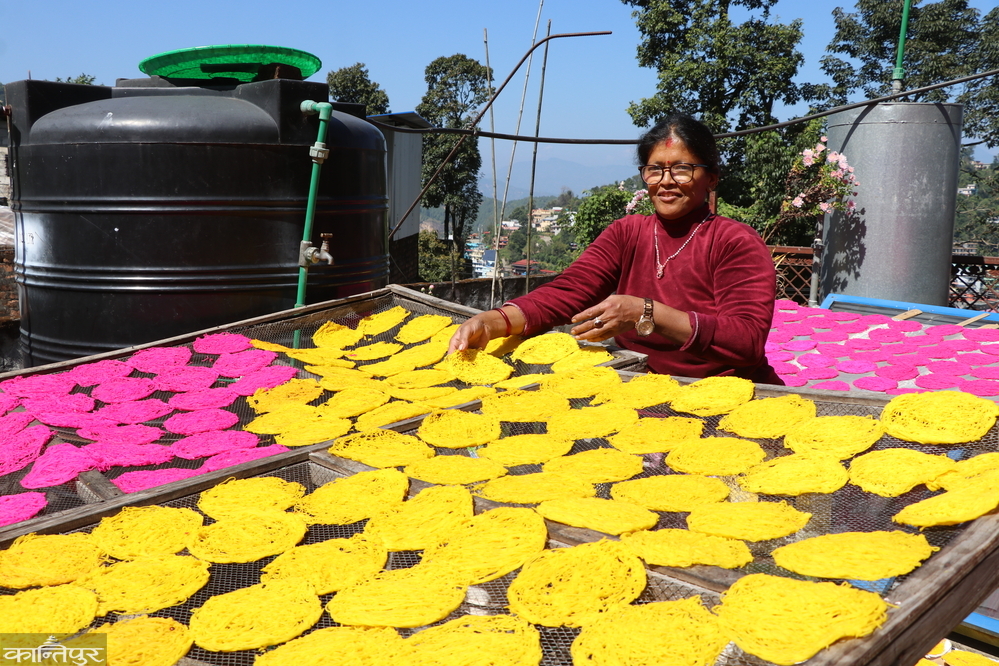
Jhiniya, which is used only during Dashain-Tihar, has recently been taken as a pahur by guests at smaller festivals as well. ‘Earlier, it was limited to the Newar community and Tihar,’ he said, ‘Recently, its demand has increased in all festivals. ’
He said that even when he came here, the method of making Jhiniya roti has not become modern. He says that there is a compulsion to rely on traditional and natural forms. He says that by preparing a modern machine, jhiniya can be sold in large quantities in the market at a cheap price.
In Newari, jhiniya roti is called kasinkamari. Jhiniya is prepared and sold commercially in places such as Tamghas, Wamitaksar, Baletaksar, Majuwa, Shanpir, Kharjang, Mankot and Ridi in Gulmi.
This is how jhiniya is made
At the beginning, rice is ground into flour. The flour is cooked in water. The flour is cooked in the same color as the one you want to make. The flour becomes solid after cooking. Prepare it in the form of small grains. Place the prepared grains in a hand-held machine. Then operate the machine with one hand and place a container under the machine with the other hand.
Gently rotate the pot to shape the zinnia. Place the prepared zinnia in another pot and dry it in the sun for at least 3 hours. Fry the zinnia in oil.