What happened in Ladakh in the context of Nepal and other parts of the world including Gen-G and other youths taking to the streets against injustice?
We use Google Cloud Translation Services. Google requires we provide the following disclaimer relating to use of this service:
This service may contain translations powered by Google. Google disclaims all warranties related to the translations, expressed or implied, including any warranties of accuracy, reliability, and any implied warranties of merchantability, fitness for a particular purpose, and noninfringement.
Although it seems that the tension that started in neighboring India's Ladakh a few weeks ago has subsided, this region has not completely calmed down.
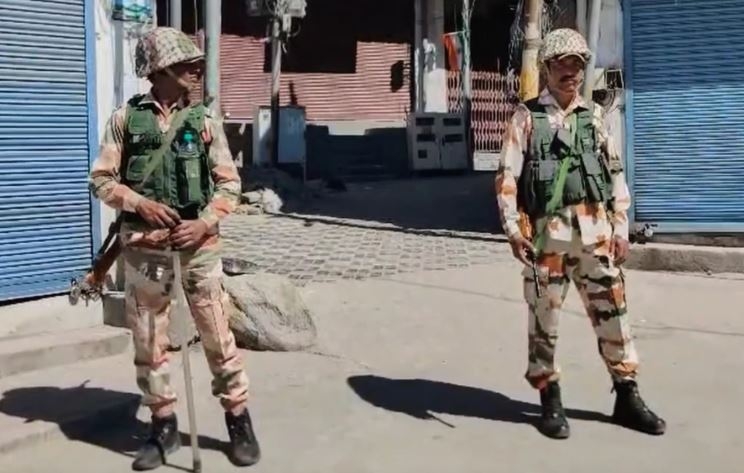
On Tuesday, the local administration said that the curfew in Leh has been lifted for four hours and the situation is becoming somewhat normal. But as the administration said Ladakh has not returned to its old rhythm. Because the ban on mobile and internet services continues .
The administration has claimed that they have solid and strong evidence against activist Sonam Wangchuk, who was arrested under the National Security Act. But the government officials have not explained in detail what this strong evidence is. While the ruling BJP supporters are saying that the arrest of Wangchuk is the right step, the opposition parties and rights activists have opposed it and demanded his release.
Newly appointed Lt. Garbhar Kavinder Gupta told The Hindustan Times that according to , all parties were invited to find a solution through dialogue. is . He has claimed that there is a plan to normalize people's life and gradually open schools and other institutions.
Why has Ladakh become turbulent with the death of four people and the injury of 150 people including security personnel? In support of Wangchuck and his issues, who has announced a 35-day fast, local youths started a demonstration in Leh city on the 15th day of the fast (24 September) ? What happened in Ladakh in the context of young people including Gen-G taking to the streets against injustice in various parts of the world including Nepal? And how is the central government looking at it? We have tried to explain in five question and answer style .
Why is Ladakh agitated?
In August 2019, the Government of India announced the abrogation of Article 370 of the Indian Constitution, which reorganized the state of Jammu and Kashmir and recognized it as a special state. With the repeal of this article, Ladakh became a Union Territory. At the time, many including Sonam Wangchuk welcomed Union Territory status for Ladakh . But after a few months, the local residents started to feel discontent. Ladakh without legislature and federal representative began to complain of suffering through the central government.
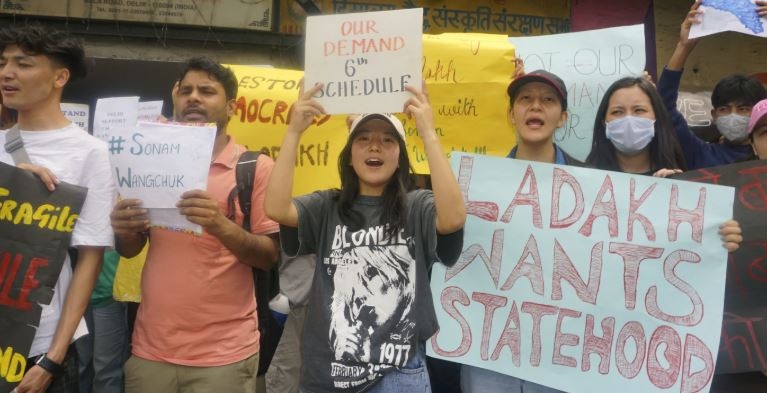
Growing discontent in Ladakh gradually took the form of protests and hunger strikes. Local groups like 'Leh Apex Body' (LAB) and 'Kargil Democratic Alliance' (KDA) led the revolt. He put forward the demand to give special autonomy and separate state status to Ladakh under the Sixth Schedule of the Indian Constitution.
The Sixth Schedule specifically grants special rights to tribal areas through autonomous councils for conservation of land, forests and cultural identity. This will help preserve the originality of Ladakh and the status of a separate state will ensure local representation and autonomy in the decision-making process, Wangchuk and others argue.
What is the central government's response to Ladakh's discontent?
The BJP-led Indian government has not given any clear response to the Sixth Schedule or whether to grant separate state status. To address the latest demand of Ladakh Even though the central government formed a high-level committee, it has not been able to achieve any concrete achievements, the locals allege. Although there have been talks on this matter at various stages, no agreement has been reached.
According to Indian media Livemint , in March 2024, representatives of Ladakh met with Home Minister Amit Shah. However, Shah rejected their main demands.
Who is at the center of this movement?
After the Indian government did not address the demands of Ladakh, protests have been taking place at the local level for a long time. At the center of this movement is Sonam Wangchuk, India's famous climate and education activist.
Wangchuk has gone on hunger strike five times in the last three years demanding constitutional protection for Ladakh. The last time Wangchuck fasted to death was in March last year in the cold weather of minus 10 degree Celsius . Since then, he has been constantly being monitored and criticized by the Indian government.

After his efforts did not yield any results, he went on hunger strike this year as well. He was supported by thousands of local residents. Gen-jis also joined it . The hunger strike that started on September 10 and the accompanying protests could not be peaceful.
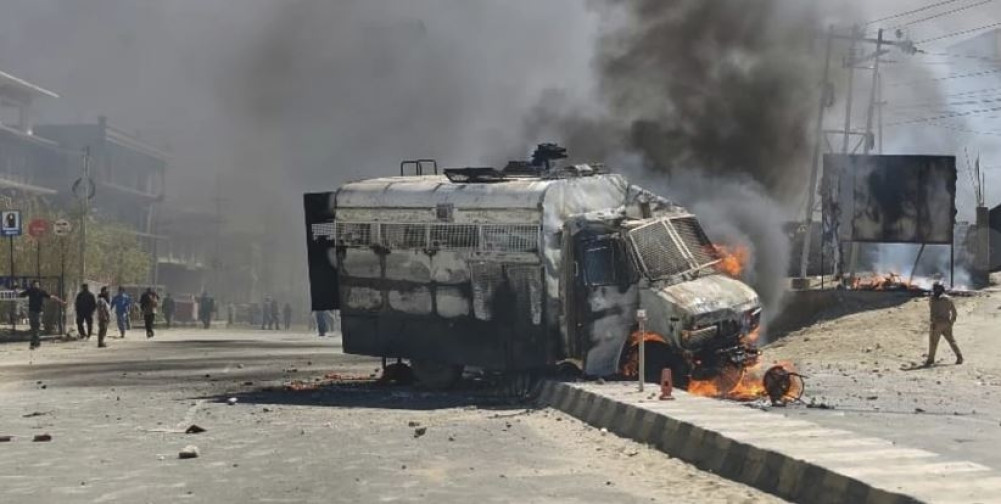
On September 24, four people died and more than 100 were injured, including security personnel, in a clash between protesting groups and security personnel. Wangchuk, who was arrested after the clash, was prosecuted under the National Security Act (NSA) 198. With his arrest, internet service has been stopped and curfew has been imposed in Leh in Ladakh. What parties are divided in the Ladakh movement ?
The major parties seem to be divided on how to view the Ladakh movement. They have been accusing each other of many things. During last week's demonstration, the local office of the Bharatiya Janata Party (BJP) was set on fire. Alleging that the Congress was involved in it, the BJP accused the protest of being 'violent' and trying to destabilize Ladakh like Bangladesh, Nepal and the Philippines.
Likewise, some media outlets have claimed that this demonstration was conducted from abroad.
Indian television DD News presenter Sudhir Choudhary has accused Wangchuk of performing this act by circulating from abroad. He said, "Wangchuk had been preparing for a violent movement for a long time by taking money from abroad in the name of an NGO." However, he has not submitted any basis to prove his claim . Does this movement seem to sell ?
Although Ladakh seems to be calm immediately, there is still a risk of this dissatisfaction appearing again, according to the Indian media. Wangchuk's arrest in particular has further internationalized this movement and the issue of Ladakh. However, the government's unclear strategy indicates that the movement will become more complicated.
Indian Congress leader Rahul Gandhi has protested against the arrests and suppression of the BJP and Rashtriya Swayamsevak Sangh's attack on the culture and traditions of the people of Ladakh. "When the people of Ladakh raised their voices, the BJP killed four youths and arrested Sonam Wangchuk in response," Gandhi said in X Post, "I demand an end to this killing, violence and incitement."
On the same day Wangchuk was arrested, Aam Aadmi Party (AAP) organized a lamp-lighting program at Jantar-Mantar and demanded his release. Similarly, Jammu and Kashmir Chief Minister Omar Abdullah has also opposed Wangchuk's arrest. Speaking about the Gen-G rebellion, Wangchuk responded that the youth in South Asian countries are becoming aware and the latest example is that the Gen-G group of Nepal overthrew the then Prime Minister KP Sharma Oli's government.
(updated again with the help of agencies)