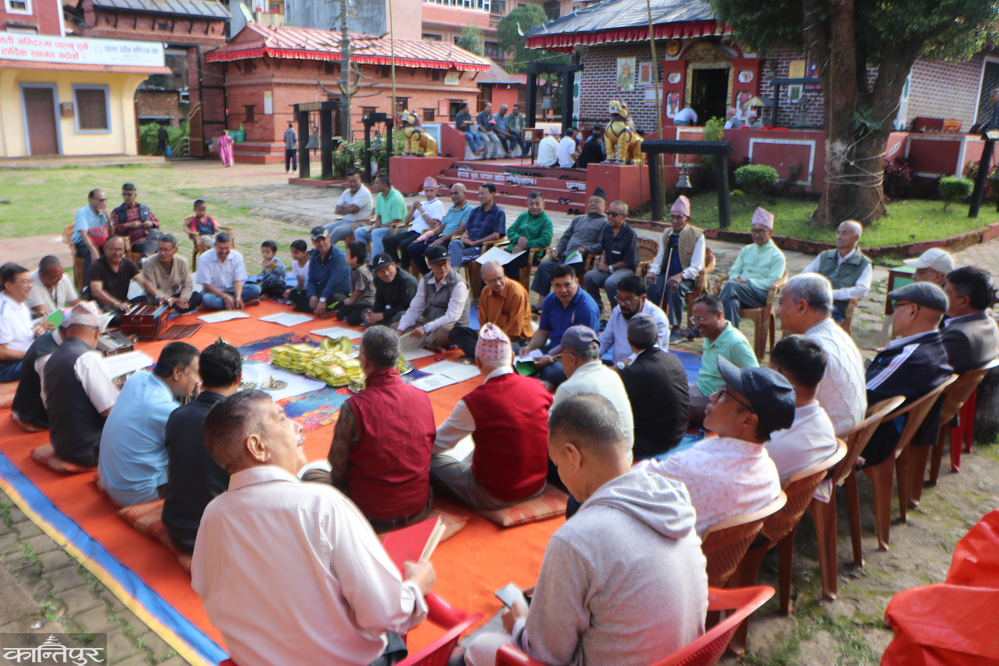
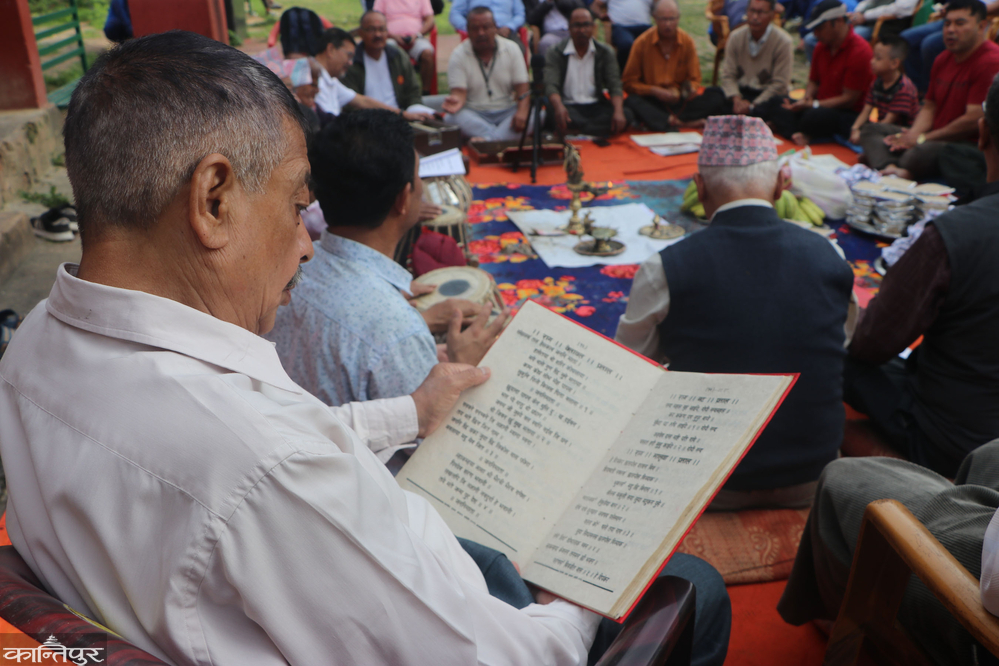
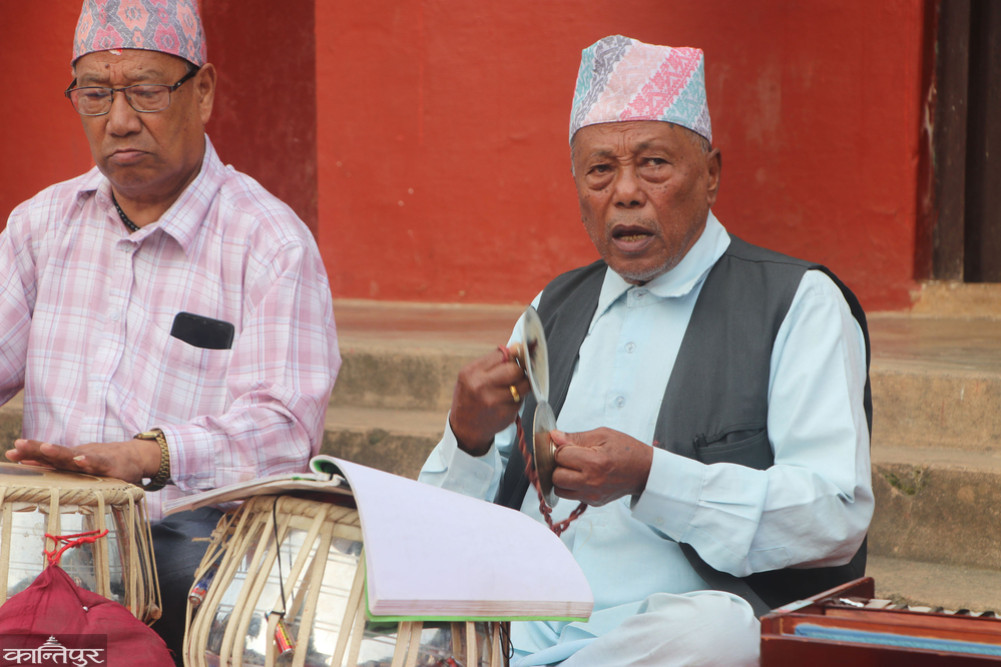
Dafa Bhajan has a history in the Newari culture. Dafa Bhajan is the highest blend of classical music. According to the experts, 'Dafa Bhajan' is not only the Newari culture, but also an important original form of Nepali music.
We use Google Cloud Translation Services. Google requires we provide the following disclaimer relating to use of this service:
This service may contain translations powered by Google. Google disclaims all warranties related to the translations, expressed or implied, including any warranties of accuracy, reliability, and any implied warranties of merchantability, fitness for a particular purpose, and noninfringement.
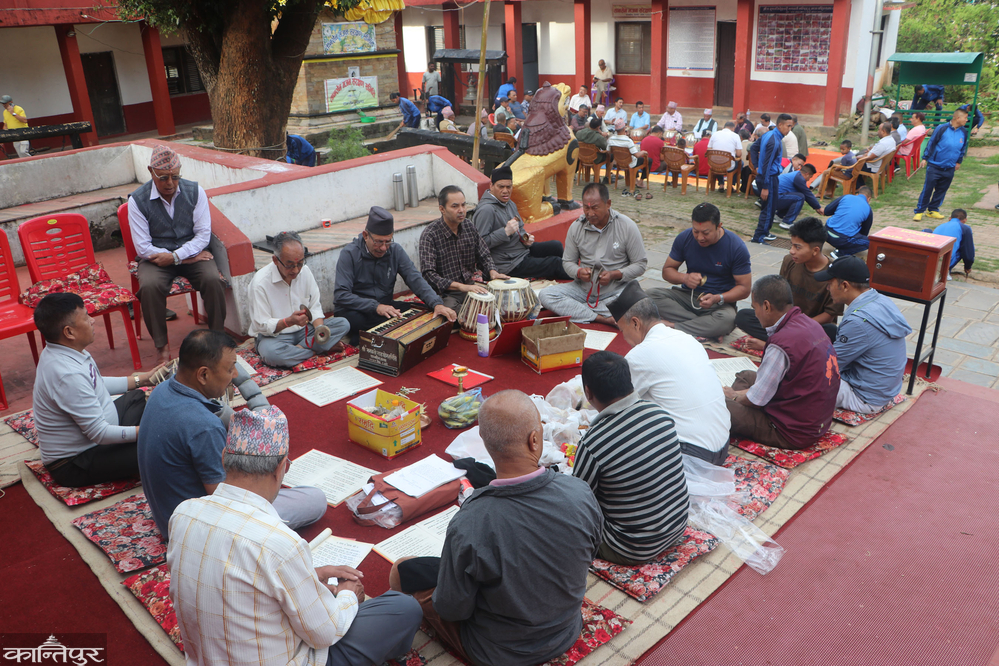
83-year-old Mangalman Bajracharya of Tansen Municipality-3, Taksartol has not stopped playing tabla even at this age. He wakes up at 5 in the morning and reaches Bhagwati temple. Even during the Dasain period, the work of playing the tabla and singing bhajans is continuous.
Bajracharya has been continuing this from a young age. "When I was 10-12 years old, I used to go to sing bhajans with my father and grandfathers," he said, "even now I have not stopped singing bhajans." Bajracharya is the leader of the Tansen Bhajan Conservation Committee even now.
81-year-old Gyanukumar Bajracharya of Bus Park, Tansen Municipality-6 has been playing the harmonium for 65 years. Bajracharya sings bhajans with finger movements. He has led Bhajan Khalah and still hasn't stopped singing bhajans. "Since I was young, I have focused on singing bhajans," he said.
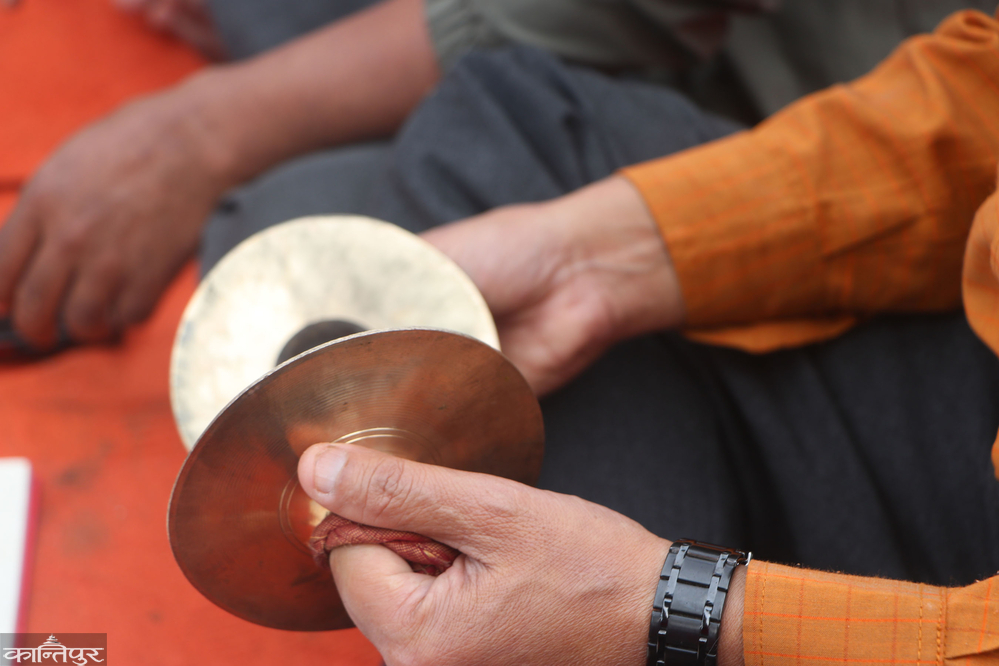 10 years ago there was only one group . But now they sing bhajans in two groups with the participation of the youth, the elderly and the elderly. Adhavaishe, not only the old, but the youth's voice is mesmerizing . "Dafa Bhajan" was originally in Newari. According to Mangalman, since it is a Newari bhajan, it is difficult for everyone to sing and give rhythm, so it is also made in Nepali . "However, the earlier bhajans were sung in Newari, Bhojpuri, Nepali, period languages," he said, "now we have continued it." It has been continued for years. Historian Nirmal Shrestha said that "Dafa Bhajan" was Senkalin. "Earlier, there was a tradition of downing during Dasain as well as other festivals," he said, "now it is gradually decreasing."
participants look at the pages of bhajan placed in front and help in singing . Harmonium and tabla along with Mujura, Raali's beat, those who come to visit the temple listen to the hymns at the same time . Some go to visit the temple daily from Ghatastaphana to listen to hymns. Rajendra Gopal Singh of Tansen municipality-3, Bhagwati tol said, 'It is a pleasure to watch and listen to the bhajans of the two groups. It seems that some have come to listen to this hymn.'
 According to him, the youth generation is not interested in Bhajan Kirtan recently. The 'Raga' 'Tal' of some hymns has reached a state of extinction. Pushkarraj Regmi of Tansen Municipality-3, Bhagwatitol said that there is concern that the hymn singers will become extinct with the passing away. According to him, the new generation does not even think of learning. "For that, the local level should provide information about hymns in the curriculum and textbooks," he said, "If we can inform about our customs and culture, the interest in this will increase." Dafa Bhajan is the highest synthesis of classical music. According to the experts, 'Dafa Bhajan' is not only the Newari culture but also an important original art of Nepali music.
Dafa hymns are musical chants sung according to time, situation and season. It presents human behavior, customs and activities in the country. Dafa songs, music and lyrics are based on traditional classical ragas. Culture expert Madan Deurali said that the Newars called Dafa for different musical styles. He said that Dafa songs are sung based on 35 ragas.
Although such hymns have been in existence since Lichchavikal, it is claimed that they were institutionalized in Senkal. Dafa Bhajan is a distinctive feature of Newari culture. But recently, the practice of singing Dafa hymns has been disappearing in most places. Earlier such hymns were sung regularly. Cultural expert Chitravaliram Suwal said that such bhajans sung in Newari toltol are now in a state of extinction. Lately there is a gathering of 11 members of Bhagwati Bhajan Samiti (Bhajan Khalah). Sometimes up to 15 people . Since the previous year, the Tansen Bhajan Conservation Committee has also been gathering at the Bhagwati temple premises. A maximum of 30 people gather in this group . In
bhajankirtan, along with 'Dafa Bhajan', religious stories like Shiva Mahima, Balan, Mahabharata are also sung as songs. Bhajans describe the pastimes and incarnations of God since creation. During Navadurga, especially they sing hymns of goddesses. There is a problem that today's generation cannot extract the 'Raag' and 'Tal' of Purano Bhajan. According to young Amit Karmacharya, even though he has tried to learn, it is difficult to bring 'raag' and 'rhythm'.