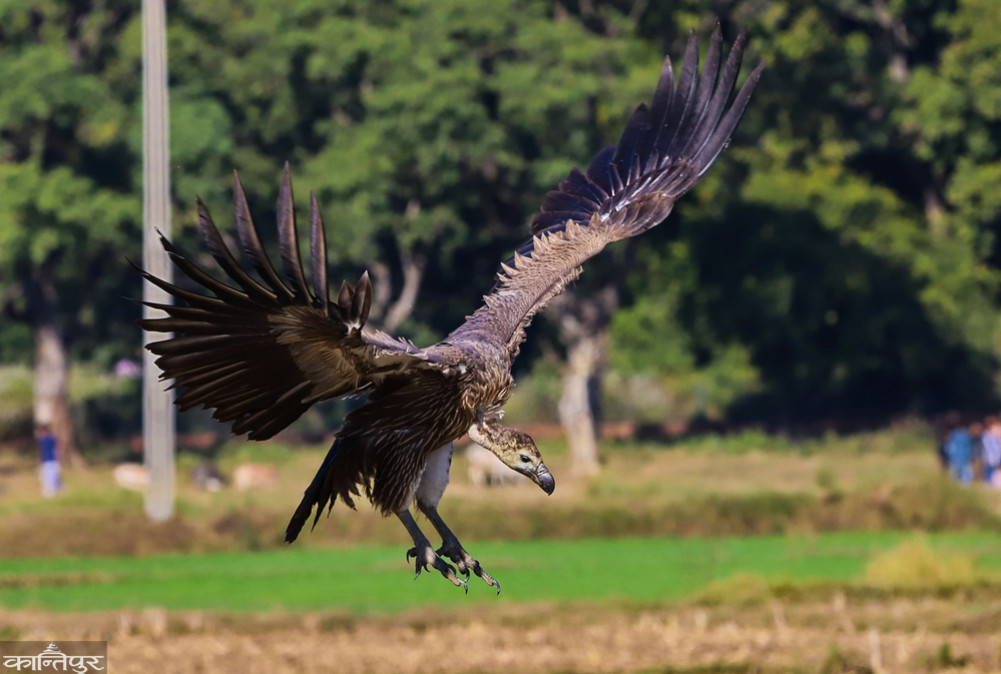
The vulture has been making an important contribution to environmental cleanliness by eating the carcasses of dead animals.
We use Google Cloud Translation Services. Google requires we provide the following disclaimer relating to use of this service:
This service may contain translations powered by Google. Google disclaims all warranties related to the translations, expressed or implied, including any warranties of accuracy, reliability, and any implied warranties of merchantability, fitness for a particular purpose, and noninfringement.
Recently, the number of vultures has been increasing throughout the country. Conservationists have said that the number has increased due to the effect of conservation and public awareness. Which is also making them excited.
On the first Saturday of September i.e. on August 21, the 17th International Vulture Awareness Day is being celebrated in the world including Nepal. Although a bird of prey, the vulture does not hunt by itself . The vulture is also known as the priest of non-violence as it eats the carcasses of dead animals. Vultures are also famous for enhancing natural beauty and beauty.
At first glance, the vulture looks a little scary. The exterior texture is not good either. So there is a negative effect on the introduction of birds . In search of livestock, vultures hang around garbage heaps. They fly while eating kava . A vulture is depicted as a violent, scavenging and hideous bird when it is seen sneaking and eating. However, when you go to the surroundings and make food, the environmental importance is less discussed.
The vulture is sending a message that it is not appropriate to make an opinion about any bird just by looking at its outer cover. When re-evaluating the results obtained from the scientific study conducted to see the economic side of the ecosystem service provided by the vulture in the southern African country, it has been found that the value of the ecosystem service of the three countries alone is more than 251,000 dollars per year . According to a study report by Word Life International Africa, 2025, a study conducted in Botswana, Zambia and Zimbabwe states that they are contributing the same amount annually to areas such as sanitation, disease control and tourism. 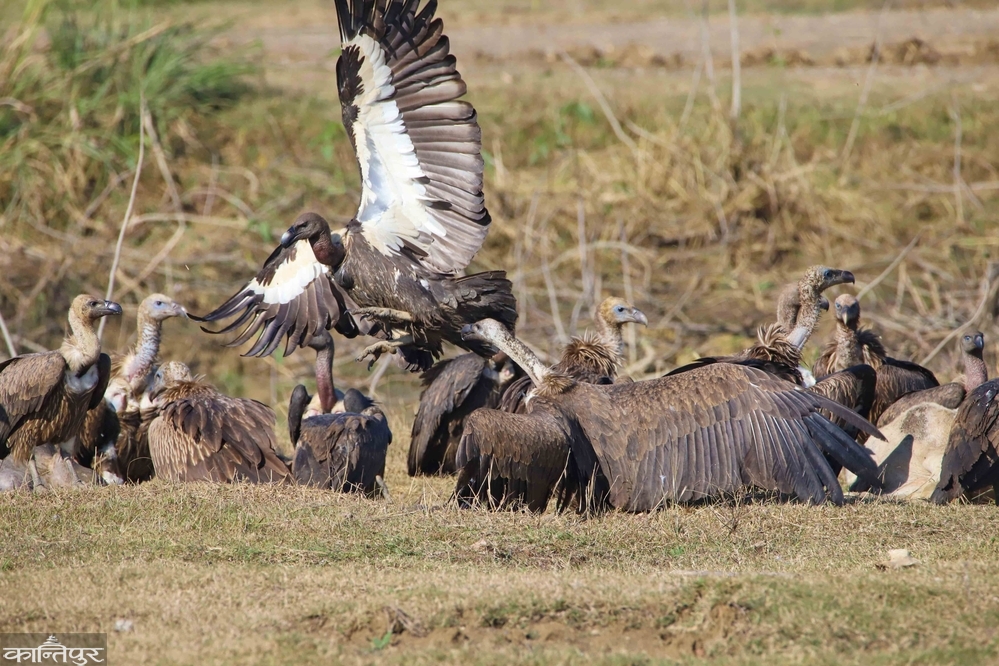
There are 11 species of vultures in Africa. 7 of which are in the crisis list . In the Southern African Development Country (SADC), which has 16 member countries, it is estimated that the value of the services provided by vultures to maintain the ecosystem balance is equal to 1.8 billion dollars per year. A study conducted there states that one vulture contributes $11,000 to Chinese sanitation. That's why the vulture is also called a natural cleaner without investment . Senior ornithologist, Dr. Dr. Hemsagar Baral said. "This has increased the unnecessary expenditure of human beings," he said, "the pressure of drug production has increased." Vulture does not allow such a problem. No need to suffer unnecessary pain and suffering.'
Although the beak, naked and long neck are hideous and ugly, the vulture is a bird that has a great role in environmental cleanliness . Ankit Vilas Joshi, vulture conservation officer of Bird Conservation Association (BCN), said that the vulture, a scavenger of nature, played an important role in making the environment free from pollution, odor and disease by eating animal waste and discarded meat. Carnivores eat only about 36 percent decayed flesh and skeletons. However, the vulture helps to make the environment free of pollution by eating most of the rotten meat and skeletons, he said.
In the 1990s, there was an unnatural and dramatic 91 percent decline in the number of vultures in South Asian countries including Nepal and India. In the 1990s, it is estimated that there are about 10 to 1.6 million vultures in Nepal. However, the number of vultures suddenly decreased by 90 percent to less than 20,000. A study by the Nepal Bird Conservation Association from 2002 to 2011 showed that the Dungar Vulture and the Little Gray Vulture decreased by 91 percent and 96 percent. Later, conservation efforts, plans and programs started by the government/non-government sector have increased the number of vultures.
Diclofenac, a drug used to treat swelling and pain in pets, has caused vulture destruction. It has been confirmed that the consumption of animal feed that has been fed with these drugs affects the vulture's kidneys. Diclofenac is an inexpensive non-steroidal animal pain reliever, which is fatal to vultures. The kidneys of the birds eating the meat of the animals treated with this drug were damaged and they died.
The effect of diclofenac was so terrible that a study using one vial of 30 ml killed 350 to 800 vultures, said vulture expert Krishna Prasad Bhusal . After that, the use, production, import and sale of Diclofenac, a painkiller drug used in animal treatment, which is the cause of vulture destruction, has been banned in Nepal since May 23, 2016. He said that drugs such as nimuslide, ketoporfen and acetofenac, which are still harming vultures, should also be banned. "Selling has been banned in India and Bangladesh," he said, "it's getting late here." In the same year, the first Jatayu restaurant in the world was operated in Nawalparasi to provide pure food to vultures. Later it was increased and established in Rupandehi, Dang, Kailali, Kaski and Sunsari.'
The vulture is a large carnivorous bird belonging to the group of birds of prey. It does not hunt itself and eats the flesh of dead animals. Deubadur Rana, a vulture expert, said that vultures are also called 'nature's kuchikar' because they play an important role in making the environment balanced, odor-free and disease-free by eating the waste of dead animals and discarded meat. The highly acidic juice in the vulture's stomach easily digests rotten meat containing various harmful germs . However, due to the absence of vultures, gnats are scattered everywhere in the environment, and as a result, there is a risk of infectious diseases such as rabies, plague, rabies, cholera, and diarrhea spreading to humans through these gnat-eating dogs, foxes, rats, and flies. Similarly, livestock can transmit anthrax, brucellosis and tuberculosis.
There are 23 species of vultures in the world and 9 species in South Asia including Nepal. A vulture, which can see up to eight times farther than humans, eats an average of one kg of food in three days. The vulture flies up to 300 kilometers in search of Sino . Vultures help maintain a clean environment by eating dead animals infected with bacteria, viruses and diseases. If there is no vulture, there is an equal chance of spreading the disease . Vulture expert Rana said that vulture is like a natural cleaner.
Among the vultures found in Nepal, only 6 species of vultures make nests and kill babies. Dungar, small gray and golden vultures are species that make nests in trees, while Himalayan, Hadfor and white vultures make nests in fences . Like other bird species, male and female vultures cannot be easily distinguished. Vultures mate for life. Nest building, brooding and rearing are done jointly by male and female. Other species of vultures lay only one egg per year (a breeding season), except for the griffon vulture and some cases of the white vulture. There is data that only 55 to 70 percent of the chicks harvested by vultures can grow.
Lately, the study of vultures has been increasing. Interest in its conservation is increasing. Under the Ministry of Forestry and Environment of the government, the Department of National Parks and Wildlife Conservation is working by making an action plan for vulture conservation 2023-2027. This is reducing vulture conservation through scientific research, habitat conservation and awareness. Joshi, vulture conservation officer of BCN, said that last year, Bird Conservation Association (BCN) found 715 nests while monitoring vulture nests in the main places of Nepal.
Saving Asia's Vultures from Extinction (SAVE) has declared Nepal the world's first protected area for vultures in November 2018. The vulture protected area is considered to be the vulture's habitat and its surrounding grazing and roaming area . Save is a consortium of 24 partners working together to save Asia's endangered vultures.
Department of National Parks and Wildlife Conservation, National Nature Conservation Fund (NTNC) and Nepal Bird Conservation Association (BCN) are key partners of SAVE. Some places in Lumbini and Gandaki states have been declared vulture protected areas.