Geopolitical analysts have interpreted the meeting of the three leaders as a new equation in the 'global order'. They claim that India's relationship with China, which has reached an agreement to increase trade with Russia despite American pressure, has sent a message that India's relationship with China is on the mend.
We use Google Cloud Translation Services. Google requires we provide the following disclaimer relating to use of this service:
This service may contain translations powered by Google. Google disclaims all warranties related to the translations, expressed or implied, including any warranties of accuracy, reliability, and any implied warranties of merchantability, fitness for a particular purpose, and noninfringement.
During the Shanghai Summit (SCO) in Tianjin, China, Chinese President Xi Jinping, Russian President Vladimir Putin and Indian Prime Minister Narendra Modi were seen in the same photo frame on Monday. Their 'body language' makes the meeting informal and cordial. The same picture of the Prime Minister of the democratic country of India standing with two powerful communist leaders has attracted the attention of the whole world. Geopolitical analysts have interpreted the meeting of the three leaders as a new equation in the 'global order'.
A message of change in the prevailing Western hegemony in the world order: Dhananjay Tripathi, Associate Professor, South Asian University At this time, Russia and China's relationship with the world power America is not easy . Recently, India has also been hit by US President Donald Trump's 'tariff war'. It has cooled the relationship between India and America. All the three countries are suffering in one way or another with the US due to various sanctions against Russia, competitive behavior with China and the policy of 'Tax War' against India. In that situation, the photo of Xi, Putin and Modi with laughter and sincerity is also seen as a reflection of the changes coming in "global politics".
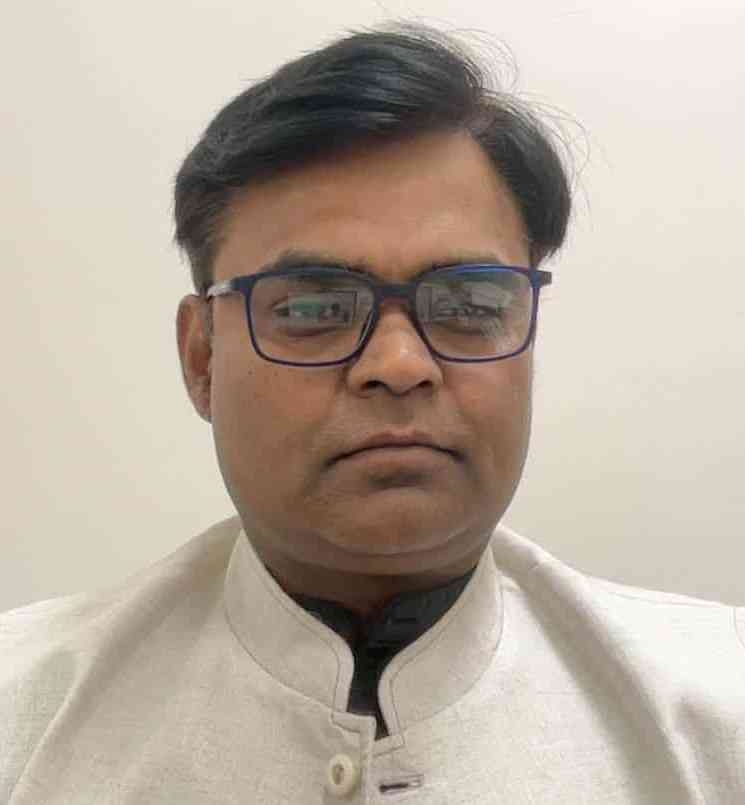 According to experts in geopolitical affairs, the "friendly" meeting between Xi, Putin and Modi in Tianjin has given a clear message that a new balance is being formed in the world order . Dhananjay Tripathi, associate professor of international affairs at Delhi-based South Asian University, says that the meeting between Modi, Xi and Putin in Tianjin has given a basic message that the 'Global South' is coming closer. The West continues to dominate international politics. India, China and Russia trying to come together is a message of an important change in world politics,' he said, 'This has signaled a change in world politics.'
To keep China in balance, America had been taking a strategy to keep India in its share . But after Trump added an additional tax burden of 50 percent on India, India has taken a strategy to get closer to Russia and China. India is heavily dependent on Russia for weapons and military equipment in the defense sector.
But after the Russia-Ukraine war, after the increasing pressure of the western countries including the US, India took a strategy of reducing its military dependence on Russia . The military partnership with the US was increasing . But Trump's announcement that American investors will leave India and that India will be punished for buying crude oil from Russia has badly shaken India's trust in America. America has increased the tariff on India initially by 25 percent and later by 25 percent to 50 percent. According to experts in geopolitical affairs, the US has done so to increase pressure not to buy oil from Russia because Russia has not stopped the war with Ukraine. But India has said that American behavior is wrong and will buy cheap oil from wherever it is available to provide convenience to Indian citizens .
It has been analyzed that Indian Prime Minister Modi demonstrated his closeness with Putin in the Chinese city of Tianjin to show that he does not want to bow to American pressure. Modi has confirmed it to some extent by posting a picture of him traveling in the same car with Putin on the social network 'X'. "After the SCO summit, President Putin and I went together to our bilateral meeting place," Modi wrote, "The conversation with him (Putin) is always intense."
Modi and Putin have also agreed to increase bilateral trade. "We discussed ways to deepen bilateral cooperation in all areas, including trade, commerce, space, security and culture," Modi wrote in X after the talks with Putin, "Our special and privileged strategic partnership has become an important pillar of regional and global stability." In the statement issued by the Ministry of Foreign Affairs of India, it is mentioned that both the leaders expressed their satisfaction with the continuous growth of bilateral cooperation and relations, including economic, financial and energy sectors. Despite American pressure, Professor Tripathi says that India has succeeded in conveying the message of continuing trade and relations with Russia. While America is doing arbitrary things, it is necessary for India to find an alternative market to America for business. India is also forced," he said, "India seems to be looking for that market in Russia or China. This is the clear message from Tianjin.'
Modi's participation in Tianjin and the meeting with Xi have also conveyed the message that the relationship between India and China is improving. There have been disputes between the two countries many times over the border. After the military clash between India and China in Galwan in eastern Ladakh in June 2020, the relations between the two countries were further strained. Analysts say that due to the Galwan incident, the relationship between the two countries has reached the worst state since the 1962 war. Due to the coldness in the
relationship, Indian Prime Minister Modi has traveled to China after 7 years. While the Chinese president did not come to the G20 summit in Delhi two years ago. After the Galwan clash, Xi and Modi met at the BRICS summit in Kazan, Russia last year. Analysts claim that India and China are moving towards improving relations from the same meeting in Russia. In the bilateral meeting, Modi and Xi agreed that they are not rivals but partners in development and that differences should not turn into disputes in the future. Pointing out the need for common views on global issues and challenges, an agreement has also been made for direct flights between Beijing-Delhi and various cities in China and India.
"The two leaders considered it necessary to expand common ground on bilateral, regional and global issues and challenges such as terrorism and fair dealing on multilateral platforms," said a statement released by India's Ministry of External Affairs after the meeting between Modi and Xi. : Mrigendra Bahadur Karki, Executive Director, SINAS
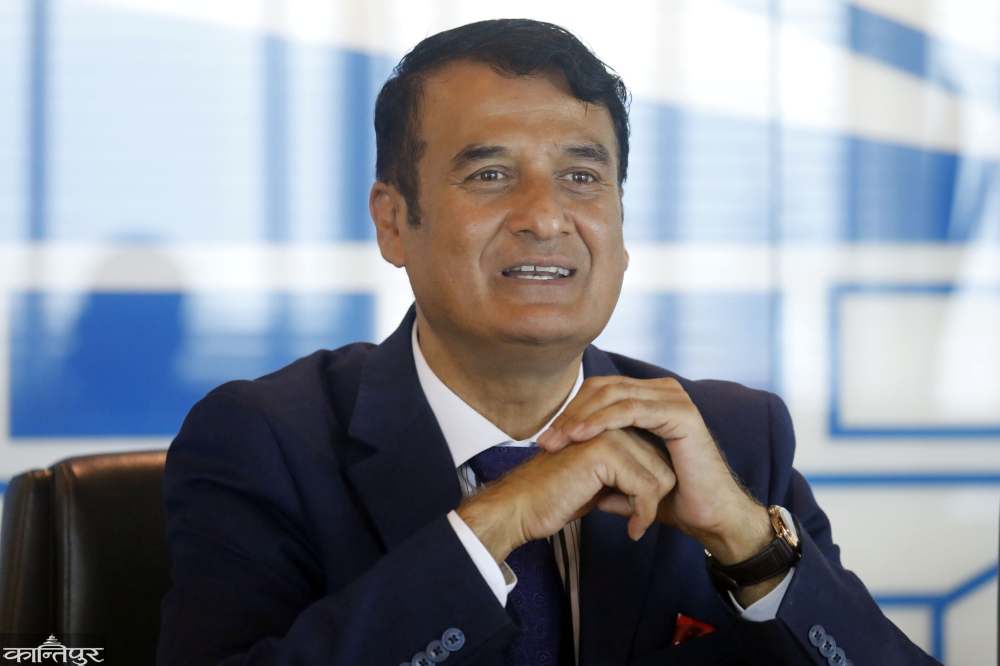 According to Karki, the US has been supporting him on platforms including the 'Quad' according to the strategy of not maintaining India's closeness with its traditional 'enemy' China . However, Karki comments that America has pushed India closer to China. "America has been using Japan, India and Australia to balance China," he said, "India is getting closer to China due to Trump's policy." It becomes important to see whether the current India-China proximity is a reaction of America or natural. So it will determine a lot in the future.' Mrigendra Bahadur Karki, Executive Director of Tribhuvan University's Center for Nepal and Asian Studies (SINAS), says that the Tianjin Conference tries to convey the message that the next era is the 'Asia's era'. "Chinese President Xi and Indian Prime Minister Modi have been highlighting the issue of Asia's era for a long time," he said, "Xi, Putin and Modi have tried to give a clear message that Asia will no longer be dominated by the West in world politics, but Asia is moving forward."

