Now the lake is busy with birds of prey. They are encouraged to raise calves. They are walking behind the 3/4 week old baby. They are teaching to live in harmony with nature. They are protecting the cubs and teaching them to walk.
We use Google Cloud Translation Services. Google requires we provide the following disclaimer relating to use of this service:
This service may contain translations powered by Google. Google disclaims all warranties related to the translations, expressed or implied, including any warranties of accuracy, reliability, and any implied warranties of merchantability, fitness for a particular purpose, and noninfringement.
The weather is very hot. When you get closer to the lake, the heat increases. People become restless due to heat. Sometimes it seems like let's walk and come back. However, when the bird sanctuary is near the Jagdishpur lake, nature lovers are equally thrilled and happy even in the scorching summer. All the sorrows and pains disappear when you see the attractive flock of guinea fowls in the eastern northern corner of the lake.
It is heartening to see another flock of beautiful and attractive birds Jalapsara nearby to the south. In the northern corner of the lake, the endangered birds of Nepal become happy when they see the beautiful chicks of Harihans.
Raithane bird is busy in the lake right now . They have the opportunity to raise calves. 3/4 week old baby is walking behind . Teaching to live in harmony with nature . They are protecting the baby and teaching it to walk. The bird is raising the baby by finding food, bringing it, teaching it to feed .
In the lake Silsile ducks, divers, Kurma, Lamaunele, Simkukhura and Dhyani Bakulla are rearing chicks . Similarly, Kotero Munia, Red Munia, Bhod Bakulla and Askote Bakulla are also busy . Small Jalewa, Black-headed Munia and Yellow, Red and Black Junbakulla are also raising chicks . "Everyone is mesmerized by their chirping, cuckoo speech and affectionate love," said senior wildlife photojournalist Om Yadav. Their busyness and charming activities are making everyone happy . Listed in the World Frontier Zone, the lake itself is fascinating . Wildlife photojournalist Yadav said that the struggle of Mau to raise the cubs is adding excitement and making everyone happy.
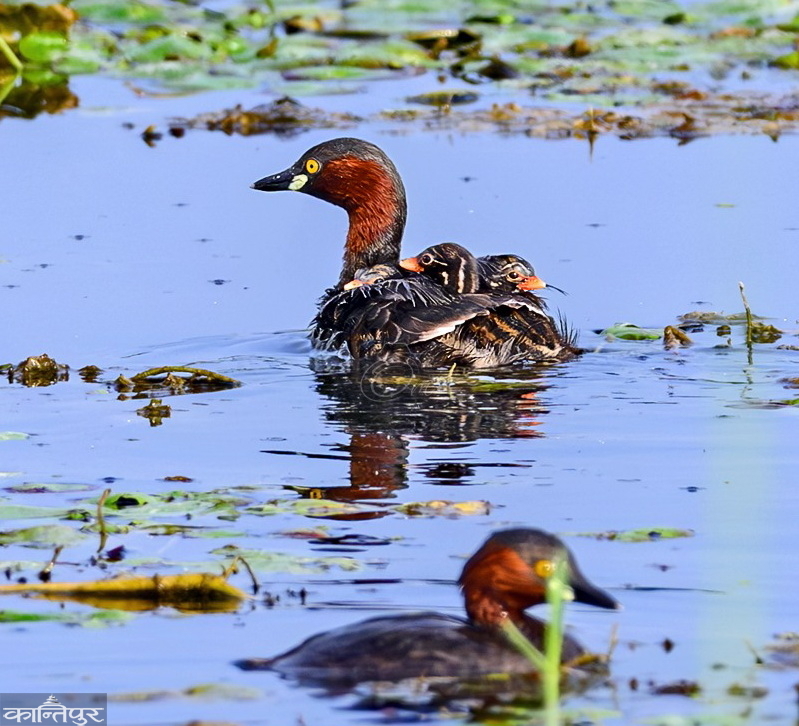
Ornithologist Dr. who is now nesting and raising chicks with more than 30 species of birds in
lake. Hemsagar Baral said. He said that among the border areas of the country, most species of birds are rearing chicks in Jagdishpur Lake. Raithane birds have been attracted here for breeding because there is a good border area in the lake, they can find a safe place to choose, and the diet is easy. Looking for a place in June. They build their nests by collecting grasses, weeds and weeds. After three to four weeks, they harvest the bachera. They grow up in two to three months and make adults until October.
Birds choose a place to nest in a lake looking for a safe environment and food. More than 350 raithane birds are nesting in the lake and rearing their young. Ornithologist Dr. Munia species 3 birds lay eggs and raise chicks twice in this season after getting good food here. Baral said.
Raithane bird refers to a bird that lives for twelve months . Some of the birds were already flying. Some came later and became Raithane . Some of the summer and winter visitors have settled in Jagdishpur because of the bird entanglement and a good environment like the place where they used to live, said chiropractor Krishna Prasad Bhushal. Long-chinned wagtails and wagtails are winter visitor birds . Yellow Junbakulla and Red Junbakulla are summer visitors . However, these four birds have now become endemic in Jagdishpur, said ornithologist Bhushal. This could also be the effect of climate change, he said. The sea bird Thimaha Falafya has now become the Raithane bird of Jagdishpur .
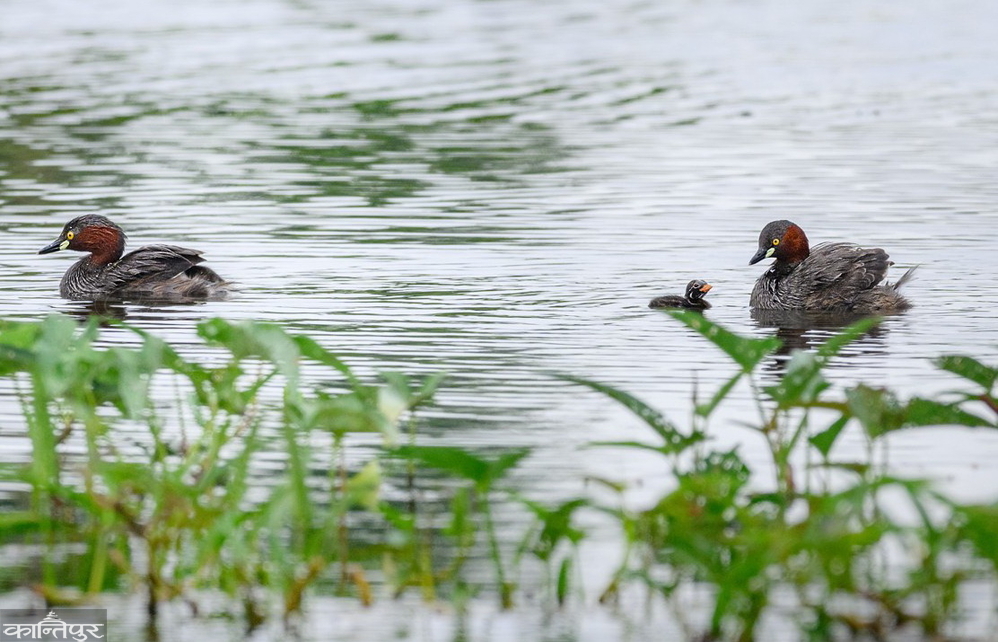
The 157-hectare lake is the country's second bird sanctuary. The lake has been sheltering most of the waterfowl migrating from the northern region during the winter . The lake has been sheltering more than 15/20 thousand winter visitors here for 5/6 months of winter every year.
Nature guide Vishal Wagle told Maui-Bachera love, their struggle to grow up and making their every activity very exciting. He said that there is an environment that makes human life joyful with the chirping of birds, colors and water sports. 'Jagdishpur actually has a great attraction of bird tourism,' he said, 'if it can only be promoted, the country will get good benefits.'
Ward no. of Kapilvastu municipality. The bird sanctuary at 9 and 10 has now become the best bird watching spot in the country. It is mentioned that 43 species of fish, 10 species of amphibians, 42 species of reptiles and 32 species of mammals are found in the bird reserve. Similarly, it is said that 168 species of birds can be found in the lake area. Among them, 92 species of birds, 9 species come in summer, 64 species of birds come in winter and 3 species of birds are partial migrants, according to a study conducted by IUCN Nepal.

