We use Google Cloud Translation Services. Google requires we provide the following disclaimer relating to use of this service:
This service may contain translations powered by Google. Google disclaims all warranties related to the translations, expressed or implied, including any warranties of accuracy, reliability, and any implied warranties of merchantability, fitness for a particular purpose, and noninfringement.
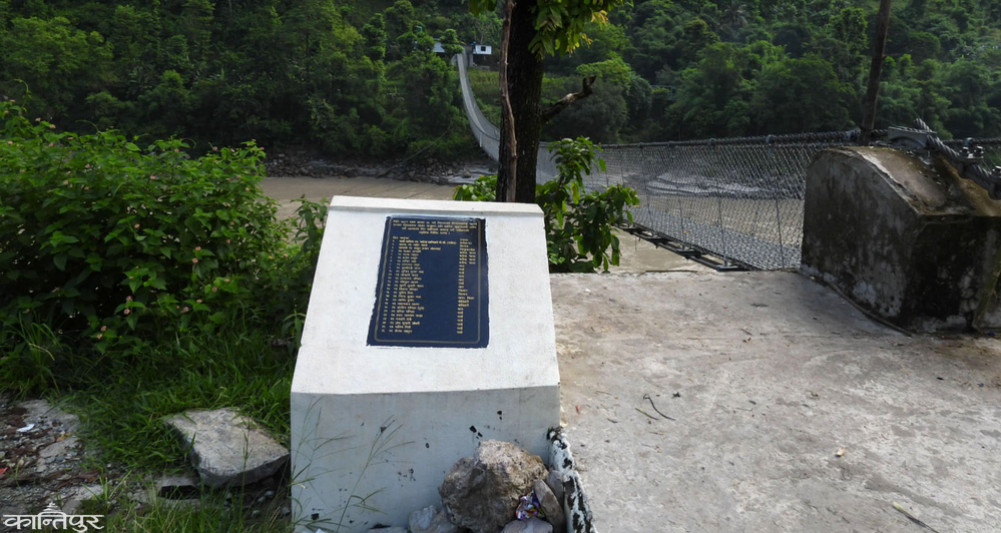
Saturday is the anniversary of the disappearance of two buses in the Trishuli River near Bharatpur Metropolitan City-29 Simaltal on Narayangadh Muglin Road. Out of 62 passengers in both buses, only three people from one bus were found safe. The bodies of 19 people who were washed away with the bus were found and identified, but 40 other passengers and both buses disappeared in the river.
With this incident, the government changed in the country and Ramesh Sukkar was appointed as the Home Minister. The first decision of the Minister of Home Affairs was to create a working group for a detailed study of the Simaltal accident. According to the Home Minister's decision on June 31 last year, a 6-member working group was formed under the coordination of the Joint Secretary of the Ministry of Home Affairs, Chabi Rizal. The task force submitted its report on July 23 last year.
The task force prepared a report by identifying the role to be played by various agencies for the cause of the accident and preventive measures . The committee made various suggestions and recommendations to reduce the causes of road accidents, streamline search and rescue operations and simplify the relief process. After a year passed since the accident, the implementation situation is not satisfactory . In the 44-page report prepared by the
task force, failure to stop the road condition, the first point of the conclusion mentions the landslide caused by the rural road dug above the accident site as the cause of the accident . In the report, it has been asked to implement the issue of obtaining consent from the road department in accordance with the Public Roads Act 2031 when opening the tracks of subsidiary highways . But officials of the road department say that there is no progress in this.
'We are not going to take data to see if consent is taken or not, but its compliance is very low . They may have been taken somewhere, but generally speaking, there is almost no practice of taking them," said Engineer Prabhat Kumar Jha, Deputy Director General and Spokesperson of the Road Department. According to the division road office, no auxiliary road has been dug by crossing the highway in Chitwan in recent days.
'No one has come to take consent and we have not seen this time digging to open a subsidiary road under the guise of a highway. They may not have come to take consent because they have not opened,' said Engineer Krishna Acharya, who is the Information Officer of the Division Road Office of Bharatpur. Apart from this, he also said that the office is ready with machine tools to remove the road obstruction that may occur during monsoon.
Rescue materials were not added. The task force formed by the Ministry of Home Affairs came to the Disaster Management Training School of the Armed Police in Chitwan Kurintar on July 19 last year and took suggestions on the improvements to be made in the field of rescue . A team of armed police divers is engaged in search and rescue in the rivers . The
committee recommended in the report that various types of modern tools should be managed and put into use as soon as possible. In the Simaltal accident, the need for these devices was felt due to the fact that the search was hindered by the rising and murky water.
File photo of Indian and Nepalese armed police search operations at the crash site last year.
On May 7, there was a program to give certificates to 20 trained divers at Kurintar of the Armed Police . Inspector General of Armed Police Raju Aryal did not forget to raise the issue of lack of rescue materials in the program attended by the Minister of Home Affairs, Home Secretary. In other words, the armed police did not get rescue materials as recommended by the report even when the year was passing and the rain was coming.
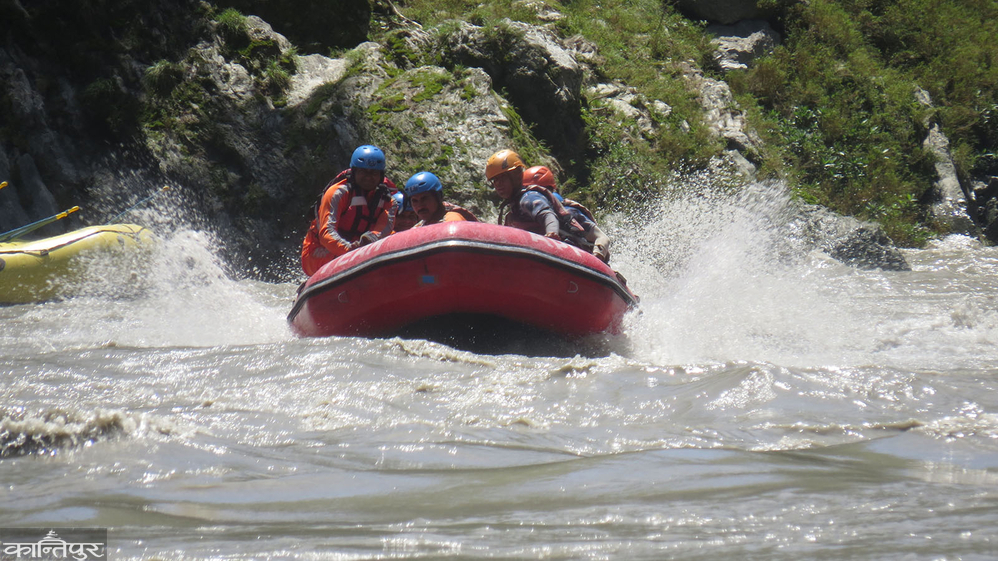
We are working this time with the same tools as yesterday. In the meantime, new tools and equipment have not been added," SP Janak Puri, spokesperson of the Armed Police Disaster Management Training Institute in Kurintar, said. At present, the armed police use a 40 horse power (HP) motorboat for search and rescue in the river. It becomes difficult to work during the dry season when the flow of the river is strong.
SP Puri had told the working group last year that a motorboat of at least 60 HP is needed if not double as much as possible. Similarly, he also said that the life jackets used in search and rescue should be of a type that can be used in water for 12 hours continuously. The rescuers said that it was difficult to work in the murky water and depth due to the lack of modern tools. In the report, the committee recommended that the work of managing the equipment and bringing it into use should be done under the leadership of the Ministry of Home Affairs. Home Secretary Gokarnamani Duwadi, who came to Kurintar at the event on May 7, while talking to reporters, said that the recommendations of the task force formed to investigate the Simaltal accident are being implemented gradually.
"Relief materials for urgent matters and emergencies have been made available". But in the long run, the system that we expect and the recommendations made by the report has not yet been made,' said Home Secretary Duwadi. He said that according to the arrangement of the budget, the tools will be arranged. "There has to be a source". I don't have to say about the economic situation of the country . For the materials that we can manage from internal sources, those who can take initiative in the budget and those who cannot, should get help from international donors, said the Home Secretary.
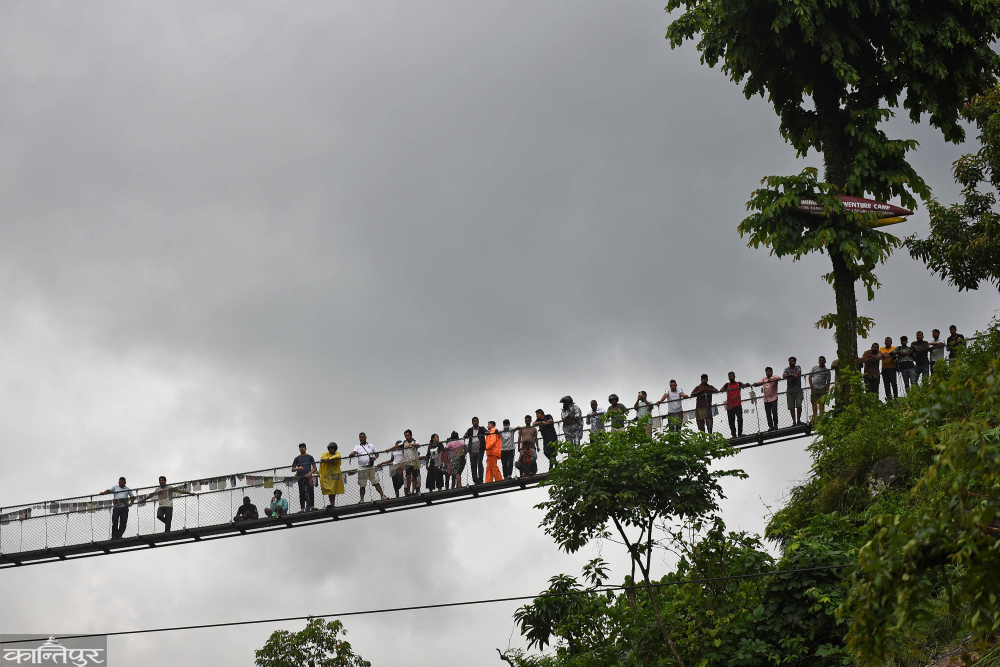
The mapping of Trishuli did not happen
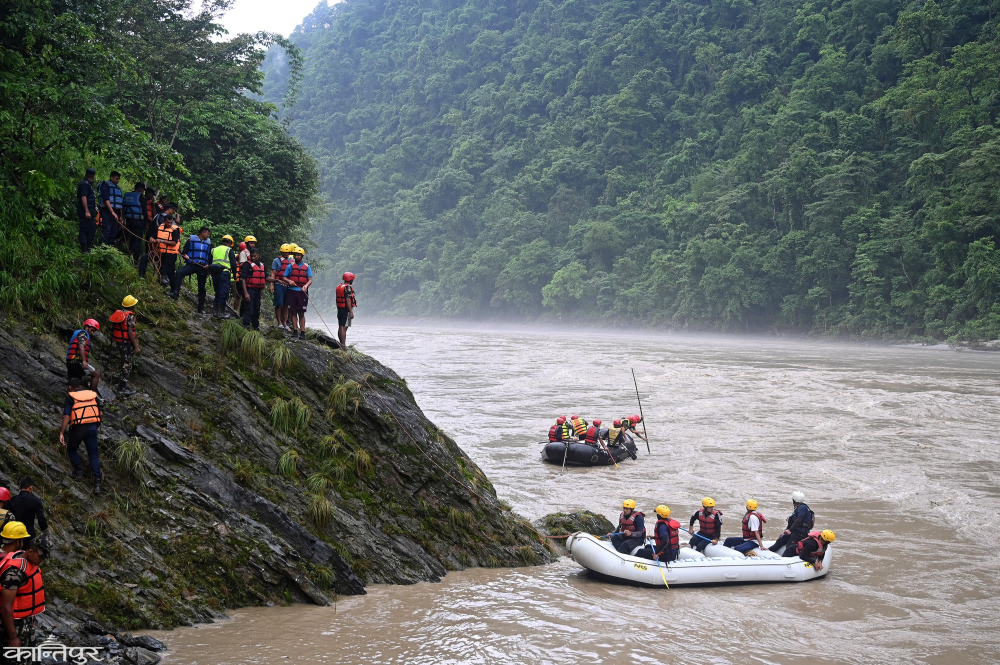
Since it is difficult to find a vehicle after it falls in the Trishuli river, the working group formed by the ministry asked to map the river bed and search for the missing vehicle. But with the end of last year's drought, this matter also went away. The winter passed but neither the lost car was found nor the river was mapped . The task force assigned the responsibility to the armed police. DSP Shailendra Thapa, the Central Co-Spokesperson of the Armed Police informed that plans are being made on how best to proceed to fulfill the responsibilities assigned to the armed forces by the task force. He also said that plans such as
to make the community aware of disaster management have been implemented. On Friday 28th of June last year, around 3:30 in the morning, Ganpati transport bus No. 03-001 B 2495 coming from Kathmandu to Gaur and Bagmati Province No. 03-006 B 1516 going to Kathmandu from Birganj and Angel bus No. 03-006 B 1516 went missing after falling into the Trishuli in a landslide in Simaltal Sinduregaira, about 23 km northeast of Narayangadh. Although the bus reached Trishuli, three passengers of the Angel bus saved their lives by swimming themselves. There were 62 people in both buses.
file photos
Other than three passengers and two buses disappeared in Trishuli. The search team found 24 dead bodies from the Narayani river bank and Triveni Dam area, about 103 km below the incident site. Among them, only 19 bodies were confirmed to be passengers of the bus that fell in the landslide.
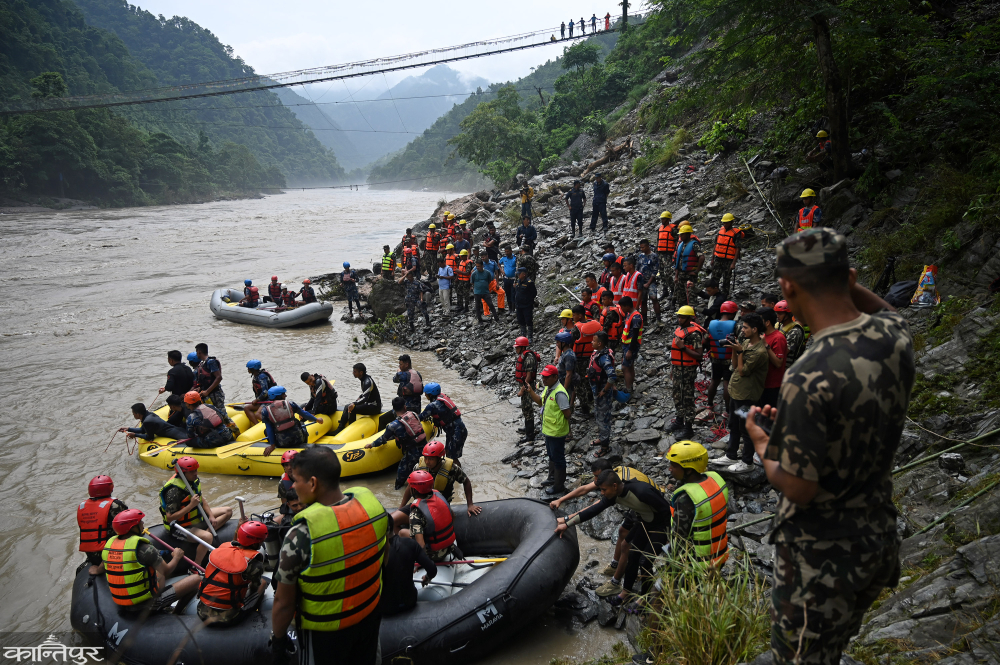 Among those 19 bodies identified by the family, three are women and 16 are men. Seven Indian citizens in one bus and two in another nine Indian citizens also disappeared in the river along with the bus. Out of which the bodies of five Indians have been found. The condition of the remaining 40 passengers is unknown, except for the three who were safe and the 19 people whose bodies were found. Indian technical team was also deployed in Trishuli and Narayani rivers for a week from 6th July last year to search for the
bus. Even the Indian team could not find the bus and other bodies . Indian technicians said that the uphill valley and high flow of the Trishuli river hindered the search. Although the Indian returned, the armed police continued to search for a month after the incident.