Refusal to resign by the chairman of the committee Ramhari Khatiwada who signed the report against the unanimous agreement of the state administration committee to keep a 'cooling off period'
We use Google Cloud Translation Services. Google requires we provide the following disclaimer relating to use of this service:
This service may contain translations powered by Google. Google disclaims all warranties related to the translations, expressed or implied, including any warranties of accuracy, reliability, and any implied warranties of merchantability, fitness for a particular purpose, and noninfringement.
In the Federal Civil Service Bill, the provisions on not being able to take up government appointments for two years after resignation or retirement from government service have been admitted to be irresponsible, but neither an investigation committee has been formed nor a commitment to reform has been made.
The parliamentarians themselves have raised questions saying that the provision to make the 'cooling off period' ineffective was placed in the bill organically and there is no intention to improve it immediately.
Chairman Ramhari Khatiwada and Secretary Suraj Kumar Dura of the State Arrangements Committee, which prepared the report of the bill, have not paved the way for the investigation. Even though most of the parties and MPs have concluded that there is wrongdoing in the bill, the State Arrangements Committee and Speaker Devraj Ghimire have not taken the initiative to investigate. According to Speaker Ghimire, there is no possibility of reforming the disputed provisions from the House of Representatives and sending them to the National Assembly. "It is my responsibility to send the report to the National Assembly in the same form as the bill passed by the Parliament," he said.
The chairman and members of the State Arrangements Committee met Speaker Ghimire on Tuesday regarding the issue of the non-parliamentary provision of the 'cooling off period' provision in the Civil Bill.
Chairman of the State Arrangements Committee, Khatiwada, has publicly appealed to the Speaker to form an inquiry committee. Although he is of the opinion that the Speaker should form an inquiry committee, Speaker Ghimire is not in a position to form a committee immediately. According to an MP who participated in the
meeting, Speaker Ghimire asked Speaker Khatiwada, Secretary Dura, and committee members about how conflicting things could remain in the report of the bill. "After that, saying that this matter is serious, he consulted with the General Secretary of the Parliament, Padma Prasad Pandey, etc. to investigate," said the MP.
After the bill with the provision of 'cooling off period' was passed by the State Law Committee, General Secretary Pandey made a public statement that the provision was unconstitutional and unfair to civil servants. Together with Chief Secretary Ek Narayan Aryal and secretaries, General Secretary Pandey put pressure on Speaker Ghimire, National Assembly Speaker Narayan Prasad Dahal, Congress President Sher Bahadur Deuba, ministers as well as Prime Minister KP Sharma Oli to remove the provisions of the bill passed by the committee. However, the committee unanimously arranged for a 'cooling off period'. The report of the bill containing the point to break it has been passed by the House of Representatives.
Even after two days have passed since the publication of the clause to make the 'cooling off period' system ineffective, instead of investigating and improving, the series of accusations against each other continues. Khatiwada, the chairman of the State Law Committee, which prepared the report on the Civil Bill, has said that there is no weakness on his part in the bill and that he is ready to face any punishment if any fault is found after investigation. Committee Secretary Dura said that there was an error while preparing the bill report and it was not deliberate. According to the State Administration Committee Secretariat, Joint Secretary Subhash Kumar Bhattarai from the Ministry of Law and Joint Secretary Meera Acharya from the Ministry of General Administration participated in writing the report.
The State Law Committee had provided in section 82 (4) of the bill that 'an employee who has resigned or retired from civil service or other government service shall not be appointed to any constitutional or government position before the completion of two years from the date of retirement'. After making this arrangement, section 82 (4A) of the original bill should be amended and the report should be submitted to the House of Representatives. But through the amendment, section 82 (5A) was kept to make the provision of 'cooling off period' made in the previous sub-section ineffective. In section 82 (5A) it was said that no appointment can be taken in any position other than constitutional or diplomatic appointment and any other appointment made by the Government of Nepal.
After meeting Speaker Ghimire, UML MP and Former Law Minister Padam Giri commented that the report was taken to Parliament and passed beyond the subject matter agreed upon in the parliamentary committee. Whatever was agreed upon in the committee should have been submitted to the parliament and passed. There was a conspiracy here, it is a very wrong thing," he said. Until this is decided, the meeting of the State Order and Good Governance Committee will not proceed. Those who are responsible for this should leave their place on the basis of morality and face the punishment.'
UML had agreed to keep the 'cooling off period' system only at the last stage. The UML agreed to a two-year 'cooling off period' only after the Congress, Maoist and other parties agreed. Giri said that after it is passed by the committee, everyone should carry that decision. After the MPs of the committee met with the Speaker on Tuesday, the meeting of the State Arrangements Committee was also postponed. The discussion on the Nepal Police Bill had started in the committee, but that too was blocked.
Congress MP Hridayram Thani said during the conversation with the speaker that there was a trick and conspiracy in the 'cooling off period'. He said that even if it is not to weaken the parliament, those involved in that act should be punished, but there should be no conflict between the executive and the legislature. Maoist Member of Parliament Janardan Sharma said that the bill was deliberately placed outside the committee's approval of the 'cooling off period'. After meeting the speaker, he said, "The conspiracy and bullying that was done against our sovereign rights to make a mockery of the Parliament should be investigated." The secretary, chairman, committee should take responsibility for this.'' Mentioning that cheating in the making of the law is not acceptable, he said that the necessary investigation and correction process should be started.
United Samajwadi MP Rajendra Pandey suspected that the Chief Secretary, General Secretary of Parliament and Secretaries had played a game in removing the 'cooling off period' arrangement accepted by the Minister of Federal Affairs, Home, Defense and Education. I have heard that some secretaries went to threaten the Prime Minister that they will jointly resign. We passed it unanimously, there is work to adjust the language, to adjust the upper and lower clauses. Since it is connected with the Secretariat of the State Order Committee, the Ministry of Federal Affairs and the Ministry of Law, these three levels have to sit and correct it," said Pandey. "This has become a scam.
Maoist MP Madhav Sapkota said that the activities against the 'cooling of period' under the leadership of the Chief Secretary and the General Secretary of the Parliament have led to the current situation. The background that was played in the National Assembly and the House of Representatives under the leadership of the Chief Secretary and the Secretary General of the Parliament should be remembered. There was a theoretical and political consensus on the state system. The Speaker submitted the report without holding the last meeting of the committee," he said. "This is a well-thought-out conspiracy. It is a serious crime against Parliament. We cannot take it for granted. This is pure fraud. Morally, the chairman and secretary of the committee should resign. A high-level or parliamentary inquiry committee should be formed, those involved should be prosecuted.
After meeting Speaker Ghimire, Committee Chairman Khatiwada said, 'Whose fault is this, they should be brought to justice. Today we also invited friends from the Ministry of Law and General Administration, they did not attend. This is a serious and massive blow to the Parliament. Such a big mistake does not happen anywhere in making laws. It should be investigated. If it is on me too, let it be investigated. If I am guilty, I will also be subject to action.'
000
'The Speaker does not have the right to change the clause'
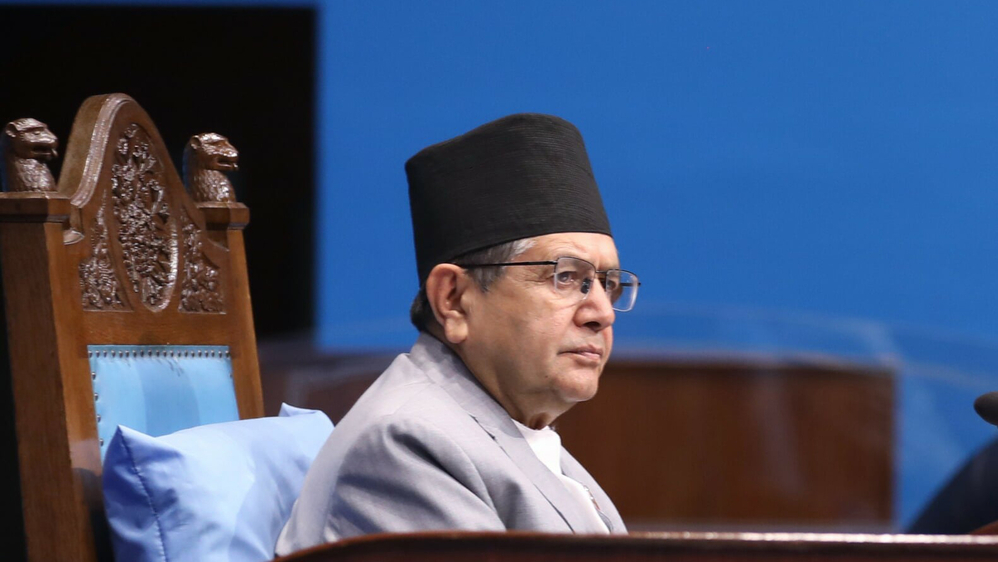
It has been found that the employees of the State Order and Good Governance Committee Secretariat of the House of Representatives and MPs have committed serious fraud in the provision in the Civil Service Bill that no government appointment can be taken for two years from the date of resignation or retirement from government service.
In this regard, Speaker Kantipur's conversation with Devraj Ghimire :
It is a rare incident in parliamentary history that a decision has been made in the parliamentary committee, but there is a different provision in the report of the passed bill. How have you taken it? The question has arisen whether the
report has been finalized by looking at what has been achieved or not. The chairman of the committee (Ramhari Khatiwada) said that everything was decided from below. Based on that, the report was forwarded and distributed, discussed and passed. Until then nothing had come. Today they say that there is a problem in writing. Now you have to pay attention to these things.
The party leaders and MPs say that there should be an investigation into this matter. What do you think about it? What should be done after understanding the advice of
leaders. But what has come has been passed by the House. No one seems to have changed in between. If it was discussed and not passed, then it should be seen where the error occurred, who made the error.
parties are saying that this is against parliamentary practice, the committee passed one thing, the report came up with another?
What has come has passed. It's about how you sent it from the committee. The decision of the committee is not a matter of passing and submitting the other. If so, then it is serious. That has not happened yet.
The committee member decided to keep the 'cooling off period' for 2 years during the discussion, but in the final report, you are saying that the opposite provision was made, right?
Now you may have to live with MPs who do that. We have no such information, no one has informed us so.
The chairman of the committee and the MP have said that a committee should be formed to investigate this matter. Have you made any preparations regarding the formation of the inquiry committee?
investigation, what has been passed and what should be passed? What is broken, what needs to be corrected? That is my first focus. Where the error occurred, who did it, and why, are the things behind it.
Opinions are coming from the speaker about the possibility of correcting the error in the bill. Is the regulation authorized or not? Have you thought about that?
What will happen if 'and' is added or removed in any section of the bill? Does the Speaker have that right? Who has given the right to add or subtract 'and' for small things? where is it If that's the case, I'll fix it, I'll fix everything! I am not going to take the things that have come up there into the discussion as they are, and not to carry forward whatever decision is made.
What does the National Assembly do now and only after returning from there does it come under the authority of the House of Representatives? What was passed by the
committee was discussed and the same topic was passed by the assembly. When the assembly passed the same, when it was said that we had not sent such a thing, show me which one had been sent.
Is it now trying to escape the speaker's head that it had to be removed or corrected? Matching is also a process. Combining the words and, or, and also makes a big difference. There is no right to take away from someone or to keep someone from keeping. If the speaker wants to do it, he should tell me under which laws, rights and regulations. How did it go, why did it happen? It has a process, a sequence.
Chief Secretary, General Secretary of Parliament and secretaries were pressing to remove the 'cooling off period' system. It is suspected that such an arrangement was made due to its influence in the parliament.
Suspect who does what to whom! What the incident shows is that the report of the committee has been passed. Jajas argues that this is not the case, they would know. I didn't know anything.
000
'I am ready to be punished if found guilty'
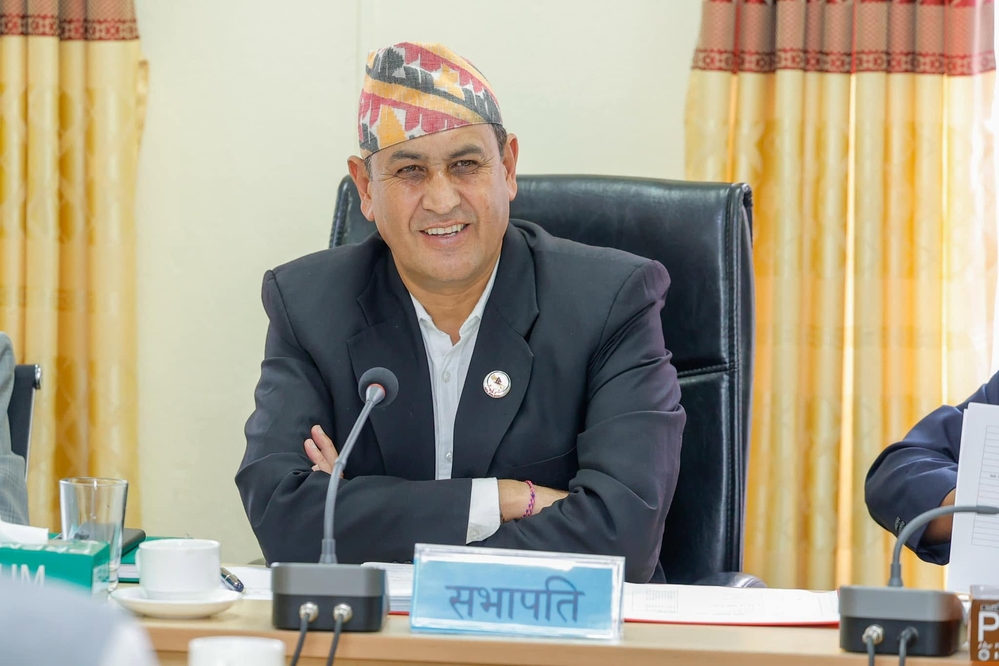
It has been found that the employees of the State Order and Good Governance Committee Secretariat of the House of Representatives and MPs have committed serious fraud in the provisions of the Civil Service Bill that no government appointment can be taken for two years from the date of resignation or retirement from government service.
In this regard, the Chairman of the State Order and Good Governance Committee Kantipur's conversation with Ramhari Khatiwada :
In the report signed by you and the secretary, it was seen that there is another point that refutes the 'cooling off period'?
We gave the task of writing the unanimous decision of the committee to the secretary of the committee, general administration and joint secretary of the Ministry of Law. There was no cooling-off period in the bill, after the committee put it, there was no such provision in the next sub-section. We also looked at the paper decided by the
committee. It was written that sub-section 5 would not be kept if the committee signed it. Sometimes an officer of the Ministry of Law and General Administration suggests that no other section or sub-section can be inserted after this. They also have a role in writing the report. After putting the 'cooling off period' in sub-section 4, we thought that sub-section 5 did not get everyone's attention, and we signed it.
Were you coerced into signing?
We all committed to the point of 'cooling off period'. When we spoke in the Parliament, we said that the 'cooling off period' had come. Even from 1st to 15th June no one noticed that, we were all assured. This fatal error has occurred. Now what to do with it, from our side. Making a clear arrangement in sub-section 4 of section 82 to keep a 'cooling off period' while finalizing the
report. Also create Clause 5 to accommodate another clause of the original Bill. Amending some words of sub-section 5 such as the phrase 'without taking the prior approval of the Government'. And the detail that neutralizes the 'cooling off period' itself, i.e. section 5 (a) can be ignored as it is not enough attention?
After looking at all the records, the Speaker has said that he will investigate it, we have said that an investigation should be done. We have decided not to include this clause while reading the sub-section to all members of the committee. The writing committee was given to the Secretary, Joint Secretary, Law and General Administration. It is customary for the Ministry of Law to inform that this should not happen after it happens, the Ministry of General Administration also says, they did not say anything about it.
Is it possible for you to sign on the subject of so much discussion and controversy, and not even look at the report? After highlighting the
above, does anyone imagine that there is 'bullying' in it from somewhere? The media was writing, others were also interested. I was among those who fought for it. I am of the opinion that the sub-committee should be kept for two years instead of one year. The fact that three ministers came and said that the 'cooling off period' was 2 years was not ignored.
Shouldn't you and the secretary take moral responsibility in this? I have already requested to investigate the
. If found guilty, I am ready to face any punishment.
After the 'cooling off period' system was put in place, the chief secretary, general secretary and secretaries of the parliament said it would be unconstitutional and insulting.
It is not the employees who decide whether the laws made by Parliament are constitutional or unconstitutional. We see the supremacy of Parliament. We have decided that the supremacy of the Parliament should be maintained. In the meeting with the Speaker, MP Krishna Gopal Shrestha has clarified that whether the people walking with the procession had any influence. He has also told the speaker about where this game was and how it happened. That is why we have said that there should be an investigation.
Even Congress MPs have said that you should resign, should you do it or not?
If there is an investigation, I am ready to face the punishment if my fault is found anywhere.
000
'We will not allow the House to run until the bill is passed'
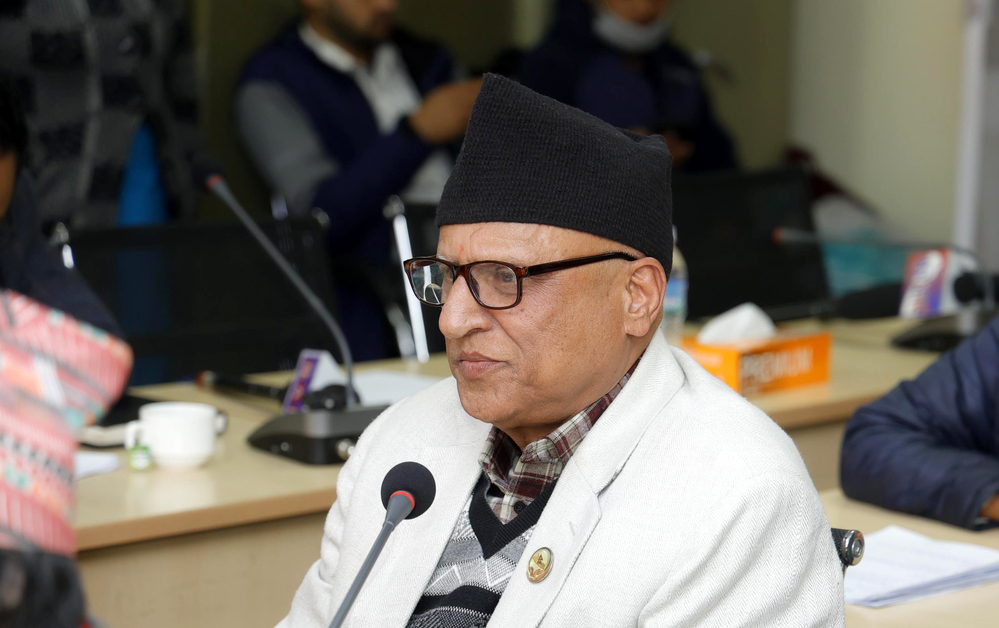 Dilendra Prasad Badu, Coordinator, sub-committee under the State Order Committee
After meeting the speaker, we said, 'We did not allow the two-year cooling off period system to be broken, you, the minister and we should do whatever we have to do to improve it and take it to the National Assembly'. A committee should also be formed to investigate how the error occurred in the bill. It has been a 'blunder'.
We have seen that the Chief Secretary, General Secretary and Secretaries of the Parliament shamelessly went from place to place to remove the system of 'cooling off period'. We want to know if its effect has worked. Speaker's help is needed in finding out who is involved in this. If the Parliament does not form an inquiry committee, it should be formed even if there is a state order committee. It's good that the Parliament made it, because it seems that the question is directed towards the chairman of the committee.
There is a committee meeting tomorrow (Wednesday). This matter is discussed. Such a betrayal of what has already been agreed upon in Fullhouse is a serious matter. It should not be done without investigation, whoever it is, the perpetrator should be brought to justice. Otherwise, there is no reason for Parliament. Were the people who were assigned the task of arranging the clauses of the bill, told in writing or verbally? They should be called and understood. Looking at today's mood, UML and Maoists agree with us.
When the government submits the bill in the upper house, it should be reformed according to everyone's suggestions. It is discussed, revised, comes to the lower house and is passed. What we've worked so hard for comes through. Second, whether that is possible or not, should be discussed. Because the process must be legal. After we all agree, our parliamentarians amend it in the upper house and remove it. After the bill comes from there, we will pass it. (conversational)


