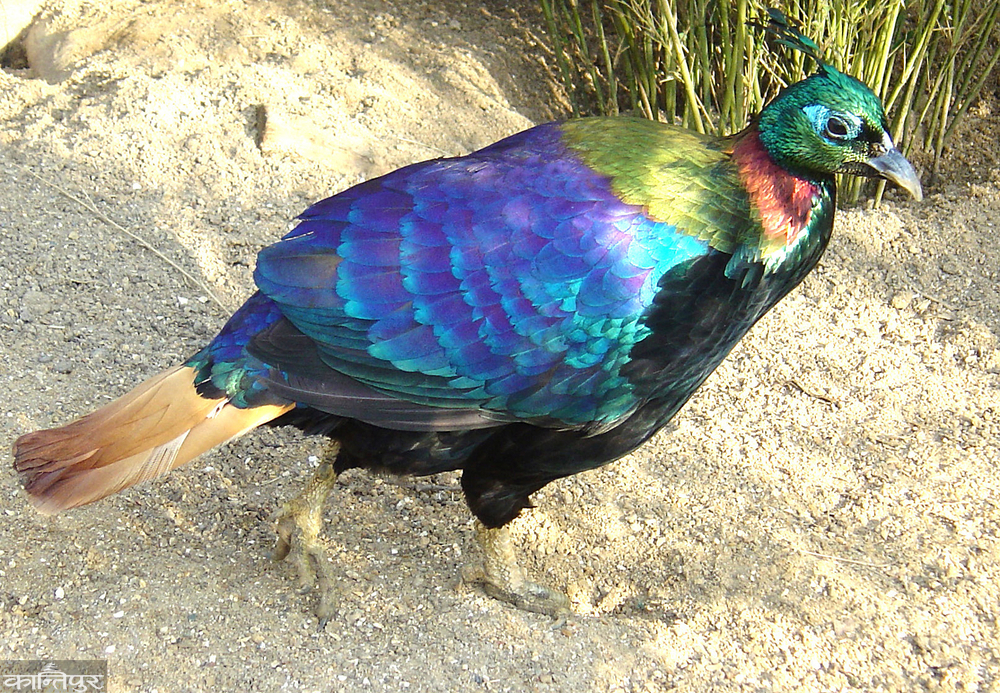
The 'Pepper Pheasant Sanctuary' was built on the initiative of Colonel Jimmy Roberts.
We use Google Cloud Translation Services. Google requires we provide the following disclaimer relating to use of this service:
This service may contain translations powered by Google. Google disclaims all warranties related to the translations, expressed or implied, including any warranties of accuracy, reliability, and any implied warranties of merchantability, fitness for a particular purpose, and noninfringement.
Colonel Jimmy Roberts, the former Gurkha soldier who opened the first trekking company in Asia and made Nepal's trekking routes known to the world, said in the latter part of his life, 'After my death, send my remains to Seti Gandaki.'
After being discharged from the Gurkha regiment in India, he made Pokhara his base and opened the trekking company 'Mountain Travel Nepal' in 1964. A year later he registered the company. And Chahare Pakkha Pakhera of western Nepal. Coming to Nepal for the first time as a British Gurkha officer, he also worked to collect birds for the British Museum.
came to Pokhara in the early 1960s. Grassy plain below, Annapurna above and the strange shape of Machhapuchhre drew him here . He played a role in the exploration of the trekking routes of western Nepal which are currently in use. He has explored the 21-day 'Round Annapurna' trekking route from Lamjung via Manang to Thorong, Mustang and Myagdi, Annapurna base camp via Veerethanti-Ghandruk-Chomrong, Ghorepani-Pun Hill trekking route.
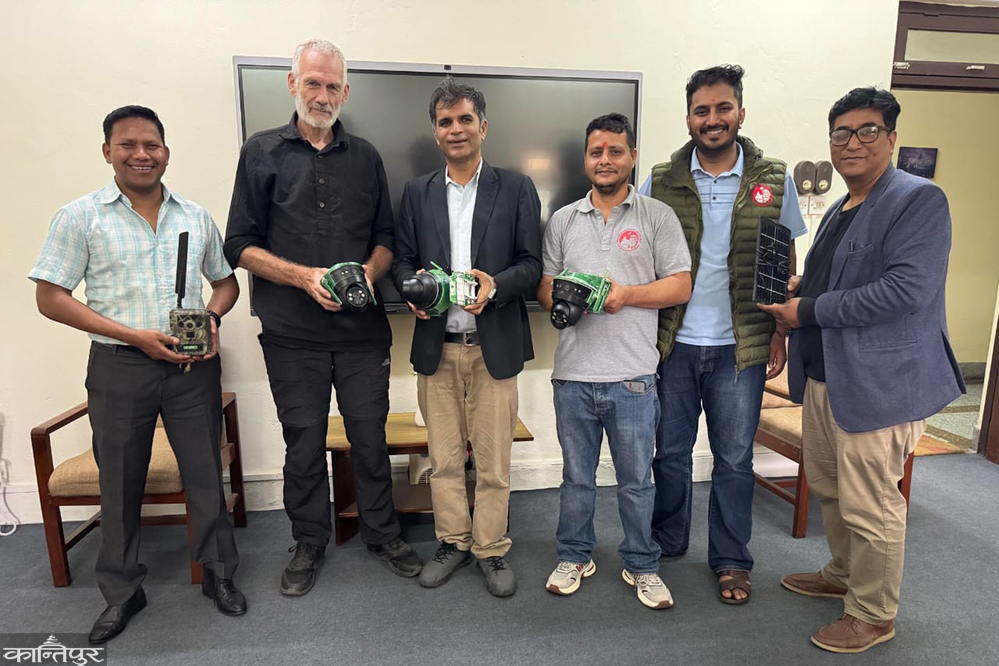 The National Nature Conservation Fund is going to install a spy camera in the Annapurna conservation area to control poachers. Photo: NTNC/ACAP
In 1976, while exploring the footpath, he reached Pipar area in present-day Machhapuchhre Rural Municipality. Piper Lake is reached through Karuva-Sandal, the last village of the rural municipality. Jhalak Thapa was also with him as an assistant. When he reached Peeper, he heard the call of pheasant birds. Among the 8 species found in Nepal, 5 species of Kalij were seen at the same place. He was enthralled by seeing Rangichangi Danfe, Munal, Phokras, Chilime and Kalij.
In 1975, the World Pheasant Association (WPA) was established with its headquarters in the UK to work on pheasant conservation worldwide. Jimmy Roberts and officials of the World Colleges Association contacted at that time . He elaborated on Pepper. Anthony Lelliot, who was studying in Britain, was sent to Nepal for studies. Lelliot came and studied the Kalijs in the Dhorpatan area of Pipar and Baglung. Later Dr.Pralhad Yonjan also joined.
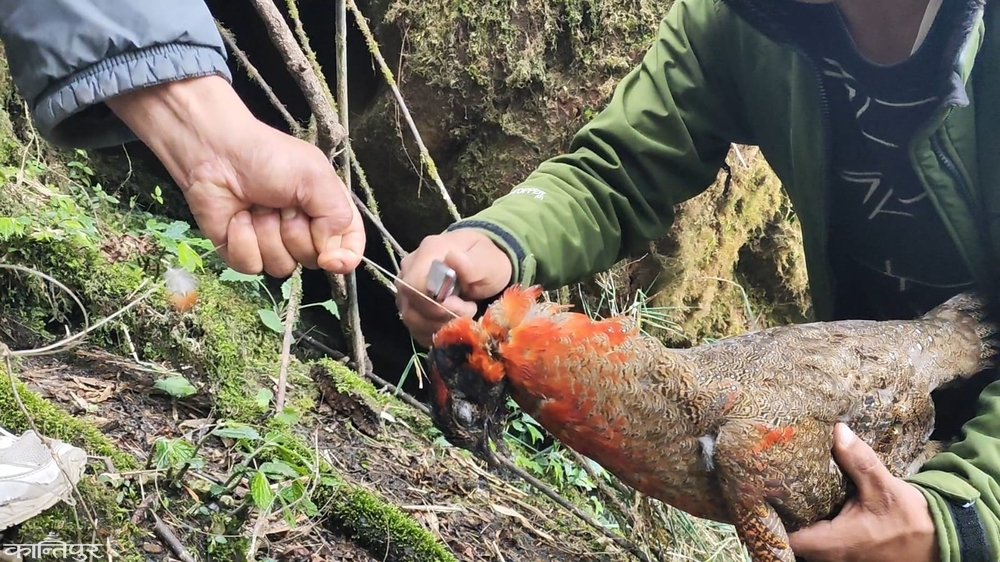 Biocos Nepal staff rescuing a trapped munal in Pipar area. Photo: Biocos Nepal
Jimmy was the person who lobbied the government that Machhapuchhre should be kept as a virgin mountain. In 1957, two British citizens from his company, Cox and Noyes, reached Machhapuchhre for climbing. On June 2 of that year, they went to climb from the north side and returned 50 meters below the peak due to lack of time. Since then there has been no attempt to climb Machapuchhre .
In 1979, the first international seminar of the World Colleges Association was held in Kathmandu. From the same year, the Sangh started Kalij counting in Pipar area . Initially, only Munal and Phokras were counted in Basantayam. The representative of the association used to keep the data based on the sound of the birds (call count). In the 4-year kilometer area of Pipar, Kalij was started to be counted at intervals of four-five years. That place which is 3 thousand 200 meters above sea level is known as 'Pepper Pheasant Sanctuary'.
In 1983, another British researcher also studied the plants in pepper . In 1998, tourist businessman and birdwatcher Suresh Shakya and Indian citizen Rahul Kaul first made a detailed study of the pheasant species found in the area. In 2001, the ornithologist Hemsagar Baral took the students of the Institute of Forestry Studies, Pokhara, to cover the large area of Pipar, to cover a larger area.
For the first time in 2005, Kalij was counted in Piper led by Nepalese. So far 15 times Kalij has been counted in Pipar area. Recently, Biodiversity Conservation Society (BIOCOS) Nepal, an organization working in the field of conservation, has been entrusted with the task of counting Kalij. Currently, the organization is headed by Laxman Paudyal . Paudyal, the then Pokhara coordinator of Panchchi Sankarsan Sangha (BCN), went to Peeper to count the Nepal Kalij with the British team in 2004 . He also prepared a bachelor's thesis in forestry on the topic of plants found in pepper.
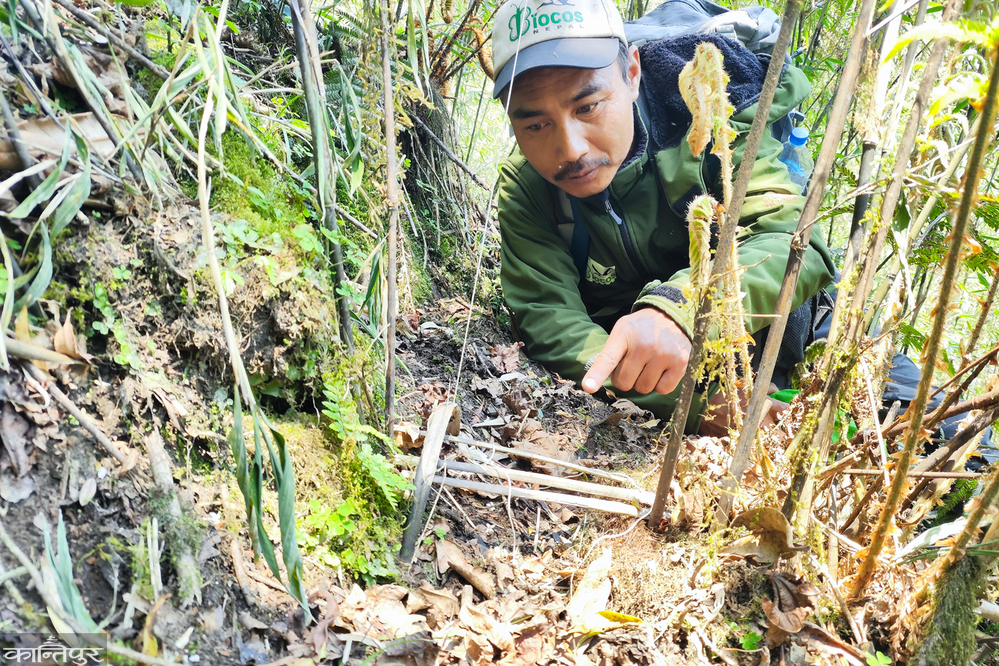 . Photo: Biocos Nepal
According to him, in 1983, an action plan was submitted to the Department of National Parks and Wildlife Conservation of the Ministry of Forestry with a proposal to make Piper a protected area or a research center. Annapurna Conservation Area had not been declared at that time. Annapurna Conservation Area Project (ACAP) was established only in 1986 under the National Nature Conservation Fund.
After he was employed in the department, he searched for the action plan but could not find it. The then director general of the department was Vishwanath Upreti. When we discussed with him, the document was not found,' Paudyal said, 'Later, when we discussed with other employees, a proposal was submitted to make Piper a protected area or a research center.'
Among the birds found in Nepal, the national birds are the stork, the mullet and the chir. Cheer is found in the high Himalayan regions, while Luiche (Forest Chicken) and Peacock are found in the plains . He says that poaching of the Kalij species found in the Pipar region is already widespread. He said that the number of birds of the Kajil species is decreasing recently as the herdsmen who keep sheep and buffaloes in the lake, herb collectors and hunters trap the Kajil for meat and bring eggs to eat. Lately, he has left the job of the department and is active in Kalij conservation as the president of Biocos Nepal.
Kalij species declining due to poaching. 19 people, including researchers and assistants, formed two groups and counted the puree of Kalij species Damphe, Munal and Phokras and Titra species from 4th to 18th Baisakh. The team has expanded the area of kajil counting this year . Within the Annapurna Conservation Area, the forest areas of Machhapuchhre Rural Municipality, Pilicho, Pipar, Khumai, Korcha, Lubruchu, Chichimle, Damfe Chaur, Hille, Odane etc. were counted.
Previously only Munal and Phokras were counted, but this year Danfe and Pura have also been counted. In that area, 146 Danfes, 148 Munals, 19 Phokras and 170 Peuras have been found. The team has also conducted a bird count in that area . This year, 200 species of birds have been found in that area. Since the survey conducted in 1979, 314 species of birds have been found in the Pipar-Khumai area. Whereas 518 species of birds are found in the entire Annapurna conservation area. This area is known as the Peeper Sanctuary or Peeper Reserve among bird watchers and researchers worldwide.
Biocos Nepal staff rescuing a trapped fox in Pipar area.
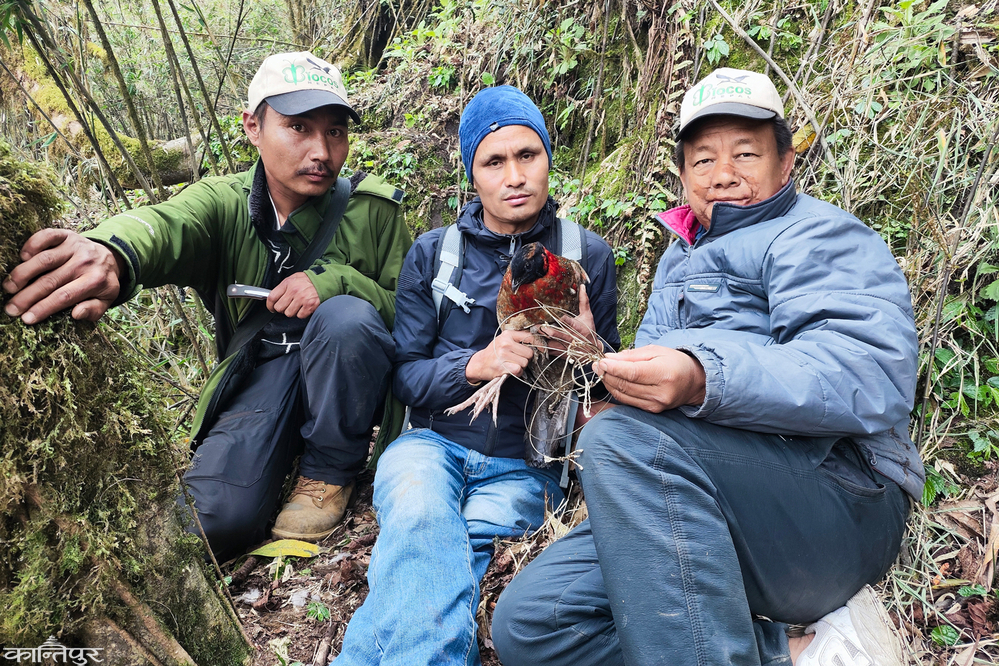 Photo: Biokos Nepal Only in Peeper, the number of Kajil is decreasing . In 1993, there were 31 in Peeper, but only 20 were counted this year . In 1997, there were 30 phocras, this year it has dropped to zero. Dr. Parasvikram Singh, director of Biocos Nepal, says that the number of snakes is not expected. He said that poaching for illegal trade is the main challenge of Kalij conservation.
According to environmentalist Singh, Danfe-Munal live in Khark during summer. They fall in the forest area in winter. As the yam descends, the hunter sets the trap . The hunters make a gate-like entrance in the middle by putting a fence 100 to 200 meters long on the path of Kalij species. When entering through that open space, Kalij falls into a trap. Such a trap is made near the source of water . "In Danfe-Munal conservation, the hunter's trap has become like a trap for conservationists," he says.
From March to spring, they go to Khark and lay eggs in open areas. The child is afraid of catching a cold . He enters the forest again to protect the child. Even then, the trap is set . Such a trap falls on the neck and legs. Sheep herders, buffalo herders, locals trap for meat . The hunters take the trapped dogs to Pokhara for sale.
In the course of Kalij's investigation, he has met many times the trappers trapped in Piper. His team has also rescued Kajil from the trap. The danger of hunters is more for the falcon than other birds. There is a trend of hunting it for taste," he says, "now it is more dangerous to do business. It can be said that its number is decreasing because many traps are found in the area where there are traps.''
Although the number of robberies is calculated for the first time, the number is not satisfactory . "She lays 10-15 eggs at a time, so the number should be very good," he said.
Since it is far from the village and the police or ACAP personnel cannot reach it, poachers have increased in the Pipar-Khumai area . Singh said that even though a person with a gun was found in the camera trapping of Biokos, no action was taken. He is saddened that there is not much effort in conservation after the stork is called a national bird. Earlier, the ornithologist Dr. Hemsagar Baral had conducted a research on the dung beetle in the Langtang area . But there has been no nationwide study yet.
Munal found in Pipar area of Machhapuchhre rural municipality. Photo : M Ottaviani/WPA
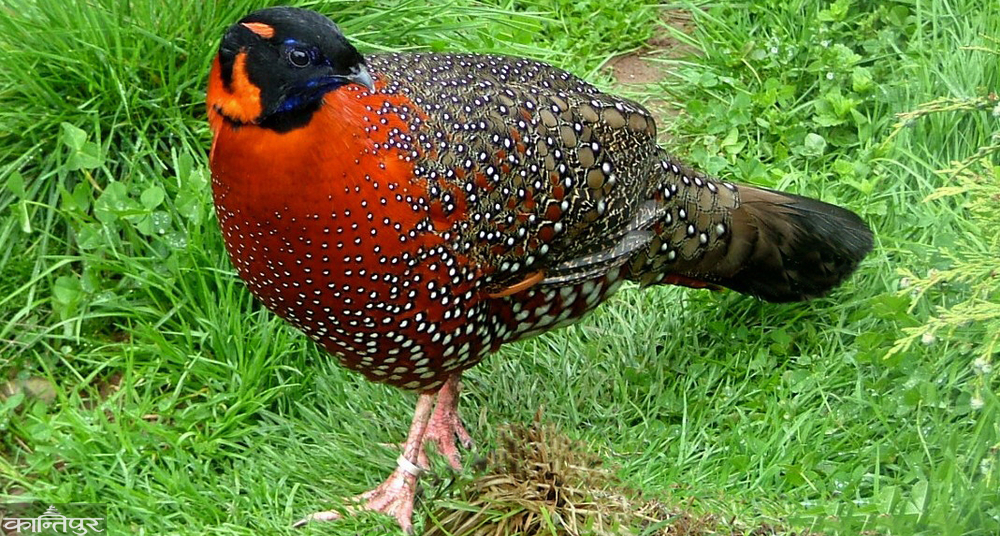 "The wildlife department has made a list of protected animals, birds, but more attention has been given to tigers and rhinos," says environmentalist Singh. Not only after the reduction, but also without reduction, we had to pay attention . This always keeps the bird population in good condition.'
Manshant Ghimire, the president of Pokhara Bird Society, says that the sound of Phokras, which regularly lives in Piper, is not heard this time and it is a challenge for Kalij conservation. He told that Munal was seen earlier on the Mardi Himal trekking route, but now he has not seen it. He said, "poaching is the main reason for the decline of the Kalij species, along with forest fires, dozer terror is another threat." He has experienced that due to the decrease in the number of birds in that area, it has not been possible to show it to foreign tourists who come for bird watching.
Since the beginning of Kalij conservation, the World Kalij Association has been investing in conservation education in Machhapuchhre Rural Municipality. ACAP chief Ravin Kadaria says that the number of Kalij should be increasing but it is a matter of concern that it keeps decreasing. He said that it is challenging to control illegal activities including poachers in the Annapurna conservation area. "ACAP has also paid more attention to agriculture and forest conservation," he said, accepting the weakness, "wildlife conservation and bird conservation have done less work."
Biocos in collaboration with ACAP is conducting mobile-based monitoring in the Piper area . Biocos has appointed an employee for monitoring. During monitoring, 18 traps were set in 2022. Director Singh of Biocos said that traps have been removed continuously since last year and more than 300 traps have been removed so far. Since last May, 40 camera trappings have been placed in Pipar area . Trail cameras are also being used to control poaching.
Environmentalist Dr. Parasvikram Singh (left) rescuing Munal caught in a trap during monitoring in Piper.
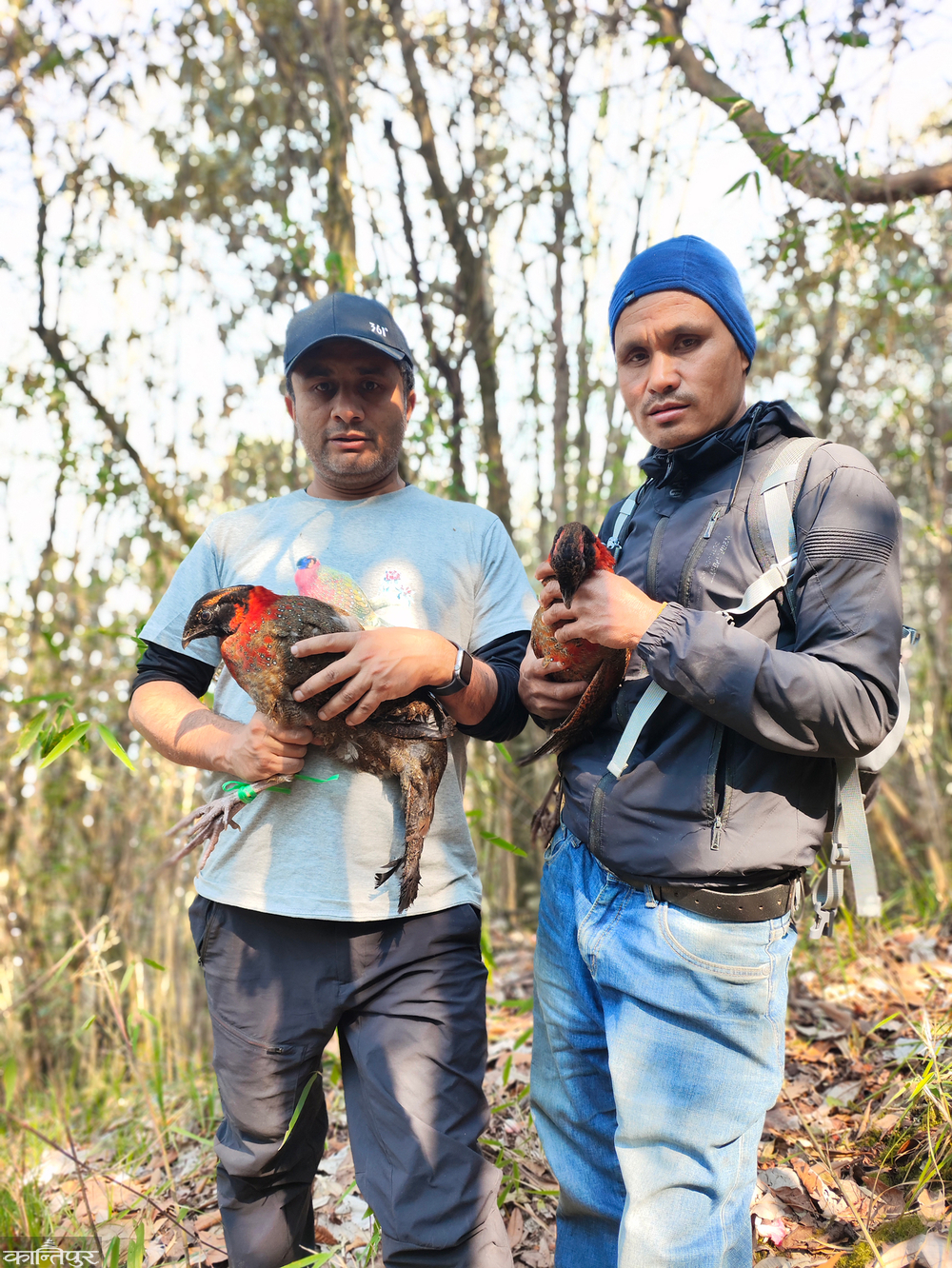 According to the laws of Nepal, hunting, transportation and trade of protected birds is completely prohibited. Section 26(4) of the National Parks and Wildlife Protection Act makes it a punishable offense to kill or injure a protected bird. In that section, there is a provision that the person involved in such acts may be fined between 15,000 to 30,000 rupees or imprisoned for a term of three months to nine months or both. Danfe, Munal and Chir are also included in the list of sites.
Spy cameras to stop poaching
The National Nature Conservation Fund is going to use technology to control illegal poaching of wildlife in the Annapurna Conservation Area. The fund has prepared to monitor by installing spy cameras in places where there is a possibility of theft.
According to the head of ACAP, Ravi Kadaria, the fund will install such 'spy cameras' in 10 locations in the first phase. After that, based on the effectiveness, the aim is to gradually expand to 50 places. "The plan is to place cameras in sensitive places to directly monitor the activities of wildlife and possible illegal activities," he said, "These cameras will capture photos and videos of people involved in illegal hunting and send them to the office immediately, which will facilitate the action process." "For the first time, we are applying such technology in the Annapurna region." After its success, there is a plan for further expansion," he said. The cameras to be used by the
fund will be powered by solar panels. They are equipped with a SIM card . Photos and videos will be broadcast live to the office through mobile network (4G). "This is a type of CC camera, which can be viewed 24 hours a day from the office," Kadaria said about the technology, "The live view from the camera helps greatly in the prevention and monitoring of theft." If someone tries to remove it or damage it, a notification with the photo of that person will immediately reach the office . All this information will be kept safe in the database of the fund and it is ensured that it cannot be accessed elsewhere . The currently used camera is imported from China. As
is an online system, you don't have to go to the field to receive information. Previously, during traditional camera trapping, data was available only after reaching the place where the camera was placed. But the online camera sends the incident information immediately via email or app . The
fund is planning to add artificial intelligence (AI) technology in the future. Preparations are being made to add AI for the purpose of notifying, sounding an alarm, and implementing an automatic identification system as soon as a special activity is seen. The fund expects that such technology will make wildlife conservation more effective in the Annapurna conservation area. Conservationists say that the use of technology is necessary to solve serious problems like wildlife poaching. It is expected that the use of spy cameras will discourage those involved in poaching and provide timely information to the relevant agencies to take necessary action. Dr. Parasvikram Singh, director of Biocos Nepal, says that Kalij has been calculated with the aim of making Khumai-Pipar, a main tourist destination in Nepal for observing different species of birds including khumai-pipar
. "Nowadays, even the students only look at the books". But you have to go to Khumai-Pipar to see Danfe," he said about the reason for conducting research on Danfe-Munal.
Traps found in Pipar area of Machhapuchhre rural municipality. Photo: John Corder/WPA
The Nepal Ornithologists Association provided ornithologists for the bird count. The president of the association, Hathan Mahato, was engaged in bird counting. He says that Peeper area is the best place for bird watching . "There is a lot of variety of birds in a small area," he says.
Birdlife International's Asia Partnership Manager Dr. Hum Gurung says that the Pipar area has immense potential in bird watching tourism. According to him, bird watching tourists spent 62.73 billion dollars in 2023. This expenditure is increasing by 6.2 percent every year.
'Birdwatching tourists spend three times more money and time than other tourists,' he said, 'In order to extend the tourist's stay and increase the local income, emphasis should be placed on bird tourism.' Manshant Ghimire, president of Pokhara Bird Society, says, 'Birds should be shown and eaten, not killed. It should be protected from now on to show the birds to future generations.'