Mention in Human Rights Commission investigation that Arjun Lama of Kavre was buried alive on Sapkota's direct order
We use Google Cloud Translation Services. Google requires we provide the following disclaimer relating to use of this service:
This service may contain translations powered by Google. Google disclaims all warranties related to the translations, expressed or implied, including any warranties of accuracy, reliability, and any implied warranties of merchantability, fitness for a particular purpose, and noninfringement.
The Supreme Court has ordered the government to investigate the kidnapping and murder charges against former Speaker and Maoist Vice President Agni Sapkota. Sapkota is accused of killing Arjun Lama of Kavre in 2062.
The Constitutional Bench of Chief Justice Prakashman Singh Raut, Senior Justice Sapna Malla Pradhan and Justices Kumar Regmi, Manoj Kumar Sharma and Kumar Chudal has asked for an investigation into the death case after final hearing on 3 writs filed against Sapkota on different dates.
Arjun's wife Purnamaya Lama filed a complaint at District Police Office Kavre, but the police refused to register the case saying that the conflict-time case would be considered under transitional justice. Purnamaya filed a petition in the Supreme Court on February 2, 2064 against the decision of the police.
In July 2065, the Supreme Court annulled the decision of the police to lodge a complaint saying that it was beyond jurisdiction. A complaint was registered against Sapkota and 6 people on 26th July 2065 after a dharna was started at Purnamaya Police Office showing the same order. An arrest warrant was issued against Sapkota after the case was registered. There was a public debate on whether transitional justice should proceed according to the criminal law.
Sapkota became Minister of Information and Communication on 21 Baisakh 2068 when Jhalnath Khanal was the Prime Minister. Journalist Kanakmani Dixit and human rights activists Sushil Pyakurel, Kapil Shrestha, Subodh Pyakurel, Charan Prasain, Mandira Sharma, Sunilranjan Singh and Gopalkrishna Sivakoti filed a petition in the Supreme Court demanding that the Minister should be dismissed, saying that it is against the rule of law to make a person who should be tried for murder. The then Prime Minister Khanal and the then Home Minister Krishna Bahadur Mahara were also made opponents for expressing the need to withdraw the conflict-time issue.
The bench of Judge Ramkumar Prasad Sah and Prakash Wasti heard the petition on 7 June 2068 and ordered that an interim order cannot be issued against Sapkota saying that no one can be removed from carrying out public responsibilities based on the filing of a complaint in Nepal's legal system. Although the interim order against Sapkota was not issued as per the request of the petitioner, the Supreme Court raised serious questions about the delay of the police in investigating Purnamaya Lama's complaint and gave an injunction to the government.
It was said in the mandate, "Since the court cannot remain indifferent to the concept of the supremacy of the rule of law, the basic value and recognition of human rights, impunity and the concept of justice for the victim, the investigation will continue in accordance with the prevailing law in the duty-death case registered from Purnamaya Lama's complaint, and every 15 days until the writ petition is finally decided, if there is any influence, pressure and non-cooperation during the investigation, the details of the same will be presented to this court through the office of the Attorney General." Will do.'
Baburam Bhattarai government withdrew the case of Sapkota on 12 July 2069. Against this, Purnamaya filed a writ in the Supreme Court on 7 November 2069, insisting that the decision of the Council of Ministers to withdraw the case of Sapkota and the decision of the police to keep the complaint in Tameli should be annulled.
While these two writs were pending, Sapkota became the Forest and Environment Minister on behalf of the Maoists in 2072. Against that too, human rights activists including Kanakamani Dixit filed a petition and demanded that the convicts in the death case be dismissed from the minister and tried in the District Court Kavre.
Sapkota became the Speaker of the Federal Parliament in January 2076 while these three cases were going on. The order came on Wednesday in the 36th Paci in the case against Sapkota, which has been pending in the Supreme Court for a long time.
Purnamaya's writ has been issued, but the other two writs of the human rights activist have been dismissed. "Even if only one writ has been issued, our demand has been fulfilled," said Dixit, one of the petitioners, "This is an important decision of the court in favor of the victims and against impunity." "The victims were frustrated when the case that had already gone through the criminal justice process was being entangled by showing an unformed commission," says Mandira Sharma, South Asia Director of the ICJ and a human rights advocate. "The court has only issued a writ, no written order has been given," said Sapkota. Lama was abducted by the Maoists on 16 Baisakh 2062 from the premises of Sri Krishna Mavi in Chhatrebanj, Kavre. On that day, Lama was elected as the chairman of the management committee of the school.
At the same time, Maoist activists Yadav Poudel 'Rakki', Bhola Aryal and Karnakhar Gautam mentioned in Purnamaya's report that Lama was kidnapped. After the kidnapping, Lama was taken to Maoist's military training center in Bundakhani gavis of Kavre, according to the National Human Rights Commission's investigation.
According to Purnamaya, Maoist activist Norbu Moktan introduced Lama to Maoist Central Committee member Agni Sapkota. Sushil Pyakurel, the then commissioner of the Human Rights Commission, said that he was subjected to extreme torture.
The Commission's investigation has shown that the Lama was buried alive by the direct order of Sapkota to dig his own grave. According to the commission, after being kidnapped on 16 Baisakh 2062, the Maoists kept him captive for 47 days.
I can't say anything without the full text: Sapkota
Did you get a court order to investigate the murder case?
The order has not been written, the full text is required to form an opinion about the order. I can only tell when it comes. But what I think is that the part that has been hyped outside is not worth it in the same way.
The writ has been issued, the issuance of the writ means that the court agrees with the petitioner's demand. Isn't the release of the writ petitioner's demand a reversal of the Baburam government's decision not to investigate the death case against you?
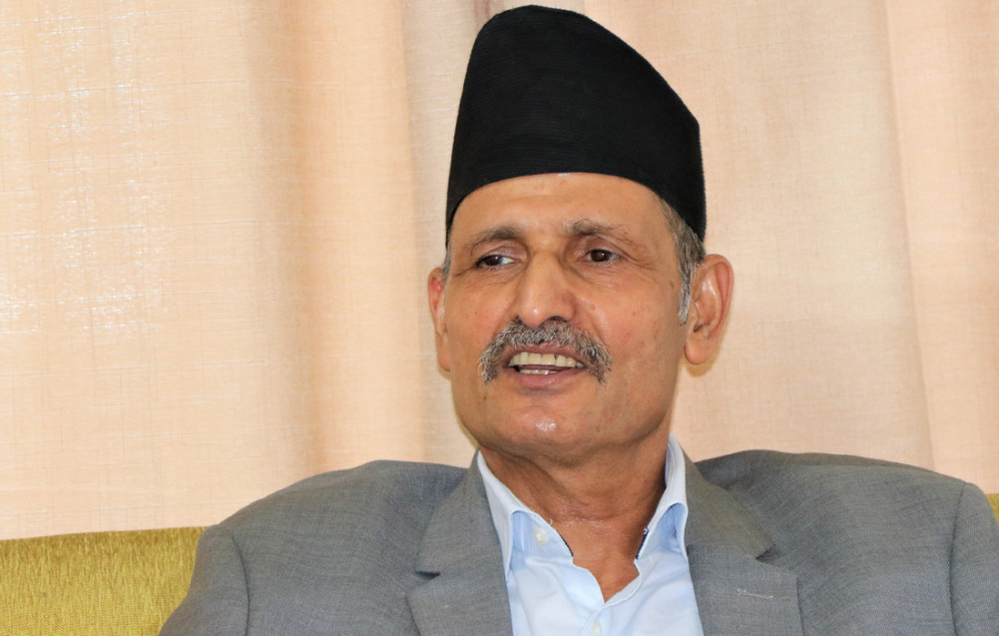
That's it. However, I think that the police investigation is definitely not as per the news. For that, the court order should be read in writing.
So, what is the meaning of ordering the court to investigate?
truth commissions have been formed, which can also lead to investigations. So what I say with special emphasis, I cannot say anything without seeing the full text.
Was it expected that the writ would be issued like this?
I don't think it's necessary to say that. One should not even comment on the court order without understanding the matter.

