At least 31 people, including 10 family members of Jaish-e-Mohammed founder and commander Masood Azhar, were killed in the attack.
We use Google Cloud Translation Services. Google requires we provide the following disclaimer relating to use of this service:
This service may contain translations powered by Google. Google disclaims all warranties related to the translations, expressed or implied, including any warranties of accuracy, reliability, and any implied warranties of merchantability, fitness for a particular purpose, and noninfringement.
Two weeks after terrorist attacks on tourists in Indian-administered Kashmir, India has carried out a series of airstrikes in various locations in Pakistan and Pakistan-administered Kashmir. At least 31 people were killed in the attack by the Indian Army. Soon after, 15 people were killed in the shelling by the Pakistani army.
The Indian Ministry of Defense has announced that 'Operation Sindoor' was launched on Wednesday morning as part of its commitment to hold accountable the attackers who killed 26 tourists in Pahalgam on 22 April.
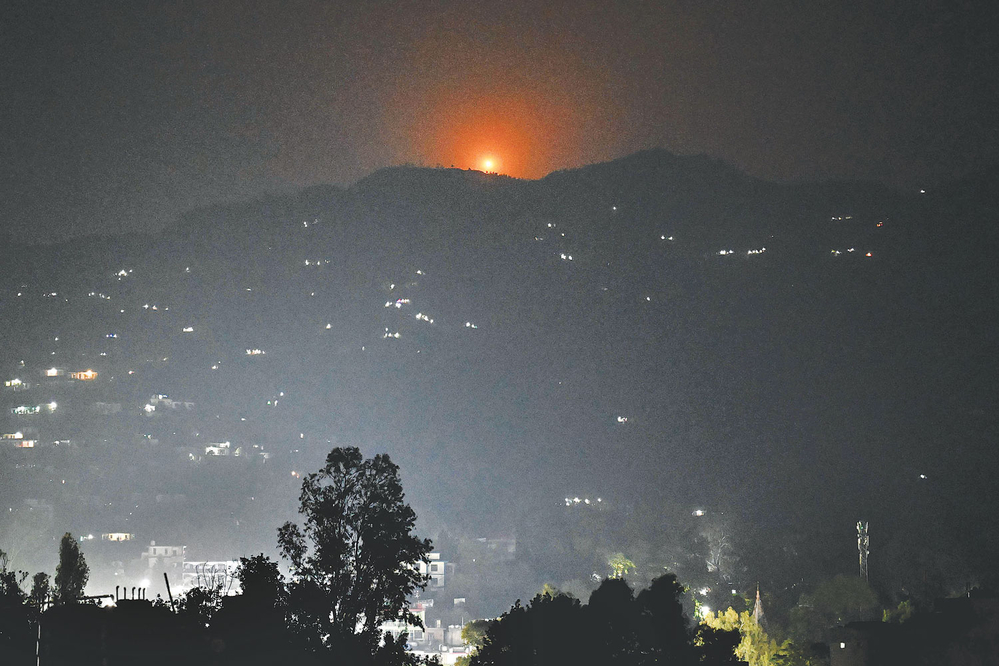
In a press conference held in New Delhi on Wednesday, Foreign Secretary Vikram Misri, Colonel Sophia Qureshi and Wing Commander Vyomika Singh announced the details of the operation. According to them, the Indian Army attacked from 1:05 am to 25:00 am on Wednesday. India claims that 'terrorist structures' in 9 locations in Pakistan have been targeted.
Main structures of Lashkar-e-Taiba, Jaish-e-Mohammed and Hizbul Mujahideen were targeted. According to Wing Commander Singh of the Indian Army, air strikes were carried out on Sawai Nallah and Sedhana Bilal camps in Muzaffarabad, Markaz Abbas and Maskar Raheel Shahid Gulpur camps in Kotli and Markaz Ahl Hadith in Bhimber. Sialkot-based Sarijal and Mehmuna Zoya camps, Bahawalpur-based Markaz Subhan Allah and Muridke camps were also targeted by the Indian Army.
Muzaffarabad is the capital of Pakistan-administered Kashmir. Kotli and Bhimber are located near the Line of Control (LoC) between India and Pakistan. Sialkot, which is 48 km from Kashmir, and Shakargarh, which is 115 km away, are cities in Punjab province.
Bahawalpur and Muridke in Punjab province are at a distance of 557 and 192 km respectively. "In direct retaliation to the Pahalgam attack, 9 terrorist camps were targeted and all of them were destroyed," said Singh. Pakistan's military spokesman, Lt. Gen. Ahmed Sharif Choudhary, confirmed that at least 31 people were killed and 57 injured in the attack by Indian forces.
Indian media including BBC Hindi reported that at least 15 people were killed and 32 people were injured when the Pakistani army opened fire after the Indian attack. According to the Indian Army, all those killed are from Poonch district of Indian-administered Kashmir. The tail is near the LoC.
Pakistan Army claims to have shot down five Indian aircraft and one drone. But it has not been confirmed. India has not responded to Pakistan's claim.
14 people including 10 family members of Jaish-e-Mohammed founder and commander Masood Azhar were killed in the Indian attack. They were killed in an attack by India on the Subhan Allah Mosque in Bahawalpur, Pakistan.
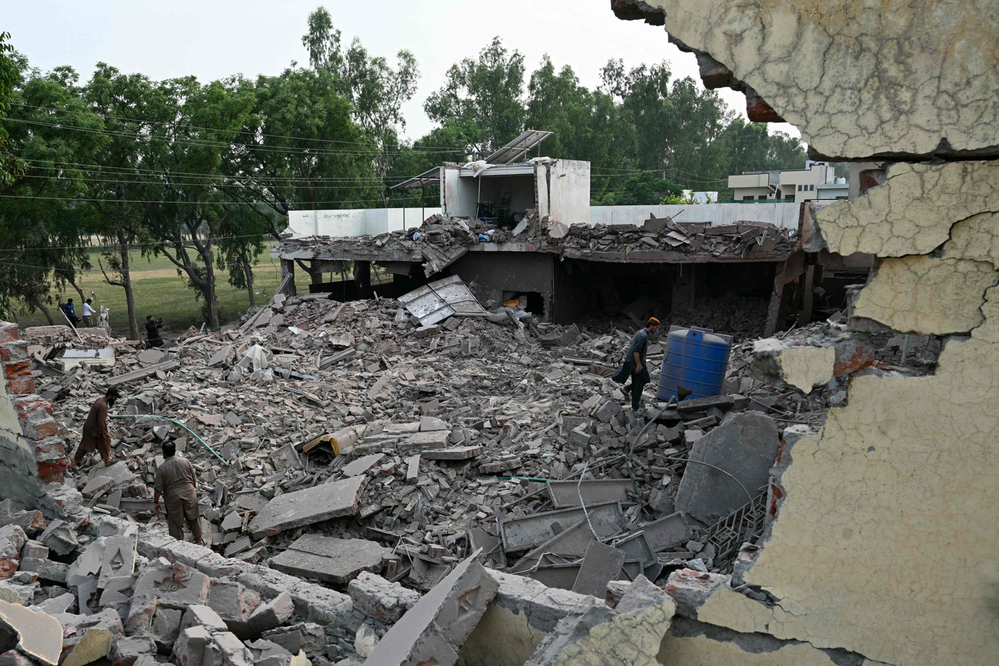
According to a statement issued by Jaish-e-Mohammed on Wednesday, Azhar's sister and brother, nephew and his wife, a niece and five children of his family were killed. According to Jais-e-Mohammed, three of their aides and the mother of one aide were also killed in the attack. Jaish-e-Mohammed killed 40 soldiers in a suicide bombing in Indian-administered Kashmir in February 2019.
Wing Commander Singh of the Indian Army said that "Operation Sindoor" was launched based on reliable intelligence information to prevent damage to civilian lives and infrastructure. Indian officials have been claiming that Pakistan Army and ISI have mobilized a special service group to train 'terrorists' in those locations.
Indian Prime Minister Narendra Modi has praised the Indian Armed Forces for conducting 'Operation Sindoor'. After the Pahalgam incident, Modi had warned the assailants not to leave, no matter where they go on earth. A few hours after the launch of 'Operation Sindoor', Defense Minister Rajnath Singh informed about the attack in the cabinet meeting. Then all the members of the cabinet welcomed the attack.
According to local media, Defense Minister Singh also discussed air strikes with the chiefs of land, sea and air forces. Indian Home Minister Amit Shah also held a meeting with the Chief Ministers, Chief Secretaries and top police officers of the border states. Chief Ministers of Punjab, Rajasthan, Gujarat, Uttarakhand, Uttar Pradesh, Bihar, Sikkim, West Bengal and Lt. Governors of Union-administered Ladakh, Jammu and Kashmir were present in the meeting.
In a press conference, India's foreign secretary Bikram Misri said that the attack was on Pakistan and Pakistan's "terrorist hotbeds" in "exercising its right to respond to and counter attacks from across the border". "The terrorist attack two weeks ago was motivated by the intention to affect normal life in Indian-administered Kashmir," he said.
Noting that more than 22.5 million tourists visited Indian-administered Kashmir last year, Misri claimed that a terrorist attack was carried out two weeks ago in Pahalgam to destroy the tourism sector, which is the mainstay of the local economy. He also accused Pakistan of not taking any steps to destroy the 'terrorist infrastructure'. Misri said that 'The Resistance Front' (TRF) was involved in the Pahalgam attack and was a front of the Pakistan-based terrorist group Lashkar-e-Taiba.
In the Pahalgam incident, the Indian police alleged that the two attackers were Pakistani nationals and that Pakistan had supported them. Pakistan has been saying that it has no involvement in the Pahalgam terrorist attack.
India's main opposition Congress leader Mallikarjun Khadge has also supported 'Operation Sindoor'. "National unity and solidarity is the need of the hour," he said, "After last month's attack on Indian-administered Kashmir, the Congress party has clearly stood with the armed forces and the government in any decisive action against cross-border terrorism." All India Majlis-e-Ittehadul Muslimeen (AIMIM) chief Asaduddin Owaisi also welcomed India's attack on "Pakistani terrorist camps".
Jammu and Kashmir Chief Minister Omar Abdullah has responded that no one in the region wants war between the two countries. "But Islamabad is responsible for reducing the number of guns," he said. He said that the Indian government has chosen the right method to give a suitable response to the terrorist attack in Pahalgam. “The strikes were only on terrorist sites in Pakistan, not on military areas or civilian infrastructure. But Pakistan has bombed some areas and our citizens are being targeted there,” he said. He has also assured not to panic the people of Kashmir.
India's major airline companies have stopped service at airports in northern India from Wednesday. Air India has announced that flights to Jammu and Srinagar in Indian-administered Kashmir, Leh in federally-administered Ladakh, Jodhpur in Rajasthan state, Chandigarh and Amritsar in Punjab state and Bhuj, Jamnagar and Rajkot in Gujarat state have been canceled till May 10 (Saturday) morning.
IndiGo has also canceled several flights to northern cities. Apart from the airports listed by Air India, IndiGo has also canceled flights to Dharamsala in Himachal Pradesh, Bikaner and Kisangarh in Rajasthan and Gwalior in Madhya Pradesh. SpiceJet has said that flights to that airport have been affected.
Pakistan's Prime Minister Sehbaz Sharif has described Wednesday's attack as "cowardly". Pakistan's Defense Minister Khawaja Asif has said that India's claim of targeting terrorist camps is false. He says that India has attacked civilians.
Pakistan's Ministry of Foreign Affairs issued a statement saying that civilians were killed in the attack by India, including women and children. "Such reckless behavior poses a serious threat to regional peace and stability," the statement said. Pakistan has expressed its displeasure by summoning the deputy head of the Indian diplomatic mission in Islamabad.
Pakistan's National Security Committee has condemned the Indian airstrike as a 'heinous crime'. The committee concluded that India has invaded Pakistan's sovereignty. Citing Article 51 of the United Nations Charter, Pakistan has warned that it has the right to defend itself.
The meeting of the committee chaired by Prime Minister Sharif said that Pakistan's military forces have been authorized to take retaliatory action. The Pakistani Prime Minister's office also said that the armed forces have been given the authority to take related actions.
The Pakistan People's Party (PPP) has condemned the attack by India. Bilawal Bhutto, the son of Pakistani President Asif Ali Zardari, is the leader of PPP, one of the three major political parties in Pakistan.
US President Donald Trump has also expressed concern over the attack. I think people knew that something was happening based on past events. "They have been fighting for a long time," he said, adding, "I hope it ends soon."
Commenting India's actions as 'regrettable', China has called for restraint on both sides. "China regrets India's military action this morning (Wednesday) and is concerned about the current development situation. China opposes all forms of terrorism," said a statement released by the Chinese Foreign Ministry. "We call on both India and Pakistan to give priority to peace and stability, remain calm and restrained, and avoid actions that further complicate the situation."
China is by far the largest investor in Pakistan. The $65 billion China-Pakistan Economic Corridor project with Chinese investment has spread across the country. There are many border disputes between China and India. One of them is in the northeastern part of the Kashmir region. Britain has urged Pakistan and India to negotiate with each other.
Prime Minister Keir Starmer has said that Britain is in contact with both countries to reduce tensions and protect citizens. Foreign Minister David Lammy said that India and Pakistan have been asked to engage in direct talks to show restraint and find a fast diplomatic route. Mentioning that there are millions of citizens of Indian or Pakistani origin in Britain, he said, "I have made it clear to my counterparts in India and Pakistan that if this escalates, no one will win."
Russia has also called upon both India and Pakistan to exercise restraint, according to news agency AFP. French Foreign Minister Jean-Noel Barrot has also called on Delhi and Islamabad to exercise restraint.
Since the Pahalgam attack, both India and Pakistan have announced various measures to retaliate against each other. They have taken measures including closing borders, canceling visas, expelling diplomats and suspending the Indus River Treaty. In the border area, the armies of both sides have also exchanged fire.
India and Pakistan, divided since independence from the British colony in 1947, have fought many wars. Most of them were concentrated in Kashmir. The first war broke out within months of partition between the two countries, which ended in 1949 with the mediation of the United Nations. It divided the Kashmir region but both countries did not give up their full claim on Kashmir.
In 1965, after the Pakistani army entered Indian-administered Kashmir, the two countries again went to war. At that time there were ground and air strikes. In 1971, war broke out in East Pakistan. India supported the freedom fighters there and eventually Bangladesh was established. In the Kargil War of 1999, Pakistani forces invaded Indian-administered Kashmir.
In recent years, tensions have been rising due to terrorist attacks. After the 2016 Uri attack, India launched a 'surgical strike'. After the Pulwama blasts in 2019, India carried out airstrikes near Balakot. After Pakistan also retaliated with air strikes, the tension between the two countries reached a dangerous level after Kargil.

