Self-righteousness, connecting with the lower class, vandalizing the Oli government
We use Google Cloud Translation Services. Google requires we provide the following disclaimer relating to use of this service:
This service may contain translations powered by Google. Google disclaims all warranties related to the translations, expressed or implied, including any warranties of accuracy, reliability, and any implied warranties of merchantability, fitness for a particular purpose, and noninfringement.
Maoist President Pushpa Kamal Dahal himself led the 45-day long march of the 'Maoist Terai-Madhesh Awakening Campaign with the People'. During this campaign, he mainly tried to convey three messages – First, we will correct the mistakes of the past. Second, the party leading the lower class is Maoist. And thirdly, the government led by UML president KP Sharma Oli is not in favor of good governance.
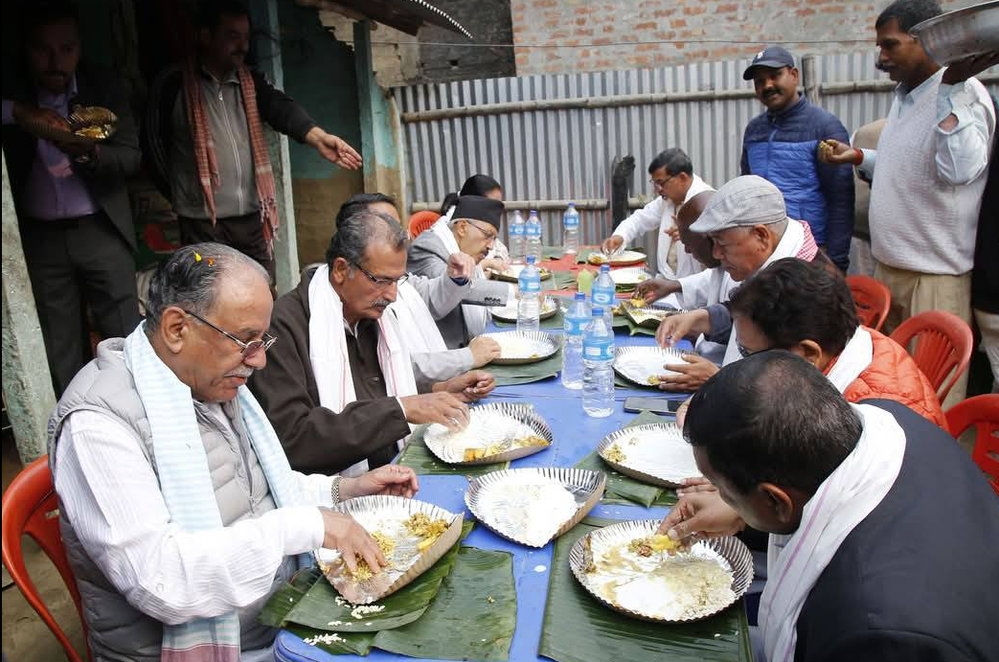
With this message, Dahal concluded the Maoist Hulaki highway focused campaign which started from Kachankawal in Jhapa and held a meeting in Mahendranagar border area of Kanchanpur. While walking on the campaign, he ate according to the place and tried to get closer by wearing the clothes of that place.
During the political trip, he continued to walk in the morning at the place where he stayed at the local's house . He also interacted with the locals while drinking tea. He used to eat on the basis of the daily 'menu' at the Khumaltar residence in Lalitpur, eating, sitting and meeting with the locals 'anyway'.
The Maoist, who had previously been speaking on one side, heard the complaints of the people living near Hulaki Highway this time. In particular, President Dahal listened to the complaints and suggestions of the locals from morning to evening and addressed about 100 meetings in 20 districts . His main focus in his
speech was criticism of UML President KP Sharma Oli's government, self-criticism for the Maoist alliance with UML and Congress in the past and he promised to correct the past mistakes .
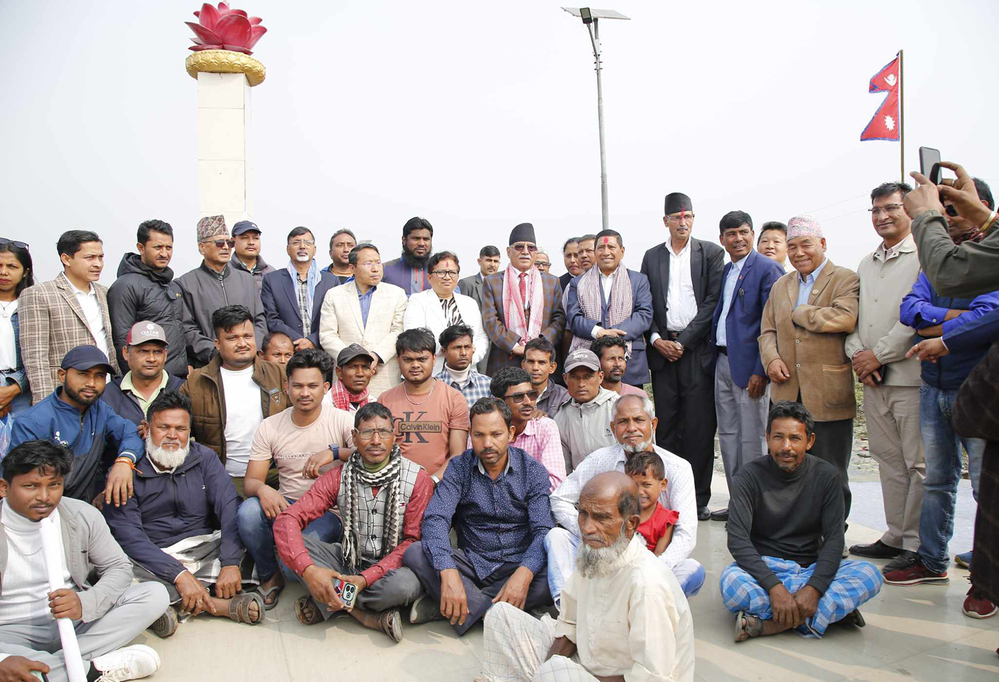
Concluding the Hulaki highway focused campaign, Dahal claimed on Wednesday that he has directly/indirectly interacted with one crore people of Terai-Madhesh. He said that the postal highway campaign near the Nepal-India border has created a strong sense of national unity.
'This campaign has created the foundation of unprecedented national unity . The basis of the economic revolution has been prepared . "It has added a new dimension," he said, "We have gained energy from this campaign." Eat with the people, sit with them . We cried and laughed along with the family of the missing martyrs.'
According to the Maoist Vice President Agni Prasad Sapkota, who went throughout the campaign, six meetings and interactions were held in 20 districts of Terai Madhesh every day from morning to night.
'The most important achievement of the campaign has been strengthening national unity. There was discussion and interaction with the oppressed people of caste, language, minority, Dalit' he said, 'This campaign has been a multifaceted achievement in terms of political, economic, cultural and geographical.' There he has tried to build the base of the party organization. Especially with the oppressed, Dalit, discriminated border citizens living around the Hulaki highway, it is trying to convey the message of being a Maoist.
Chairman Dahal reached the houses of the families and injured of those who were killed, disappeared during the Maoist armed war and promised to get justice and compensation according to the law of transitional justice.
"There was an emotional and lively discussion with the martyrs, the missing, the injured" Spokesperson Sapkota said, "They kept their pain openly". This interaction took us to an emotional high . Sometimes we cried, sometimes we were excited.'
Maoist during this trip, the locals of 20 districts gave memorandums and certificates. The Maoists are preparing to study it and prepare a document. "We have received enough memorandums to fill a room." We will make it a document, he said .
Maoists have interacted with representatives of other political parties, professors, teachers, businessmen, intellectuals, farmers, workers, minority communities during the campaign. According to Sapkota, the locals have more problems related to development and construction.
'There are complaints that the work is not completed on time, the central government does not support the local government, the state government also ignores it', he said, 'They complained about caste and gender discrimination in some places . Many women complained of being subjected to violence. During the
campaign, the Maoist said that he got to know the psychology, desires and complaints of the local people well. "There was an opportunity to study and explore to build the foundation of socialism." What are the people thinking, what is the state of mind of the people? Sapkota told his experience, "The main thing is that the people poured out their pain". We listened patiently. Let's make a commitment to implement it as much as possible.'
It is the understanding of the Maoists that the local people criticized themselves saying that it is a weakness to make a right-left alliance. "Spiritual criticism along with a serious review of the past made everyone positive." From this we know . Self review is of great importance. We kept our shortcomings clearly'' is the experience of spokesperson Sapkota, 'We felt recharged when we discussed with everyone.'
He says that the mass communication of every morning walk is interesting. We never missed a morning walk throughout the campaign. This public dialogue was of a qualitative type,' he said. He criticized and questioned us sharply. We got an opportunity to give a clear answer.'
President Dahal said during the conclusion that the national sentiment of the residents of the Nepal-India border area was strong. "We found that the residents of the education sector have a strong sense of patriotism and nationalism," he said. We have resolved to create a new Nepal with new conclusions after self-review. If you give a generous hand, the journey of socialism will be completed by completing the new economy.'