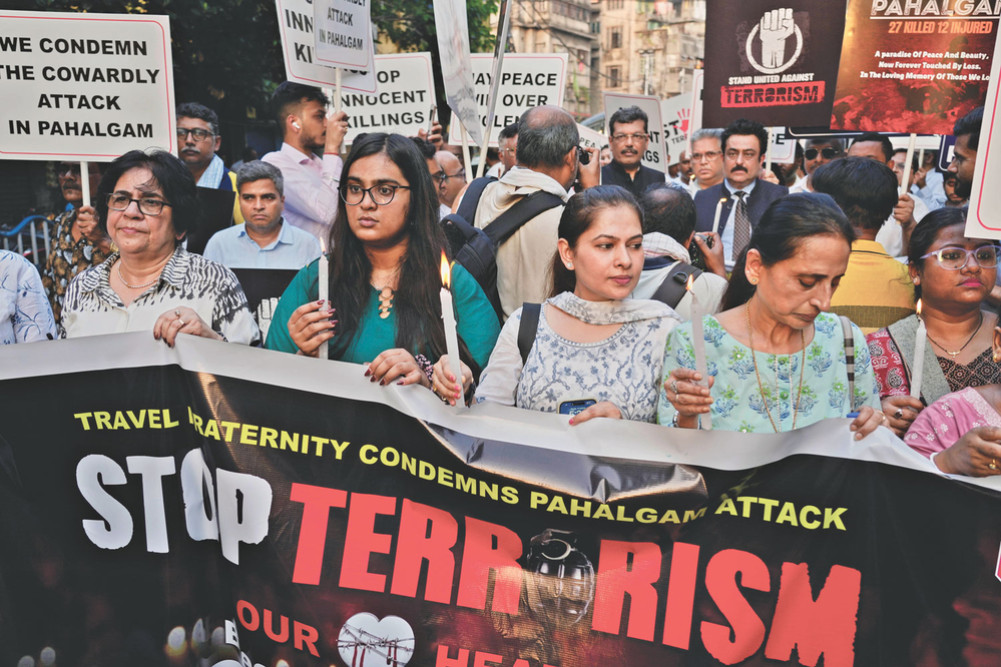
India has suspended the Indus Water Treaty with Pakistan and Pakistan has responded by suspending trade, air flights and all bilateral agreements with India.
We use Google Cloud Translation Services. Google requires we provide the following disclaimer relating to use of this service:
This service may contain translations powered by Google. Google disclaims all warranties related to the translations, expressed or implied, including any warranties of accuracy, reliability, and any implied warranties of merchantability, fitness for a particular purpose, and noninfringement.
After the terrorist attack in Pahalgam in Jammu-Kashmir last Tuesday, the tension between India and Pakistan has increased. A hint of tension has been seen in the air and water between the two countries. India has suspended the Indus Water Treaty with Pakistan and in response, Pakistan has also suspended all bilateral trade agreements with India.
In addition, Pakistan has also decided to close its airspace to all Indian-owned or Indian-operated airlines.
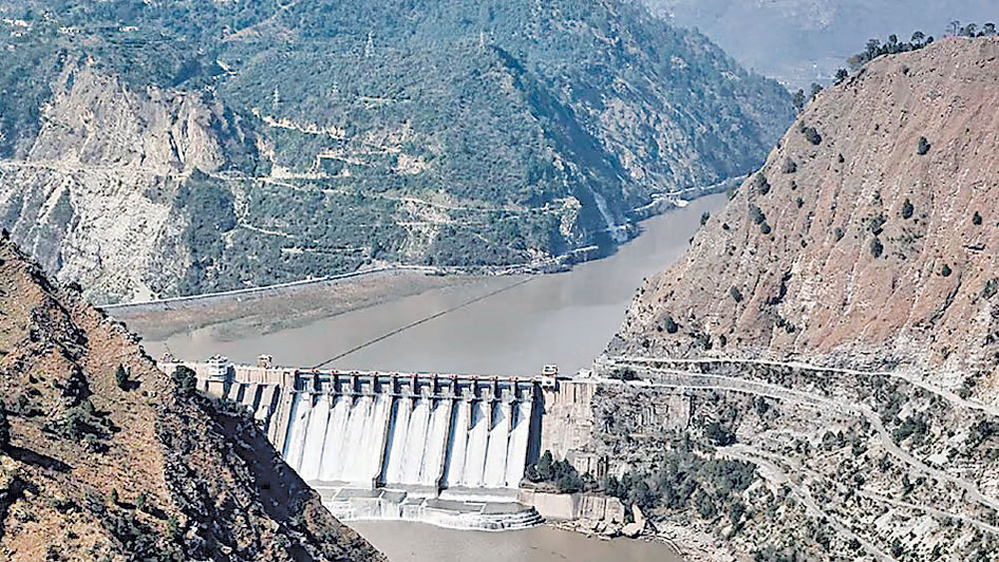
The Security Affairs Committee meeting of the Council of Ministers chaired by Indian Prime Minister Narendra Modi on Wednesday decided to suspend the Indus Water Treaty with Pakistan. The Indus Water Treaty of 1960 between India and Pakistan is seen as a successful international treaty. The treaty was not affected even though there were repeated wars between the two countries. Which has been broken after the Pahalgam attack this time.
Under the Indus Water Treaty, India was given rights to the waters of the Beas, Ravi and Sutlej rivers, while Pakistan was given rights to the waters of the three western rivers, the Indus, the Chenab and the Jhelum. However, under this treaty, India has 20 percent of the waters of Indus, Chenab, Jhelum. India has suspended the Indus Water Treaty while Pakistan is already facing water crisis.
The suspension of the Indus Treaty has also put Pakistan's plan to build six new canals in the Indus and Punjab provinces into crisis. Although India has politically suspended the Indus Strait, stopping the flow of water is technically challenging. It may take years to stop the 'diversion' of the river and rebuild the dam. Stopping the flow of the river will increase the risk of floods and natural disasters in Indian land, say the technicians.
Pakistan has protested India's suspension of the implementation of the Indus Water Treaty and has warned that any attempt to stop or divert water will be considered an act of war and will be responded to with full national force. "Pakistan and its armed forces are fully capable and ready to defend their sovereignty and territorial integrity," said a statement released by Prime Minister Shehbaz Sharif's office after a meeting of Pakistan's National Security Committee.
Claiming that Pakistan is involved in the terrorist attack, India has taken five-point diplomatic steps on Wednesday. Announcing the decisions taken at the meeting, Indian Foreign Secretary Vikram Mishri said that the Indus Water Treaty has been postponed with immediate effect. said, "India will not implement it and will not be forced to implement it until Pakistan provides proof that it has stopped supporting cross-border terrorism."
India said:
Pakistan has strongly criticized the Indian decision. Pakistan says the Indian decision is "one-sided, unjust, politically motivated, highly irresponsible and without legal merit". In a statement issued by Prime Minister Sharif's office, India's attempt to link the Pahalgam attack to Pakistan 'without any credible investigation and evidence' is 'futile, irrational and a defeated argument'.
Former Additional Indus Water Commissioner Shiraj Memon told BBC Urdu claiming that even though India has announced that it will stop the implementation of this agreement now, it has practically stopped its implementation for almost four years.
Commenting that India has not organized the annual meeting of water commissioners for the past four years and has not provided reliable data on river water, Memon adds, 'India is giving only 30 to 40 percent of river water data, and the rest is being sent by writing 'Neel' or 'Nonabsorbent'.
After the terrorist attack in Pahalgam in which 27 people lost their lives, India has also ordered the Pakistani diplomat to leave the country, considering him as persona non grata. Similarly, the visa exemption scheme that is being received as a SAARC member country has also been stopped and Pakistani citizens in India have been asked to leave India within 48 hours. In response, Pakistan has also suspended trade, air flights and all bilateral agreements with India.
In response to India's latest move, Pakistan has also suspended all visas issued to Indian citizens under the SAARC Visa Waiver Scheme. The number of diplomats at the Indian High Commission in Islamabad has been reduced to 30. Indian Defense, Naval and Air Advisers have been ordered to leave Pakistan before April 30.
After the Pahalgam incident, India has ordered the diplomats of the Pakistan Embassy in New Delhi to leave the country within 7 days, declaring them as 'persona non grata'. Similarly, it has decided to recall its Defense, Navy and Air Force advisers in the Indian Embassy in Islamabad, the capital of Pakistan.
The visa exemption scheme that Pakistani citizens are getting as a member of SAARC countries has also been stopped. Pakistani nationals in India under SAARC visa exemption have been asked to leave India within 48 hours.
India's claim that the two attackers were Pakistani
India has said that two of the Pahalgam attack attackers were Pakistani. The Anantnag District Police in Jammu and Kashmir has issued a notice mentioning the names of three of the four gunmen involved in the attack.
"Two of the three people are Pakistani nationals and the third is a local of Anantnag," the notice said, "There is no information about the fourth attacker yet."
Indian police said all three were members of Pakistan-based terrorist group Lashkar-e-Taiba (LeT). But none of them have commented on the claims of the Indian police so far. But Pakistan has said that it has no role in the Pahalgam attack and that it is India's domestic problem. According to the BBC, citing police sources, around 1,500 people have been detained across Kashmir for investigation and questioning.
Modi's warning not to spare attackers
Indian Prime Minister Narendra Modi has warned that those involved in the terrorist attack in Pahalgam of Jammu and Kashmir will not leave even if they go to any corner of the world. "I tell the whole world, India will identify, pursue and punish every terrorist and their supporters," Modi said in his first speech after the attack, "We will find them in every corner of the earth."
Speaking at the inauguration of a development project in the state of Bihar, Modi said those who plan the attack and mitigate the incident will be punished beyond their imagination. They will surely pay the penalty for it. The will power of 1.4 billion Indians will break the backbone of these terrorists.
terrorism will be punished," he said. Modi says that he will make every effort to ensure justice. Terrorists attacked Baisran Valley, known as 'Mini Switzerland', near Pahalgam on Tuesday. 27 people died in the attack, including Sudeep Neupane, a youth from Butwal. According to the Indian media, 17 people were injured in the incident.
The Resistance Front (TRF), a shadow organization of the banned Pakistani insurgent group Lashkar-e-Taiba (LeT), claimed responsibility for the attack. Although the insurgency has been going on for three and a half decades in the Muslim-majority region of Jammu and Kashmir, there has been a slight decrease in the number of attacks in recent years.
India has been claiming that the security situation in Jammu and Kashmir has improved and violence has decreased since Kashmir's partial autonomy was revoked in 2019. But incidents of violence have been happening. The last time there was an attack on civilians in June 2024. 9 people were killed when an armed group opened fire on a bus carrying Hindus. India has been promoting areas including Pahalgam in Jammu and Kashmir among domestic and foreign tourists for the last few years.
–