Bajaha Sagar is one of the best wetlands in Nepal and India. Around this place, there is a fascinating movement of storks. The most storks are seen there in Nepal. It is always seen in the number of 100 to 150.
We use Google Cloud Translation Services. Google requires we provide the following disclaimer relating to use of this service:
This service may contain translations powered by Google. Google disclaims all warranties related to the translations, expressed or implied, including any warranties of accuracy, reliability, and any implied warranties of merchantability, fitness for a particular purpose, and noninfringement.
An initiative has been started to make Bajaha Sagar located on the border of Nepal and India a Ramsar region (World Wetlands). For this, the officials of the two countries have started the discussion after observing the site and proceeded with the work.
Bajaha Sagar is the best wetland area of both the countries. Around here, the world's most beautiful bird, the stork, is seen enticing. The most storks are seen there in Nepal . It is always seen in the number of one hundred to one and a half hundred . Between 200 and 250 storks are seen in May and June during the breeding season. They live in Dasgaja and border areas. Sometimes they live in Nepal, sometimes in India. However, there are good wetland areas towards Nepal and most of them live towards Nepal.
Bajaha Sea is fertile ground for storks in both countries. Ornithologists are very excited to see the number of storks. "The landscaping of this place is good," said Rajendra Suwal, Head of Partnership Program of WWF Nepal. Nobody kills .
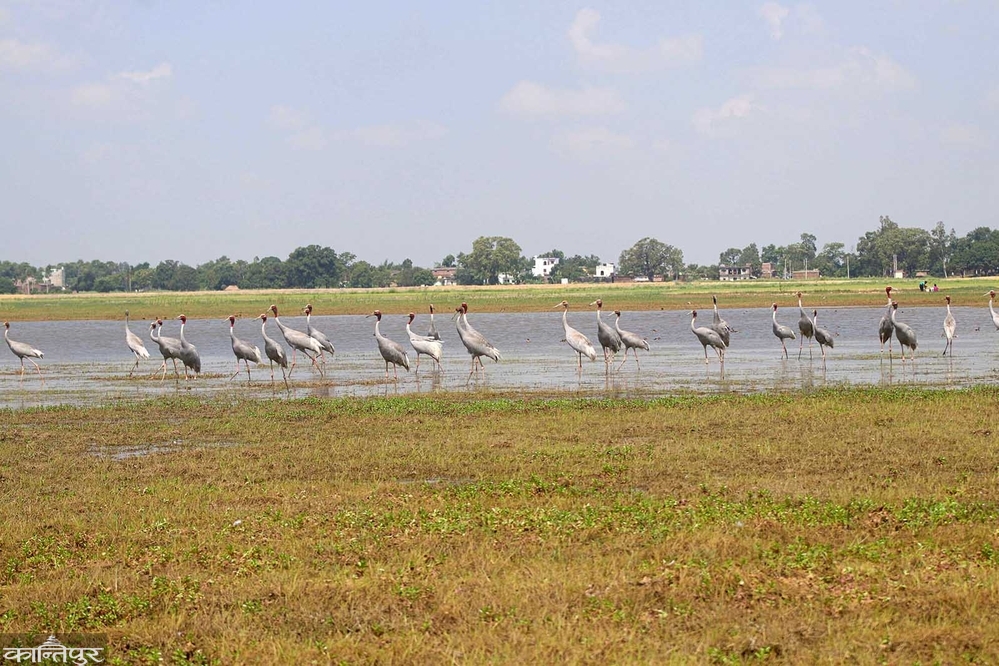
Suwal said that after learning that there are plenty of storks in Bajaha from Kantipur, they started planning how to protect it and make it a tourist destination. He said, 'It's about the border area . It has a different geographical situation. There is a lot of potential for tourism. A country can't just want to . For that both the countries have to agree. It's hard work.'
However, since it will be new and the first for South Asia, the International Crane Foundation, America's Vice President of the Asia Program, who has run the campaign. Mahendra Shrestha said. "There is no single Ramsar site of two countries anywhere in South Asia," he said, "If the campaign succeeds, there will be new history." That's why we have fallen for it. 3/3 of Hungary and Slovakia and Bulgaria and Romania are trans-border Ramsar sites. Vice President Shrestha said that this is a good development of tourism in both countries. Similarly, he says that what is being done here is also done.
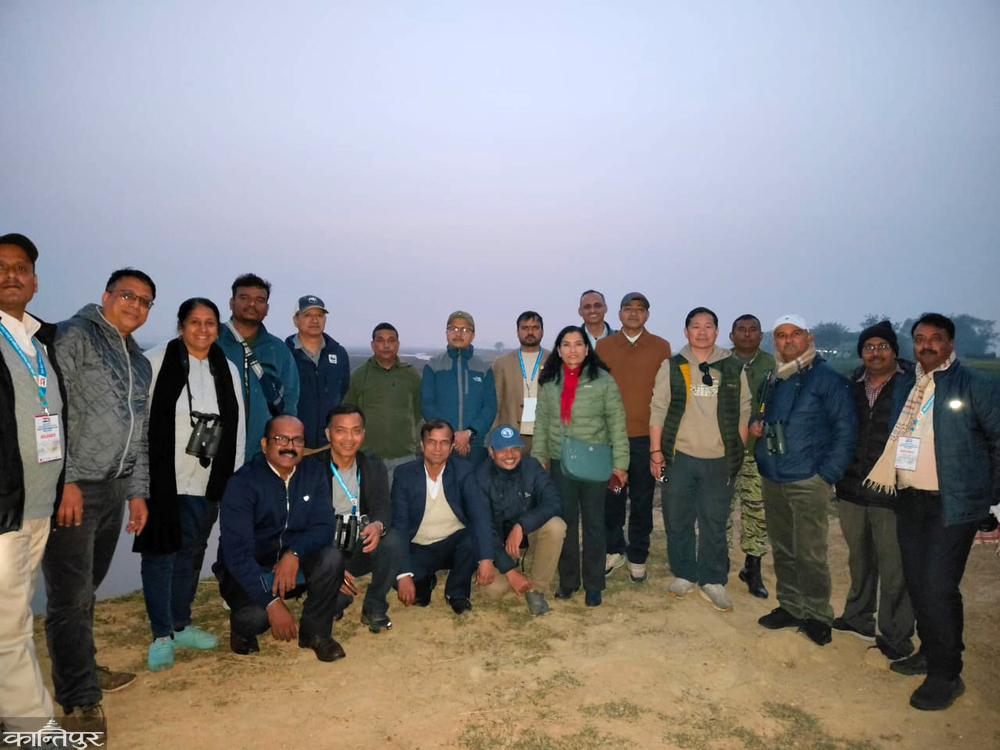
This place is a matter of concern between two countries. One can't just want to . Therefore, the Indo-Nepal Trans-Border Dialogue was held in 3-day Saras conservation by keeping the stakeholders of both the countries. With the help of WWF Nepal and International Crane Foundation (ICF), Tribhuvan University, Central Department of Zoology and National Parks and Wildlife Department organized a program in Lumbini and promised to move forward.
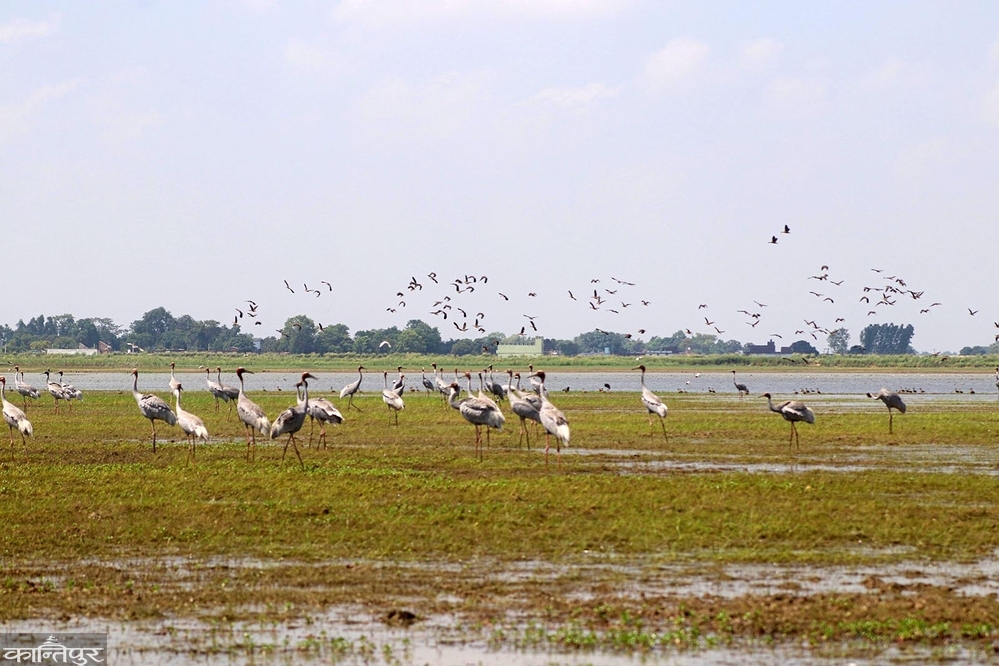
Rajendra Suwal, Head of Partnership Program of WWF Nepal, said that which birds, mammals, wild animals and plants are now found in the vicinity of Baja Sagar along with storks. He said that it is a matter to be studied and discussed again by the officials of Nepal on the Nepal side and the officials of India on the Indian side. He said that he is planning to discuss this and move forward.
70 percent of Bajaha Sagar falls in Siddharthnagar district of India. 30 percent of it belongs to Mayadevi rural municipality of Kapilvastu district of Nepal. India has about 170 hectares. There is 80 hectares of land towards Nepal. Sagar is adjacent to Tulsidihwa village towards Nepal and Bajaha village is adjacent towards India. There is a boundary post number 552/47 towards Sagar Beach. It is always under water. Because of the lake, the bird has become a good wetland .
India has built a dam in the ocean for irrigation . During the rainy season there is more water for 3/4 months but at other times the bird has an excellent environment . There are food crops all around and wild rice growing in some places, so the birds are happy and there is no feeding problem.
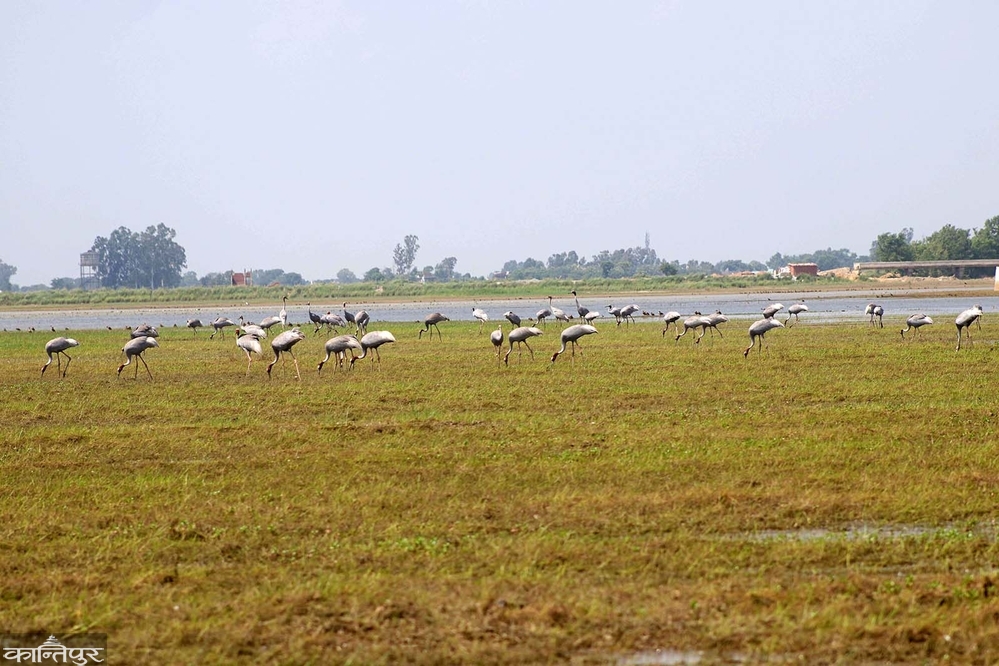
Here, the storks enjoy a free environment . During breeding, their dance can be seen amazingly . They also have the opportunity to see the unique scene from making good to rearing calves. It has become a place of interest for tourists as you can observe the romantic love, love and harmony of storks. It has become the best place for everyone to enjoy watching the charming movement of storks.
Haribhadra Acharya, Ecologist of the National Parks and Wildlife Department, said that it was concluded that it is an important place for storks after the officials of both countries visited and discussed. 'It proved to be an IBA (Impotent Bird Area) for the bird,' he said, 'now we have to work for its identification.' After researching in this area, two national wetlands He said that more work can be done by moving forward. Director of Stork Special Conservation Program in Gujarat, India, who is very excited to do a new kind of work. Jitender Naur said. "There was a discussion about how to work in the trans-boundary area of both countries," she said, "Now we have to make a plan and work." This is a new learning for the conservationists of the two countries. This is a new work for South Asia.'
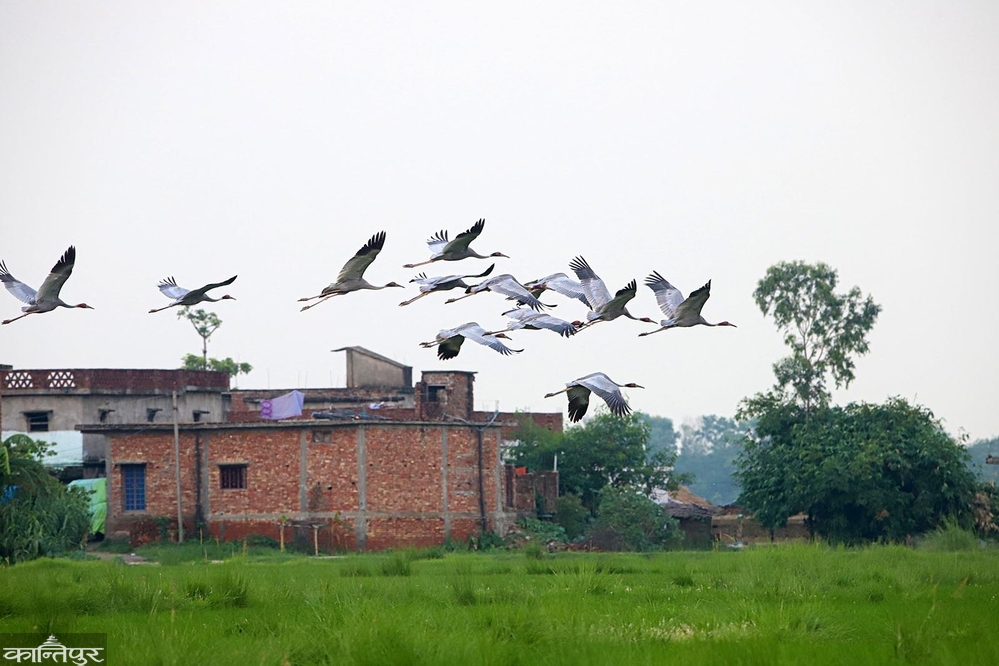
'It is good to see storks in large flocks in one place,' says ornithologist Hathan Chaudhary, 'it is believed that there is biodiversity protection.' He said that even though the climate effect is affecting the bird globally, it shows that the ecological system is good here. It increases crop production around the area. "When the place where Otharo lives is good, storks from other places have also increased," he said.
WWF is coordinating with the Nepal government to list Bajaha Sagar in the Ramsar site. As WWF is a global organization, it is also easy to collaborate with India. India is also WWF India. India is also being coordinated. On the other hand, the International Crane Foundation (ICF) headquartered in America is doing the work of finding resources.
The agreement and cooperation between the authorities of the two countries about the conservation of storks will work in the border area. Prof. Dr., director of the Department of Wildlife Sciences of the University of Lucknow, India, is very excited. Amrita Kanaujia said. She said that the new work in the trans-border area will be an example for others by exchanging the experiences of the two countries on the Terai arc landscape.
Buddhists see it as faith. Similarly, the beginning of Valmikized Ramayana also begins with the description of Prayanarat Saras Jodi . It has cultural and religious significance as well. Bajaha Sagar has become an excellent destination to enjoy watching the mesmerizing movement of the towering and fascinating birds.
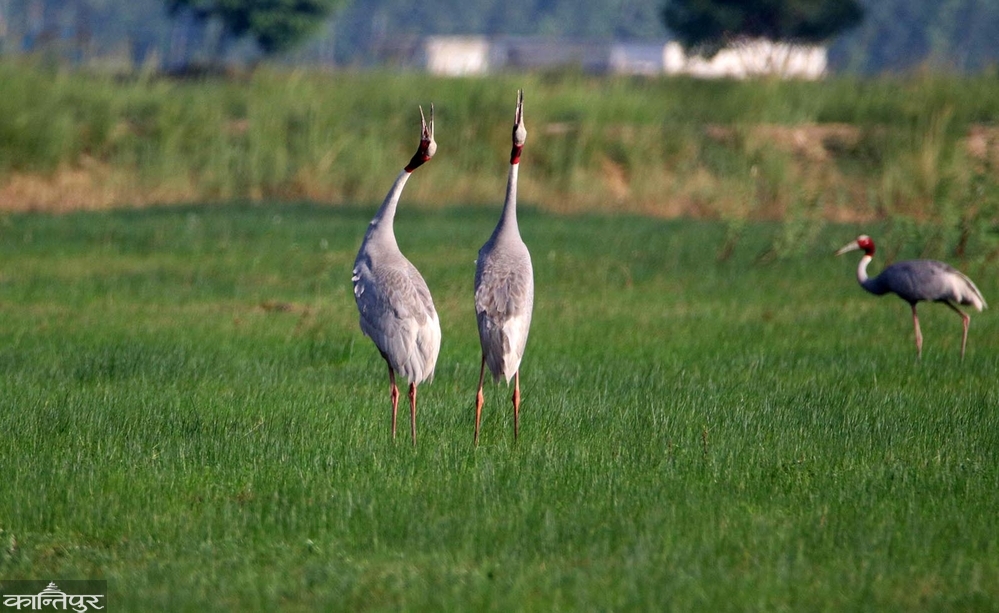
They scream and give voice to the message. It is a means of voice communication. The surrounding storks are gathered by sound. Sometimes, even when there is a risk, they take precautions by raising their voice . When animals such as leopards, tigers, and bears come nearby, they shout and inform in advance . It helps avoid potential attacks . The female makes two calls . The rooster gives only one .
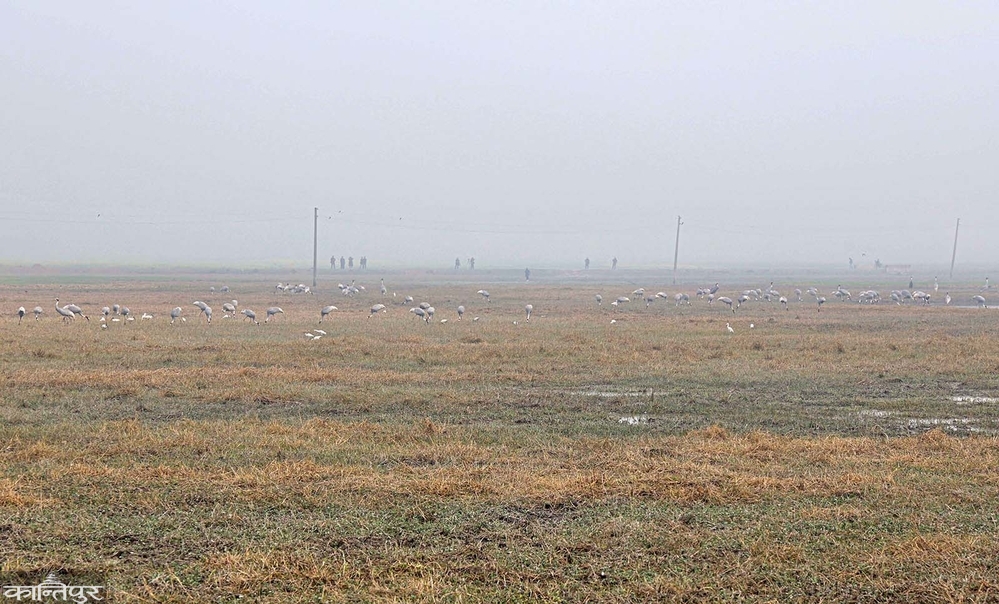
Lumbini Cultural Municipality has made Nagar Pankshi and State Pankshi of India's Uttar Pradesh due to its importance. The stork is one and a half meters tall, and if both wings are folded, it will be 3 meters long . It weighs 7 to 9 kg . They nest in natural wetlands or flooded paddy fields. Lays up to two eggs. Sometimes it takes 3 . Babies start following their parents from birth.
Now it is said that there are 690 storks in Nepal. In India, it is fifteen thousand to twenty thousand. Most of them are in Uttar Pradesh. It is an omnivorous species, it eats plants (seeds and their roots) and insects.
Until now Nepal and India have been discussing and conservation programs on tiger, elephant and rhinoceros, for the first time the conservation work of stork bird has been discussed and a positive result has been achieved, said Hari Sharma, associate professor of Central Department of Zoology, Tribhuvan University . "We will start studying other birds along with storks and create a Ramsar site by creating a trans-border wetland," he said.
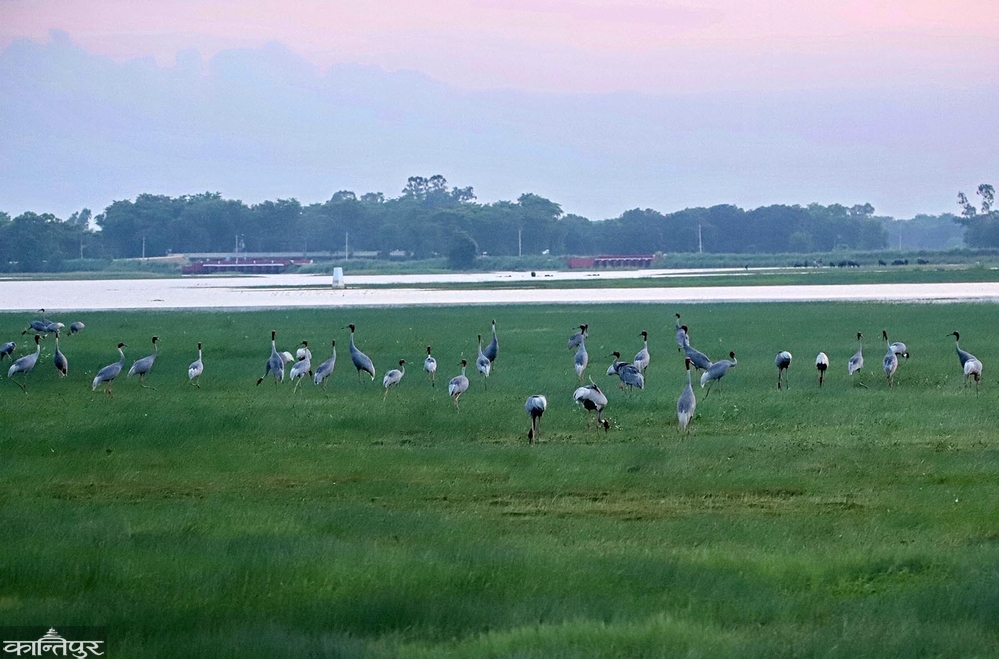
The stork is one of the 9 bird species protected by the Wildlife Protection Act 029 as it is a rare bird. It is estimated that there are more than 600 storks in Kapilvastu, Rupandehi and Nawalparasi alone.
In 2000, the stork was listed as one of the rarest birds in the world after it became less visible. The stork easily feeds the snake. That is why there is no fear of snakes around the place where the stork lives. Storks eat insects, including snails, which damage crops. As a result, the crop will be good and the production will increase . If animals such as leopard, tiger, bear etc. are coming nearby, they will shout and inform in advance. It helps avoid potential attacks .
Hanuman Pandey of Yashodhara rural municipality Pokharbitwa said that the place where storks live is considered auspicious.

