Chhawa, who was born at an elephant breeding center near Chitwan National Park 12 days ago from Rimzhimkali, was euthanized on Wednesday.
We use Google Cloud Translation Services. Google requires we provide the following disclaimer relating to use of this service:
This service may contain translations powered by Google. Google disclaims all warranties related to the translations, expressed or implied, including any warranties of accuracy, reliability, and any implied warranties of merchantability, fitness for a particular purpose, and noninfringement.
Priest Resham Poudel reached the Elephant Breeding and Training Center at Khorsor near Chitwan National Park on Wednesday morning for the ritual of Nwaran. After completing the method of Nawaran, the Rashi and Nakshatra were extracted. Then Ganesh Pant, chief conservation officer of the park, called out the name, 'Deepgaj'.
On the 12th day of the birth of Rimjhimkali at midnight on Chait 8, the funeral was duly performed. Deepgaj Khorsor Elephant Breeding Center is the 66th camp, said Manpuran Chaudhary, head of the center. Chowdhury informed that two years ago Rimzhimkali became pregnant with the elephant "Dhruvey" when she was at the Sukhibhar post in the west area of the park.
It is customary to add Gaja or Prasad after the name if it is a male and Kali or garland if it is a female. The custom of clearing the camp after completing the law is old. Former head of the center, Rameshwar Prasad Choudhary, said that after the birth of a chhawa, the information about it is conveyed to the royal palace through the National Parks Department and the name is also decided from there. "But the right to keep names locally has not come much," he said, "The palace usually sent names of members of the royal family."
Chaudhary, who retired in 2070 after working for 19 years at the center, informed that this order was broken after the mass movement of 062/63. A new tradition of Nawaran was started when Chhawa, who was born in Khorsor on 11th May 2063, got the name 'Lokantrakali' locally for the first time on the day of the success of the Jan Andolan. Although the custom of naming is new, other rituals of Navaran remain the same.
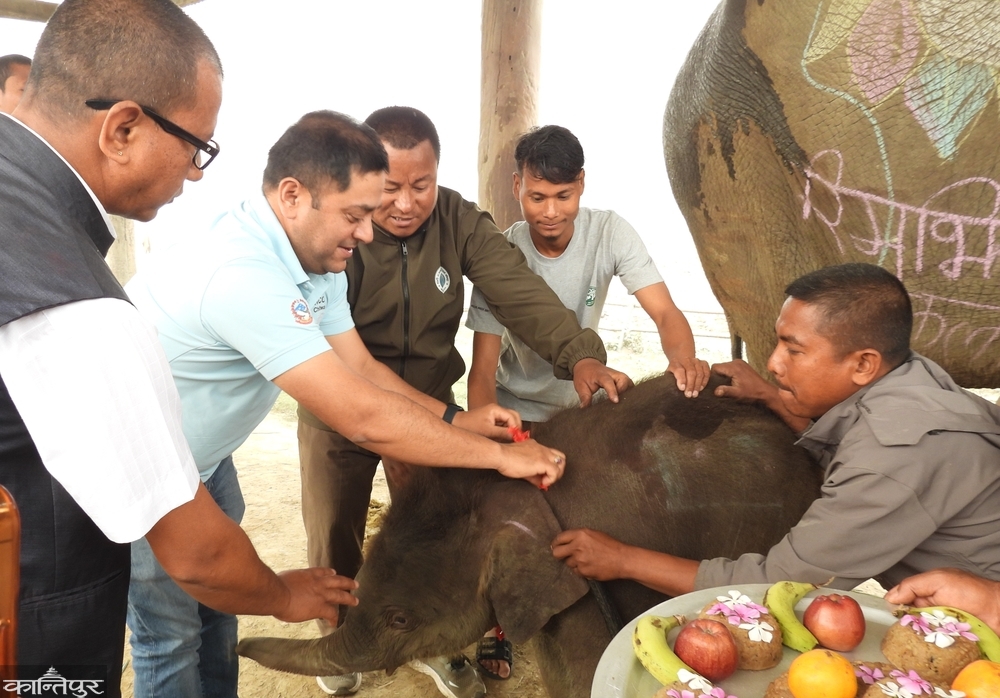
Mahute Ramdayal Chowdhury removed Rimzhimkali from 'Than' after finishing Nawaran. Pachuwa Dilip Mahato climbed on Rimzhimkali's back, Ramdayal carried Deepgaj forward. Deepgaj was confused for a long time by the footsteps of Rimjhimkali, who left the 'than' and went towards the forest. After walking through the forest for a while, Rimjhimkali reached the old Rapti river of Khorsor to swim. He drowned himself by throwing water. Deepgaj, who stepped into the water for the first time, watched this activity of his mother.
Mahute Ramdayal said that it is a custom to take the pregnant elephants out of the fort 'Than', which is made to be tied, only after they have been tamed. He said, 'Only after that, the training to teach Chhawa to walk outside with his mother will begin. Before that, the mahout and Pachhua wait and take care of them day and night. After the chawa reaches two years, they will be trained for three years. Manpuran, the head of the center, added, "After the training is completed, they will be assigned to the post of the park."
A quintal newborn baby starts standing within half an hour and can walk within an hour and a half after birth, but cannot go far before weaning.
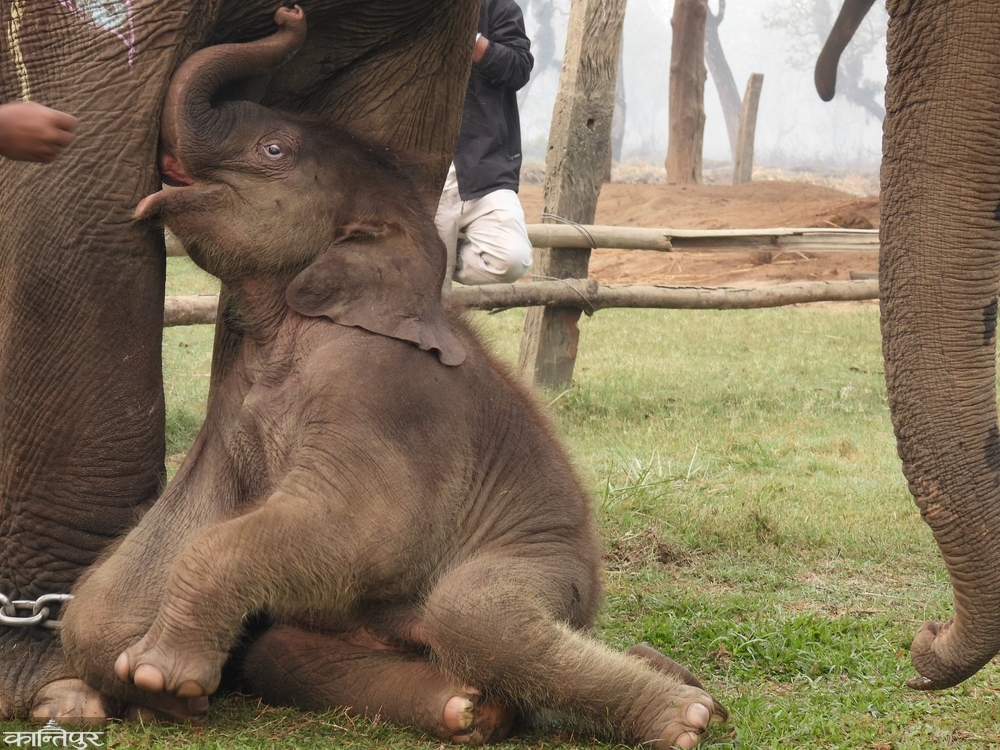
Deepgaj is the 66th elephant born in the Elephant Breeding Center of Khorsor, which was established in 2043, said Manpuran Chaudhary, head of the center. Since 2054, camps have been born in this center.
Chhawa only eats mother's milk for three months. Mahute Ramdayal said that after three months, they will start picking grass. He said that pregnant elephants will be fed with seven kilos of gram, bheli, zwano and fenugreek cooked in rice and made into kheer. The daily ration of an elephant is two quintals of grass and two hundred liters of water. Mahute Ramdayal says that the elephants of the breeding center are fed with one and a half kilos of Veli, 1.5 kilos of chickpeas, 25 grams of salt and 15 kgs of paddy grass made into kuchi.

