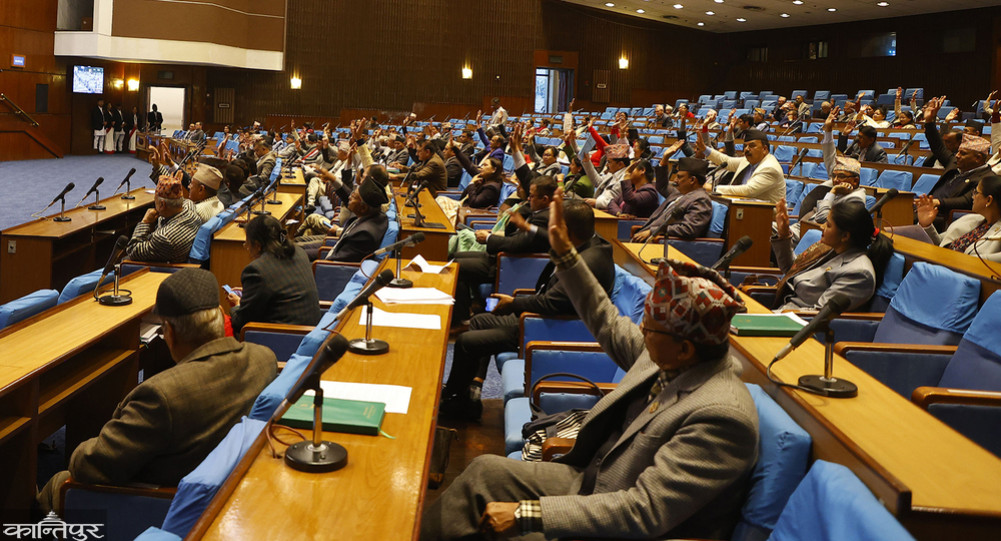
”Amendment of some Nepal Acts on Cooperatives”, ”Amendment of some Nepal Acts on Promotion of Good Governance and Public Service Delivery”, ”Economic Procedures and Financial Responsibility”, ”Privatization and Improvement of Economic and Business Environment” and ”Investment Enhancement” Ordinances were accepted by the House of Representatives meeting, and the proposal to be accepted in the National Assembly today
We use Google Cloud Translation Services. Google requires we provide the following disclaimer relating to use of this service:
This service may contain translations powered by Google. Google disclaims all warranties related to the translations, expressed or implied, including any warranties of accuracy, reliability, and any implied warranties of merchantability, fitness for a particular purpose, and noninfringement.
With the help of Jaspa Nepal, 5 of the 6 ordinances brought by the government have barely moved forward more than a month after they were submitted to the parliament meeting. In the House of Representatives meeting on Wednesday, the government's proposal to accept the Ordinance on 'Amendment of some Nepal Acts on Cooperatives', 'Amendment of some Nepal Acts on Promotion of Good Governance and Public Service Delivery', 'Economic Procedures and Financial Responsibility', 'Privatization and Economic and Business Environment Improvement' and 'Investment Enhancement' was passed by majority.
On January 18, the first meeting of the winter session of the Federal Parliament, the government submitted these five ordinances and six ordinances "Amending some Nepal Acts related to land". But due to disputes among the parties that helped in the formation of the government, these ordinances were not able to go ahead as the majority in the National Assembly was not seen.
The government worked hard for a month to convince Jaspa Nepal, which seemed to be decisive in getting a majority in the National Assembly. 5 ordinances were able to move forward after the dialogue between Prime Minister KP Sharma Oli and JSP Nepal President Upendra Yadav last Sunday night became 'positive'. As JSP Nepal did not look positively on the amendment ordinance to some Nepali laws related to land, the said ordinance is stuck.
In the House of Representatives, the government is preparing to propose that these five ordinances be 'accepted' in the National Assembly on Thursday. Once accepted by the National Assembly, the government will be able to take the replacement bill to Parliament. National Assembly Secretary Surendra Aryal says, "The five ordinances presented to be accepted in the House of Representatives are on the possible agenda for Thursday."
Among the five ordinances accepted by the House of Representatives on Wednesday, President Ramchandra Paudel, on the recommendation of the Council of Ministers, issued the cooperative ordinance on January 14 and the other four ordinances on January 29. The ordinance to amend some Nepalese laws related to land was issued by the President only three days later on January 2.
President Paudel was interested in the ordinance when it was issued. After the party JSP Nepal, which supported the government after it was submitted to the parliament, also protested against this ordinance, the government has been trying to celebrate it for a month. But since Jaspa Nepal's stance on that ordinance remained unchanged, other ordinances were only moved forward. Law, Justice and Parliamentary Affairs Minister Ajay Kumar Chaurasia says that the five ordinances have been taken to the parliamentary process as per the agreement reached between the ruling parties. "There will be a discussion in the Sahayatri Party on how to proceed with the remaining land ordinance. The government has stopped it for now," he says. "There will be a discussion between the parties soon about whether to amend the land ordinance in the replacement bill." Jaspa Nepal's first vice-president Rajkishore Yadav says that his party is in favor of advancing five ordinances after the "gentleman's agreement" to withdraw the land ordinance. "Based on the decision of the parliamentary party on January 29, it was decided that we will accept five ordinances other than the land ordinance, and we will keep the agreement in these ordinances in the replacement bill," he says, "There has been a consensus on the land ordinance, it must be implemented, if it is not accepted within the 60-day deadline, it will become inactive or according to the discussion with us, the government should withdraw it."
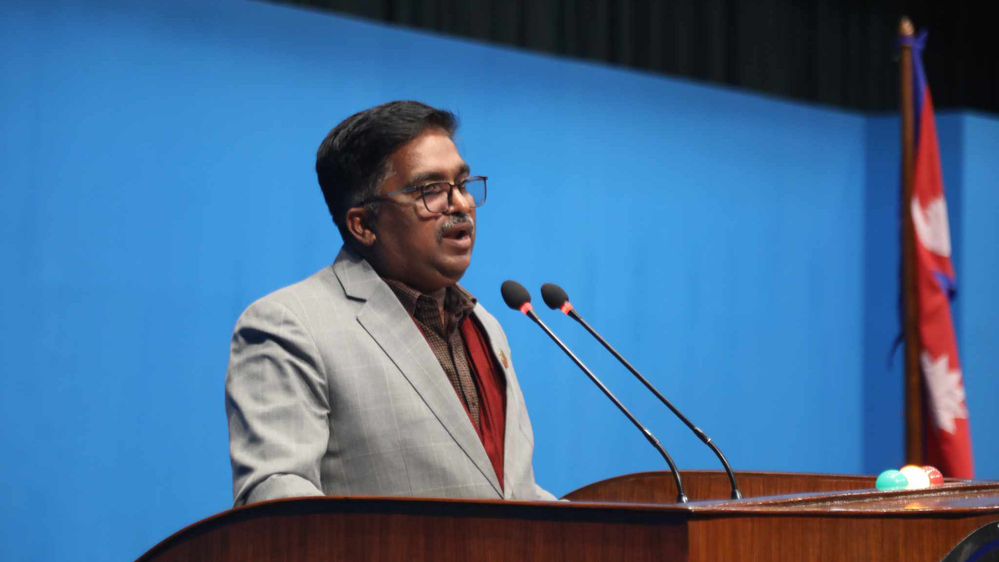
The government needs the support of Jaspa Nepal to pass ordinances and bills from the National Assembly. A majority in the 59-member National Assembly requires the support of 30 MPs. There are 28 MPs including 16 from Congress, 10 from UML, 1 from Manoneet and 1 from LOSPA in favor of the ordinance. Jaspa Nepal, which has 3 MPs, is expected to gain majority after taking the decision to accept it.
The ruling LOSPA had also been opposing the land ordinance. After the government is ready not to proceed with the ordinance, there will be 31 MPs on the ruling side in the National Assembly. Nominated MP Vamdev Gautam, who has been saying that he will vote in favor of the ordinance, has started saying that he will 'use discretion'. In the National Assembly, there are 26 MPs including 17 from the Maoists, 8 from the United Socialist Party and 1 from the National People's Front.
When there are equal votes for and against the ordinance, there is a situation where the Speaker of the National Assembly, Narayan Prasad Dahal, has to participate in the division of votes. President-nominated MP Dahal was a Maoist leader in the past. For the time being, since JSP Nepal will vote for the ruling party, the president will not have to vote.
There is a constitutional provision that the Ordinance Replacement Bill must be passed within 60 days of the commencement of the session of the Federal Parliament. There is not even a month left for the government to pass the replacement bill through the parliament.
In the House of Representatives, Deputy Prime Minister and Finance Minister Bishnu Paudel proposed that the Privatization (First Amendment) Ordinance be accepted. He said that the ordinance was brought to improve the conditions of Udaipur Cement Factory, Hetaunda Cement, Dairy Development Institute, Gorakhkali Tire and other institutes. It was Poudel who proposed that the Ordinance on Financial Procedures and Financial Responsibility should be approved. While answering the question raised by the MP on the Ordinance, he said, it is important to have an account of what was done in which period to reach the state of 'Country Gray List'. Now everyone participating in the government is closely monitoring, we will work on the scheduled time and we will get out of the 'grey list'.' According to him, an ordinance has been brought to make legal arrangements to improve the economic and business environment and increase investment. Minister Paudel said that the ordinance should be passed to bring in foreign investment in priority areas for national interest, increase employment, transfer knowledge and skills while increasing production and productivity, and create a favorable environment for the country to move forward economically.
Minister of Land Management, Cooperatives and Poverty Alleviation Balram Adhikari proposed that an ordinance to amend some Nepal Acts related to cooperatives be accepted. According to the minister, an ordinance has been brought to resolve the distortions in cooperatives and make necessary amendments to the existing laws to return the money of the savers and protect their savings.
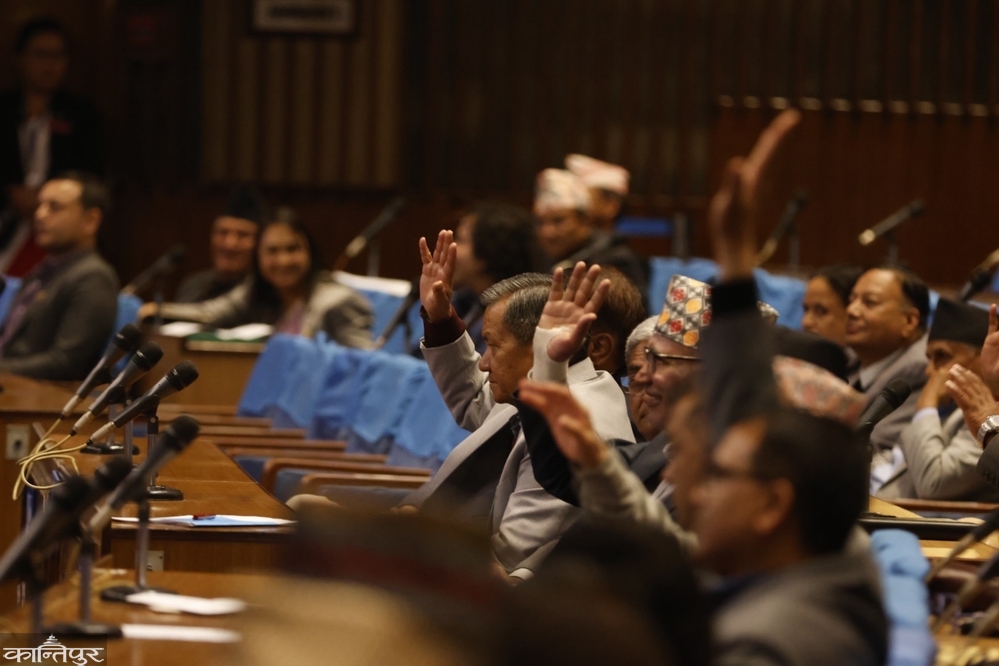
On behalf of Prime Minister Oli, Minister of Communications and Information Technology Prithvisubba Gurung proposed that an ordinance to amend some Nepal Acts related to the promotion of good governance and public service delivery should be approved. During that, he said that he brought the ordinance with the aim of promoting good governance in the country and making public services effective. Minister Gurung said, "In order to deliver public services to citizens in a short period of time, to promote good governance according to the concept of e-governance and good governance with the highest practice of information technology," said Minister Gurung.