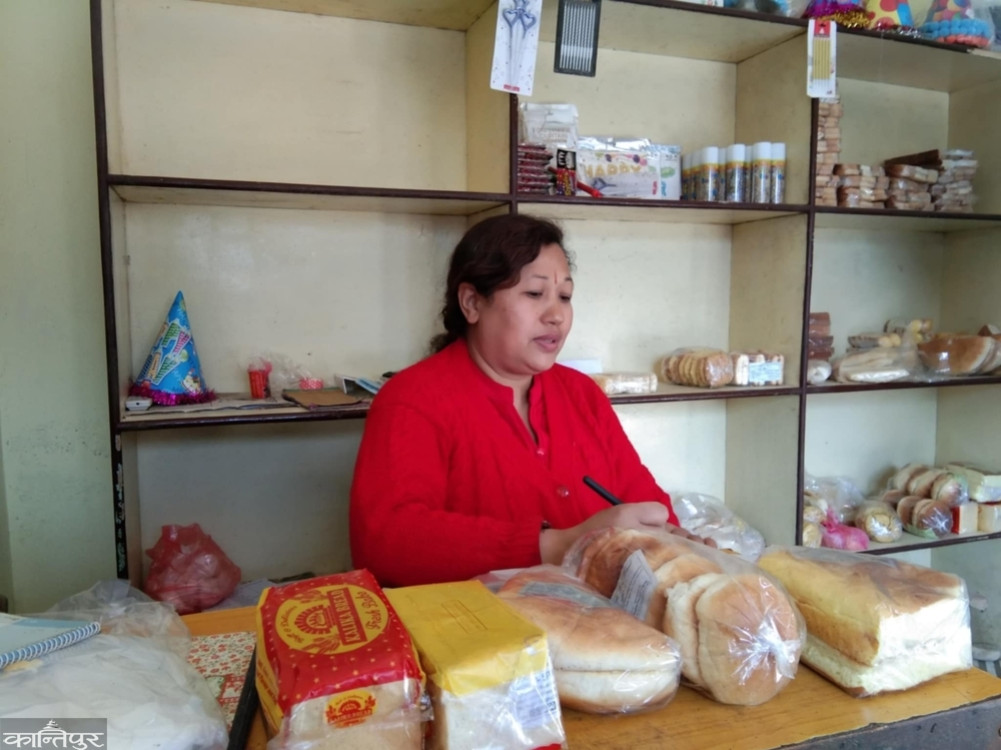
The history of Rajan Bakery, which introduced Paoroti to the people of Baglung
We use Google Cloud Translation Services. Google requires we provide the following disclaimer relating to use of this service:
This service may contain translations powered by Google. Google disclaims all warranties related to the translations, expressed or implied, including any warranties of accuracy, reliability, and any implied warranties of merchantability, fitness for a particular purpose, and noninfringement.
Rajan Shrestha from Baglung Municipality-2 entered the capital to study higher education. He was also preparing for admission to B.Sc. Suddenly father Chandrakumar and elder brother Krishnakumar called the village.
At that time, his dream was to become a government employee. But they could not avoid the request of the parents. Babu Chandrakumar was engaged in industrial business. After returning to Baglung, Rajan took over the business while studying BA. After leaving the capital and returning in 2050, it has been more than three decades since he managed the business alone.
Rajan, who has been in bakery production for 31 years, starts his daily routine at 4 am. His business is not the type of business that is very prosperous and makes millions. Rather, it is just a continuation from the father's time. It has been 53 years since my father started the business.
Shrestha's family business made Baglung residents aware that bread is also a snack. Says Rajan's Dai Kazi, Shrestha of the village, that 'Rajan Bakery' changed the habit of eating only chiura and fried corn as a snack. "If you eat bread for one rupee in a dry cup of tea, you will be safe for the whole day," he says.
Kazi says that only those who go to work in India know the taste of Pooroti Baglung in 2028. Kazi was only three years old when his father started this business. He established 'Rajan Porroti Udyog' in the name of Rajan, the youngest of 7 brothers. It is remembered that Kazi returned Rajan who had come to the capital to take higher education in the Faculty of Science to prevent the closure of the industry.
Chandrakumar's He passed away 5 years ago. 7 brothers are in their own profession. Jetho Krishnakumar, Milo Bhojendra and Sailo Ishwar have retired from civil service. Kailo Kazi is a senior advocate. Above Rajan, Nirmal and Rambindu are engineers. Sister Uma also supported the business for a long time.
Even for 40 years of its establishment, 'Rajan Poroti' was operating as the only Poroti industry in Baglung. Other industries have been operating only for a decade and a half. Now, the number of bakery industries here has reached half a dozen.
Rajan said that there are people who have been taking pauroti regularly for 40 to 50 years. 'Recently there are many people who migrate, so old customers have decreased, new ones have been added,' he says happily, 'some old customers come from far away to meet and buy lunch.' Rajan remembers the old days when the visitors gossip about his parents' company. The brothers also remember carrying bread on their heads and taking it home.
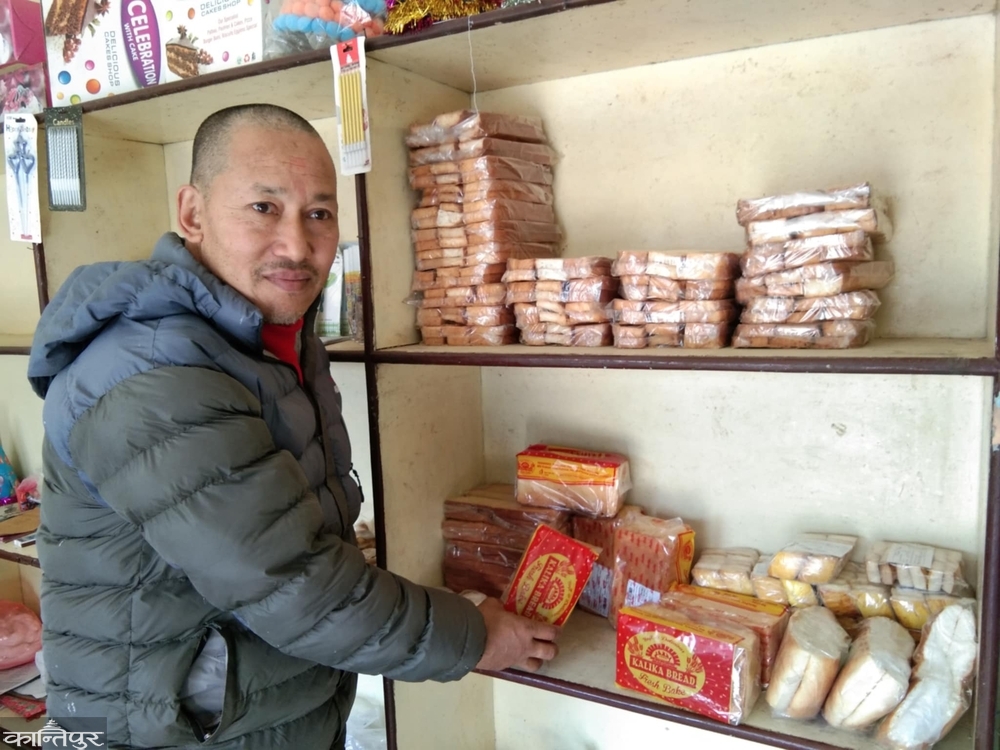
Rajan has also collected the experience of going to Kushma of Parbat, Beni of Myagdi and Dobilla of Baglung and carrying bread till morning to deliver bread. "Right now, it is enough to take it inside the market, there are 3 workers for that too," he said, "there are also 3 people working inside Kaligad." Along with his wife Deepika, three members of the family have also given their time in the industry. Govind Rizal, who lives in Bhakunde, said that he has been working in the same industry for 22 years.
Two quintals of flour are used here daily. According to Rajan, there is a daily turnover of Rs 30,000 to 40,000. The product, which started with a bun called Bhakku, has now grown to a dozen dishes.
Deepika also makes up to a dozen birthday cakes daily. 'Sometimes we get only one or two orders and sometimes we get good earnings,' she said, 'Many people believe that it is an old bakery. We are happy about this.'
Earlier, the Shrestha family used to prepare pauroti on a wood-burning fire. Times have changed, technology has increased. Now it is prepared through gas and electric ovens and mixers. Rajan said that the compulsion to be red with smoke has been removed and the work can be started easily whenever one wants. "The compulsion to get up at 2 am to burn firewood is gone," he says.
The industry that started with 150 buns a day now produces thousands of different bakeries. Rajan says that even though other industries have started opening, the production has been stabilized. Lakshmi Sharma of Baglung-2 said that her thinking of not leaving the business but also not unhealthy competition shows that she cares about quality. He has been a regular customer of Rajan Bakery for 20 years. Local businessman Ganesh Ji has been relishing the taste of Rajan Pouroti for 40 years.
After 5 years, Rajan has changed the name as 'Kalika Bakery'. But many locals still know it as Rajan Bakery.
Rajan Bakery is an example of how a business can be sustained with regular work and hard work even with a small investment. Rajan says that only 2.5 million rupees were invested in two ovens and a mixer. 7 people have got employment in this industry, adding the members of the household also increases the number to 10.
Rajan has recently been doing consumer awareness work. "There will be problems if the quality of the food is not taken care of, so I have been giving suggestions to every customer," he said.
Although the Pauroti who comes from Pokhara keeps a period of 7 to 10 days, he keeps it only for 5 days. He said that only namkin, puff and biscuits are kept for one to three months.
Recently, after the increase in various adulteration in food, the administration increases the monitoring. Rajan complained that sometimes they cause pain and insults unintentionally. "If there is a weakness in someone else's goods in the market, the administration has also given us grief," he said, "It is bad when they repeatedly come and stop work on the pretext of monitoring, and throw away goods indiscriminately." No monitoring has been able to show any weakness in quality so far.'