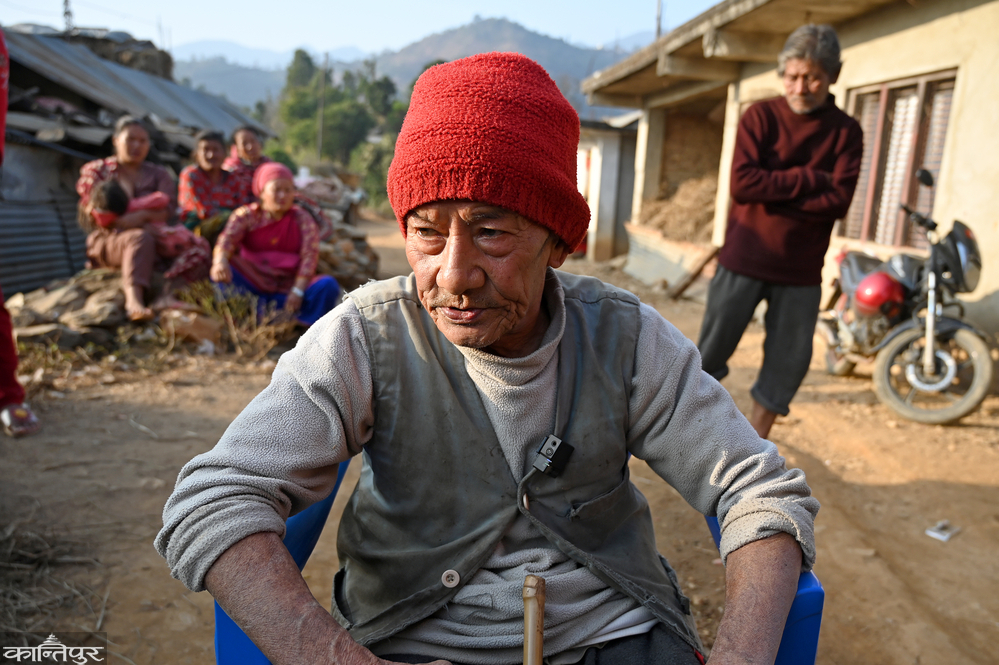
After repeated protests, some farmers in Rasuwa got land in their names, but none of the landless people in Nuwakot have been able to obtain land title deeds yet.
We use Google Cloud Translation Services. Google requires we provide the following disclaimer relating to use of this service:
This service may contain translations powered by Google. Google disclaims all warranties related to the translations, expressed or implied, including any warranties of accuracy, reliability, and any implied warranties of merchantability, fitness for a particular purpose, and noninfringement.
The plight of farmers in Tarkeshwor Rural Municipality-5 of Nuwakot is completely different from the rest of the district. According to politicians and land activists in the district, this ward is home to the highest number of farmers affected by land grabbing in Nuwakot. The farmers who till the land in this ward, which is the most affected by land grabbing in the entire district, have been being harassed by government officials for centuries.
According to the Census-2078, there are a total of 705 households in Ward No. 5. Former chairman of this ward, Chudamani Prasad Gajurel, says, ‘Out of 705 households, about 600 families are under birta.’
In this ward, Khadak Bhanjyang, Gorsyang, Dangsing, Kalimati, Chapdang, Ratmato, Choughada, Dui Peepal and other areas, there are more birta victims with tenant rights certificates.
A study by the District Land Rights Forum Rasuwa-Nuwakot says that 1,558 families in Nuwakot district and 718 in Rasuwa are still cultivating birta land. About 4,957 ropanis of land in Nuwakot and 2,389 ropanis of land in Rasuwa are under birta.
Usha Kiran Timsena, a young leader from the same ward and a suspended central member of UML, is also a land grabber. ‘The district is plagued by the land grabber problem.
Most farmers in our ward are land grabbers,’ she says, ‘I am a member of a land grabber family. Our grandparents died ploughing the land grabbers. Our state is not strong, even the laws that have been made are not implemented. Now my generation has to get justice. Whoever has ploughed the ancestral land should have the right to it.’
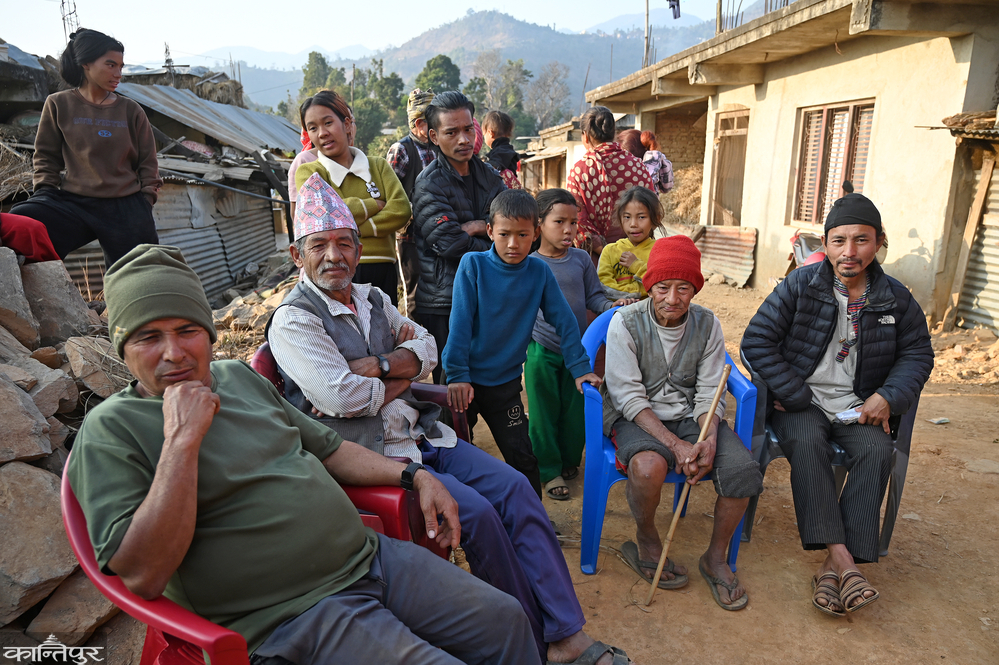
The land grabber farmers of Nuwakot understand that the land mafia, land grabbers and land brokers have ‘ruined’ our lives. As Rana Bahadur Tamang (61) says, ‘What is the joy when the field you planted is not yours? I only write about amazement in life.’
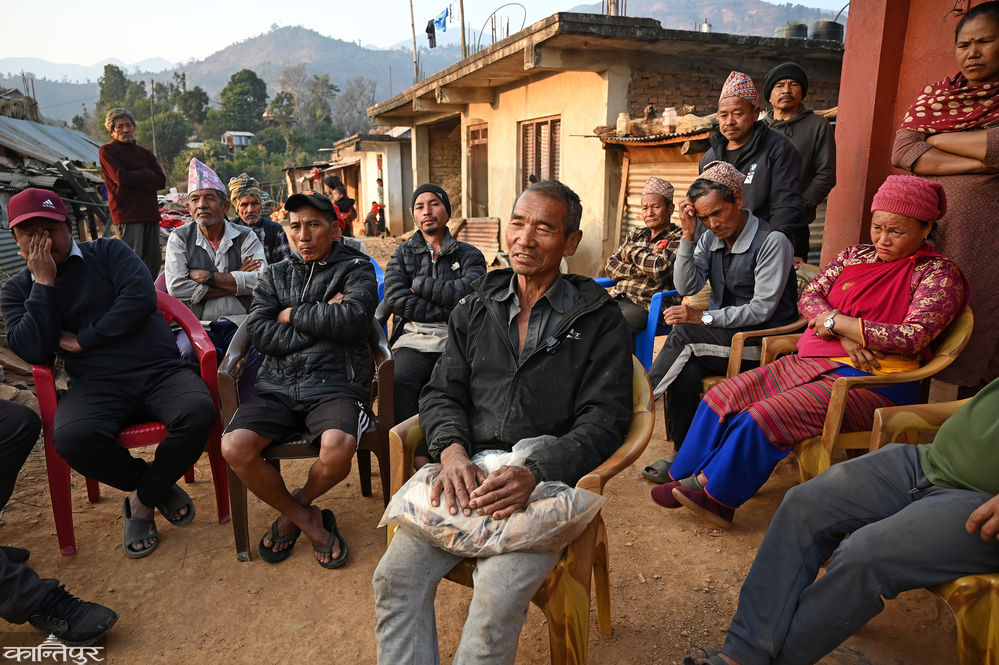
Ran Bahadur carries a bundle of documents left by his late father-grandfather (receipts of payment of rent to the landlord, tenant rights certificates) – Ran Bahadur. When government, non-government or journalist people enter the village, they show the bundle and, taking a deep breath, repeat the same question – When will I get the title deed of the land I have plowed all my life, sir? It is as if he is a professional questioner, who looks at the papers of his great ancestors.
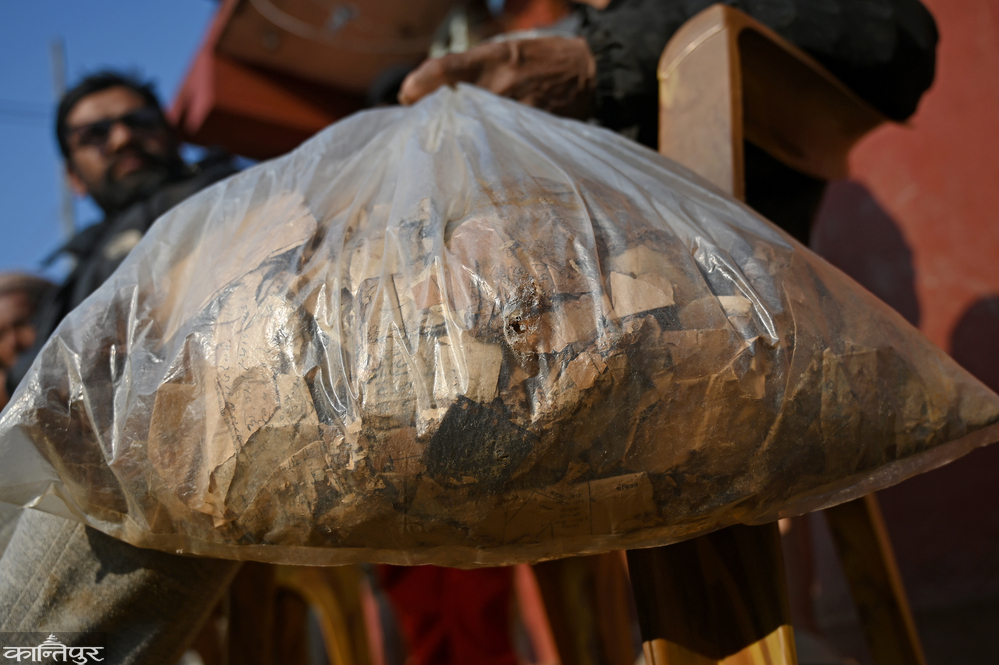
Ran Bahadur was standing in the middle of the Dang Singh village, carrying a large plastic bag full of old, torn, rusted, and torn papers. In this bundle of papers is the history of his ancestors, their sweat. The receipts for the rent paid by his many ancestors to Birtawal, the certificate of tenant rights, which was torn but intact, had been preserved for generations. He had hope with that package - that the government would one day provide justice by looking at these papers.
Rana Bahadur sweated his whole life on the slopes that depended on the sky. He ignored the sun, rain, hail, frost, and frost, making the land fertile. He survived, continuing to work hard in farming to support his family. Sometimes enough grain grew, sometimes it was destroyed by drought, but his unbreakable bond with the land of his ancestors is still strong.
The signs of old age are on his face, but the land he had cultivated since childhood is registered in the name of Birtawal.
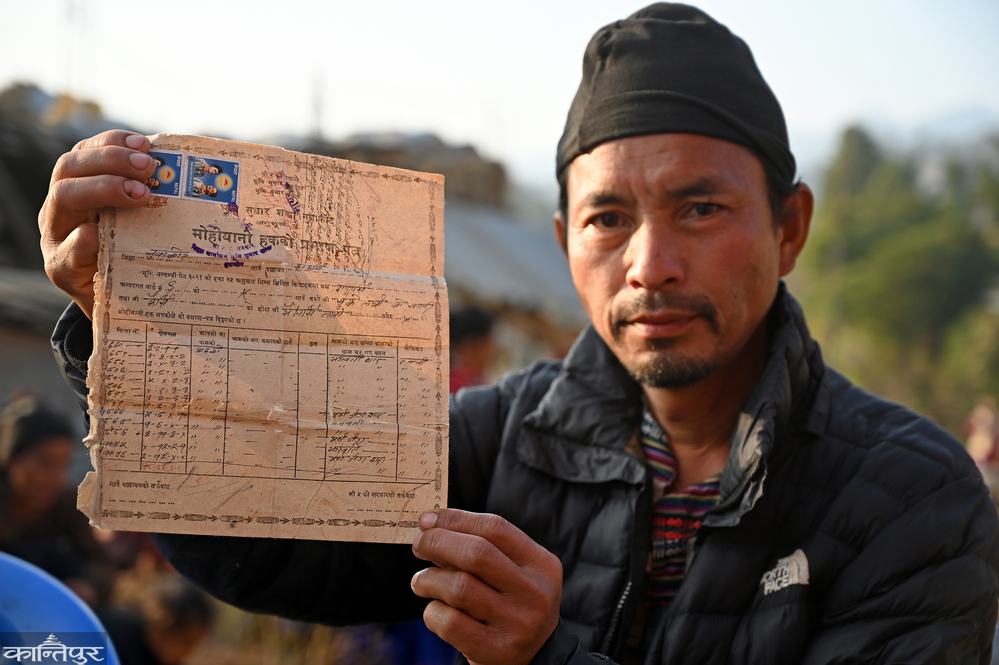
Rana Bahadur once worked as a security guard in Kathmandu. After his father passed away in 2072, he quit his job and returned home and plowed the village's birta land. His younger sister had kept a bag of papers at home. Rana Bahadur carefully read the paper - it was a receipt for paying the birta owner in advance. Then he put all the papers away. He has promised to show the bag of papers to the minister and the Prime Minister one day. He says, 'After seeing that paper, they will definitely know how much we farmers have been suffering.' That bag also contains a paper from before the birta was abolished in 2016 BS.
The entire village went into agitation after losing hope that the government would solve their problem on its own. Rana Bahadur, who is now the district joint secretary of the Land Rights Forum, is demanding that the title deeds of the land we are earning are in the name of the birta owner, it should be ours. Rana Bahadur's ancestors cultivated 50 ropanis of land in Birta. 'All ancestral property is Birta. We will continue to protest until the title deed is in our name, and I will protect this parcel until then.'
...
'The news of the abolition of Birta in 2016 BS did not reach our village, our ancestors did not know about it. If they had known, we would probably not have suffered,' says former ward chairman Chudamani Prasad, 'Even now, the land here is in the names of the Shahs and Ranas. Our ancestors made this land into a quarry.'
He remembers that from time to time, the Birtawal's agent (Mukhiya) would enter the village, pick up the dogs and take them away. According to him, during the survey in 2035/036 BS, the Mukhiya and Birtawala's agent stopped the surveying of the land that farmers had been cultivating for centuries in the name of the farmers. They say, ‘At that time, Shrestha was built in the name of the Birtawala.’ The victims here organized themselves by forming a Land Rights Forum in 2068. After that, they protested repeatedly at various stages, but their hands were empty. Farmers from Nuwakot sat on a dharna for 7 days at the Land Revenue Office, Nuwakot in 2071. After the dharna, an agreement was reached with the Ministry of Land Management - the problem of the remaining Birta land would be resolved, but the problem remained the same.
The movement achieved some achievements in Rasuwa. About 500 families there received land titles. For example, Bhuminanda Neupane (68) of Kalika-3, Katunje, Rasuwa received land titles for an area of 13 ropani, 3 anna, 2 paisa, 3 daam through the movement. In 2066, a notification was issued by the Council of Ministers to allow the acquisition of ‘K’ Birta land. Bhuminanda filed an application. ‘Along with the application, we also submitted the land deed, the recommendation of the local body and the proof of payment of the previous tax. In 2067 BS, an environment was created to get the certificate,’ said Bhuminand. He had paid Rs 52,000 in revenue land revenue.
There are no farmers in Nuwakot who get the certificate like Bhuminand. Nuwakot leaders have become ministers many times. When they were ministers, farmers submitted memorandums and explained their problems. Ministers used to assure that they would take the initiative to solve the problem, but later they forgot. Former ward president Chuda Prasad says, ‘It is said that only the poor know the pain of a khukuri. Leaders are not poor, how can we know? We know that pain and pain. We did not get help from the leaders. Even when so many farmers in one ward were suffering from drought, the state did not pay attention.’
...
According to the data in the book ‘Land Tenure and Taxation in Nepal’ by economic historian Mahesh Chandra Regmi, 780 hectares of land in Nepal were under Birta till 2007. That is 36.3 percent of the total land of Nepal. That situation is not there now, but the Birta-vyatha that remains says – the land of Nuwakot-Rasuwa is still in the possession of the rich. Farmers are waiting for the day when the branches of that Kalbikha will be cut.
Let’s listen to the words of some farmers, who had appeared at Chautara to tell their grievances.
Maitsingh Tamang (81) of Tarakeshwor-5, Chapdang does not have a land title deed in his name. ‘Our Birtawal lived in Basantapur, Kathmandu. I myself went to the Birtawal’s house until 2020 to deliver the land,’ he said, ‘Later we stopped paying the land tax, but the land we earned through our own sweat is no longer ours. We have been treated unfairly.’
Gangadatta Vasti (79) of the same ward also used to go to the headman’s house to pay the land tax since he was 10 years old. One memory is fresh – on the day of Dashain Tika, he went to the headman’s house carrying a small basket of goat meat. On one side, the headman imposed an additional fine of Rs. 1 because the meat portion was too small. His headman was Lokjung. Gangadatta remembers receiving a receipt after paying 6 mana bodi and 1 pathi of meat. The headman would also visit the village from time to time and order the land tax to be paid. If they did not come, the headman would come. Gangadatta’s 18 ropanis of land is under the headman’s headman. ‘No matter how much we struggled, we could not get the land tax certificate,’ he says, ‘Now our only hope is with the government.’
Dharmaraj Vasti (72) of Chapdang is extremely tormented by the pain of land tax. His chest always aches, thinking that the problem will never be solved. Since he was a child, he used to go to Gorsyang hill to pay his tiro/kut with his father. He had to bring a buffalo to the house and even a bigauti. He always had to take a goat's basket during Dashain. 'In this way, we paid the kut till 2024 BS, then we stopped paying. From time to time, the birtawal would come and harass us. We have been suffering,' says Dharmaraj. He thinks that when the land was measured, the chautariyas came and stayed on the hill, and they tempted the surveyors in various ways and did not allow the land to be measured in the name of the farmer.
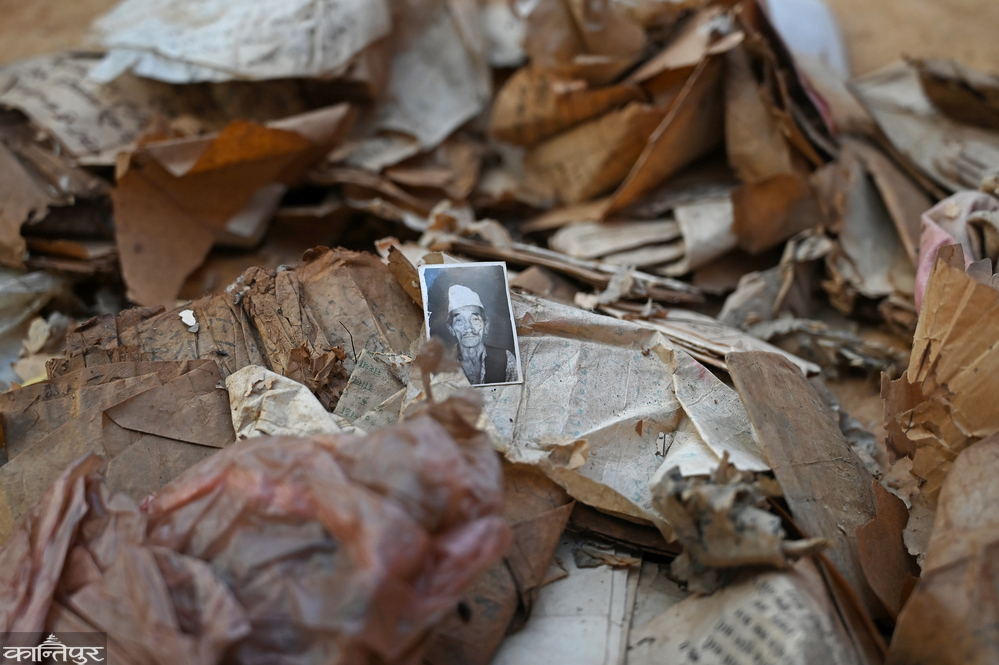
Dharmaraj had a ploughing certificate. He says, 'Somewhere it was lost during the earthquake, somewhere. Now there is no document. 15/16 ropanis of land that has been ploughed since the time of Jijubau is birta.' Even when the government opened the application for the birta land in 2066 BS, he did not know. ‘That is why we have been deprived of getting the land title deed,’ she understands.
Nirmala Tamang (38) of the same ward does not have the land title deed for her house. ‘I have also joined the agitation to see if I can get the land title deed. Let’s see how the Birtawals will come to the place where we have been living since our ancestors, saying, ‘This is my land,’’ she says.
The Birtawal of the house where Tul Bahadur Tamang (50) lives has the land title deed. ‘We do not have any land as far as our ancestors are concerned. We have the land, we cultivate it, we grow food and eat it, but we do not have the land title deed and legal ownership,’ he says, ‘We wanted the land title deed. We do not know how to get it, but we wanted it. We do not even know the landowner. They have not even come here.’ His 38 ropani 12 anna land is in Birta.
Hari Prasad Rimal, the vice-chairman of Tarakeshwor Rural Municipality, is also deeply saddened by the farmers' suffering. 'We are trying hard to solve the Birta problem,' he says. 'We also met the Minister of Land Management, Cooperatives and Poverty Alleviation at Singha Durbar. We requested for help, but the process of solving it has not progressed. We also promised during the elections that we would take the initiative to solve this problem. Leaders of all parties say that they will, but I think that a solution should be found by giving a written commitment. This problem should be solved from the higher authorities. Has the leadership not been able to explain it well?'
Minister, Land Management, Cooperatives and Poverty Alleviation Balram Adhikari claims that he is working on a plan to solve the complex problem of Birta. 'I have listened to the farmers since I went to Rasuwa. They have been tilling the land for generations, but they are suffering from the pain of not getting the land title deeds,' he said. 'I have made a list of the laws that are creating obstacles to solving it, and I have started working on it. The process of amending the regulations has moved forward, which will solve the problems of many farmers.'
...
Jhalak Subedi, author of the book 'Land, Farmers and the State', who is studying and researching land, sees the nexus between the landlord and the state as the main reason why farmers in Nuwakot, which is close to the city in terms of distance, still plow the same land.
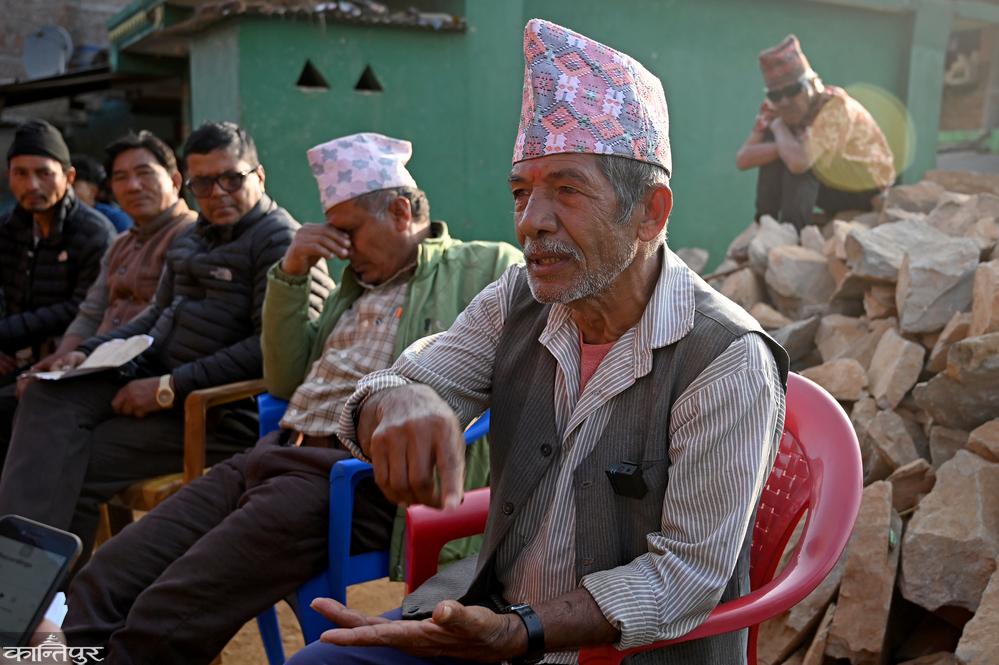
'The Land Act of 2021 set the limit, but the state did not take all the land according to it. There was a nexus between the landlord and the state. The state was in favor of the landlord,' he said, 'Farmers should have received half the land according to the law, but they did not get it. A large number of farmers were deprived of their land rights.'
Subedi says that farmers were not even given tenant rights due to misuse of power. 'It became a phenomenon of not allowing farmers to keep their land by raising issues, intimidating them by showing them the law, and creating various problems. The Kathmandu people kept oppressing the farmers because of their power,' he said, 'especially the power of the state was used in the interest of the landlords, but it could not be in favor of the farmers. That is why the Birta land remained.'
Congress leader Poudel has 1,000 ropanis of Birta land. The land in his and his mother's names is in Betravati and the villages above it on the Rasuwa-Nuwakot border. The Birtawal, on the other hand, is in favor of the Birta-afflicted farmers. He feels that the Birta land should be registered in the name of the tenant and dual ownership should end. Balchandra says, 'Birta should be abolished. The land should be in the hands of the farmers. The one who tills the land, the one who builds the house.'
Land activist and writer Biswas Nepali, who has been agitating for land rights for a long time, feels that if other Birtawals had the same beautiful thinking as Balchandra Poudel, the Birta problem would have been solved soon. 'If all Birtawals had the same idea, this problem would not have existed. सबै बिर्तावालमा जमिन जोतखन गर्ने किसानलाई नै दिन्छौं भन्ने भावना यसरी पलाइदिए, समस्या समाधान तत्कालै भइहाल्थ्यो,’ उनी भन्छन् ।
पृथ्वीनारायण शाहको दरबार सानले ठडिएकै छ नुवाकोटमा तर यहीँका किसानको शिर सदियौंदेखि निहुरिएको छ । यहाँका डाँडाकाँडा, भीरपाखा हराभरा छन्– किसानले मलिलो बनाएको त्यो भूमिमा तिनकै अधिकार छैन । नुवाकोटको यो बिर्ता–व्यथा किसानहरूको एक लामो आलाप हो, उत्पीडितको निको नभएको एक घाउको । जमिन त अरूको साङ्लामै छ, असलमा किसान स्वयं साङ्लामा छन् । बिर्तापीडित किसान रणबहादुरमा आशा मरेको छैन, भन्छन्, ‘यो सरखारको मति बिग्रेको हो, एक बेला हाम्रो दिन आउँछ ।'