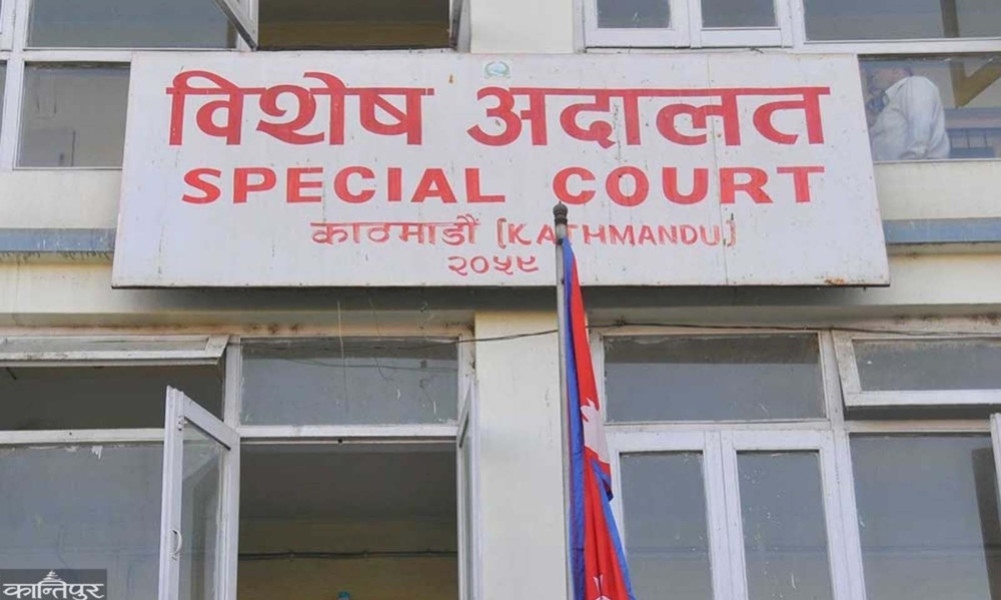
Two decades after the establishment of the special court, almost all the old cases have been cleared, the remaining 50 cases are all from the last 6 months
We use Google Cloud Translation Services. Google requires we provide the following disclaimer relating to use of this service:
This service may contain translations powered by Google. Google disclaims all warranties related to the translations, expressed or implied, including any warranties of accuracy, reliability, and any implied warranties of merchantability, fitness for a particular purpose, and noninfringement.
In the Special Courts Act, it is mentioned that the case should be settled within 6 months, but there were many cases that were not resolved even after 6 years. In other courts too, the legal standard of filing a case within a certain period of time has never been met.
But recently, the rate of disposal of cases in special courts has changed. Specially, all cases older than 6 months have been cleared.
According to the data till Thursday, 50 cases are still pending in the special court. All these are from 6 months ago. Last year there were 199 cases that exceeded 2 to 5 years, the total number of pending cases was 575. How did the special court established on August 6, 2059 achieve such an achievement after 22 years?
According to the special court, in November of last year, a team of 5 judges headed by Judge Teknarayan Kunwar took a decision to fully comply with the legal provision that the case should be disposed of within 6 months. After that, a list of cases was made and a practice was established to analyze every day what part of the case was not reached and the whole team of the court was required to complete it.
'We have not only coordinated and discussed between the bar and the bench, we have also called the relevant offices and officials to send the necessary documents on time and if the same, the court itself has sent staff to bring the documents,' Jitendrababu, registrar of the special court. Thapalia said, 'Just today (Thursday) the authority has given some answers requested by the court in the bribery case of Chitwan Cancer Hospital, I called the spokesperson there. Magain, we are doing this every day.'
Jurisprudents consider it an important achievement to solve the case in the court within the period specified by the law. "This achievement of the special court is rare not only for us, but also for the courts of many countries," said the former president of the special court, Gauri Bahadur Karki, "one or two cases have been cleared within the specified period, but all cases cannot be cleared within such a short period of time." Karki said that if the accused of corruption tries to prolong the case as much as possible by having many lawyers in the same case and doing bench shopping, the case will not be resolved for years. He said that a timely decision would be possible only if the judicial leadership takes an honest stand.
"In the case of Sudan scam, 50 lawyers of 36 defendants tried to postpone the case every time," he said, "I decided to keep the case under observation, and I remained patient, so the case could not be prolonged." There are many other measures, if followed, the case will be disposed of in time.
Former Supreme Court judge Balram KC said that the special court has set aside all the six-month-old cases and raised new hopes for justice. If the case is prolonged unnecessarily, people's faith in justice will decrease. Delayed justice does not provide enough treatment,'' he said, adding that the special court has given hope when it is being understood that our courts are not able to deliver justice quickly. It would be great if the same situation happened in other courts.
The special court deals with corruption cases filed by the Abuse of Authority Investigation Commission and cases related to undisclosed assets filed by the Money Laundering Investigation Department. It is called a special court because it hears only certain types of cases.
The authority files cases related to bribery, embezzlement and any work that causes damage to state property, abuse of office and fake certificates taken by government employees and public officials.
Similarly, when a person is unable to show the legal source of the amount earned illegally, the Money Laundering Investigation Department investigates the private sector and files a special case. These two crimes of a special nature can be tried only in special courts wherever they are in the country. It is appealed to the Supreme Court.
'We study the case file day by day'
Jitendrababu Thapalia, Registrar
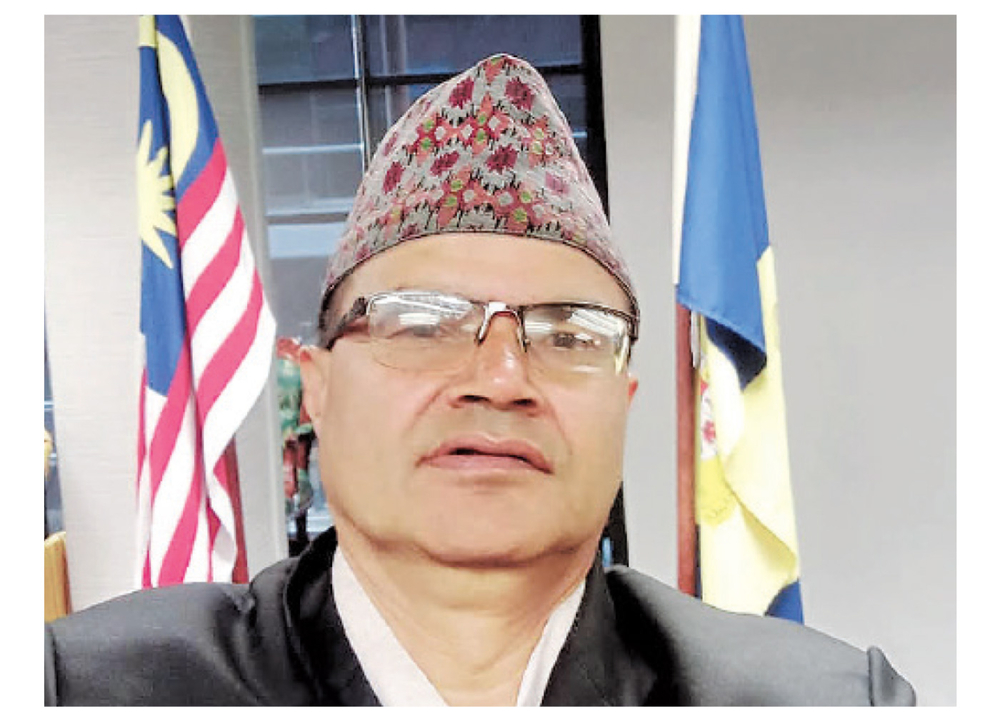 Courts have been trying to decide quickly, but have not been able to. The special court has disposed of all the old cases this year. How was this possible?
Our role remains in the managerial responsibility of speeding up the old cases in the special court and submitting them to the bench. How is the court? Our team has been active in embodying the slogan 'like a special court'. Attention and commitment were also seen among the judges to make decisions quickly. By making a check list in every case, sub-registrar, branch officer, superintendent along with me monitor and inspect from time to time. In order to get the
answer on time, we send correspondence, phone calls, or even send a car to bring the answer through the court staff. As soon as I came to this court, I made a proposal to keep the case null and void for more than 6 months in the staff meeting with the judges. Success was achieved through the collective efforts of government lawyers, the Bar Association and us.
When the case is fast, there may not be as much preparation and consideration as it should be in the judgment, how is the court addressing the danger of the justice being overturned? In the case of
, the debate, collection of evidence, evaluation of the evidence, and if there is a need for further understanding or if evidence is to be presented, the act of presenting and deciding is a clean hearing. This is in accordance with the principles of natural justice. If a party is not satisfied, it also has the right to appeal to a higher court. A speedy decision on a
case is the best part of justice. It is also not good to cause unnecessary harassment to the parties. A quick withdrawal is the best solution. There is a provision that the parties to the case can appeal to a higher body or the Supreme Court for remedying the fact that sometimes there may be a lack of consideration or human error.
How different or the same is the case in other courts and special courts?
The size of the case submitted to the special court is quite large. Even one judgment is up to 1200 pages. Arguments of both sides of the case, collection of evidence, writing of judgments are generally longer and of a different nature than other courts. It will be easy to put an end to the case through collective commitment to bear the
responsibility, continuous interaction and discussion between the Bar-Government Lawyer-Bench. Leadership styles and managerial roles are also important. It is becoming possible to settle the issue in time with the collective action of both of them.