The government bears the cost of treatment of the prisoners. If someone becomes unwell while in prison, they are initially taken to the nearest government hospital and if they cannot be treated there, they are referred elsewhere. In the case of prisoners willing to undergo treatment themselves, if the government hospital proves that further treatment is necessary, they will be taken to the hospital of their choice.
We use Google Cloud Translation Services. Google requires we provide the following disclaimer relating to use of this service:
This service may contain translations powered by Google. Google disclaims all warranties related to the translations, expressed or implied, including any warranties of accuracy, reliability, and any implied warranties of merchantability, fitness for a particular purpose, and noninfringement.
Apart from Dhanusha, Bara, Bhaktapur, East Rukum and East Navalparasi, there are 74 prisons, one each in Dang and Kathmandu, in 70 districts across the country. Also, 8 children correctional homes are in operation. In all, about 32,000 prisoners are serving their sentences. The government has been taking charge of free healthcare for all of them. For that, it seems that 19 million rupees have been spent on the treatment of prisoners and prisoners in this financial year alone.
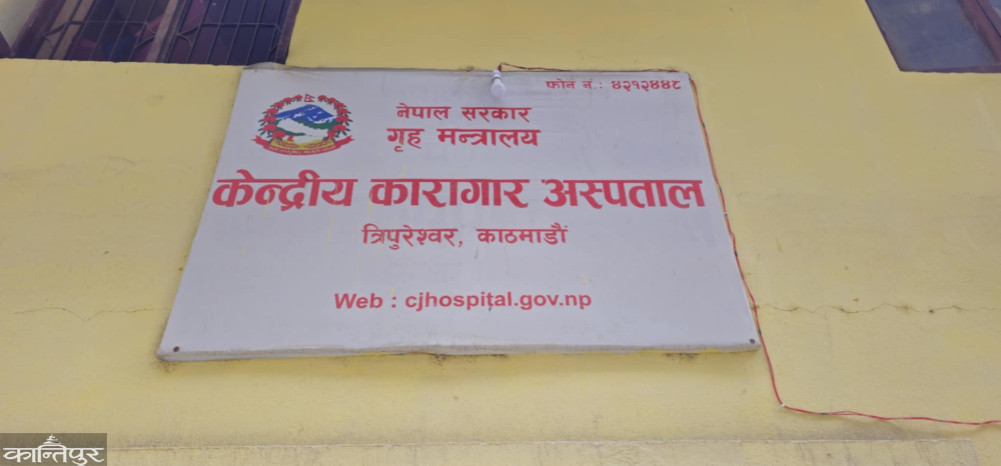
If inmates in prisons across the country are sick, the first treatment is done at the Central Prison Hospital in Jagannath Dewal, Kathmandu. Similarly, there is a psycho-socially disabled prisoner hospital in Nakkhu Jail in Lalitpur for special types of prisoners. The government is responsible for all the maintenance of the prisoners, from the health care to the vapari. If the inmates in other jails of the country have health problems, they are transferred to the central jail and the treatment process is continued.
Since the constitution of Nepal considers the health of citizens as a fundamental right, the government has been taking charge of free healthcare in the case of sick prisoners. If the inmates are unwell while in detention, in the case of Kathmandu, they are first taken to the Central Prison Hospital, and in the case of other places, they are taken to the nearest government hospital in case of emergency. However, if treatment is not possible there, they are referred to other private hospitals. In the case of prisoners willing to undergo treatment themselves, if the government hospital proves that additional treatment is necessary, they will be taken to the hospital of their choice.
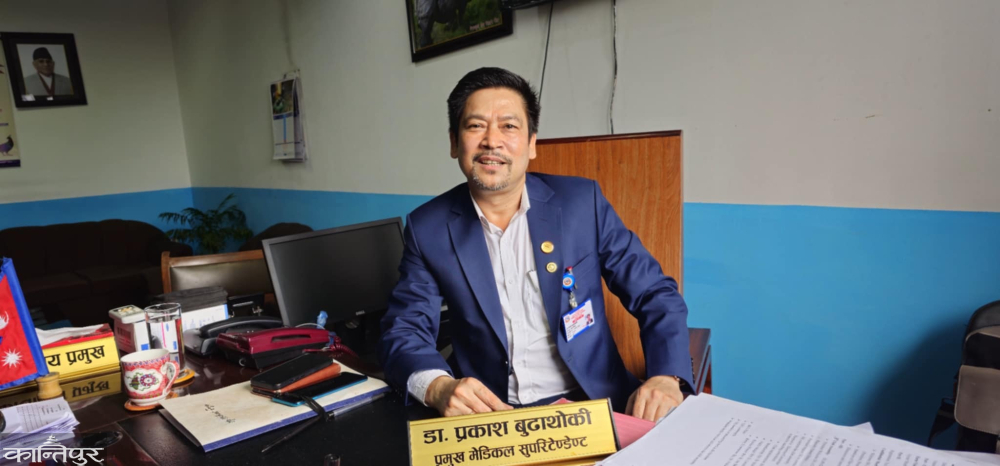 Chief Medical Superintendent of the Central Prison Hospital and spokesperson of the Ministry of Health Dr. According to Prakash Budhathoki, if sick prisoners in prisons other than the central prison are unable to pay for their treatment, they will be transferred to the central prison for treatment. "Currently, a system has been implemented to transfer prisoners from any prison in Nepal to the Central Prison Hospital if they require specialist treatment from government sources," Budhathoki said, "Prisoners staying here before could go to the hospital of their choice because they were ill. But it has been stopped since the prison hospital started functioning. If you are sick, you should come to us first.
Mesu Budhathoki said that former minister Top Bahadur Rayamazhi was initially brought to the prison hospital's emergency service after he felt uncomfortable with his health. According to him, he was referred for treatment at the Manmohan Cardiothoracic Vascular and Transplant Center at the University Teaching Hospital after it was found that he had a heart problem during the examination.
Mesu Budhathoki said that if the Central Prison Hospital has to refer for more treatment, it has made an agreement with 21 hospitals in Kathmandu on the basis of priority. He said, 'We have assigned hospitals on the basis of priority by doing first, second and third. There are 14 government hospitals on first priority. If treatment is not possible there, agreements have also been made with 4 other government hospitals including a private laboratory. If the treatment is not possible there, an agreement has also been made with 2 other private hospitals. He said that even if treatment is required in an outside hospital, free treatment will be available to the prisoners.
Currently, 12 inmates are being treated for cancer and 4 are being treated for regular dialysis at the Central Prison Hospital. Preparations were being made for the kidney transplant of some prisoners. However, he was freed from imprisonment among them, Dr. Mesu. Budhathoki said, "Among the patients receiving regular treatment at our place, the most expensive treatment is cancer." According to the data of the Central Prison Hospital, the cost of patients referred for outside treatment alone is around Rs 8 crore this financial year. For the prison hospital, the government has given a budget of 110 million this financial year. Dr. which is still insufficient. Budhathoki says.
In 2080/81 alone, 134 of the inmates in the Central Jail underwent various types of surgery at government expense, of which 33 underwent eye surgery. Due to the lack of surgical facilities in the Central Prison Hospital, arrangements for surgery have been arranged at Veer Hospital and National Trauma Center.
dr. According to Budhathoki's claim, it costs about one lakh rupees monthly for cancer patients. Similarly, for the patients undergoing dialysis, it costs 40-50 thousand per month. Chemo is expensive. Had to buy it. It has been arranged for patients who need dialysis to be done three times a week," he said. "A few months ago, preparations were also made for the kidney transplant of some prisoners. However, there was no further follow-up about it after they were freed from imprisonment.'
According to him, since the treatment of the prisoners started costing a lot, the work of health insurance has also been carried forward on his own initiative. However, as many prisoners do not reveal their real name, address and identity, it is difficult for insurance. "We have requested the government to insure the detainees as their identity. If that happened, there would have been health insurance for all the prisoners, natives/foreigners. And our financial burden would also be reduced," he said.
'We have taken charge of the health care of all those in prison. We only refer those who cannot be treated in our hospital elsewhere, we do not encourage them to be treated outside," said Dr. Budhathoki said, "Even if someone has been seeing a doctor for a long time, we first do a health check and send them out only if there is a real need." Although the total approved capacity of the Central Prison Hospital is 68 people, a total of 76 people are currently working there. In which there are 8 specialist doctors, 9 medical officers and 14 nursing staff while the rest are technical and administrative staff working in various departments.
In the hospital inside the prison, there is not only outpatient service, but also emergency service in addition to admitting patients for treatment. Therefore, arrangements have been made for 2 doctors to stay there 24 hours a day. Specialist doctors are kept on call duty as per requirement. Dr. According to Budhathoki, after he took charge as the head of the hospital, he arranged for two specialist doctors who studied on Nepal government scholarship to work there.
After the completion of the construction of a separate building for the Central Prison Hospital, on July 28, 2070, the service started with 15 beds, but now it has been expanded to 30 beds. According to the data till May, the total number of prisoners and detainees in the Central Jail alone is 4 thousand 16. Among them, there are 117 prisoners and detainees above 65 years of age, while 271 foreigners, including Indians, are also in jail.