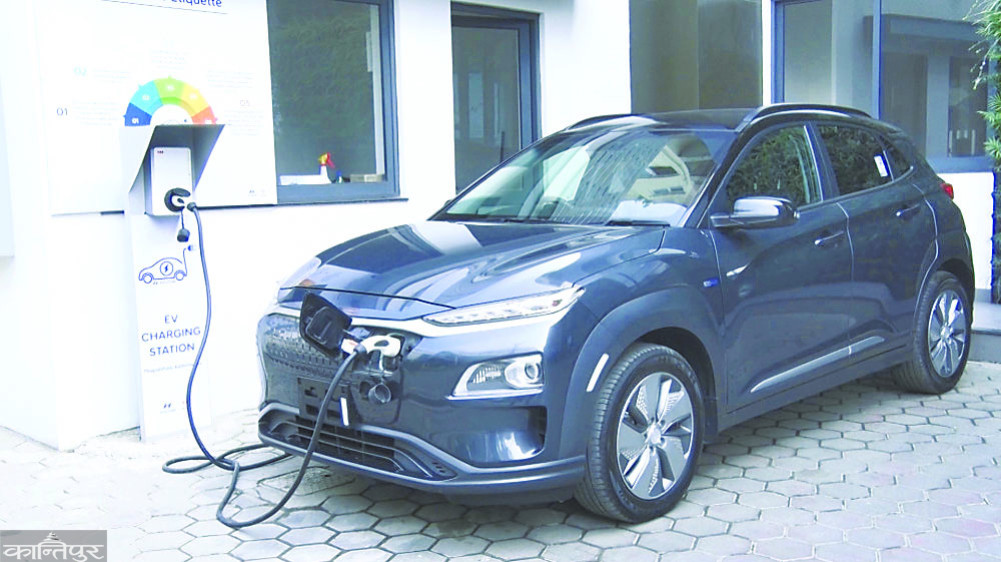
NADA has also expressed concern that creating doubts, spreading confusion, and promoting unfairly without sufficient facts and official basis regarding imported vehicles after completing legal, technical, and institutional processes will lead to a loss of credibility for the entire electric vehicle industry.
We use Google Cloud Translation Services. Google requires we provide the following disclaimer relating to use of this service:
This service may contain translations powered by Google. Google disclaims all warranties related to the translations, expressed or implied, including any warranties of accuracy, reliability, and any implied warranties of merchantability, fitness for a particular purpose, and noninfringement.
Nepal Automobile Importers and Manufacturers Association (NAIMA) and NADA Automobiles Association of Nepal have said that their attention has been drawn to the comments, discussions and interpretations being made about the motor capacity of electric vehicles (EVs) in Nepal through various media in recent times.
The issue was raised by NAIMA in a statement issued by NAIMA earlier in discussions with the Minister of Finance, Minister of Industry, Commerce and Supplies, Minister of Physical Infrastructure and Transport, among others. ‘We were of the view that a clear, practical and uniform system is needed regarding EV motor capacity testing, certification and technical evaluation,’ NAIMA said.
NADA notes that electric vehicles are imported into Nepal only on the basis of official details, testing and certification processes issued by nationally and internationally recognized testing agencies. NAIMA also clearly states that it is a common international practice in the global automobile industry for vehicles of the same model to be produced with different technical specifications according to different countries, regulatory structures and market needs. 'Drawing conclusions about motor capacity based solely on the details seen on the website, model name or external information cannot be considered a technically reliable basis,' NAIMA has said.
NADA has also expressed concern that creating doubts, spreading confusion and unfounded publicity about imported vehicles without sufficient facts and official basis after completing legal, technical and institutional processes will lose credibility towards the entire electric vehicle industry. 'EV entrepreneurs in Nepal are doing business in a transparent and responsible manner by fully complying with the prevailing laws, tax and customs regulations,' NAIMA has said.
NAIMA claims that electric vehicles are becoming an important means of promoting clean energy use, sustainable transport system development and green economy in Nepal. "The expansion of the EV sector is positively contributing to increasing the effective use of domestic clean energy, reducing environmental pollution, and the long-term sustainability of the overall energy and transportation sector," Naima said.