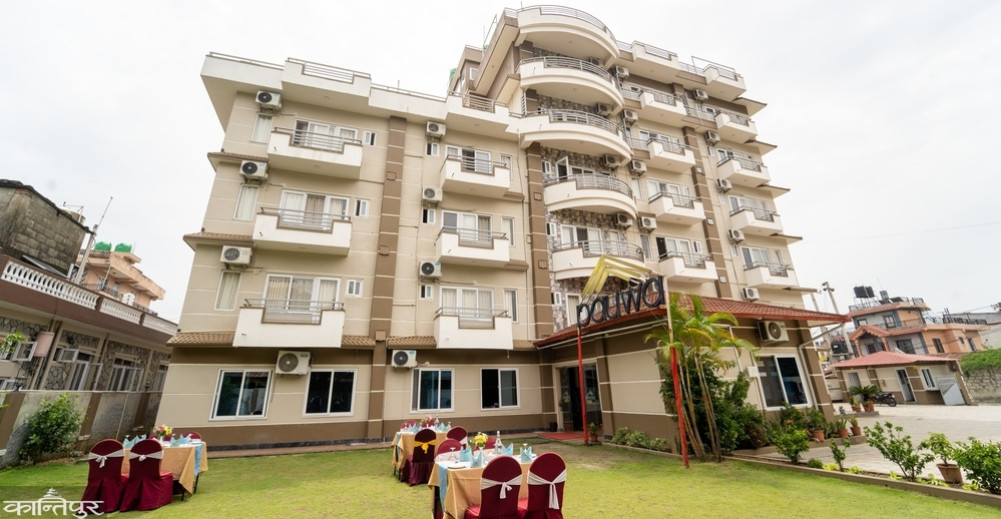
Celebrating a decade of its establishment, Hotel Pauwa has more than 250 investors and 1,000 employees across its various branches.
We use Google Cloud Translation Services. Google requires we provide the following disclaimer relating to use of this service:
This service may contain translations powered by Google. Google disclaims all warranties related to the translations, expressed or implied, including any warranties of accuracy, reliability, and any implied warranties of merchantability, fitness for a particular purpose, and noninfringement.
Hotel Pauwa, which started its journey from a 7-room building in Saljhandi, Rupandehi a decade ago, has now spread across the country. The hospitality journey that began from a small house with a few rooms has now reached various districts from east to west. Pauwa has stated that it is expanding its hospitality network with the goal of opening 100 hotels and resorts across the country in the next decade.
‘We have completed our childhood,’ said Dhruv Neupane, Vice President of Hotel Pauwa. ‘During this period, we have gained experience and also earned trust.’ He said that the journey of a decade has shown the direction for the future. He claimed that ‘Pauwa’ has established itself as the country’s leading hospitality brand as it moves forward by promoting Nepali traditions and cuisine. He said that the goal is to open 100 branches across the country in the next decade, building on the foundation of its childhood.
Celebrating a decade of its establishment, Pauwa has stated that it is possible to establish a ‘Nepali brand’ even through struggle within the country. ‘This is a history of struggle, dedication, faith and achievement,’ said Neupane, ‘This has also proven the potential of Nepali labor and the Nepali brand.’ According to Nepali tradition, travelers used to stay in Pauwa. It was customary to build pati-Pauwa to make it easier for such travelers and travelers to stay. ‘We have adopted the name Pauwa by absorbing that tradition,’ he said, ‘We have adopted the culture of considering guests as God.’
Butwal, Bhairahawa, Saljhandi in Rupandehi, Gorusinghe in Kapilvastu, Nepalgunj in Banke, Jumla in Karnali, Surkhet, Chitwan, Kathmandu, Sindhuli, Pokhara, Janakpur, Bhaluwang, Pauwa has announced that it has expanded 19 branches to tourist destinations including Jhingamara, Tansen in Palpa, Dhangadhi in Kailali, Makawanpur Gadhi, and Kalinchowk in Dolakha. Pauwa has promoted restaurants, accommodations, gardens, and parking as specialties. ‘A short period of ten years is also a sensitive time in terms of development,’ said Durga Prasad Bhandari, chairman of Hotel Pauwa. ‘For us, this period has become a valuable time to build an institutional character.’ 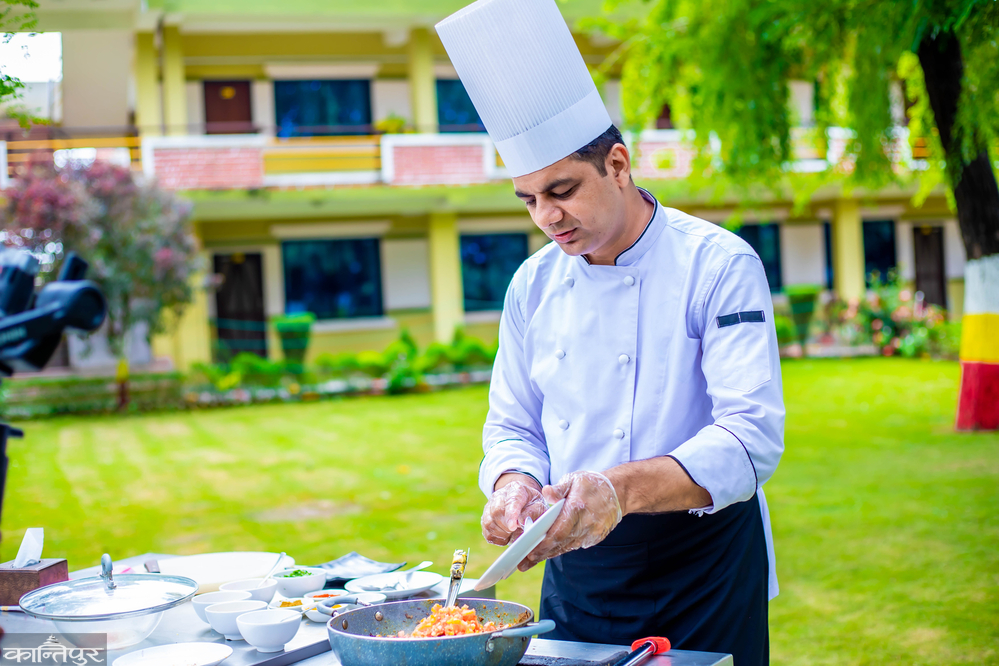
According to him, hotels are being built targeting religious shrines in various provinces. Bhandari said that this is benefiting both domestic and Indian tourists. Rural traditional food of Nepal is available in its branches. It has been organizing a taste festival every year to promote Nepali taste. The hotel has organized a taste festival in the last week of Chaitra to mark the completion of the decade. ‘Pauwa is not just a hotel, it is also an identity of Nepali taste and culture,’ said Bishnu Bhandari, brand head of Hotel Pauwa. ‘Not only the structure of the hotel, but also the Nepali artwork and materials decorated on the walls, the taste of the dishes and the presentation of the employees reflect Nepaliness.’ Pauwa has made Daura-Suruwal the uniform of the employees.
The hotel celebrates every festival to promote Nepali culture. Special cultural programs are organized on festivals including Maghi, Shivaratri, Teej, Dashain, Buddha Jayanti. Bhandari said that this promotes Nepal’s multi-ethnic, multicultural and multi-religious identity. ‘Food festivals organized from time to time have given a commercial form to traditional dishes,’ he said, ‘We organize programs to preserve Nepali language, culture and food.’ He said that they are working to introduce culture at the international level by making festivals a celebration. The public flocks to the Deusi Bhailo, Shivaratri and Sarai Nach organized by the hotel. Bhandari said that Hotel Pauwa is an example for the youth who think that there is nothing in Nepal. According to him, the hotel has emphasized on equal investment by making the employees the owners. ‘In Hotel Pauwa, the main investors and employees have equal status,’ he said, ‘We have encouraged the employees to invest so that they feel a sense of belonging.’ He said that they monitor where the employees are spending the earnings from here. He said that they monitor so that they use the hard-earned earnings for their families.
The hotel has given priority to youth in employment. The hotel’s five department heads are also young. Bhandari is in charge of marketing and branding. Krishna Gautam is the head of operations, Pradeep Bhandari is the construction engineer, Dev Neupane is in charge of food, and Bhojraj Thapa is the head of the accounting department. All of them are under the age of 35. According to Bhandari, the brand head, in some places Pauwa has built hotels with its own investment, and in some places it has taken over the management of hotels that were having problems after building and running them.
Managing Director Bishnu Gyawali said that the slogan of Hotel Pauwa is 'Nepali hospitality begins with Pauwa'. 'We have emphasized the Pauwa accommodation by eating at Pauwa,' he said, 'Pauwa is strengthening its internal structure, refining its management, and institutionalizing quality.' He said that the experience learned in the first decade has helped draw a roadmap for the future. ‘Mission 100 is not just a numerical target, but also a test of management capacity, brand credibility and institutional maturity,’ he said, ‘It is a plan to move forward in the direction of human resource development and making the Nepali hospitality brand with international standards.’ 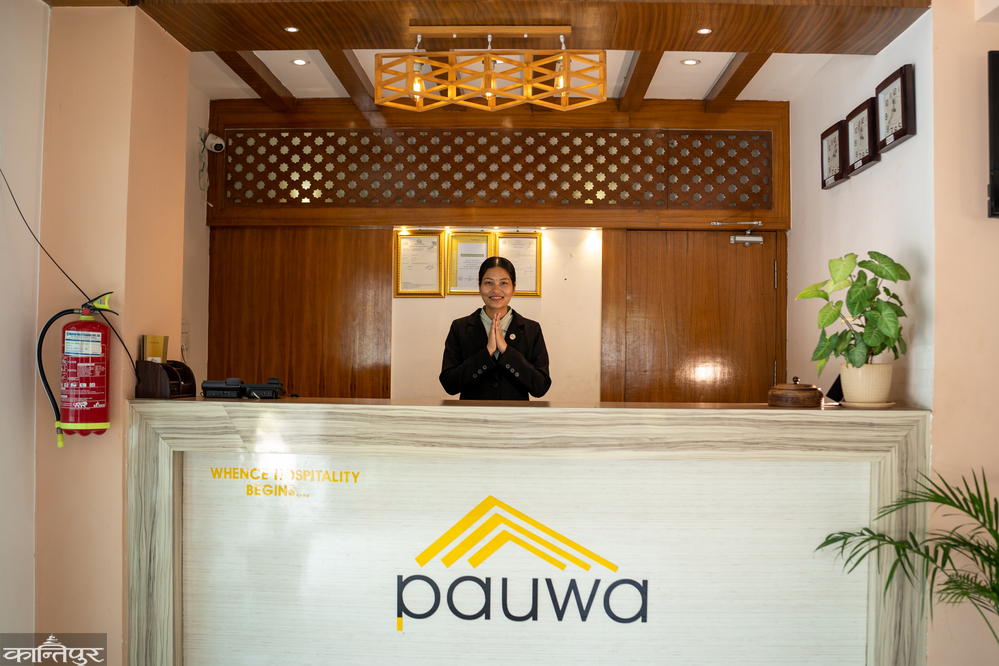
Currently, Hotel Pauwa has more than 250 investors in various branches and more than 1,000 employees. Branches have been expanded from easy to remote. Its investors are also abroad. The hotel has stated that they are playing a role in promoting tourism by promoting Nepali destinations in the countries they are in. ‘Pauwa’s upcoming journey is not just about business expansion,’ said Brand Chief Bhandari, ‘It is also a campaign to establish the Nepali hospitality market on a global scale.’