We use Google Cloud Translation Services. Google requires we provide the following disclaimer relating to use of this service:
This service may contain translations powered by Google. Google disclaims all warranties related to the translations, expressed or implied, including any warranties of accuracy, reliability, and any implied warranties of merchantability, fitness for a particular purpose, and noninfringement.
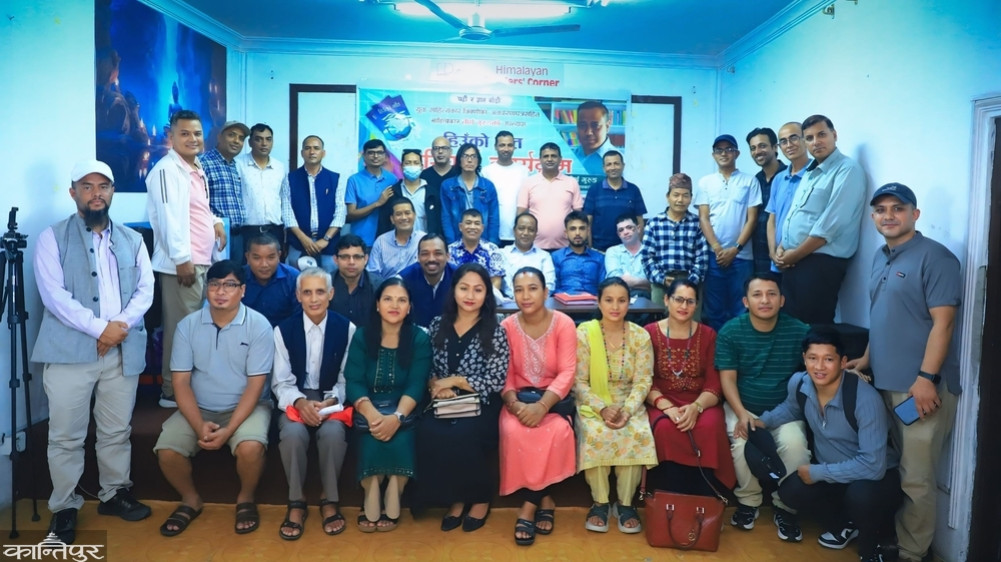
In the novel 'Hiunko Geet' by the writer Tirtha Gurung, the role of colonial power in the disintegration of Raithane knowledge system is discussed. In the 118th regular program of the Random Readers Society in Pokhara on Saturday, it was discussed that the story of the Gurung tribe's Thalo Khola state from its development to its destruction was discussed in the novel.
It is said that the novel presents the story of the social conflict of the ancient society and the disintegration of a settlement in a unique way. While discussing the book, the writer Triveni, based on Raithane's method of knowledge, while discussing the work, opined that the knowledge of family relationships flows collectively through the characters in the novel. He asserted that in the song of snow, there are features of place-specific environmental relations, the tradition of 'payback', the tradition of value and recognition, and the importance of land.
"The novel has uniquely explored the social conflict of the ancient society and has shown its role in the destruction of a settlement," he said, "This is the main plot of the novel which is established in a very beautiful way." In the
program, novelist Tirtha Gurung shared his experience of starting to write novels by connecting them with his personal life. Suffering from a kidney disease, he emotionally recounted the story of how he started writing as a way to symbolically express the revival he received after his father's kidney transplant.
He has previously brought Pathshala (novel) and Apa Kharp (story collection) to the market, he said that he also wrote the novel to pay back his motherland, mother tongue and mother culture. Stating that he has been encouraged by the love of the readers so far, he promised to make changes in the next edition taking into account the suggestions of the readers.