We use Google Cloud Translation Services. Google requires we provide the following disclaimer relating to use of this service:
This service may contain translations powered by Google. Google disclaims all warranties related to the translations, expressed or implied, including any warranties of accuracy, reliability, and any implied warranties of merchantability, fitness for a particular purpose, and noninfringement.
Writer/journalist Basant Basnet gave a long dialogue among the students at Himalayan Whitehouse International College on Sunday. Basnet shared his writing-journey, journalism and experience/feelings on the novel 'Simsara' with the students in the dialogue conducted by the college.
This time Basant Basnet's novel 'Simsara' was discussed in the book-discussion program organized by the college once a month.
'There is never any loss by reading a book, perhaps the most beautiful meditation in life is reading,' Basnet suggested to the students who are studying Plus-Two, 'Reading apart from course books broadens the world of knowledge of students, and also explains the complex relationships between society and people. To read a book is to read the story of the people and society living at the same time.'
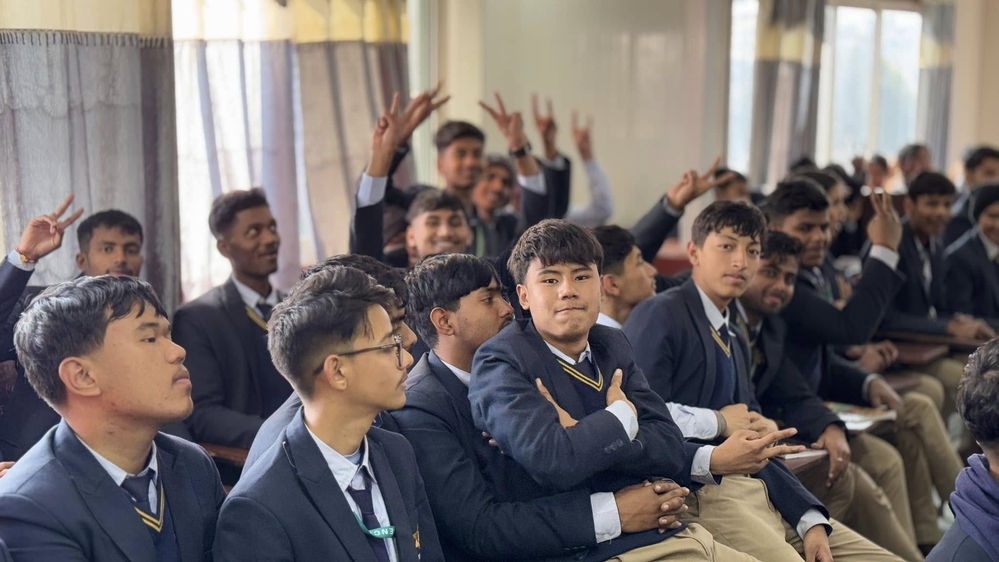 In the session 'Basant Basnet with students' conducted by Shailendra Adhikari, the author of the novel 'Arhat', the author Basnet also narrated the background and composition of the novel 'Simsara'. He also answered the questions of the students about his earlier novels 'Mahabhara' and non-fiction '72 ko Bismay'. "Simsara tells the story of family disintegration and tension, while Mahabhara tells the story of politics, religion and love," said Basnet, "My first book discussed the politics of Madhesh."
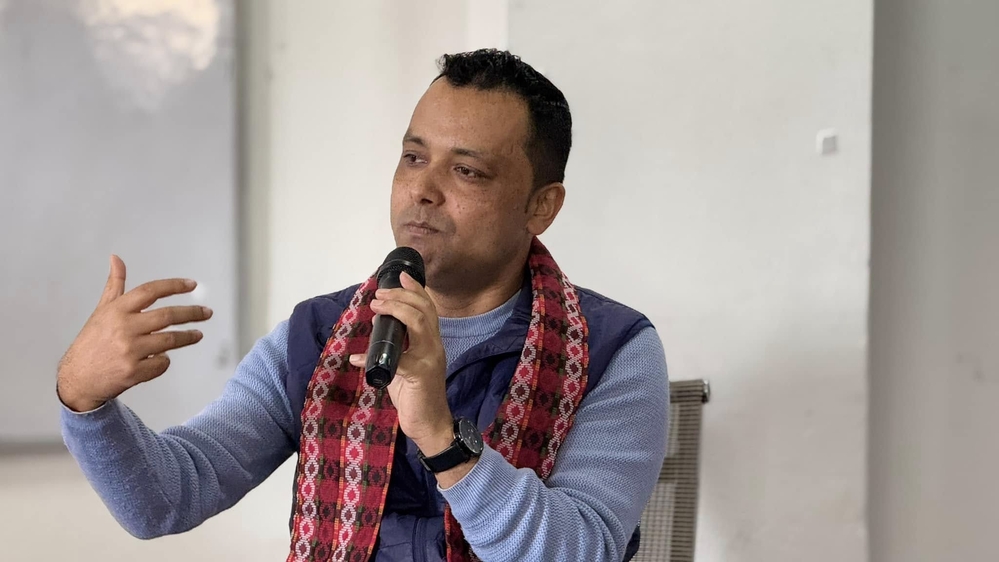 Basnet told that the lives of the characters of Elam and Panchthar are also the lives of his two novels. In response to a student's question about the authors' analysis of a person's life and the time he is living, Basnet said, "Life is actually a long journey." People should accept life as a long journey - success, enthusiasm, failure and acceptance should be remembered as normal events.'' .'

