The popularity and buzz of any sport largely depends on financial resources. Twenty-20 cricket has not only made cricket financially viable, but also made it rich. In this way, Twenty-20 has also helped to keep Test and One-Day cricket alive.
We use Google Cloud Translation Services. Google requires we provide the following disclaimer relating to use of this service:
This service may contain translations powered by Google. Google disclaims all warranties related to the translations, expressed or implied, including any warranties of accuracy, reliability, and any implied warranties of merchantability, fitness for a particular purpose, and noninfringement.
That was a long time ago. Even as late as the 1980s, articles criticizing One Day Cricket were everywhere. Even though One Day Cricket was born only about 10 years before that.
Supporters of traditional Test cricket used to claim that the One-Day game was killing its true form. Many used to mock it by calling it 'pyjama cricket'. Colorful jerseys and a white ball. Many could not accept it. They were the old generation cricket connoisseurs.
Now let's talk about the present. The tenth World Cup of Twenty-20 cricket will start from Saturday. One-Day and Twenty-20 Cricket World Cups have been organized at intervals of some time. Nowadays, it is being heard that One-Day cricket has also not kept up with the times. That is, what was there is now in Twenty-20 cricket. Those who criticized One-Day cricket in the past, what is left to say when they see the discussion of Twenty-20 cricket increasing now?
Now there is also cricket that lasts for two or more days. Its highest form has become Test cricket, five days. One-Day cricket is also happening, one day, with 100 overs. Along with it, Twenty-20 cricket. Now the question befitting the new era, if Twenty-20 cricket had not really come into existence, would traditional Test cricket be playing as it is now? The answer is not easy. But one thing can be said with pleasure, the Twenty-20 format has greatly enhanced the game of cricket. By making the popularity of cricket wider. It is even more than the cricket revolution brought by 20 overs.
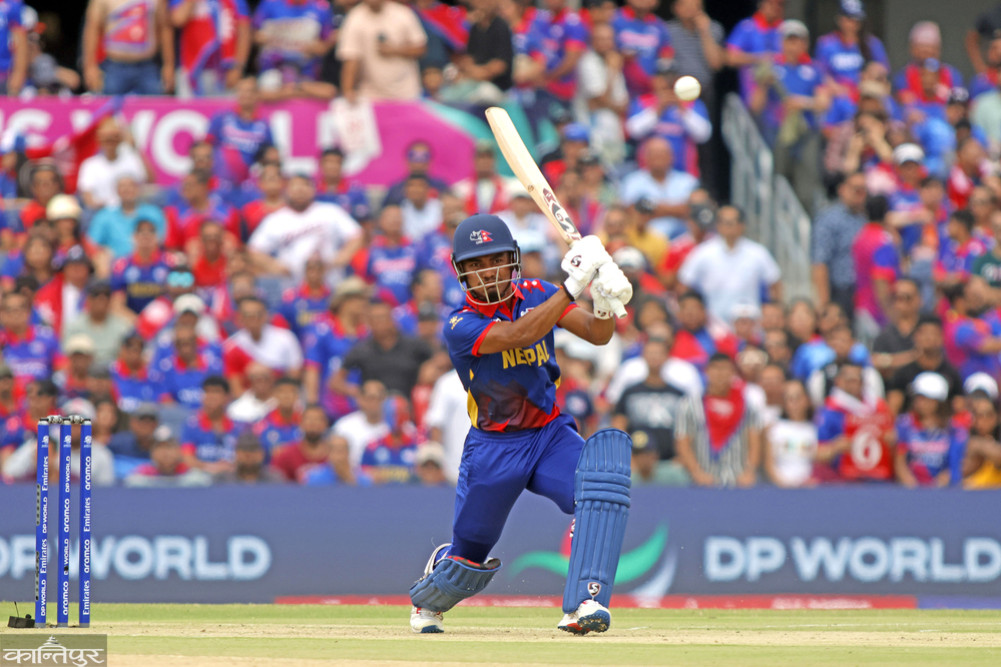
The tenth World Cup of Twenty-20 cricket has started in India and Sri Lanka from Saturday. In the next few weeks, there will be a lot of talk about it everywhere, in countries that love cricket. Nepal is also playing this World Cup, so there will be a lot of talk here too. What is the journey of Twenty-20 cricket of a little over two decades like? What has it given to world cricket? The history of cricket itself is about 150 years old.
When Twenty-20 cricket was started, it was given a slightly exaggerated name, ‘Heat and Giggle’. In 2003, cricket's popularity began to decline dramatically in England, the birthplace of the game. Cricket lovers began to say that the game itself was not up to date, it needed a new form. This younger form of cricket, which started in a humble manner, has finally changed the game forever.
Now, how come Test cricket was also played in Twenty-20 format. What is the biggest virtue it has brought to world cricket? The first answer to this is, players who actually look like athletes. Otherwise, in a certain era, even players who looked 'lazy' were considered eligible for this game. Nowadays, if a player is not completely physically fit, they would not think of continuing to play. Now the days when a batsman could play the entire game in a lazy manner are gone.
Now is the time for batters who can rotate 360 degrees and strike. Now, cricketers must be as agile as gymnasts. These players don't have to do anything but slide, dive, relay catch towards the boundary, etc. while fielding? Due to Twenty-20 cricket, more and more runs have been scored in Tests, whereas earlier even two hundred runs were considered good in a one-day match. 'Reverse sweep' and 'scoop' have started being used in Test cricket as well. That is why, draws in Test cricket are now rare.
And due to Twenty-20 cricket, this game has also produced many types of specialist players. Like 'power hitters', i.e. players who are taught to play aggressively in the last five overs. 'Mystery bowlers', i.e. those bowlers who cannot be predicted what kind of bowling they will do at any given time.
And also 'death bowlers', i.e. those special bowlers who not only bowl sharp yorkers in the final and decisive moment, but can also bowl surprisingly slow balls. If we were to list new things like this, it would be long. There may be more uses in the future.
World cricket is always faced with a serious accusation that it has become limited to the games of a few countries. Other sports spread themselves, this game is happy to be limited to a few teams. This accusation is true to some extent. However, this fact is being broken by itself, because of Twenty-20 cricket. This time 20 teams are playing in the World Cup, this number will increase in the future. This time Italy is playing the World Cup for the first time. If we were to go back to the 80s, we would have laughed a lot when we heard that Italy played cricket, thinking it was a joke.
The main thing is that the popularity and buzz of any game depends on financial resources. If anyone has not only given money to cricket, but also made it rich, it is Twenty-20 cricket. The development of franchise cricket has made this game very professional. The financial resources raised by Twenty-20 have to some extent supplanted other forms of cricket. In this way, Twenty-20 has also helped to keep Test and One-Day cricket alive. That is, the Twenty-20 format has made world cricket hum. This is it, the cricket revolution brought by 20 overs.