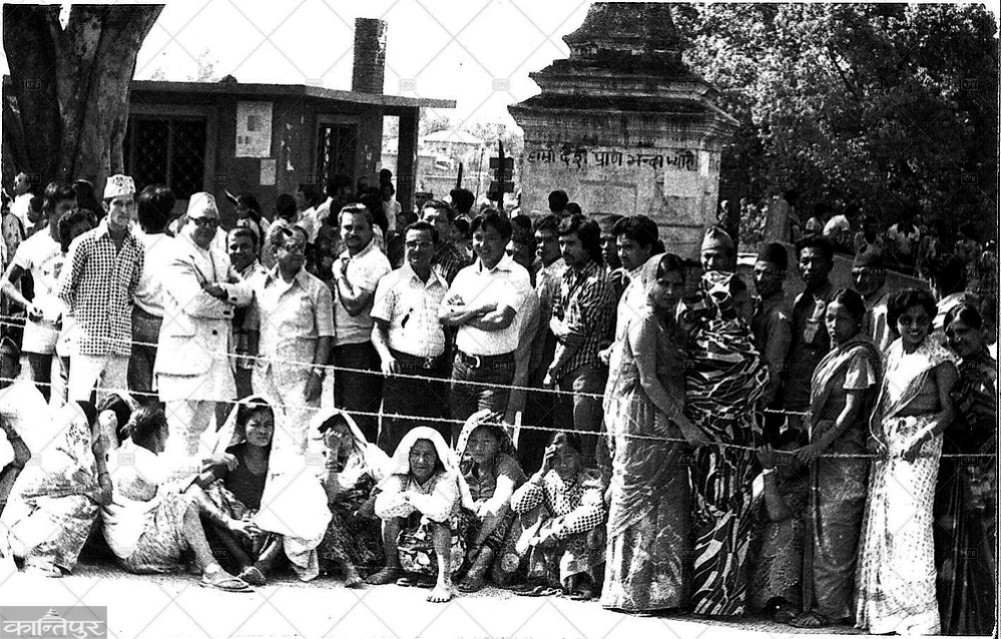
The referendum was supposed to ask two questions – ‘Should we maintain the current Panchayat system with occasional reforms? Or instead, establish a multi-party system of governance?’
We use Google Cloud Translation Services. Google requires we provide the following disclaimer relating to use of this service:
This service may contain translations powered by Google. Google disclaims all warranties related to the translations, expressed or implied, including any warranties of accuracy, reliability, and any implied warranties of merchantability, fitness for a particular purpose, and noninfringement.
Pakistan was very turbulent in the 1970s. The country was in the throes of a split.
Zulfikar Ali Bhutto had sprinkled the poison of power tactics on that wound. Protests, angry demonstrations, and election dramas were being staged.
Eventually, Bhutto himself was the one who was replaced by Mohammad Zia-ul-Haq, who had made him the army chief, after removing five senior generals. After the coup, Bhutto was arrested and released for some time. However, in March 1978, the Lahore High Court found him guilty of a murder charge and sentenced him to death.
The referendum was to ask two questions – ‘Should we maintain the current Panchayat system and make timely improvements to it? Or instead, establish a multi-party system?’ The date for the referendum was set – 20 Baisakh 2037. . In February 1979, the Supreme Court upheld the High Court's verdict by a 4-3 majority. Although the verdict was made through a controversial judicial process with military influence, the verdict was implemented at midnight on April 4, 1979 (22 Chaitra 2035). Bhutto was hanged in the Central Jail in Rawalpindi.
This news hit Kathmandu, about 1350 kilometers away from Rawalpindi, as a flash. On 24 Chaitra, students from various campuses in Kathmandu reached the Pakistani embassy to submit a memorandum. However, the police suppressed it. Then, student strikes and protests began. The student protests that spread across the country were stopped only after the royal proclamation of 10 Jestha 2036. In the royal proclamation, the king had said, ‘We have announced that arrangements will be made to hold a secret referendum of all Nepalis based on adult suffrage throughout the Kingdom of Nepal.’
The referendum was to ask two questions – ‘Should we maintain the current Panchayat system and make timely improvements to it? Or instead, establish a multi-party system?’ The date for the referendum was set – 20 Baisakh 2037.
Arrangements were made to allow representatives of both parties (independent and multi-party) to be present on one side of the ballot box and the place where names were verified at each polling station and sub-center. The ballot paper prepared for the referendum had a border drawn in the middle on a 4/4 inch paper. The name of the party concerned was written on the ballot paper, which had the yellow color of the Panchayat system on one side and the blue color of the multi-party system (sky blue) on the other.
For the king, who claimed to be ruling ‘according to the will of the people’, it was imperative to win the Panchayat to maintain prestige and the panchayat leaders to maintain a single umbrella in power. As soon as the referendum was announced, the then Prime Minister Kirtinidhi Bista resigned, and Surya Bahadur Thapa was appointed as the new Prime Minister.
The government including Thapa did many things to win the Panchayat. Money was taken from employees and businessmen. At that time, 41 million rupees was taken from Chothmal Jatiya on the condition of granting Nepali citizenship and allowing him to smuggle snake skin. (Navaraj Subedi/A Period of History) Similarly, extensive deforestation was carried out.
Prime Minister Thapa was more active in winning the Panchayat. Leaders in favor of independence would attend public meetings across the country and speak in favor of the Panchayat. Until the referendum, there was a struggle between the hardliner and softliner leaders of the Panchayat. However, after the referendum was announced, unity was seen between them.
What did the Congress say?
The Congress had welcomed the referendum announcement. On 17 Jestha 2036, he had said, ‘This has proven to be a major step towards resolving the existing national crisis.’ It is clear from the speeches, statements and party pamphlets of the leaders that the Congress adopted a propaganda policy of exposing the Panchayat and making people understand the importance of multi-party system while campaigning for the referendum. The Congress propaganda department had published an appeal, in which ‘What did the non-party (Panchayat) system give to the people, what did it do?’ and ‘What does the multi-party system (democracy) give to the people, what does it do?’ were mentioned point by point.
What did the non-party Panchayat system do? The Congress had said that the political status of the Nepali people was reduced from ‘citizens’ to ‘community members’. Those who raised their voices for the restoration of democracy were labeled as anti-national elements and were subjected to jail, imprisonment, exile, total hanging and shooting.
In the absence of public participation, politics for development and the cheap slogans and programs of all-round development have on the contrary brought the economic level of Nepal to the ranks of the poorest countries in the world. The Panchayat system, which has been a curse for Nepal and Nepalis for 20 years, has not only ruined the country and plundered the nation, but also posed a great threat to the nationhood and the existence of the country.
The Congress had said that in a multi-party system (democracy), all the people will be freed from the chaos of the people and will become citizens who exercise their rights with their heads held high. A multi-party system (democracy) will establish the rule of law in the country and protect human rights by winning the hearts of the people, not by relying on guns.
In a multi-party system (democracy), the discrimination between the hill and the Tarai people will end. A wave of proper arrangements for transportation, industries, education, health, canals, dams, drinking water, etc. will begin in the Terai and hilly regions based on fair treatment, need, utility and priority.
The Congress had said that after a long period of 20 years, the people were able to decide their fate through a referendum and that it was the ultimate duty and responsibility of every Nepali to actively participate and support the cause of democracy.
On the occasion of the New Year of 2037, BP Koirala had also issued a separate appeal. He said – ‘Democracy was established on Falgun 7, 2007 with the courage and sacrifice of the revolutionaries. The opportunity for Nepal’s 7.2 million determined voters to restore that democracy that was ended on Poush 1, 2017 is coming on Baisakh 20, on that day the nation will take a long step towards an encounter with destiny.’
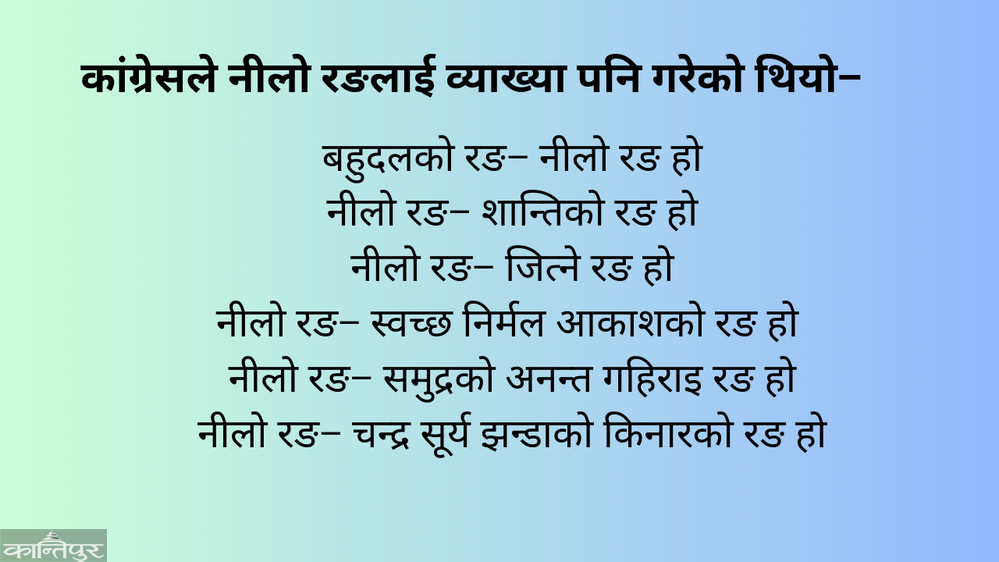
BP had more faith in the king regarding the fairness of the referendum. He had rejected the offer of cooperation made by some leftist parties that were in favor of multi-party politics.
Writer Dhach Gotame, who was a government employee at the time, writes, ‘A high-ranking leader like BP could not make a proper political assessment of the referendum. How could he be confident that the referendum, which was a question of life and death for non-partisanship, would be impartial by the king and the administrator? It is surprising.
On Chaitra 21, 2036, at a public meeting in Siddharthanagar, he bluntly said – ‘There can be no doubt about the royal declaration that the referendum will be impartial.’ Ganeshmanji’s demand that the local bodies of the Panchayat should be dissolved nationwide and Manmohanji’s demand that the referendum be conducted by an impartial interim government, he rejected both and made a short-sighted prediction that 99 percent of the votes would be in favor of multi-party politics.’ (Dhach Gotame/Kalantar).
Divided Communists
There was no consensus among the communist parties on how to understand and use the referendum. Among the parties that were in the midst of mutual division, some used it, some boycotted it. However, except for a few, the confusion of the rest remained.
Jayagobinda Shah, Nirmal Lama, Narayanman Bijukchhe, Sahana Pradhan, Chitra Bahadur KC, Bharat Mohan Adhikari, Kamal Prasad Koirala, Mahesh Prasad Upadhyay had signed and issued a five-point statement on Bhadra 5, 2036. These included the release of the royal prisoners, withdrawal of cases, dissolution of all bodies of the Panchayat system and the Panchayat government and formation of an interim government, suspension of all laws restricting the fundamental rights of citizens, and voting rights for all citizens who have reached the age of 18. However, they could not move forward in a united and concrete manner until the end.
The CPN-ML decided in its Politburo meeting on 22 Jestha 2036 that ‘the fascist king, in secret collusion with Indian expansionists and the Nepali Congress, has created a fraudulent drama of the so-called ‘referendum’ to suppress the people’s revolution and save the monarchy and reactionary regime that is about to collapse, therefore, it decided to broadcast a directive to oppose and boycott it and continue to pursue its objectives.’
Later, it suspended the boycott slogan and supported the five-point conditions put forward by the multi-party democratic forces. Although the party was ready to raise the slogan ‘the fairness of the referendum must be guaranteed’, it was not ready to call for the multi-party system to be long-lived.
The fifth meeting of the party Central Committee held from 3-4 Baisakh 2037 decided to boycott the ‘referendum’ and continue the struggle against autocracy and independence when the five preconditions were not fulfilled. Perhaps if the government accepted the precondition, the party also decided to call for a vote to the people. Ultimately, when no positive action was taken by the government, the party continued the policy of boycott. (Surendra KC/History of the Communist Movement in Nepal (Part-2). The CPN-ML, in its Politburo meeting on 22 Jestha 2036, decided that ‘the fascist king, in secret collusion with Indian expansionists and the Nepali Congress, has created a fraudulent drama of the so-called ‘referendum’ to suppress the people’s revolution and save the monarchy and reactionary regime that is about to collapse, therefore, it decided to broadcast the directive to oppose and boycott it and continue to persevere in its objectives.’
Thus, the policy of the Nepalese government regarding the referendum remained ambiguous. Another left party, the Nepal Communist Party (Fourth General Conference), opposed the referendum. There was also a difference of opinion in the Nepal Workers and Peasants Organization (later the Nepal Workers and Peasants Party). (Bharat Mohan Adhikari/My Life Journey).
According to Sahana Pradhan, who is leading the Pushpalal group, the extreme left wing of the Nepali communist movement was busy boycotting the referendum. The extreme left wing said, ‘If the multi-party party wins the referendum, politics will reach the ballot box and the people’s war will be weakened. Therefore, the referendum is a fraud. Multi-party and non-party are the same thing.’
This kind of boycott could not affect the vote in favor of non-partyism. It was clear that this boycott would negatively affect the vote of the multi-party party in the name of revolution. (Sushila Shrestha/Sahana Pradhan: Smriti From the window).
There was a group of NCP members including Sahana Pradhan and another group led by Manmohan Adhikari who were in favor of using the referendum. Sahana Pradhan says that they emphasized that ‘boycotting the referendum indirectly means supporting non-partisanship’ at that time. That is why he also says that the followers of the extreme leftists chased, chased and disrupted their general meetings.
Congress President BP distanced himself from the collaboration with the Communist Party. Bharatmohan Adhikari writes, ‘Manmohan Adhikari had proposed to BP Koirala to form a national committee of multi-party supporters to run a campaign in favor of multi-party. He told BP, ‘Let’s form a national platform to win the multi-party, you will be the president in it, I will be a member’. BP flatly rejected his proposal to form a national platform to bring all the multi-party forces together to run a strong campaign to win the multi-party.’ (Bharatmohan Adhikari/My Life Journey).
The reformed Panchayat won
Those who had completed 21 years of age by 10 Jestha 2036 were allowed to vote for the referendum. The number of voters was 71,92,451. 48,13,486 (66.925 percent) votes were cast. Of the votes cast, 3,72,069 (7.63 percent) were invalid. A total of 24,33,452 (54.79 percent) votes were cast in favor of the reformed Panchayat system. A total of 20,07,965 (45.21 percent) votes were cast in favor of the multi-party system.
In 19 out of 75 districts, the multi-party side received more votes. The districts that received more votes were Morang, Sunsari, Siraha, Udayapur, Sarlahi, Kathmandu, Lalitpur, Bhaktapur, Chitwan, Rautahat, Kaski, Rupandehi, Palpa, Dang, Bardiya, Surkhet, Doti, Kanchanpur, Dadeldhura were. (Election Commission/History of Nepal's Elections).
The accusations that the Panchayat party won through rigging were loud. Yet BP Koirala readily accepted the results. After winning the referendum, all the workers affiliated with the Panchayat from all over the country flocked to Kathmandu. The Panchayats were privileged, never worried, only sought positions, and were more concerned with how they would gain positions, prestige, and wealth from it than with faith and loyalty to the system. After the referendum, even the court seemed confident that no one could shake the Panchayat system from anywhere (Navaraj Subedi/A Period of History).
The gist of all this is that after the referendum, the Panchayat supporters felt that their system had gained legitimacy. It happened. The way the money was distributed in the Panchayat, the tendency of exploitation developed in the Panchayats. Earlier, such a tendency among those at the center of governance has now spread to the lower levels. It has rapidly spread the distaste for the Panchayat. The accusations that the Panchayat party won through rigging were loud. Yet BP Koirala readily accepted the results.
On the other hand, the victory of the Panchayat was not absolute. At the time of the announcement of the referendum, timely reforms in the Panchayat were promised. Therefore, the court was under moral restraint. Therefore, it was forced to move forward with the process of amending the constitution.
On the other hand, the multi-party system realized that half of the people had turned against the Panchayat. This gave them the courage to fight against the system. After the referendum, the political parties relaxed to some extent. They started using the elections as a cover. It became easier to communicate with the people. The possibility of cooperation with different parties also increased. A common 'enemy' was identified.
Male also later criticized himself saying that 'not being able to use the referendum was a weakness'. He also fielded a people's candidate in the Panchayat elections. It started to be used. In the 2046 movement, there was cooperation between the Congress and the leftist elements. Finally, on 26 Chaitra 046, the king bowed down. The Panchayat system became history.