Tirhutiya Ganchi, a place where soldiers who fought in the war used to rest, has now become a witness to political rallies and ceremonies.
We use Google Cloud Translation Services. Google requires we provide the following disclaimer relating to use of this service:
This service may contain translations powered by Google. Google disclaims all warranties related to the translations, expressed or implied, including any warranties of accuracy, reliability, and any implied warranties of merchantability, fitness for a particular purpose, and noninfringement.
In the Nepali dictionary, ‘Pur’ means city, town, and market. In the Treta Yuga, it was located within the capital of King Janak, Janakpur. The name Janakpur is associated with the name of King Janak. However, as the Nepali dictionary says, the meaning of Pur added after Janak is not that. There is a mythological belief that Janakpur was named because there was an area, i.e. Pur, ruled by King Janak during his reign.
In the 7th century, a Chinese traveler visited the Janakpur area and mentioned that its name was Chensuna. According to analyst Roshan Janakpuri, the name Janakpur was given because it was associated with King Janak and Sita. ‘Janakpur is an old name. The name Janakpur is also mentioned in the works of Maithili Kokil poet Vidyapati,’ Janakpuri said, ‘The settlement and market developed from the area ruled by the kings and maharajas. Janakpur is also that.’
In 1417 BS, Surkishore Das from Lohagarh, Madhya Pradesh, India, who was a monk, arrived in Janakpur in search of the golden idol of Sita. After Sita told him in a dream, ‘Wherever my golden idol is found, that is where Janakpur is,’ he set out in search of the idol.
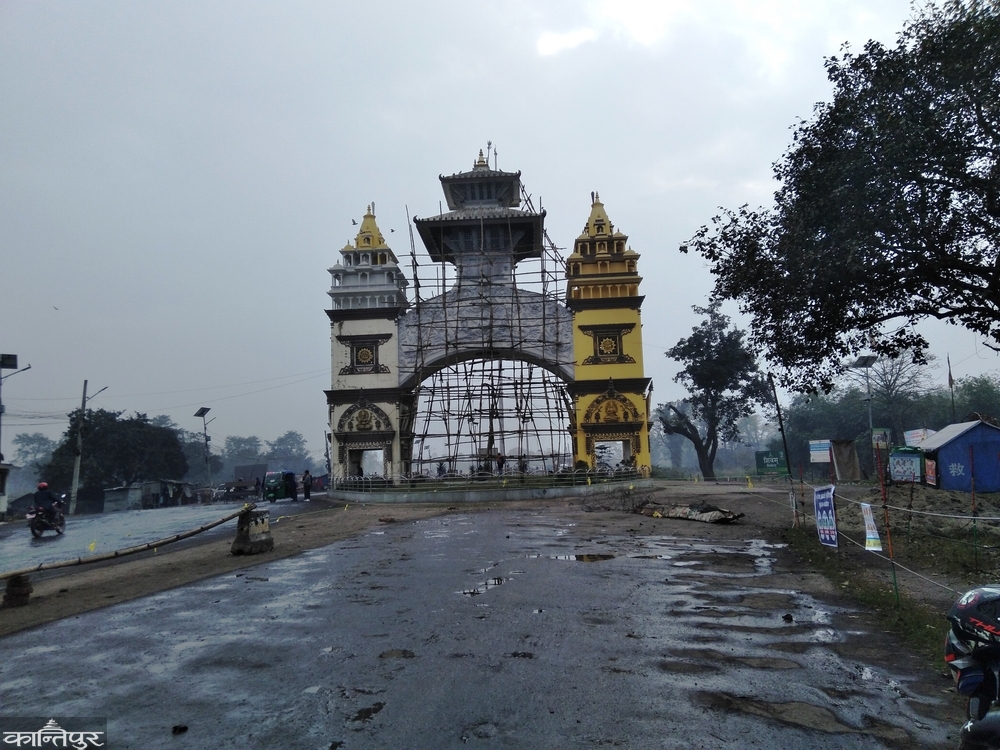
He built a hut at the place where Sita’s golden idol was found. And, he started living there. Although it is called a fantasy, the place where the Janaki Temple is now located was a hut. At that time, Janakpur was a small settlement in a dense forest. After the news of the discovery of the golden statue of Sita spread, Rani Vrishabhanu Kunwar of Tikamgarh in Madhya Pradesh, India, came to Janakpur.
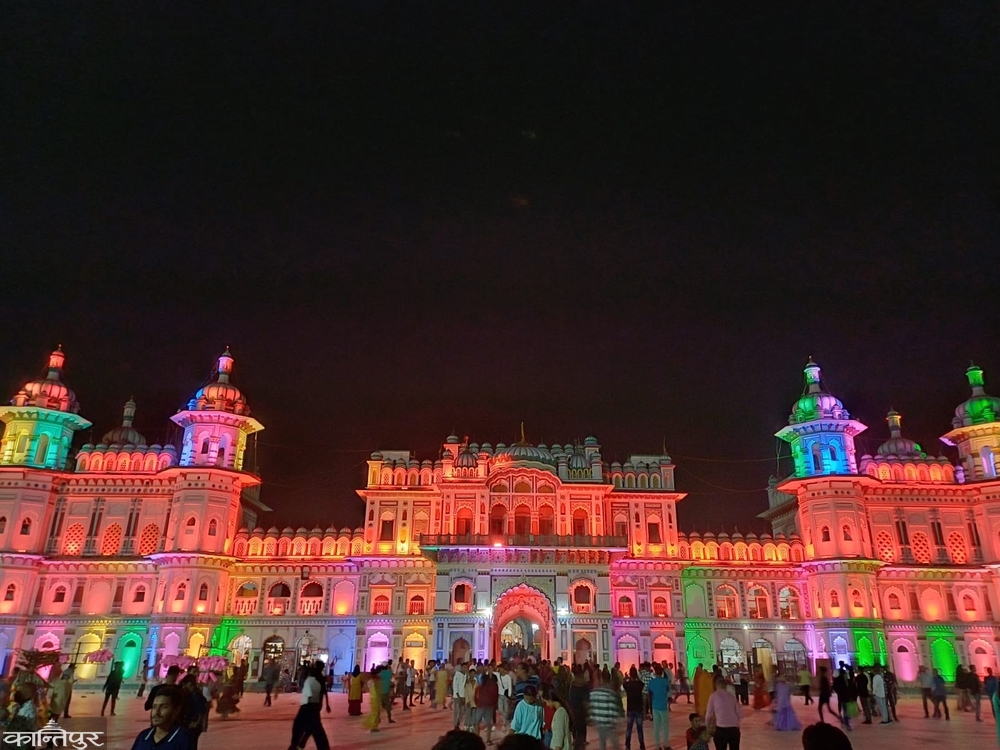
Childless, she vowed to have a child. After having a child, the queen made the Sita temple in the hut luxurious. The Janaki Temple, built at a cost of 9 lakh silver asrafis, is also called 'Naulakha Temple'. The construction of the Janaki Temple, whose foundation stone was laid in 1894, was completed in 1911. The small settlement in the forest, Janakpur, began to transform into a dense settlement after the construction of the Mughal-style Janaki Temple. Janakpur took on the form of a city due to the Janaki Temple, the largest temple in Nepal in terms of area and the holy place of worship.
Experts say that both the historical and linguistic aspects of the connection between Haripur and Ishwarpur in Sarlahi are connected. Haripur was named after the settlement of Hari, meaning God. There is a historical Mahadev temple in Chitain, Haripur. Similarly, Ishwarpur refers to Ishwar, meaning God. Former president of the Federation of Nepali Journalists, Beni Bahadur Karki, says, ‘The reason why Haripur and Ishwarpur were connected is because they were ancient and religious centers of Mithila civilization.’
Birshamsher’s Ganj
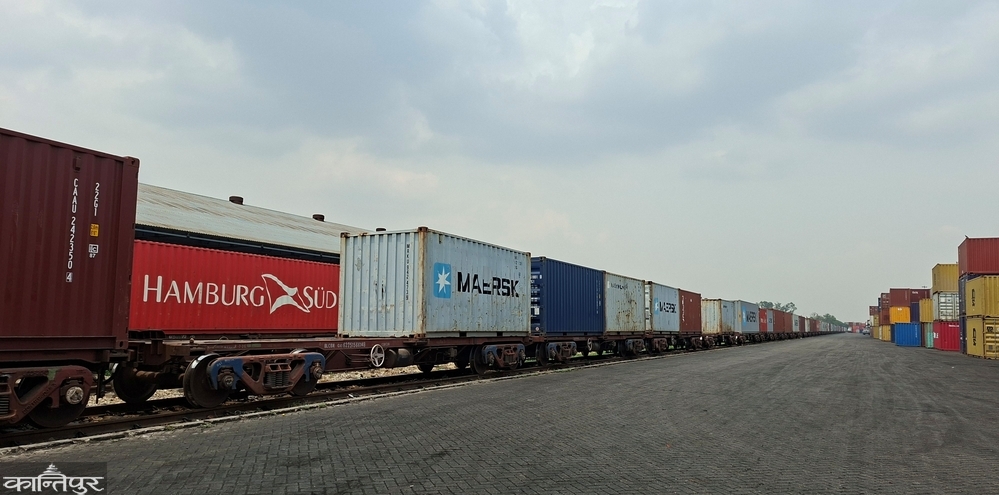
Birgunj is a 116-year-old city. It is estimated that the then Shri 3 Birshamsher established the Birgunj Bazaar between 1945 and 1950. It is said that its name remained Birgunj because Birshamsher established it. In the Nepali dictionary, the meaning of Ganj is a word that becomes the name of a settlement or market by adding a suffix to the end of the name.
Before the establishment of Birgunj, the main center of Parsa district was Alau. There is a history of setting up a military camp in Alau of Parsa from Sugauli in the month of Shrawan 1904. In a brief introduction to Birgunj Metropolitan City, before the establishment of Birgunj Bazaar, the surrounding villages of Bagahi, Alau, Barewa, Kalaiya, Prasauni, Inaruwa, and Chhapakaiya had already come into existence. There was a small road from Kalaiya to Alau via Prasauni and Inaruwa villages and then Chhapakaiya.
To establish Birgunj Bazaar in a forest-covered area, Shri 3 Bir Shamsher had appointed his trusted duo Siddhabir Mathema and Dhwajbir Mathema (two brothers) as the chiefs of the goods depot and the timber depot respectively and posted them to Birgunj. In the same vein, Siddhabir Mathema distributed free land and timber and provided cash assistance to those building houses in Birgunj.
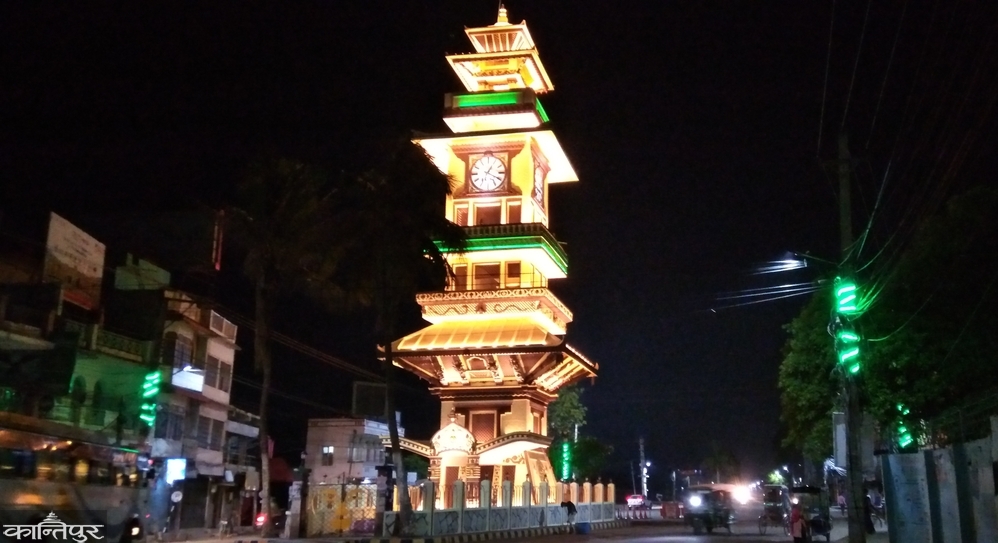
The name Birgunj is also linked to the history of Rana-era politics, trade promotion, and administrative decisions. Ganesh Lath, author of the book 'Simant Samjhana', which includes the history of Birgunj and its canals, says that the settlement and expansion of the market in Birgunj are linked to the tenure of Rana Prime Minister Birshamsher.
According to Lath, to boost trade activities, the then Rana rulers had started developing markets in a planned manner in the border area connecting with India. In the same vein, the name 'Birgunj' is believed to have been established by combining 'Bir' from Birshamsher's name and the Persian-Urdu word 'Gunj'. The word 'Gunj' comes from the Persian language.
It means market, trading center, or settlement. Lath says that before 'Ganj', there was a custom of using the word 'Gadhi' instead of 'Ganj' in Nepal. Lath says that Simaragadhi is also connected to Parsagarhi, Baragarhi, Sindhuligarhi and the present city of Simara.
'Chandranigahapur' through Chandrashamsher's care
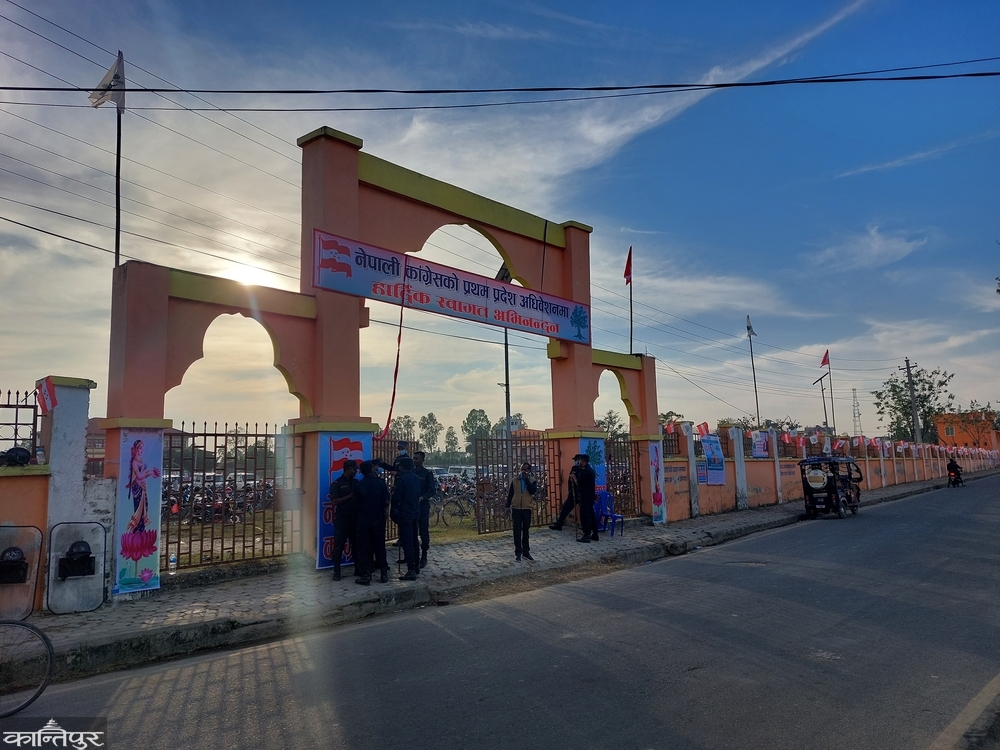
Chandranigahapur in Rautahat, located on the East-West Highway, is recently known as Chapur. Chandranigahapur, which is named after Chandrapur Municipality, was named after someone.
The name Chandranigarpur is interesting, and historical reasons are also associated with this name. It is mentioned in the brief introduction of Chandrapur Municipality that Chandranigahapur was named after Chandrashamsher Rana, the 13th Prime Minister of Nepal, who took care of the place. ‘At that time, the Ranas used to stay in this area when they came to the Terai for hunting,’ says the introduction of Chandrapur Municipality, ‘Jung Bahadur Rana used to go out for hunting via the then Bhikshakhori, which is now Amlekhgunj.’
People started calling this place Chandranigahpur because the name Chandrashamsher was associated with it, said Dr. Shaligram Sharma, a social worker from Chapur. ‘It was named Chandranigahpur because it was a Nigah box from Chandrashamsher,’ said Sharma, ‘After he went hunting, the settlement here increased.’
Saptari-Mahottari: A place of penance
It is believed that the name Saptari was named after Saptari. The word Sapt means seven and the sage of sages. In ancient times, this area was called Saptari because seven sages performed penance in this area. It is understood that it became Saptari due to corruption over time.
There is another argument for the name Saptari, the name Saptari is also named because seven major rivers flow through it. The Saptari region was the territory of the ancient Tirhut and Chaubandi kingdoms. It is also understood that the name Saptari came into use when the region established a separate identity due to religious, cultural and geographical features.
Similarly, the name of Mahottari district is linked to religious and historical beliefs. The word Mahottari is derived from the Sanskrit language. In Sanskrit, the word Mahottari means a great place or an area of special religious importance. In ancient times, the Mahottari region was an important place for penance, sacrifices and religious activities. That is why it is believed to be called Mahottari.
The meaning of Mahottari is also linked to the kingdom of King Janak. This region had a special place as a religious and cultural center of Mithila. Mahottari, the place of penance of sages and great saints, is named after Sanskrit, religious beliefs, and the Mithila civilization. There is another theory that a Brahmin named Mahodari dug a pond of about five bighas and named it after himself. It is also believed that the district was named Mahottari after the same pond.
Malang Baba became Malangwa, Barad-Bas became Bardibas
The temple of Malang Baba, located in the border area of Malangwa, the headquarters of Sarlahi, is where both Hindus and Muslims worship according to their respective traditions. Hindus worship in the form of a temple, while the Muslims bow their heads there as a shrine. It is believed that Malangwa came to be known by the name of that temple. It is believed that there were many residences and movements of saints and ascetics in the ancient period. The word Malang refers to a saint and ascetic. The name Malangwa was given to the city because it was their residence, says Shivchandra Chaudhary, general secretary of the civil society.
How was the name of the city of Bardibas in Mahottari, which is spreading its splendor with modern cities and mixed settlements, named? Although it is not clear, there are some arguments that the name Bardibas was given because it is connected to trade and residence.
According to locals, the name Bardibas was given because it was a place where traders used to live and a border crossing connecting Madhesh and the hills. It is believed that Bardibas was named by combining Bardi, which means trader or prisoner, and Bas, which means place to live.
In a brief introduction on the website of the Bardibas municipality, it is said, ‘At that time, bullock carts were used to transport wood. People and bullocks were also kept overnight around the pond. In the Maithili language, the bullock is called ‘Barad’, so the custom of calling it ‘Bardaba’ came to be because Barad lived there. It is believed that it was later corrupted and called 'Bardibas'. Some also say that the name Bardibas came about because soldiers returning home from India took off their uniforms and stayed there.
Witness to War and Politics: Tirhutiya Ganchi
Tirhutiya Ganchi, once surrounded by dense forests, is now a wasteland. During the Tirhut kingdom, Tirhutiya Ganchi was a resting place for the Tirhut (Tharu) army. There are barely a dozen trees in Tirhutiya Ganchi, which was surrounded by dense forests.
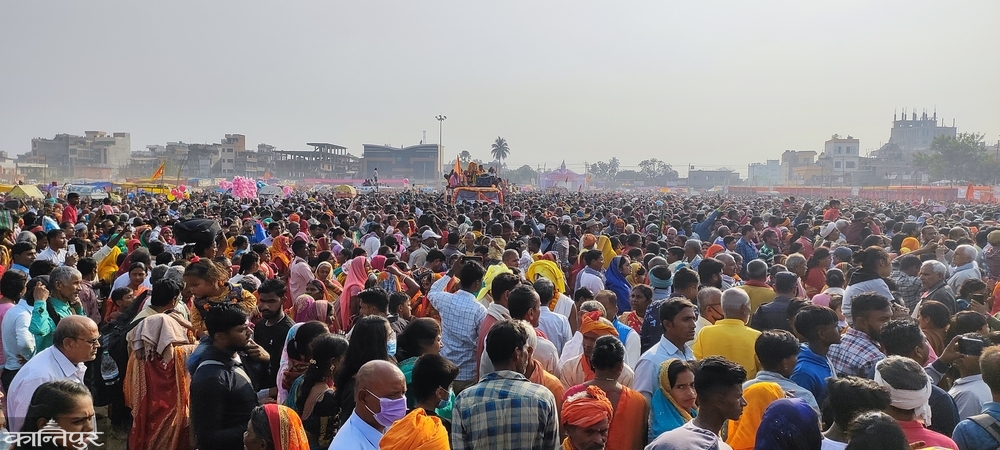
Tirhutiya Ganchi, which used to cover an area of about 20 bighas from Murali Chowk, Kadam Chowk, Fawad Hatiya, and Ram Chowk in Janakpur, has now shrunk to an area of about 4 bighas. ‘Like the Janaki Temple, Tirhutiya Ganchi is also a heritage site of Mithila-Madhesh,’ says Janakpur-based social worker Amar Chandra Anil, ‘but it has fallen into obscurity due to lack of protection.’
Tirhutiya Ganchi, a place where soldiers who fought in the war used to rest, has now become a witness to political meetings and ceremonies.

