There are many places in Chitwan, Makawanpur, and Sindhuli that have 'Gadhi' added to their names, and in Dhading and Sindhupalchowk, there are many places that have 'Bise' and 'Tar' added to their names.
We use Google Cloud Translation Services. Google requires we provide the following disclaimer relating to use of this service:
This service may contain translations powered by Google. Google disclaims all warranties related to the translations, expressed or implied, including any warranties of accuracy, reliability, and any implied warranties of merchantability, fitness for a particular purpose, and noninfringement.
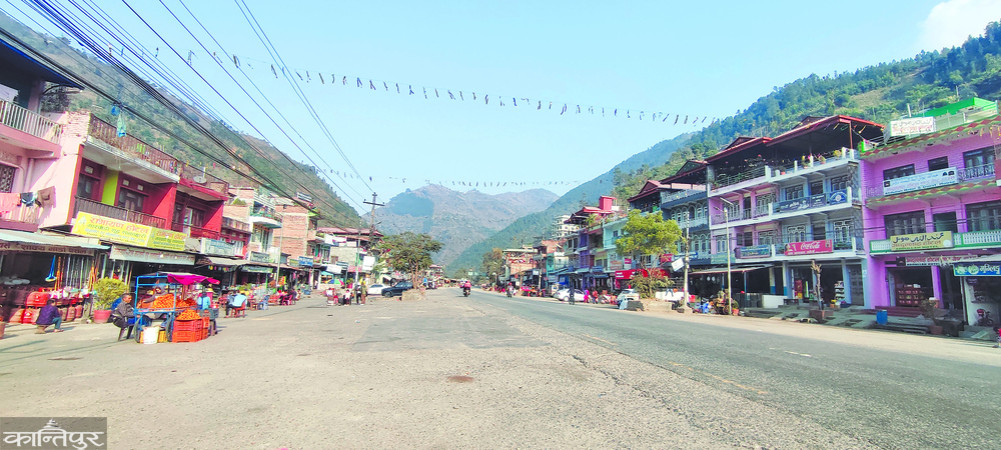
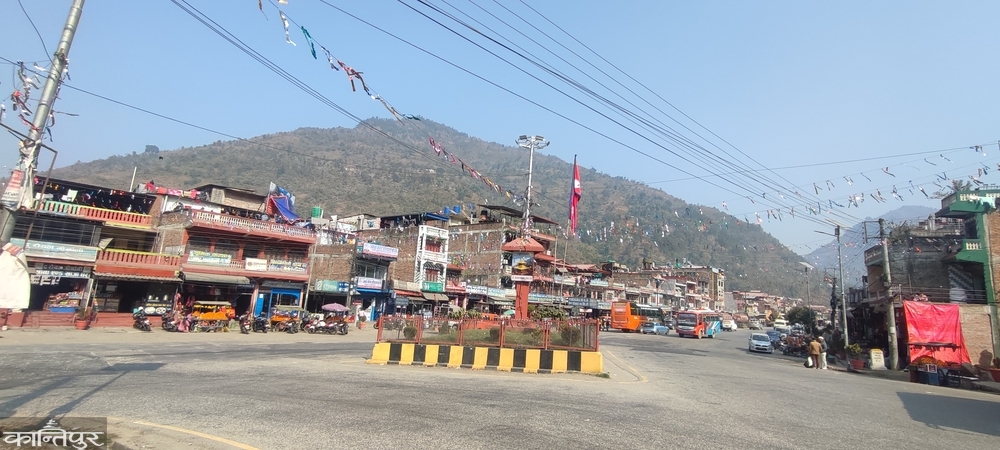
Mugling is a market where vehicles going to and from Kathmandu and Pokhara stop. There are mostly hotels here that serve food and small and large vehicles parked in front of them. Busy during the day, busy at night too. When many people hear the name Mugling, a similar market image comes to mind.
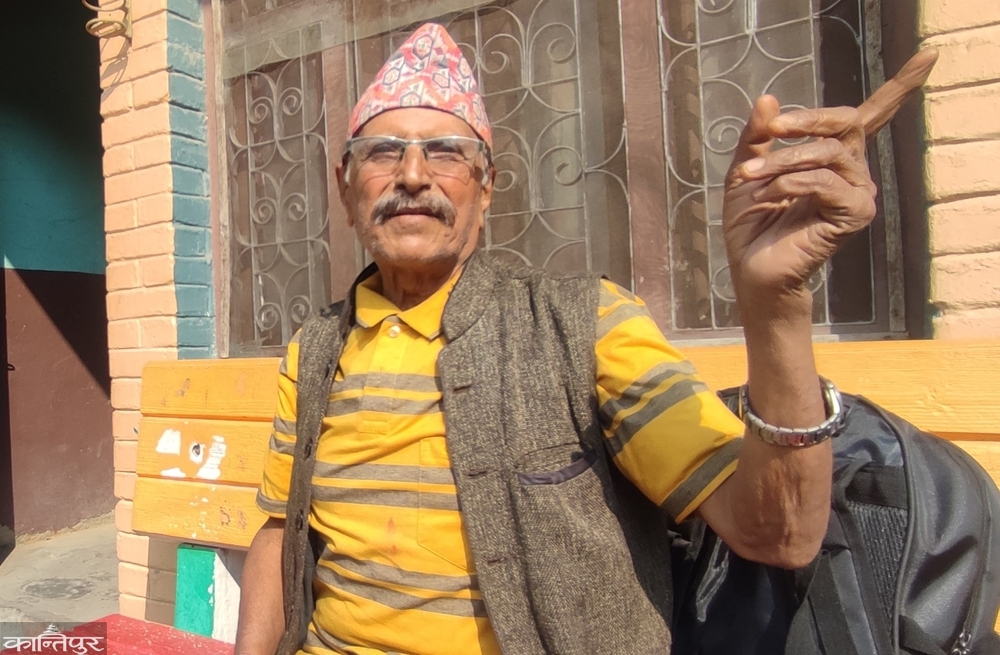
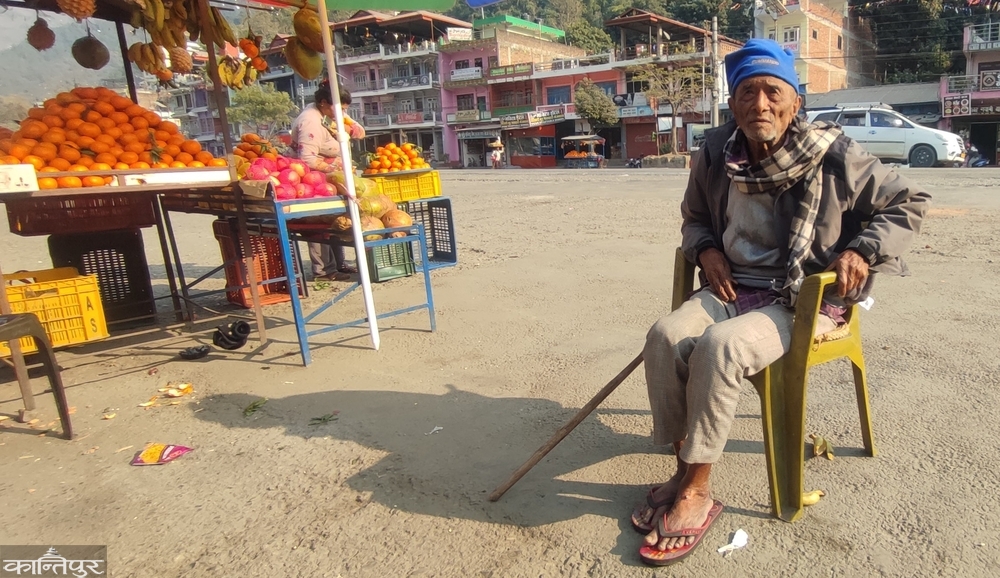
Loknath Tripathi was 93 years old . The Mugling he saw was different from the one he sees today . The Prithvi Highway from Pokhara begins as soon as the Narayangadh-Muglin road is completed . His house is located on the same highway . ‘Where there was a chair, there was a tree . Now, this place is full of houses, there was a whole field,’ he said .
Since there is a market where you can buy food and snacks day and night, the stove rarely goes out . This is the specialty of the new Mugling . But the old story is amazing . 81-year-old Bhujkumari Tripathi, who has been living in Mugling since 2018, has not forgotten the disaster she faced when the fire in her house went out once during Dashain. She said, ‘I didn’t care about it all day, when I went to the stove in the evening, the fire went out . At that time, there were no matches or lighters . The village was a mile away . I was afraid of being haunted by ghosts when I went there to look for fire.'
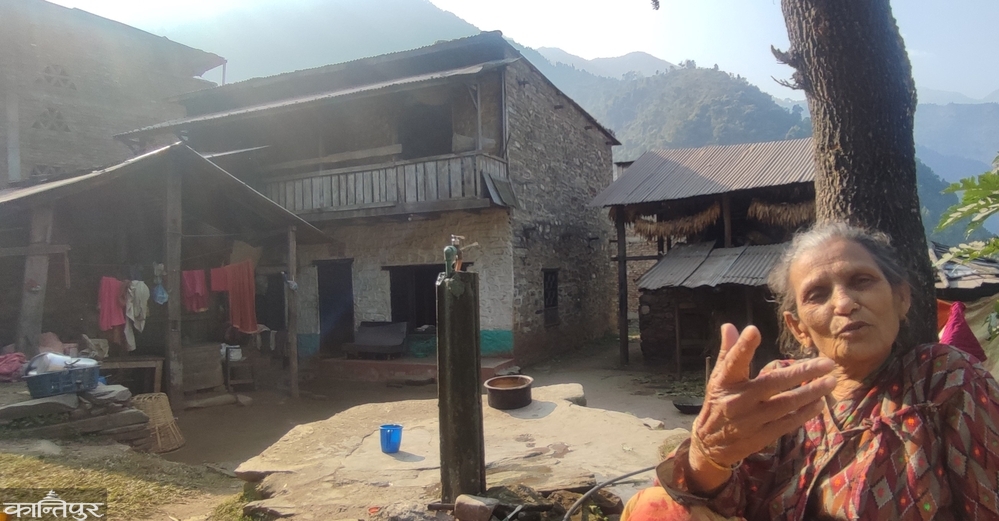
Balram Tripathi, who lives in Mugling Bazaar, tells many stories of ghosts when he feels scared. 'There used to be a barn here, not a house. People used to live in the barn in winter. When we were children, we were told not to come and live here. It was in the middle of a paddy field. There were four or five barns,' said 76-year-old Balram. These three Tripathis belong to three different families. But their ancestors are the same, whose names are linked to the history of Mugling. Balram is the sixth generation of Sadashiv Tripathi, who first came to this area.
Balram's grandson has also been born. Balaram continued to describe what he saw and experienced. Sadashiv, who was originally from Lamjung Chiti, had received Kush Birta from the then government. ‘By holding back the Kush water, the government of that time had given our ancestors land from the Hoogdi River to the western Rigdi River to build a pasture for raising buffaloes,’ said Balram. He claims that his own ancestors settled in all the tar and banks of the Hoogdi River.
‘Our ancestors used to eat cooked rice as a snack and cut their hair by pouring its juice. The juice of the rice weakened the stone, making it easier to break. In this way, a hundred-meter-long tunnel was prepared where people could cross it carrying a load of rice. The water from the river that came from started growing rice,’ Balram narrated the history. He said that he had heard a story about five hundred bushels of rice growing in the Mugling field. No one else used to come here to plant and maintain crops, except those who came from Tamin.
The Trishuli and Marsyangdi rivers in the background and the big mountains around. Mountains towards Gorkha, mountains towards Tanahun. In winter, the sun in Mugling is blocked by the mountains before four o'clock. Surrounded by high mountains on all sides, two big rivers flowing in the background, no one used to come and go here.
'Coming here was like going to some unknown place. Muglan was being discussed as such a place. So they started saying that coming down here meant going to Muglan. Instead of calling it Muglan, this place became Mugling,' said Balram. Muglin, Mugling or Mugling - these words have been used to refer to this place. But what is its real meaning?
The skills of the Thakalis of Mustang, a remote Himalayan village, which is a one-and-a-half-hour walk from Mugling, play a role in introducing this place cultivated by Taminka Tripathi. The Thakalis who started the rice business in Mugling were the Thakalis from TT, a village beyond Mustang. Tripathi grew rice here. They brought their relatives, Silwals and Pantas. But the Thakalis who came looking for a place are the ones who came. Bel Prasad Gauchan, Siddhi Prasad Sherchan and Man Bahadur Sherchan are the Thakalis who came here for the first time.
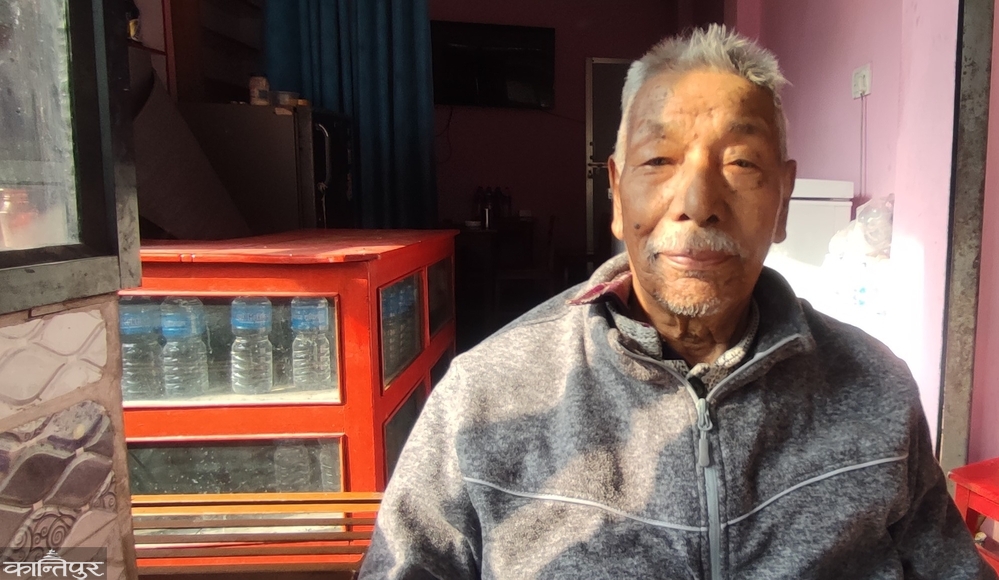
Man Bahadur is 84 years old. He still lives in Mugling. He said that Bel Prasad and Siddhi Prasad came first and that he came to Mugling in 2027. 'Bel Prasad and Siddhi Prasad had reached Narayangadh.' But the moneylenders of Narayangadh had said that a hotel would be opened in Mugling. At that time, Narayangadh and Mugling were not connected. They went to Hetauda. They reached Naubise via the by-road. And they came here from Naubise,’ said Man Bahadur.
In 2025, when the Prithvi Highway was started to be dug from Naubise, there was an increase in activity in Mugling, said Balram Tripathi. As soon as the Prithvi Highway was started to be built, a camp was set up in Mugling by the Nepal government and the Chinese government, which was helping to build the road. The camp staff, road construction workers and drivers needed a hotel to eat, and a shop to buy goods. Tripathi says that Thakalis came from Mustang at that time.
In 2029, a bridge built over the Trishuli River was inaugurated in Mugling. With the construction of this bridge, the number of vehicles on the Pokhara-Kathmandu route increased. After the construction of the Narayangadh-Mugling road in 2038, the traffic volume here started to increase. ‘There were no hotels for eating rice and lunch in Pokhara-Kathmandu or Narayangadh East-West. This is Mugling, where you can stop for food and lunch,’ said Bindu Gauchan, the owner of Ama Hotel, one of the old hotels operating in Mugling. Her hotel opened before the road to Narayangadh opened.
After the 1940s, people from other communities also came to Mugling to do hotel business. Hotels for eating rice and lunch were added elsewhere as well. Mugling has become a market, and such a market has expanded elsewhere as well. ‘Those who ate when meat and rice were 10 rupees a plate still come looking for our hotel. Newcomers and bus passengers don’t come much. But those who have tasted it have not forgotten,’ Bindu said.
DR Pokharel, who has been studying society and culture, suggests that the meaning should not be found in the Khas language, but in the language of some ancient tribe or tribe living there. Karna Bahadur Baniya, a retired professor of history, says that words ending in the letter 'ನ' are related to the Bhot Burmese language.
Gurung, Magar and Chepang communities, who speak languages under Bhot Burmese, also live around Mugling. Therefore, Pokharel and Baniya suggest that we should see what it means in their language. But no one has done any research on this. Everyone has been saying the same Muglin, Mugling or Mugling. Even after Mugling, there are villages like Chumling and Fisling on the Prithvi Highway.
There are many places in Chitwan, Makawanpur, Sindhuli with ‘Gadhi’ added after their names, and in Dhading, Sindhupalchowk with ‘Bise’ and Tar added. Earlier, wherever the kings stationed their army and other security personnel, it was called Gadhi. Similarly, Baniya said that when a fort was built, it was called Gadhi and that place started to be known as Gadhi. For example, Makawanpurgadhi, Upardanggadhi, Sindhuligadhi are places that became famous because of their forts.
Upardanggadhi is the old headquarters of Chitwan. It is only after Bharatpur became the district headquarters in 2018. Baniya says that the name of Upardanggadhi is pronounced differently. Upardang does not make any sense here. But during the Lichchhavi period, a structure called ‘Drang’ is found. Baniya said that it is a trade center but is understood to be a village or settlement smaller than a city. The name ‘Upadrang’ is mentioned in Yogi Narharinath’s Itisha Prakash’s Sandhi Patrasangha Part-1 book.
Baniya speculates that instead of calling a fort in a small trading area ‘Upadrang’, Upardanggadhi is being called for convenience. Such a situation may have occurred in the names of other places as well. A small but flat area on the banks of a river or stream is called Tar. There are places like Salyantar, Bishaltar in Dhading and Kurintar, Chumlingtar in Chitwan on the Prithvi Highway. Similarly, places like Bahrabise and Naubise are also famous settlements in this area.
Baniya says that the word Bise is used to refer to the results of population or grain production. ‘In Nepali, it is an old custom to consider 20 as the base.’ For example, one 20, two 20, three 20 are used to refer to 20, 40, 60 . ‘Even when asking about age, it is customary to ask how many bees . Similarly, bees, or bise, are also associated with place names . Bise may have been added to place names based on the number of people living in that place or the amount of grain produced,’ said Baniya .