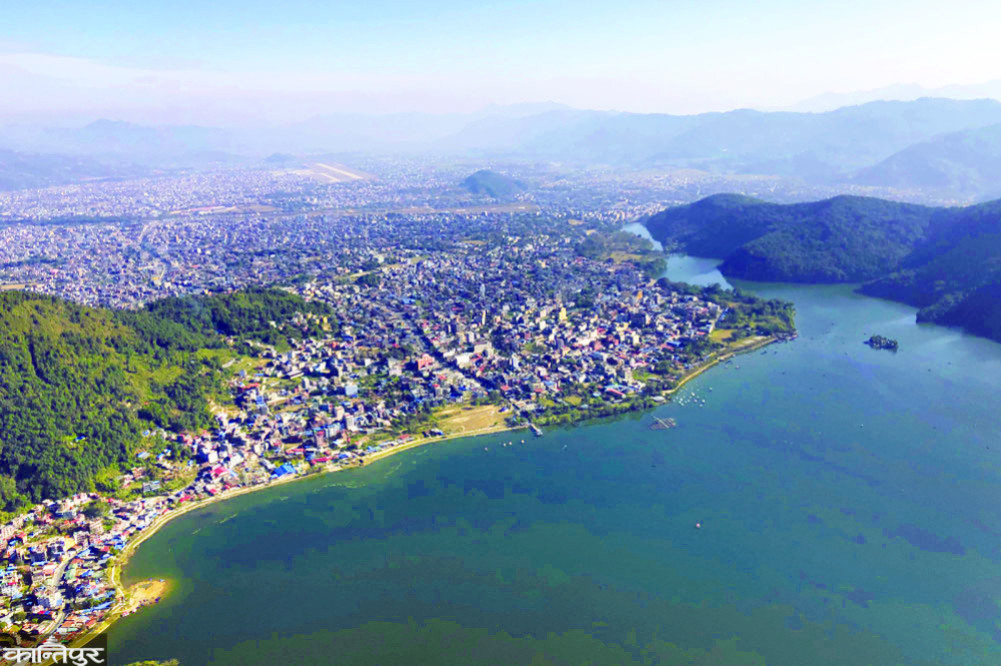
The names of the villages, hamlets, rivers, and mountains of the Gandaki region, which stretches from the Himalayas to the Terai, echo the language, culture, and history of the indigenous people. When examining the place names of the Gandaki region, one finds a deep imprint of the Magar civilization.
We use Google Cloud Translation Services. Google requires we provide the following disclaimer relating to use of this service:
This service may contain translations powered by Google. Google disclaims all warranties related to the translations, expressed or implied, including any warranties of accuracy, reliability, and any implied warranties of merchantability, fitness for a particular purpose, and noninfringement.
Crossing the mountain passes, not only does the geography change, but the conversations and memories carried by the geography also change. When you reach some of the settlements in Gandaki Province, it seems as if the stones and soil there are telling a long story of their own.
Especially when standing under the sky of Baglung, the interesting legend of its naming takes us to a unique juncture in history. There is a legend related to the tiger in terms of how the name Baglung came to be.
It is said that at one time this area was a place where tigers used to gather. It is said that in the Khas language, ‘Bagh’ and ‘Lung’ (laskar) were combined to form ‘Baghlung’. There are also those who believe that it is derived from ‘Vyaghralunj’ (the act of killing a tiger) in Sanskrit, which tells the story of the strong youth of the Magar tribe killing tigers that were terrorizing human life.
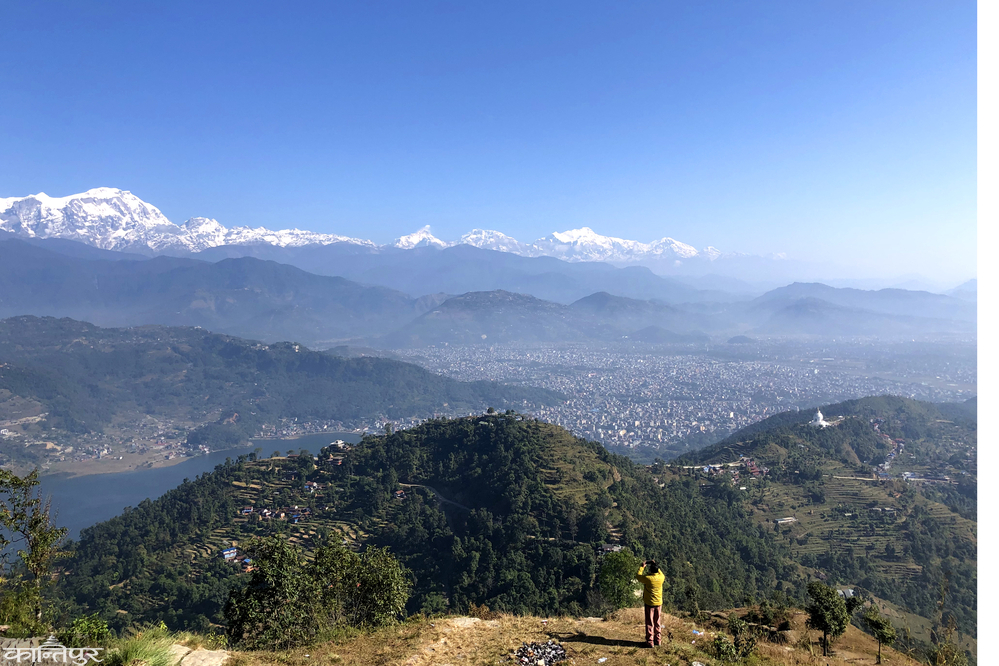
However, linguists and local experts also explain it in a slightly different way. In the Magar language, ‘Bagu’ means a raised part and ‘Lung’ means a plain or flat land. The geographical structure of Baglung is exactly the same - sometimes high peaks, sometimes low plains. Therefore, this name seems closer to the beauty of the geography than to the fear of the tiger.
The names of the villages, towns, rivers and mountains of the Gandaki province, which stretches from the Himalayas to the Terai, echo the language, culture and history of the primitive inhabitants here.
When examining the place names of the Gandaki region, one finds a deep imprint of the Magar civilization. In places where the Magar community is in the majority, the word 'Bang' is often associated with it, which means 'Chaur' or 'flat place'. 'Bobang' in Dhorpatan, Baglung is a vivid example of this.
The naming of the Gandaki province itself carries an interesting history. It is believed that the word 'Gandaki' in the Sanskrit language was formed from the word 'Ganadi' in the Magar language. In the Magar language, green vegetables are called ‘Gan’ or ‘Gan’. Therefore, a river with green water like vegetables was called ‘Gandi’ in the Magar language, and from this, the word ‘Gandaki’ was formed through ‘Gandi-Gandi’ and ‘Gandika’.
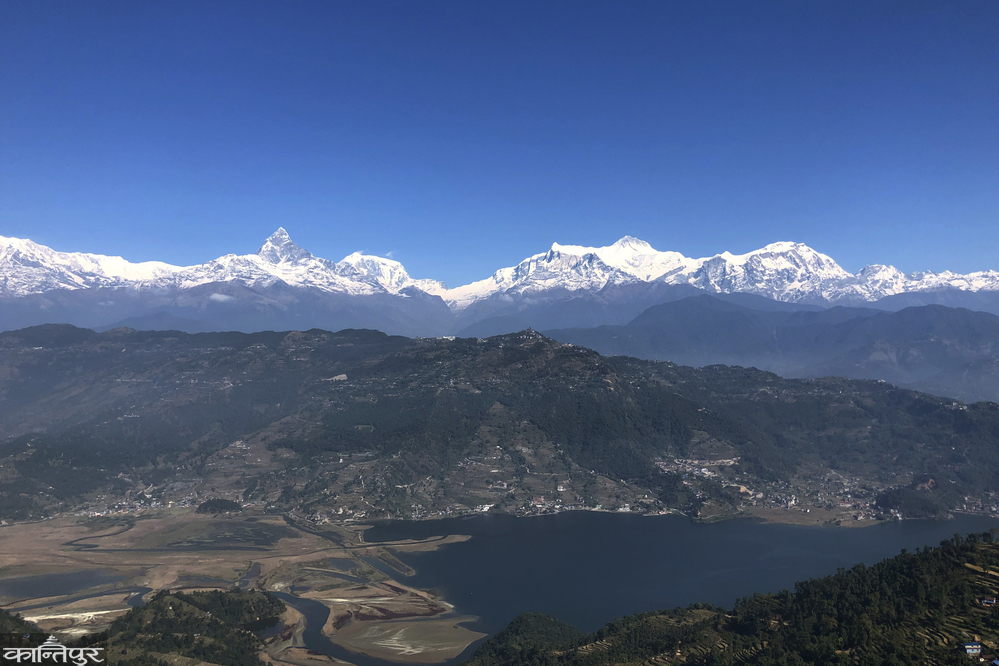
On the other hand, as mentioned in the Himavatkhand, there is also a legend that the name Gandaki was derived from the river flowing from Vishnu’s ‘Gand’, i.e. the sweat from his cheek. Both these etymologies reflect the cultural diversity here – one is a confluence of the indigenous traditions of the Magar community and the other is a confluence of Hindu mythological beliefs.
In the Magar language, water or river is called ‘Di’ or ‘Di’. Therefore, this suffix is added to the names of the rivers flowing throughout the Gandaki region. Names like Madi, Modi, Marsyangdi, Myagdi, Mardi, Mirdi, Suraudi, Singdi, Paudi, Lubdi, Dordi, Jyagdi, Khudi, Chhangchhangdi, Chudi, Yamdi, Syangkhudi, Pardi, Daraudi are the gift of the Magar language. The name of the Chhabdi River in Tanahun also comes from the Magar language. ‘Chhap’ means ‘land’ and ‘Di’ means river. Thus, the original linguistic heritage of this place is preserved in the names of the rivers.
According to sociologist Bishnukumar Singjali, the naming of Syangja district also has a deep connection with the Magar language. In the Magar language, ‘Ja’ means child. If we take this as a basis, in the Magar language, ‘Sing’ means wood and ‘Jyahake’ means to run, i.e. to do woodwork. ‘On that basis, the descendants of the wood craftsmen may have become the Magar surname Singjali or Singjapatti,’ he says. ‘Since Sinjali is a large settlement of Magars, it seems that the name of this district has become Syangja as a corruption of their surname.’
Names of forts, markets and settlements
The names of places like Jomsom and Charang in Mustang come from the Tibetan language. In Tibetan, ‘Jong’ means fort and ‘Samba’ means ‘new’. Since it was a place where a new fort was built, the name ‘Jongsamba’ remained and over time it was corrupted to become Jomsom. Lamjung was also named on the strength of the forts.
The naming of Kaski is also interesting. Since Kaskikot was a fort built on the Kaski hill, the name Kaskikot remained. On the other hand, it is believed that since it was the land where Kashyap Rishi meditated on that hill, it was called 'Kashyapi Kshetra' and over time, due to language changes, it gradually became Kashki Kshetra, Kaski Kshetra and Kaski Kshetra and later it was abbreviated as Kaski.
There are also various opinions on the naming of Gorkha. It is believed that it evolved from the Nepali word 'Kharka', meaning grass, to Garkha, Garkha, and finally Gorkha. It is also said that Gorkha is a corruption of 'Goraksha', meaning a country that protects cows, in the Sanskrit language. Scholar Krishna Prakash Shrestha has also mentioned in his book 'Sthan-Namakosh' the argument that the name of the place is Gorkha after the name of Yogi Gorakhnath.
The name of the place reflects the lifestyle, profession and cultural identity of the community living in that area. The naming of Dhorpatan in Baglung is also linked to the local lifestyle. The Lekali Kharkas are called Dhor. Most of the domesticated animals in the Leka region are brought to the Lekali region during the rainy season. There are cattle pens, buffalo pens, and sheep pens. The Lekali Kharka is called Dhor and the flat area on the hill is called Patan. The name Dhorpatan came about from the combination of these two words. However, the Magar community has also objected to the name Dhorpatan being changed from Bobang to Dhorpatan.
A high, waterless but long-standing field at the confluence of rivers is called ‘Tar’. For example, names like Palungtar in Gorkha, Bhorletar in Lamjung, and Karaputar are found. Even today, in Alamdevi in Syangja, the Magars there, the former Rajkhalaks of Nepal, and the Thakurs perform their ancestral worship in one place. There are Magar priests there. This shows that not only place names, but also cultural practices and religious traditions connect communities.
How do place names persist? When did they persist? Why do they persist? The answers to these questions lie in legends, language, and ethnic identity. There are two legends about the naming of Galeshwar in Myagdi. First, it is called Galeshwar because when a pair of red and white flags are tied to a Galegoru here, the bull used to walk on the plough. According to the second legend, when Shiva arrived here carrying the body of Sati Devi on his shoulders, it is believed that Mahadev originated at the place where Sati Devi's neck fell, and Galeshwar is believed to have remained there.
The name of the mountain Kusma is also linked to the legend. It is believed that a yogi who went to Muktinath named the place Kusum after seeing it covered with beautiful safflowers, and it is said that it was corrupted and called Kusma.
Galkot in Baglung is linked to political history. It is said that the name Golokot was built by the youngest son of Dilipbam Malla, known as the Round King, and later it was corrupted to Galkot.
The naming of Gaunsahar and Besisahar in Lamjung is also linked to political history. The name Gaunsahar has remained since Lamjung was the capital of the king. The palace where the king lived before the Lamjung state was incorporated into the Kingdom of Nepal is still on this hill. This place is called Besisahar because the king of the Lamjung state used to go down to the valley from the Lamjung palace in the winter to stay in the valley.
The change of place names is not a simple process. It affects the history, language and identity of a community. For a long time, there have been attempts to change such place names to obscure the history of indigenous peoples.
Bishnukumar Singjali, who is also the author of the book ‘Magar Sthan-Naam’, says that the names of villages are changing as Magar migration increases. ‘There are no people who can speak, who can raise their voices.’ As names are changed, indigenous identity is being lost,’ he says, ‘The development of science and technology is also destroying language and culture.’
The greatest feature of the place names of Gandaki Province is that it documents multiculturalism and multilingualism. The influence of Magar, Gurung, Thakali, Tibetan, Sanskrit and Nepali languages can be seen in the names here.
The different etymologies of the same place are also evidence of the cultural diversity here. The names of places like Baglung, Gorkha, and Kaski show the influence of Magar, Khas, and Sanskrit. This indicates that different communities have been living here together and have assimilated each other's culture.
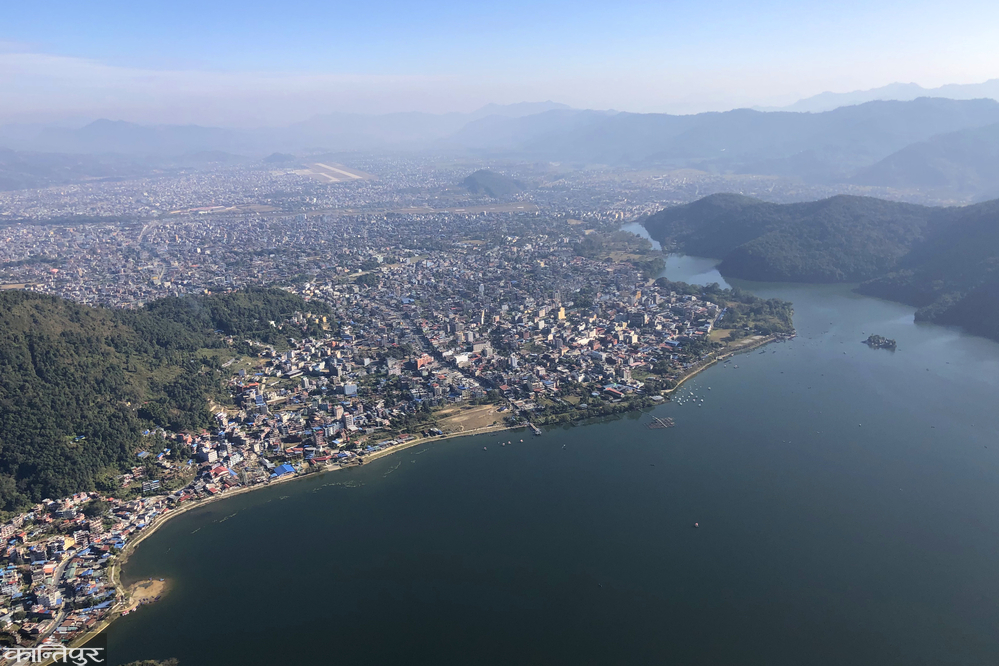
Place names also carry geographical features. The name of Charang in Mustang comes from the Tibetan word 'Chapalung Sanstrang', which means a boar's pig. The name Chaplung Sanstrang came about because it is a high mountain like a boar rising from a deep, steep gorge, and later became corrupted to Charang. This settlement with a five-story fort is located on the top of this mountain. It is said that Pokhara is called Pokhara because the place where the pond is located is called Pokhara. There are many settlements within Pokhara that are connected to Patan and Gaunda.
The place names of Gandaki Province are not just for geographical identification, they are a living document of our cultural heritage, linguistic diversity and historical legacy. These names, which have meanings in the languages of Magar, Gurung, Thakali and other communities, prove the presence and contribution of indigenous communities who have been living here for thousands of years.
However, these names are under threat. These names are changing due to language loss, migration and political interference. There is a need to adopt measures to protect indigenous languages and culture as per the ILO treaty. This excavation of names teaches us one thing – where the name remains, only there the history remains safe.