The names of squares, markets, and cities in the East are linked to local history, migration, and lifestyle, especially the dozens of place names that end with 'bare' and 'bari'.
We use Google Cloud Translation Services. Google requires we provide the following disclaimer relating to use of this service:
This service may contain translations powered by Google. Google disclaims all warranties related to the translations, expressed or implied, including any warranties of accuracy, reliability, and any implied warranties of merchantability, fitness for a particular purpose, and noninfringement.
Criticism of women's speech, behavior, and appearance is not new in society. We have been seeing and hearing accusations against women such as, 'You shouldn't walk like that,' 'What kind of clothes is that on,' and 'It's not right for a girl to talk like that.'
However, in the 1950s, an incident occurred in Jhapa, where this misogynistic mindset not only made comments on women, but also changed the name of the place. For those traveling on the Mechi Highway through Charali in Jhapa, ‘Happen Chowk’ is not a new name. This name, which everyone, from bus conductors to local traders, pronounces easily, is actually a corruption of ‘Half Pants Chowk’.
But this name is not a linguistic accident, it is the result of a social perspective focused on women. The connection between ‘Happen Chowk’ and Bina Limbu Dhungana is not a coincidence. Not only the connection, the only reason this chowk has this name is Bina.
A few decades ago, the Burne Tea Garden area was not the busy chowk it is now. The highway was expanding, tea shops and small shops were being added around the chowk. Bina often walked around in half pants.
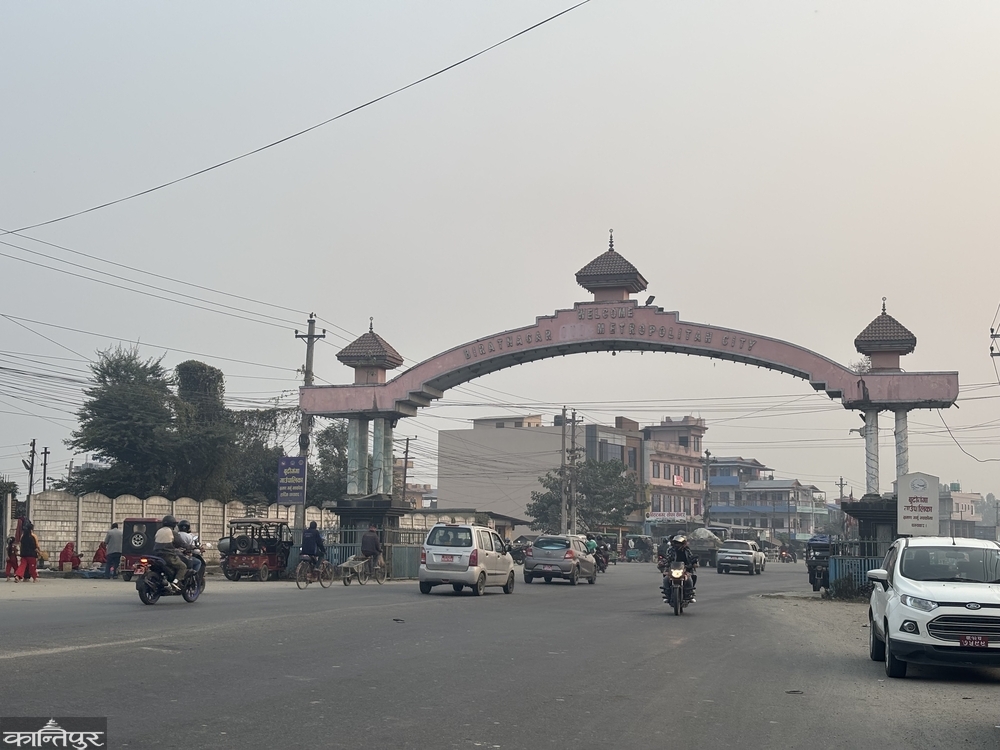
Wearing half pants may seem normal in today's context. However, in the rural-semi-urban society of that time, it was not only 'unusual' but also 'unacceptable' for women to wear clothes that showed their knees. Society did not like Bina's walking, her elegance and confidence. Men who met in the square started saying - 'That is the square where the girl who walks in half pants lives.' Gradually, that sentence became shorter, Half Pants Square.
Eventually, the name Hapen Square was established. Bina's name was lost, but the nickname formed from her body and clothing has now become a place identity.
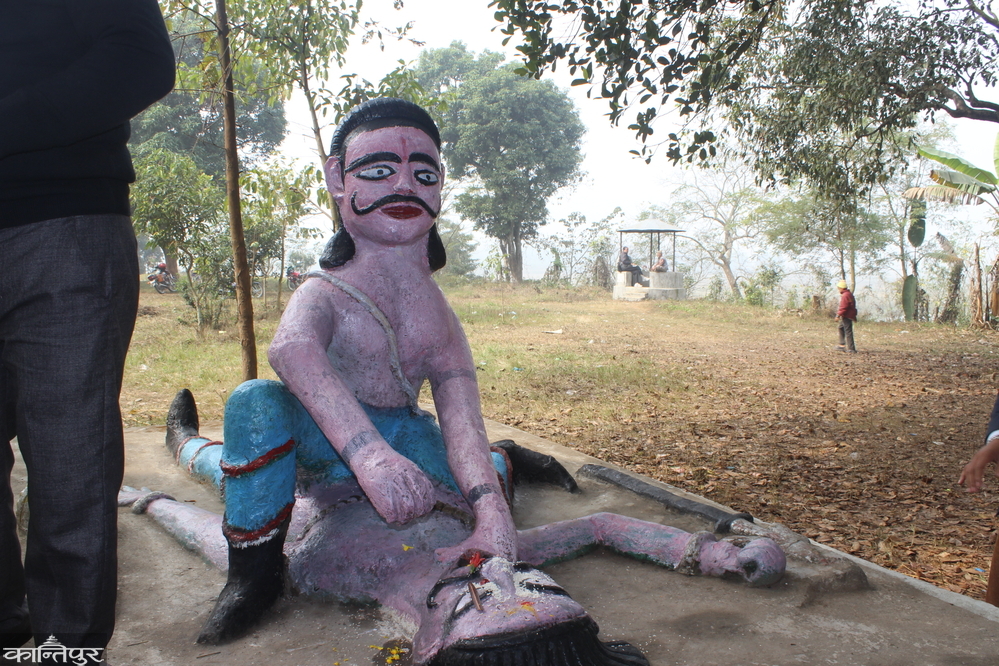
The names of squares, markets and cities in the past are associated with local history, migration and lifestyle. In particular, there are dozens of place names with 'bare' and 'bari' added at the end. Budhabare Bazaar is located just below Hapen Square.
Budhabare is a historical place where land reform was practiced for the first time in 2021. This market, located at the foot of the Chure hills, is mainly populated by the hill community. This place has a direct connection with the revolution of 2007 and the situation that arose thereafter.
According to the book ‘2028 Saal: Jhapa Bidhoor’, there was a debate about where to place the displaced people from the Airai area of Tehrathum, which was considered the Limbuban of the east. Then, the dense forest adjacent to the Chure hills was cleared and the displaced people were moved. That place later became Budhabare Bazaar.
‘The start of systematic settlement development by clearing the dense forest also started from this place,’ says author Niroj Kattel. This has also been discussed in Narendranath Bastola’s book ‘Sat Saal Kranti in Purvanchal’. Hariprasad Upreti, 80, remembers that this place was called 'Budhbare' over time after the hot weather started on Wednesdays. 'The bar where the hot weather started became the name of this place,' he says.
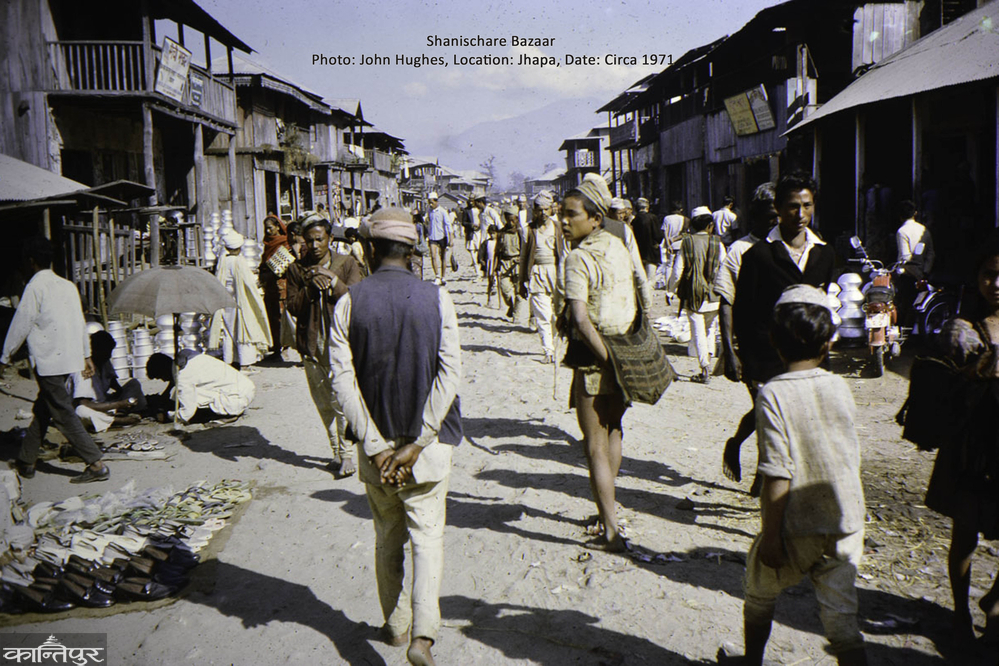
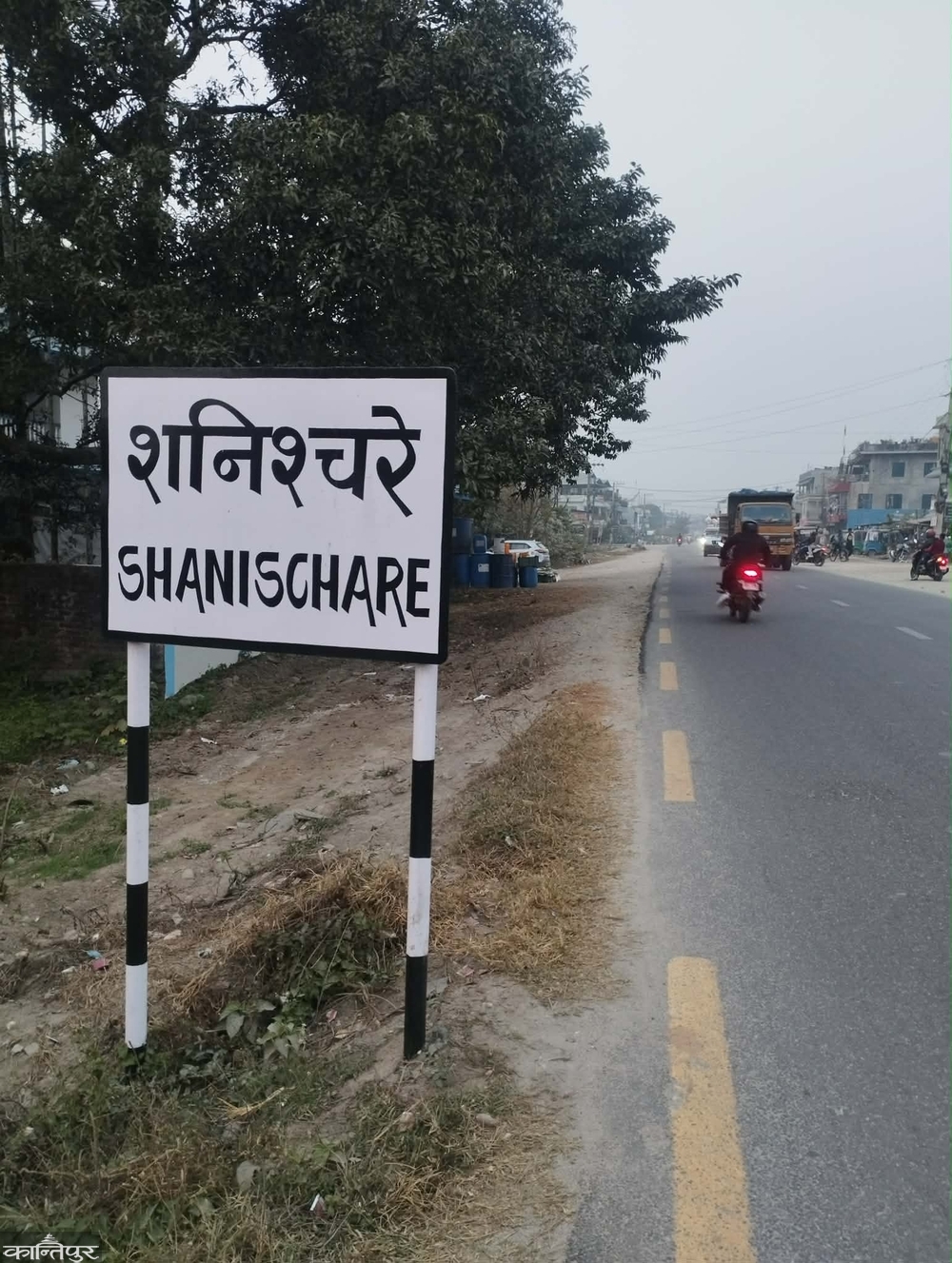
A similar story is told about Shanishchare Bazaar. The name 'Shanishchare' came to be because the hot weather started on Saturdays. According to local author Krishna Baral, the word 'Sansare' later became Shanishchare in the vernacular. This place, considered one of the oldest markets in Jhapa, was established around 2000 AD. According to him, people from the hilly districts of the then Mechi Zone used to come to this area for the market. It was the main place for trading. ‘They used to bring ghee, vegetables, and goats from the mountains to sell,’ says Baral, ‘and they used to carry salt, kerosene, rice, and wheat from here.’
As the late Congress leader Keshav Kumar Budhathoki mentioned in his autobiography ‘Apno Apno Sagarmatha’, his grandmother initially started a market here. That market eventually became the ‘lifeline’ of the eastern hills.
The story of the names with ‘Bari’ attached to it in the east is even more interesting. In Ilam, there is Joubari, Danabari. In Jhapa, Dhulabari, Khudunabari, Fuhatbari, Haldibari, Gherabari, Methibari. In Morang, Ambari, Belbari, Kerabari. In Sunsari, Bhatabari, and in Sankhuwasabha, Khandbari.
Here, the word ‘Bari’ is used in two meanings. In the hills, a bari is arable land. But in the Terai-Madhesh, ‘bari’ is used to mean a village. Beyond Mechi, Bengali speakers call a house ‘bari’. It seems that this has also had an influence on the bari. When asked where is your village, the Rajbanshis say, ‘Tor Bari Kune?’.
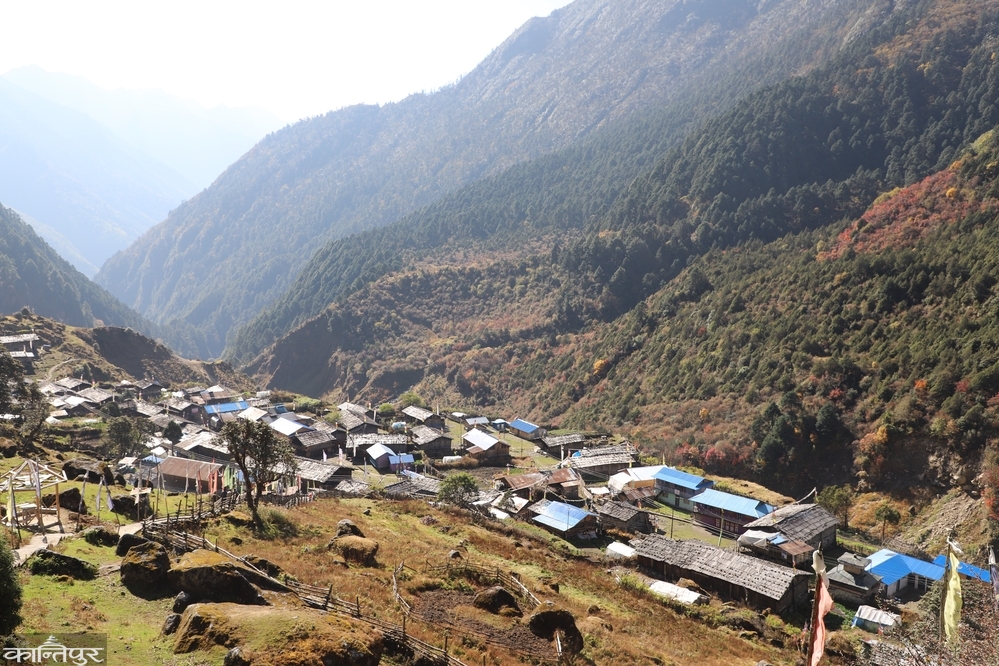
Leading journalist Indrasingh Rajbanshi from Jhapa says that the names that reflect the identity of the Rajbanshi, Tharu, Chaudhary, Santhal, Gangai Dhimal, and Meche communities are now disappearing. ‘It seems that the hill community has changed the names of places that reflect our identity to suit themselves,’ says Rajbanshi, ‘our identity is now in crisis.’
As mentioned in the book ‘Afno Serofero’ by Congress leader Gopal Kumar Basnet, Jhapa, Morang and Sunsari were once home to Rajbanshi, Tharu, Santhal, Dhimal and Meche. However, after the eradication of malaria in 2016, the migration from the hills to the Terai accelerated. After the migration from the hills, the land of the indigenous people here began to be taken away. At the same time, the names of the squares, markets and huts that they had kept in their own language also started to be changed.
‘The community that came down from the hills changed the pronunciation of the names of our places and changed ‘Badi’ to ‘Bari’,’ says history scholar Patra Dhimal. There is an understanding that Dhulabari developed as a village of a royal landlord (Deuniyan) named ‘Dhula’. Others claim that this place is named after Dhimal named ‘Dhula’.
Dhula means dust. There are also those who say that this place was named Dhulabari at that time as a village that blew a lot of dust. However, scholar Dhimal claims, ‘Dhimal identity is found in the name of this place.’ Puhantuwadi is the name given to the village of Puhantu Chaudhary of the Tharu community, who became a member of the National Panchayat during the Panchayat period, ‘Puhantubari’, now this place is called Puhatubari.
Names like Ambari, Belbari have started to be used in those areas as villages where mangoes and vines grow a lot. Kerabari, Jaubari, Danabari, Bansbari are also names given by the hill community based on farming. Haldibari in Jhapa developed as a turmeric growing village.
The name of Khandbari, the headquarters of Sankhuwasabha, is linked to the Kirat language. It is believed that it was developed from the words 'Khundabari', 'Khandpokhari' and the Kirat language word 'Khabhari'. According to legend, there was a large pond at the place where today's Khandbari Bazaar is located. As the population increased, the pond was filled, but the name remained.
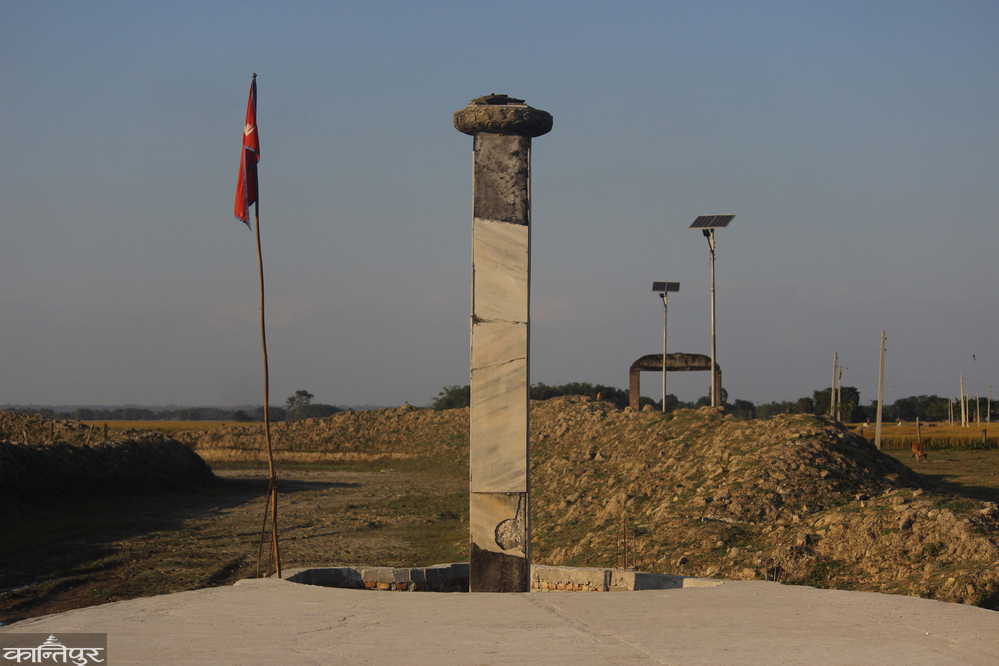
Biratnagar is believed to have been named after the legendary king Birat. Until 1970, the name of this place was 'Gograha'. This name is derived from the royal language. After Keshar Shamsher Jabra observed the ruins of King Birat's palace found in the Bhediyari area during the Morang Daudaha, Gograha was renamed Biratnagar in 1976.
In 1971, after Bada Hakim Jit Bahadur Khatri shifted the district headquarters (then Gouda) from Rangeli to Biratnagar, the city began to develop here, said Dinesh Shrestha, a leader of Biratnagar.
There is also a place of historical importance during the Mahabharata period, Kicchakabadh in Jhapa. Legend has it that when the Pandavas were staying in King Birat's palace, Kicchaka, the commander of Biratnagar, tried to misbehave with Draupadi, and after Draupadi sought help from Bhimsen, Bhima summoned Kicchaka to the palace's dance hall at night and killed him. The locals say that the place was named Kicchakabadh because that dance hall is now Bhadrapur-3.
Kachanakawal in Jhapa is the lowest land in Nepal. Kachanakawal is named after ‘Kechana’. Kechana means low and marshy land in the Rajbanshi language, said Nawaraj Bhattarai, the vice-chairman of this municipality. When we look at the history of the name Kachanakawal, this place is also connected to the history of the Mahabharata period.
There is a legend that this was the main grazing area of King Virat during the Mahabharata period. It is believed that the name Kachanakawal came from the corruption of the word ‘Kechana’. This area is the ancestral home of the indigenous Rajbanshi, Gangai, Tajpuriya and Muslim communities.
The name of the Himalayan village on the border with Tibet is Walungchung Gola (Olangchung Gola). It is said that a historical village located within the Kanchenjunga Conservation Area was named after a wild animal.
According to the local language, ‘Wa’ in Walung means red fox, while ‘Lung’ means place. Thus, Walungchung means a place where red foxes are found. ‘Walungchung was later corrupted to become Olangchunggola,’ said Cheten Sherpa Lama, the ward chairman of that area.

