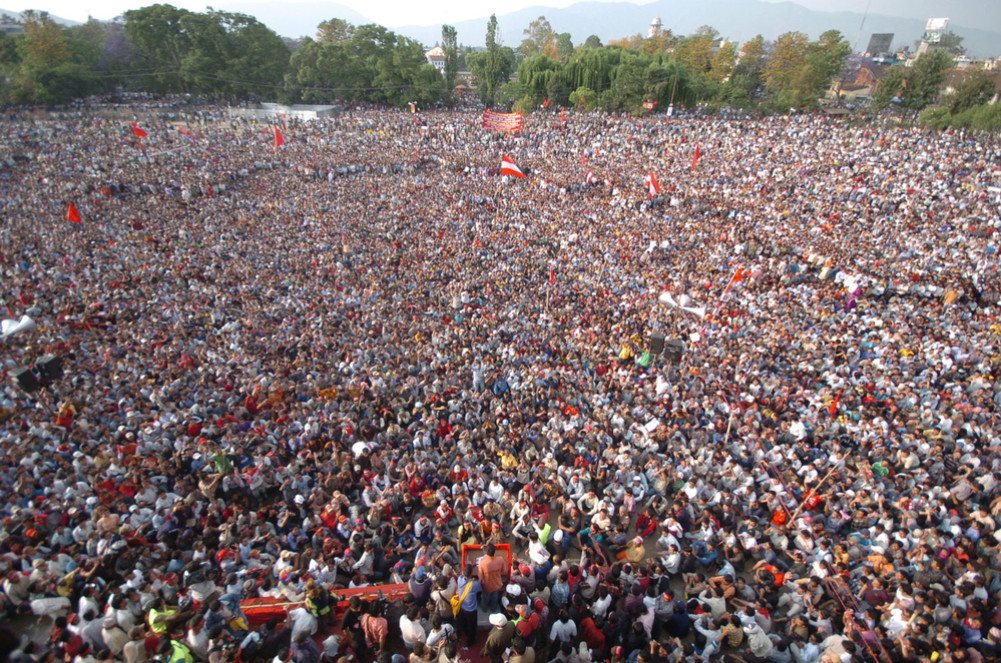
In the 20 years of the second people's movement, former king Gyanendra has started to strengthen again. The royalists are starting to take to the streets. Why is this happening?
We use Google Cloud Translation Services. Google requires we provide the following disclaimer relating to use of this service:
This service may contain translations powered by Google. Google disclaims all warranties related to the translations, expressed or implied, including any warranties of accuracy, reliability, and any implied warranties of merchantability, fitness for a particular purpose, and noninfringement.
The then king Gyanendra Shah, who was enjoying the state power in the country as a constitutional king, had to lose all the political power when he tried to take the executive power of the political parties. Monarchy became limited in history when it sought to be a king who could be heard and seen. Looking back 20 years ago now, it seems that Jan Andolan 2062/063 was civilized, magnificent and peaceful.
Thousands of protestors started taking to the streets every day in the main cities of Kathmandu and outside against the royal 'coup'. The slogan was 'Full Democracy, Citizen Supremacy'. Demanding this, seven political parties including Congress, UML, civil society, professional organizations, artists and writers started pouring out on the streets, and the palace was shaken.
As the heat of the people's movement grew, the then king Gyanendra Shah announced on 8th Baisakh 2063 that he had handed over the ruling power to the political party, saying that the people's nose had been returned to the people. However, that announcement was canceled in a blink of an eye by the seven parties and the Maoists who are fighting an armed struggle.
The palace was surrounded from all sides when the procession started coming out from thousands to millions. The Maoists also made a large number of their fighters and workers participate in the demonstration. Seven groups carried red flags while Maoist fighters and activists joined the procession carrying tree branches.
The peaceful street front was led by then Congress President Girija Prasad Koirala, Congress (Democratic) President Sher Bahadur Deuba, UML General Secretary Madhav Kumar Nepal. To strengthen the movement, the Maoists deployed Central Bureau Commander Varshman Pun (currently Deputy Secretary General). Under his guidance, fighters and activists around Kathmandu participated in the movement.
People were not satisfied with Gyanendra Shah's first speech. Jan Andolan which started on Chait 24, 2062 ended on Baisakh 11, 2063. It was simply a 'people's victory'. 26 martyrs were martyred in the movement, the number of injured declared by the state was 5 thousand 150. He gave another speech on 11 Baisakh, 2063, after Manavsagar was released in Kathmandu.
He not only knelt down before the people, he also took to heart the fact that the Nepali people are the source of the state power of the Nepalese dominion and that the sovereign power and political power of Nepal is vested in the Nepali people. After restoring the House of Representatives, which was dissolved in 2058, he asked the seven political parties to proceed according to the spirit of the people's movement.
However, the political events did not stop there. The country moved on the path of republic. If Gyanendra had not dissolved the House of Representatives and taken the power in his own hands, seven parliamentarian parties including the Congress and the UML would probably not have gone to the level of replacing the monarchy. If the then King Gyanendra had not started an autocratic rule on 19th January 2061, the monarchy would not have been overthrown so quickly. Congress, UML were on the way to reform the Constitution of Nepal, 2047 which is a constitutional monarchy.
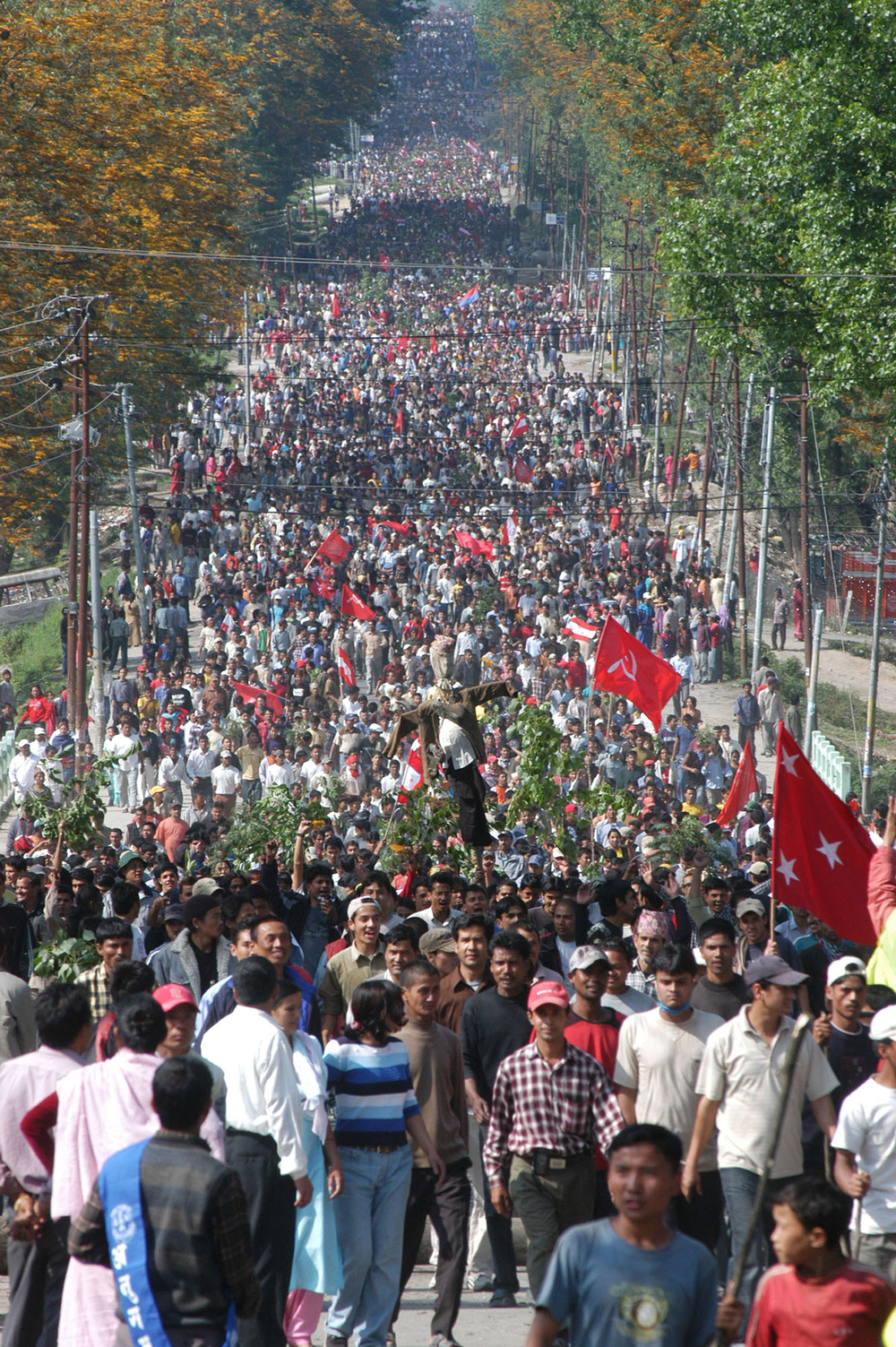 On January 19, after Gyanendra misinterpreted the Constitution of Nepal, 2047, banned political parties, detained the leaders and put them in jail, the embryo of the republic began to grow rapidly. After Gyanendra's autocratic actions, freedom of speech, freedom of the press and democratic values were suppressed. When seven parties, press, lawyers, professors, engineers, doctors, employees, civil society started coming down on the streets, it took the form of a people's movement. It was increasing day by day.
There the armed struggle of the Maoists was reaching its climax. He intensified attacks on the district headquarters, police stations around the capital, and started detonating various places and state agencies in Kathmandu Valley. At that time, the Maoists had increased their attacks around Kathmandu with the strategy of 'hitting on the back and hitting on the head'.
At that time, Congress President Girija Prasad Koiral told Maoist President Pushpa Kamal Dahal, "Increase the armed attack." We will stir up the movement. Around January and February 2062, the country had a constitutional monarchy, but the result was in favor of the republic when the student organizations held a 'mini referendum' in the campuses of Kathmandu. Even though it was just a model, it had a great political meaning.
King Gyanendra's rule and his son Paras Shah's arrogant behavior within the country was discrediting the monarchy, while the palace was becoming isolated internationally due to democracy, human rights, civil liberties, and control over the press. After Gyanendra's 'coup' in 2061, India and America in particular disagreed. They stopped the aid they were giving to the Nepalese army. At that time, Gyanendra had brought 18 truckloads of weapons as agreed to bring weapons from China (Sudhir Sharma, Himalpariko Huri).
Seven parties including Congress and UML were on the streets after the royal coup, but there was no mass demonstration. The royal government formed a royal commission and accused the party and its leading leaders of corruption. After January 2061, the Maoists increased their armed activities and attacked the royal government. It became a 'turning point' in Nepal's politics when the government was under pressure from inside and outside the country, the 12-point agreement between the seven parliamentary political parties and the Maoists and the people's movement based on it not only created the storm of 2062/063, but also became a strong foundation for the end of the 238-year-old monarchy.
Gyanendra's step is important in ending the monarchy. After he took power, he started defaming parties and seeing them as enemies," says Lokraj Baral, a professor of political science. "India and America were not happy after he took power in a 'coup'. There was international/national opposition to his action.
By that time, even the Maoists had come to the conclusion that full state power cannot be captured through armed struggle. Maoist Chairman Pushpa Kamal Dahal has said that he has entered into a 12-point agreement with seven political parties after the situation of not being able to capture full power through armed struggle. The Maoists also wanted a safe landing. After the 12-point agreement between the seven parties and the Maoists in Delhi, it seemed that they would go to the republic in twisted language,' says Baral, 'After that agreement, the movement became widespread.'
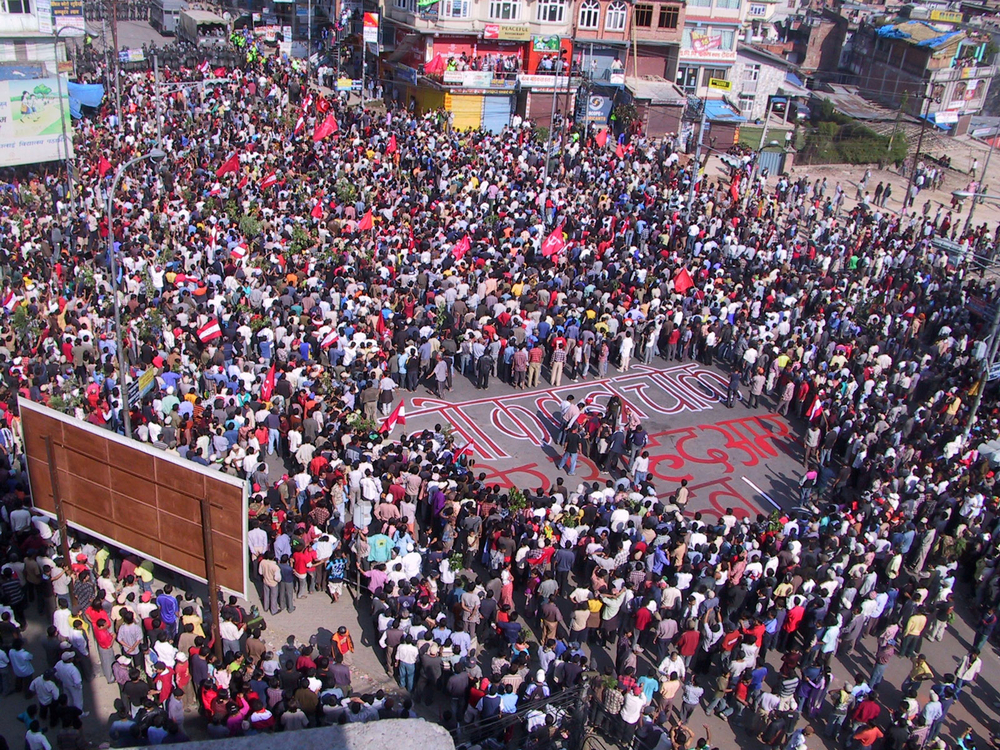
At that time, due to the palace, India had abandoned the two-pillar policy of monarchy and multi-party democracy. He played a coordinating role between the seven parties and the Maoists. On October 18, 2059, the then King Gyanendra dismissed the then Prime Minister of Nepal Sher Bahadur Deuba as an incompetent Prime Minister for failing to hold elections.
He used Article 127 of the 2047 Constitution to raise questions about political parties. In protest against it, the party and its student organization had started to take to the streets. The 'coup' of the palace on January 19, 2061 was a 'backfire' for the palace itself.
Ramkumari Jhankri thinks that all three generations have a good combination in making the Jan Andolan successful. She was at the forefront of the Jan Andolan of 2062/063. In that front, President of Nepal Vidyarthi Sangh Bishwa Prakash Sharma, General Minister Gagan Thapa, Jeevan Gautam of All Sixth and others were present. At that time, Jhankri was 27, Sharma 35 and Thapa 29, Gautam 32, Thakur Gayre 35, Khimlal Bhattarai 32, Guru Ghimire 33, Rajendra Rai 32. Most of the youth under the age of 40 led that movement.
'A period of emergency was imposed in the country. The Maoist conflict was raging. There was a 'coup' on the parliamentary parties. We started protesting that this unconstitutional step should be repealed," Jhankri said. "We were participants of three generations - grandfather (like Girija Prasad Koirala), father's generation leader and us. We were a combination of all three generations in the movement.'
While the Mau Party was wandering in the shadow of the constitutional monarchy, the student organizations took to the streets demanding a republic. Among the seven parties, the then president of Sadbhavana Party, Bharat Bimal Yadav, considers the greatest achievement of the people's movement to be 'a democratic system and the opportunity to work and speak freely'. Now everyone can work and speak freely. Before the people's movement, who was allowed to speak during the reign of the king?', he says, 'but the main political parties did not have the democratic style, and the leaders did not have honesty towards the country and the nation.' After the Constituent Assembly election in March 2065, the first meeting of the Constituent Assembly declared the Republic on May 15. The first President Ramvaran Yadav announced the end of 238 years of monarchy and the republic of Nepal in the meeting of the Constituent Assembly.
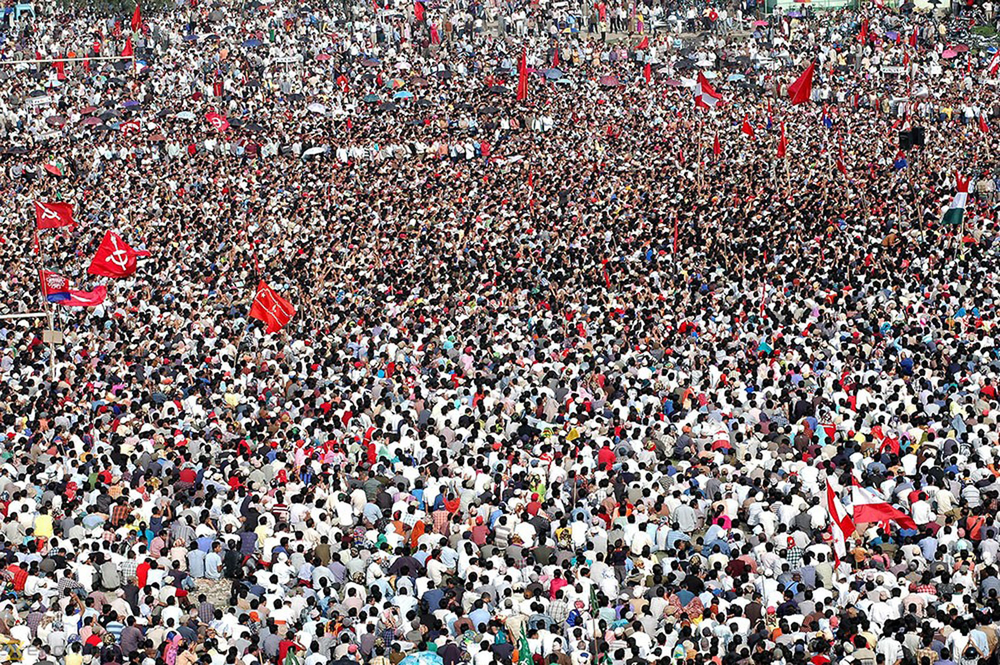
However, the parties that created the constitution in 2072 after the declaration of the republic are surrounded by serious questions when they come to this situation. 20 years have passed since the second people's movement, former king Gyanendra has started to strengthen again. The royalists are starting to take to the streets. Why is this happening? The 'poster girl' of the
movement, leader Ramkumari Jhankri says that there has been economic, social, political and physical development in these 20 years, but due to the party and state power obsession of key leaders, questions are being raised about this system.
"Since 30, 35 years, the main leaders of the party have gone to party and state power time and time again, they have not paid attention to the services of the common people, and the democratic republic has weakened because they have supported corruption," she said. The government collapsed.'