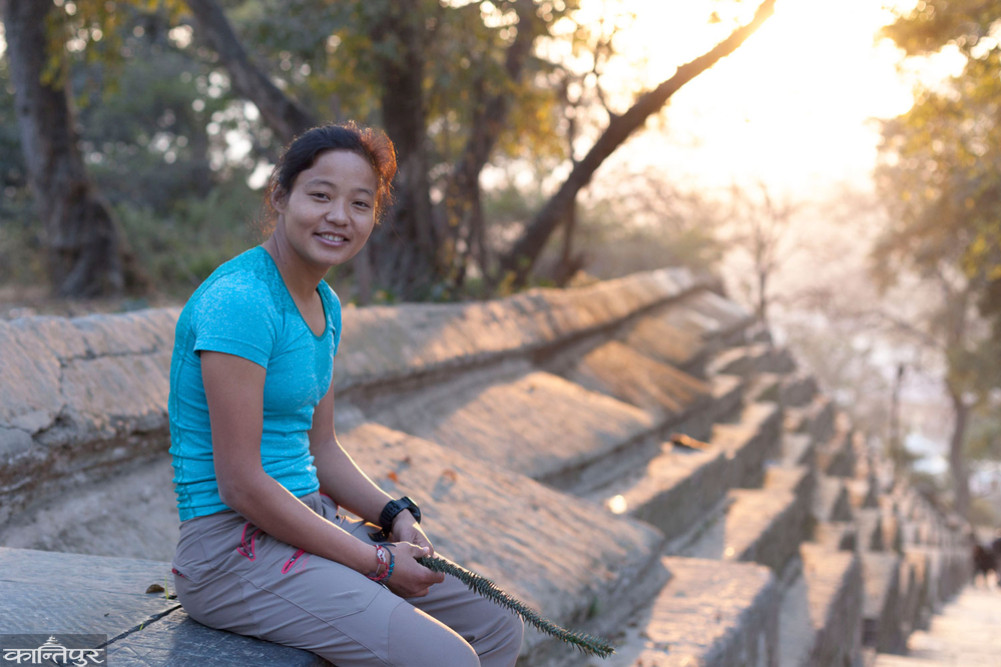
Meera Rai, Rajpura Pachai and Santoshi Shrestha's struggle and flight to success in athletics is unlike any other athlete.
We use Google Cloud Translation Services. Google requires we provide the following disclaimer relating to use of this service:
This service may contain translations powered by Google. Google disclaims all warranties related to the translations, expressed or implied, including any warranties of accuracy, reliability, and any implied warranties of merchantability, fitness for a particular purpose, and noninfringement.
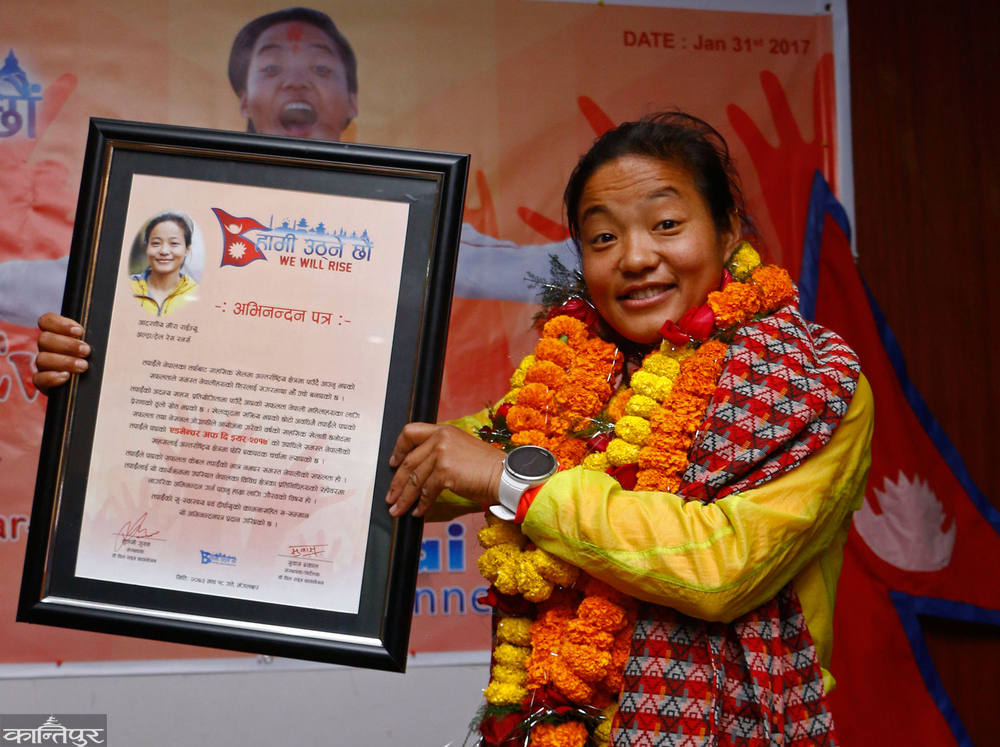
At the time of writing this story, Meera Rai was in Colorado, USA, to participate in the race. Meera Rai in particular is a flower on the rock, who had to fight hard to get back into the game. How much the mountain of sorrow and pain pressed Meera. However, she did not give up. Fell several times, got up again. Meera knew that victory belongs to the one who does not lose courage.
Meera was born in Pauwa Dung Rural Municipality of Bhojpur. He has one older brother, then two brothers and two sisters. Meera's childhood was not easy. Along with her mother, she used to go to Pakhribas to sell chillies and fruits. When Meera was ten years old, she started Bhojpur-Hile alone, climbing huge hills. While studying in school, the Maoist war was going on in the country.
A relative he knew had joined the Maoists to change the country. One day there was a function in the school, a familiar relative came and he took many other children along with him. His friends who went with him all ran away. But Meera decided to stay there. Because he had no reason to return home. The financial situation was very poor, there was no study environment. She was studying in Class 8 when she went to Maoist. Meera felt that there might be an opportunity in the Maoist camp.
Days passed, a peace agreement was reached. The news that the country would now be peaceful gave Meera great joy. As she was not old enough, Meera did not get any of the services she was entitled to. She went to the Maoist camp in Sindhuli to study. Received scholarship, took various training. No matter what she did, she never got closer to her dreams. So Meera decided to go to Malaysia.
Visa came, was told to work in a factory. All the process is completed. Anupama Magar was his friend during his stay in the camp. Karate coach Dhruvavikram Malla used to go to Sindhuli's camp every now and then to look for players. Anupama started playing karate.
It was Anupama who won the gold medal for Nepal in the 19th South Asian Games. At the last moment, Anupama stopped Meera from going abroad and advised her to play karate. Meera's life took a turn from here. In karate Meera got up to black belt, but she was not happy.
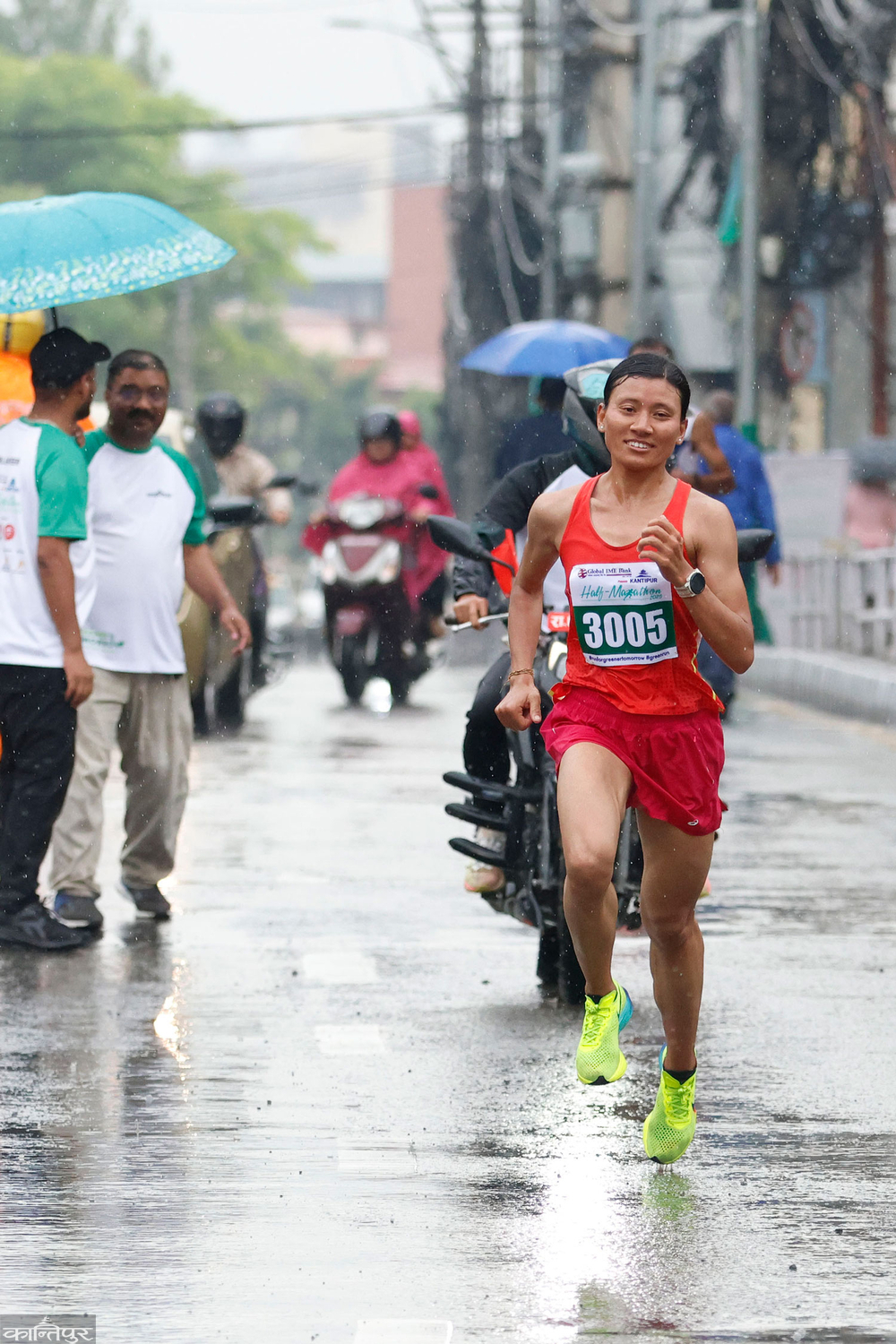 Santoshi Shrestha
She found peace in Kudna. Woke up in the morning, jumped. Similarly Meera was spending her daily life. What is road race, trail running? Meera knew nothing. She also practiced for a while at the stadium. However, as there was no bus fare to go to and from the stadium, Meera started climbing the hills of Balaju. I started thinking that I can do something by running. One day a runner crossed the gate at Fulchoki and entered the forest.
Meera followed him. Later I found out that he was Hem Gurung of the Army. He was asked to come next Saturday. She went thinking 'maybe training'. There is a 50 km Himalayan outdoor festival. Meera was the only Nepali female runner. After reaching 42 km, Meera got ringata. Why did you feel bad? Didn't know. Hem Gurung left the money at the next check post. She put the noodles in the hot water and ate it and realized that she was hungry. What should you carry while running? What to eat? What should be prepared? He didn't know. However, she completed the race.
The race was organized by Richard Ball, the founder of Trail Running Nepal. Then there was a search for Meera, is she the girl who will complete the race? Richard arrives at the stadium looking for Meera. Meera, who does not know English, gossiped with Richard. Richard asked – are you going to do trail running? She said 'S'. And so began Meera's journey as a trail runner. In 2015, Meera finished first in the Mont Blanc 80 km race in France. After that, Meera started to be discussed in Nepal. Even though it is popular in the world, it is Meera who introduced trail running in Nepal. The world knows Meera's story after that.
is currently busy producing new players through the Meera Rai Initiative Training Center. Sunmaya Budha, Priya Rai, Anita Rai, Rasila Tamang are following Meera's position. Meera is an example that if you believe in yourself, you can cross the mountains of sorrow. Nepal is considered the best for trail running. However, he is worried that the trail is being eroded by unorganized settlements. Meera is upset that no one understands that the country can be known to the world along with economic prosperity through trail running.
...
'Being born as a human girl is like a khachada. Carrying heavy work that too - without complaint, without rest! No one understands the pain, no one asks if we are okay. But, I don't want to live this life. I have to get out of here somehow, to be independent. You have to live for yourself,' this wave used to rise in the heart of Rajpura Pachhai.
A girl growing up in Kankasundari Rural Municipality of Jumla used to play the same thing in her mind. There was no trouble in eating. It was not difficult to eat in the morning and evening and to put on some clothes. My parents had a hotel. He helped with the work, cut grass and firewood. He doesn't think it's too sad. Because that was his daily routine. Peer was the rules and limits made by the society for women.
Rajpura had set her goals without understanding life properly. He wanted to become Nepal Police. He had a special fondness for the uniform worn by the police. So Rajpura never walked to school. She always used to go to school on her own. Going slowly will take time, that's why. He knew that he had to be a policeman. So his steps were quick. She would wake up early in the morning and go to work, after coming to work at the hotel and school. This is how his childhood passed.
What is athletics to Rajpura, what is running? There was no urgency. Because Rajpura was a volleyball player. His first love is volleyball, which he still has today. Where can you forget the first love? Rajpura was already a regional volleyball player before running formally. From school, she participated in the President's Running Shield in the running category. Rajpura finished second in the 1500m and first in the 5km in the President's Running Shield qualifier at Dang. After being selected from there, Rajpura went to Pokhara to play the final stage of Rashtriyapati Running Shield in 2072. Rajpura got the same result there too. Silver in 1500 and gold in 5 km.
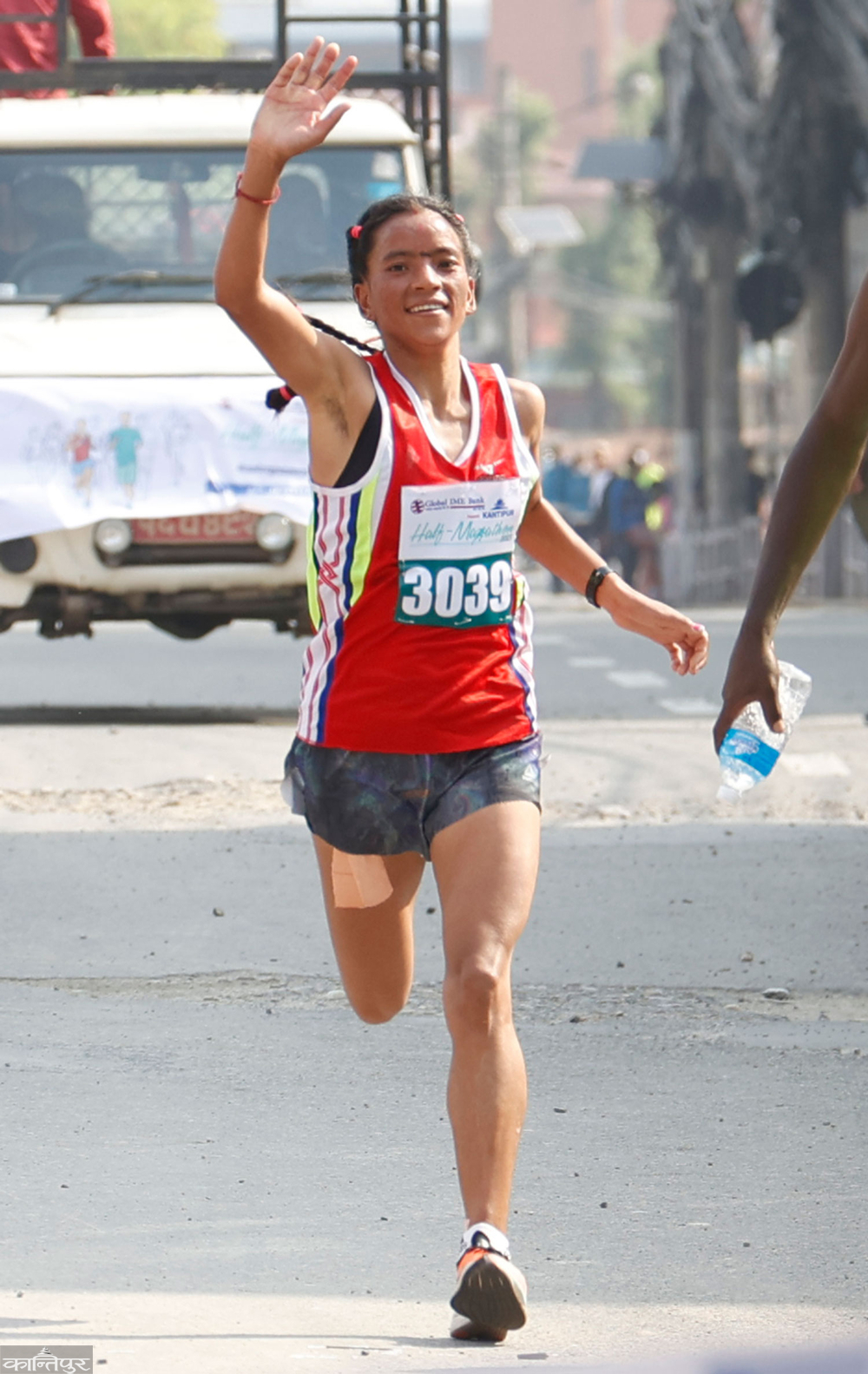 Rajpura followed
By that time, Rajpura had named her to the police. Rajpura's running stopped after the name came out to the police. She attended police training. Rajpura returned to the race through the 7th National Games. Rajpura, who started running to become a police officer, became a sportsperson because of her job. After seeing that he was first in running during practice, the Nepal Police Club suggested Rajpura to go to athletics, made him run. Rajpura also continued to move forward as the club said.
It was only 7 days after Rajpura passed out while participating in the 7th National Games. She competed in the 1,500 meters, finishing fifth. This did not disturb Rajpura. He knew his preparation. After returning from 11 months of police training, she realized that 'this was all I could do'. It was a big break-through in his athletics career.
After that, Rajpura practiced regularly. She won gold in the marathon and silver in the 10,000 meters in the eighth national competition. Rajpura's performance was not good in the South Asian Games held in Kathadoun in 2019. Rajpura, who was fighting for a medal, collapsed after reaching 38 km. The doctor said that the age has decreased. However, Rajpura still does not know the reason. She has not run a marathon since. She wants to get back into the marathon again.
Two years ago, Rajpura won the silver medal in 10 km at the ACN Cross Country in Nepal. Nepal was second in this team event with Rajpura. 2079 was special for Rajpura. That year, Rajpura won medals in almost all the competitions she participated in, including the ACN Cross Country.
Kantipur Half Marathon is another success of Rajpura. He has scored a hat-trick in this. Starting from Jumla, Rajpura's run continues to South Asian Games, ASEAN Cross Country Championship, ASEAN Championship, Bangabandhu Half Marathon and many other international competitions.
Now Rajpura is resting due to injury. Rajpura, who is waiting for the day to return to the track after getting fit, has been deeply affected by the recent incident of a woman's death after she was bitten by a snake while she was camping in Kanchanpur. Rajpura knows, the wild nights of Chhaupadi basa. However, she was accompanied by some friends of her own age group while staying in Chhaupadi Goth. There was fear in those days - will I be a victim of rape? Will the snake eat it? Does anyone do anything? Rajpura does not want to remember that night of fear.
'Is there a god greater than life?', he urges the government, with his society and with his family, 'Let's keep our daughters in their own homes. Menstruation is a flowering process, let many Rajpuras like me bloom. Let her run freely in track and field around the world.'
...
Santoshi Shrestha has a sentence that keeps ringing in her ears, grandmother's - My granddaughter is like a bird, she flies away, she comes back by flying. Born in Dhading, Santoshi found a different kind of joy in running since childhood. That's why she used to go to the shop and come back. Even if someone called her on the way, she would walk fast without hearing. That's why grandmother called Santoshi a bird.
Whatever work should be done before others, even the weight of grass should be made bigger than others. When working in the fields, carrying manure, Santoshi should be the first. She would add more if it became lighter when she was carrying a heavy load. Growing up with her grandmother, Santoshi had no material comforts in her childhood, but love. She never took insults, only praises. Santoshi came to Kathmandu Swayambhu along with her brother to study from Dhading.
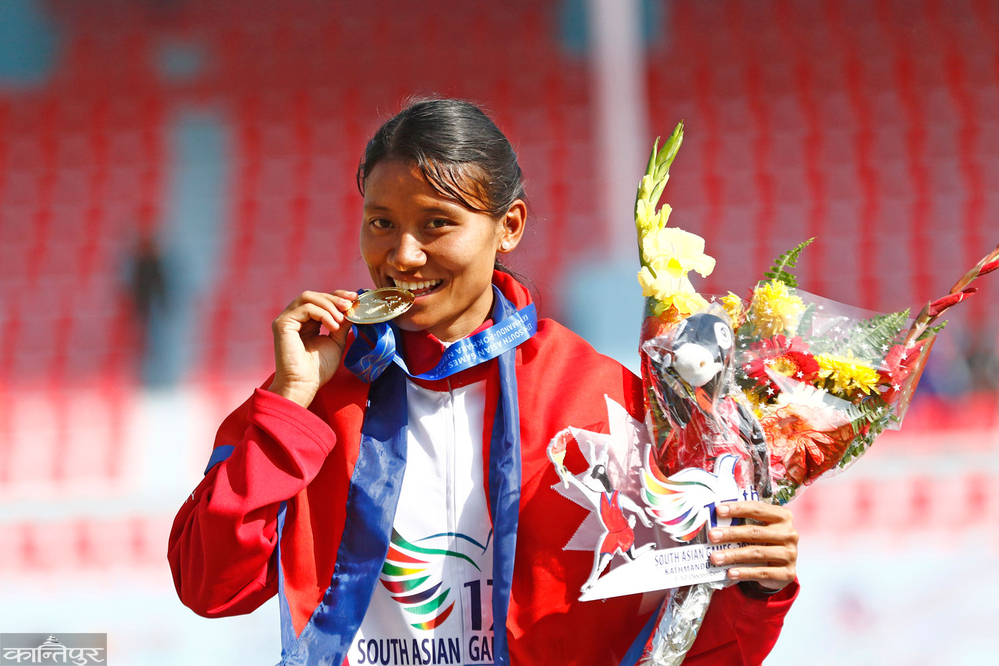 Santoshi Shrestha
Since childhood, she felt that she should do all the work herself, why bother others? Standing in line for water, cooking food and going to school was always late. Kuder had no choice but to go to school. In the school where he studied, there were only indoor sports events, not so much outdoors. Mummy and Uncle wanted Santoshi to dance. Santoshi does not feel like dancing.
As she did not like dancing, she took part in running at school. His brother advised him not to run. My brother was upset that my older sister, who was the first-second among others, would cut her off because she couldn't run. Santoshi also wanted to withdraw her name from the race - thinking that she would have to run on the banks of the Vishnumati, people would look at her and feel ashamed. And, she went to take back the name. All the girl students were withdrawing their names. There was competition between Mavi, Nimavi and Pravi. When everyone started saying 'don't play', the teacher said, 'If you withdraw your name, you have to pay a fine of 200.' So there is no option to run.
She was the first to jump wearing a shirt and trouser and torn slippers that she had bought on Dasain. As he crossed the finish line, his brother was shocked, unable to believe it. Santoshi saw the stage for the first time in her life. Santoshi was the only one to win the first prize in her section. Sir went up to the stage to receive the award for his cause. After that, Santoshi started participating in competitions.
Santoshi had no idea that running required practice. She participated in various races in Kathmandu, but no one would believe even if she got a position. The coach of the players from the department was the team. Santoshi used to say 'I have become the second, I have become the third', no one could hear her voice. Santoshi used to say to herself - one day I will be the first to show it, then why won't my name be mentioned?
After SLAC, Santoshi practiced for a few days at the Army ground, where athletics stars including Hari Rimal used to meet. Some seniors also suggested to Santoshi that 'there is no point in taking up athletics, don't play'. Even there, she did not know the specific meaning of practice. She studied science at
plus two, she never dreamed of becoming a player. After becoming a bachelor, he wanted to run. However, the responsibilities of the house stopped. There was not much food. However, she kept on working. She used to go far away on her days off, draw something on a tree, make a picture. Thoughts - to get inspiration to come next time. Santoshi used to inspire herself that next time she wants to see the paintings I have made, she has to jump all the way there.
 Meera Rai
Apart from Kanchimaya Koju and Vishwaroopa Budha, Santoshi started winning without practice. Friends used to say, 'If you practice, you will conquer even the smallest love.' However, Kanchimaya had stopped playing when she came to the field.
In 072 she was studying bachelor, Santoshi had become a little known at the senior level. Santoshi thought that she would not play after completing her bachelor's degree. The plan was 'I will become old after 25 years, I will do PhD when I am 30'. Santoshi also felt that there was a lot of injustice when she played outside the department.
Santoshi participated in four events in the 8th National Games. Got third place in 10 km. "I won't play 1500 meters," she thought. But, mother had bought a spike, she ran to show that spike. She had never worn spikes before that. She was second by a millisecond to Saraswati Bhattarai, who has played in the Olympics.
After a two-day gap, she won gold in the 5,000m, fourth in the relay. Santoshi stood first, second, third and fourth in the first national competition. However, there were various controversies regarding Santoshi in the eighth. There was a dispute about the issue of 'track counting was wrong'. Santoshi's goal was to become a national champion with graduate athletes. She accomplished that. Then she decided to quit athletics.
was to give an example that 'reading can be played', now it's done. She did not get to celebrate even when her dream was fulfilled for years. So she decided to take a break from athletics. While practicing at Ranibari, Santoshi said to Guru Raghuraj Vant, "There are no such bad people in athletics, now I can't stay in this field." Coach Vant replied, "There are good people like Sunil Rajvanshi in athletics." Rajvanshi used to help the players a lot. Vant said, "The world is not as you see it, it is not as you think, it is not only flowers, there are also thorns." Santoshi said, "I want to live in my world."
Santoshi understands that things that are under control can be fixed, not to stress about things that are not in your hands. She got mentally strong and got back on track. The 19th South Asian Games were held in Nepal.
Santoshi won a record gold medal in the 10,000m. It was the first gold won by a Nepali female athlete in athletics. Then Santoshi became the face of Nepali athletics. Young players found Santoshi as their ideal player. Athletics got a star player after a long time.
Santoshi, who has decided to quit athletics, represented Nepal at the Paris Olympics. She competed in the marathon at the Olympics. She has run three marathons so far. In the half marathon and road race held in Nepal, Santoshi is the first wherever she steps. He has won more than one hundred titles.
He has only one goal - that the next generation can run without any kind of mental stress. Santoshi wants to make an easy track for the new generation.