Women's football can dream not only of Asia-Cup, but also of World Cup, South Asia's best players are Savitra Bhandari, Angela Tumbapo and Preeti Rai.
We use Google Cloud Translation Services. Google requires we provide the following disclaimer relating to use of this service:
This service may contain translations powered by Google. Google disclaims all warranties related to the translations, expressed or implied, including any warranties of accuracy, reliability, and any implied warranties of merchantability, fitness for a particular purpose, and noninfringement.
Savitra Bhandari has completely changed now. It has become a true 'samba', i.e. connected with football in every sense. "Now I need more training, I had to have a vigorous 'warm-up', I didn't eat this, I didn't eat that," he said.
Where was Samba when she debuted in international football for Nepal in 2014? She did not play age group football for Nepal. First joined APF and made it to the national team. Not only reached, but scored in her first match against Sri Lanka. After that, he never looked back. And she became a hero for those who love Nepali football.
Kumar Katuwal is the coach who played samba for the first time in the national team. He remembers the old days, "In the beginning there was something in samba. At first glance, this player could do anything. It goes without saying. He is a once-in-a-lifetime player. Those who have watched his game closely and the statistics that come forward in connection with Samba, have to agree with the coach. If we remember his early days, his journey so far should be considered amazing.
is also the heroine of her own story, Angela. Like Samba's story, his journey so far is enough to inspire anyone. Preeti, who made her debut with the national team at the age of 15, is also a long race horse. His village is Pamchok. It belongs to Marsyangdi Rural Municipality of Lamjung. Why, from a young age, Samba had a passion for football, she only focused on playing with her friends. She enjoyed playing football after work. Although there was little football atmosphere in the village, there was also a problem - there were no girl friends who played football like him. Father Thaman and mother Muna didn't scold him for playing football only? She was beaten even more, remembering the old days makes Samba laugh today.
His family was financially normal. She grew up in sorrow by doing samba - grass cutting - fairs. Samba had another problem when he was young, he had no style. Like many others, she also learned to play from the balls of her socks. When playing, boys used to be players not only for their own team, but also for the opposition. Samba has repeatedly said, 'I learned football by playing with my older brothers.'
Now days have changed. Those who reap those things are praised. For these days, Samba has been on the football journey for more than 10 years. There were many ups and downs in it. Injuries have also hit Samba badly. However, when it comes to football, she takes a step forward and wears it in any situation - Arjunadrishti. So yes, Samba-chowk has been built in his name, Samba column has been prepared, that too in his Khudibazar of Lamjung. Isn't the whole story the same as the cinema?
...
Samba has a very good friend in Nepali football - Angela Tumbapo Subba. She has even become a movie heroine, the story is also her own. Even the character who plays in that story himself. Like Samba's story, Angela's journey so far is enough to inspire anyone. Samba and Angela not only played football together in APF, but also joined the national team for the last ten years. Angela was also one of the leaders of the Nepali team for a long time before becoming the Samba captain. A
movie is a movie. A lot can be known about Angela's football journey from the movie made in her own name. However, not everything. His story is bigger, different and touching than that movie. In Angela's own words, she did nothing to set the journey so far. 'What have I really not done in my life?' she says, surprising herself, 'I have worked from a young age, I have done many kinds of work. I am happy and proud of what I am now.'
is Angela's birthplace, the remote Famatteb village of Panchthar. The past was really difficult in his own language, even more so. A mountain of sorrow lay in front of her, struggling against it she was exhausted. At an early age, there was discord in his family, his father remarried. After that, the sad days began. Mother also remarried. After the entry of a new father in her life, things started to get easier. One fact was certain, suffering had made him strong and fearless.
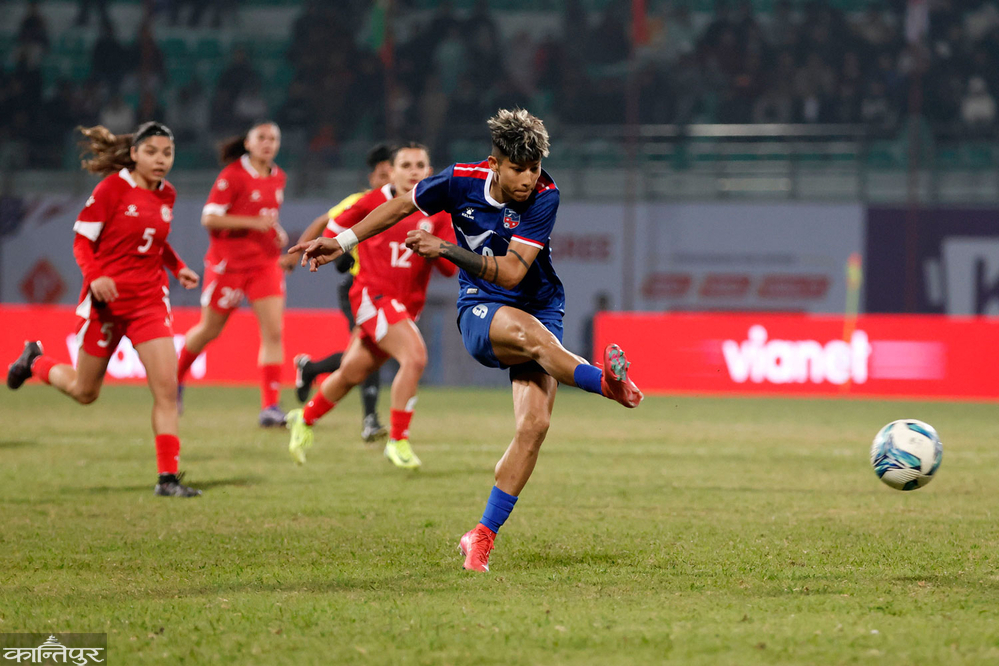
"I also picked tea in the garden, but due to my young age, I could not do that either," she says. Like others, Angela had a passion for football from a young age. After the fall of Elam from Panchthar, Lagab assumed a shape. No matter how much scolding she had at home, she would go ahead when asked to play football.
Many may not know, once he broke his arm while trying to pick up a ball that fell in the field. At least the atmosphere of football in the East is good, it was not exactly difficult for Angela to advance.
She wasn't a goalkeeper in the early days. Once when there was a tournament in Panchthar, Angela was supposed to be a forward, but had to play as a goalkeeper. What happened was that the goalkeeper of the team did not arrive until the last moment, Angela had to handle the post herself. What happened then? It became history in itself. Where is it easy to be a goalkeeper? It's about to get strong, the whole body hurts,' she sometimes complains insensibly.
After her performance as a goalkeeper started to improve, she moved to Kathmandu and joined APF. Got a job too. APF's Prem Shrestha has to be credited for all this. In the beginning, being in APF was not easy. Later she started doing well as a goalkeeper. He played for Nepal for the first time in the 2016 South Asian Games. Not only being the first choice goalkeeper, but also leading the national team for a long time is the essence of his playing life.
...
Now it's Preeti Rai's turn. This player is a little different from Samba and Angela. Preeti is called an emerging player. To him, Samba and Angela are sisters. These two sisters took over the captaincy of the Nepali national team. At some point it will be Preeti's turn to take the lead. She made her debut with the national team at the age of 15, so she has a long playing career ahead of her.
is left. He also has the experience of leading an age group team. So she is a really long race horse.
The biggest feature of Preeti's game is hidden in her short stature. It has advantages as well as disadvantages. Because of this short body, Preeti is able to perform a performance that pulls the hearts of the audience. His responsibility is in the midfield. In this role, she is adept at delivering sweet passes, that too measured and weighed. The goals that came out of his passes are sometimes good in themselves, but his passes are more talked about than those goals.
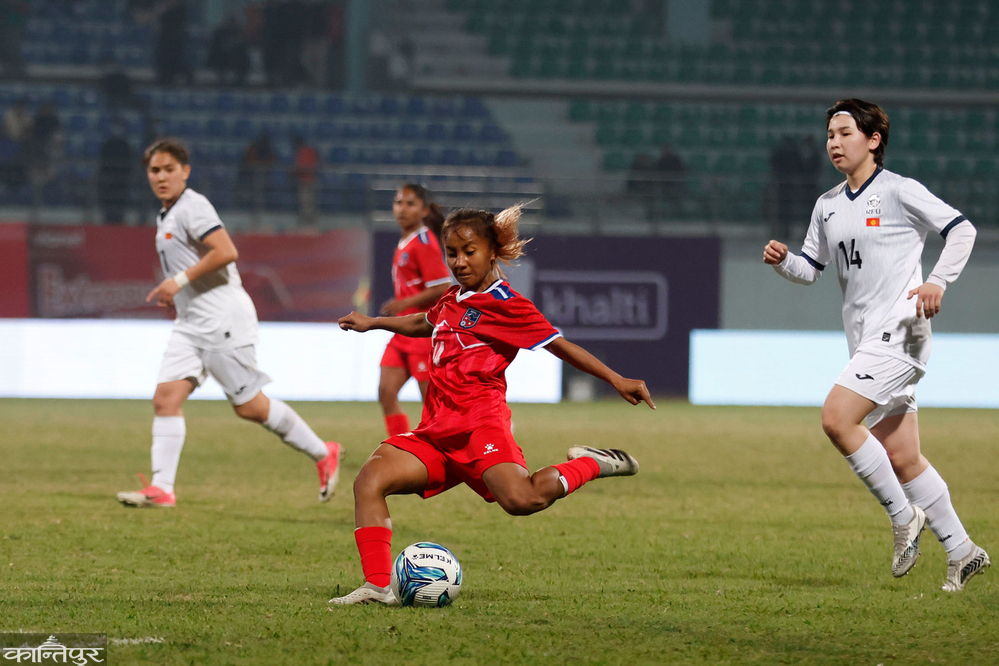
So her family's family home is Solukhumbu, but Preeti was born and raised in Kathmandu. Kapan his work. Family is middle class. Father Gyanprasad Rai works in the trekking field and mother Gyanmaya Rai runs a tea shop. Preeti, who passed her SLC from Sharda Academy in Kapan, showed talent for football from an early age. She started playing football at a young age. She also played football with her older brother at that time.
It is about the year 074, there was an open call to prepare the Nepali U-14 team. Preeti participated in it and also selected. As in all other events, what happened next? That was history. Since then, she really hasn't looked back. His performance was particularly good at the Half Championship in Saudi Arabia. With the help of his tempting goal, Nepal reached the final of the tournament. That goal against Lebanon is often discussed even now.
She is also extremely popular among Nepali football fans. The way she and her fans flocked to watch her play in a tournament in Ilam, the way the supporters surrounded her and the way she had to be put under security, it shows how popular Nepali women's football really is.
He was hurt the most by injury. She has been plagued by injuries. He himself credits those injuries as helping him become a more mature player. Another part of his personality is that he excels in studies. Not only football, she also gives equal importance to studies. She says, 'Sports and studies can be progressed together, the better.' This is why she is an intelligent player of the Nepali national team. You have to talk to him for a while, you have a similar experience.
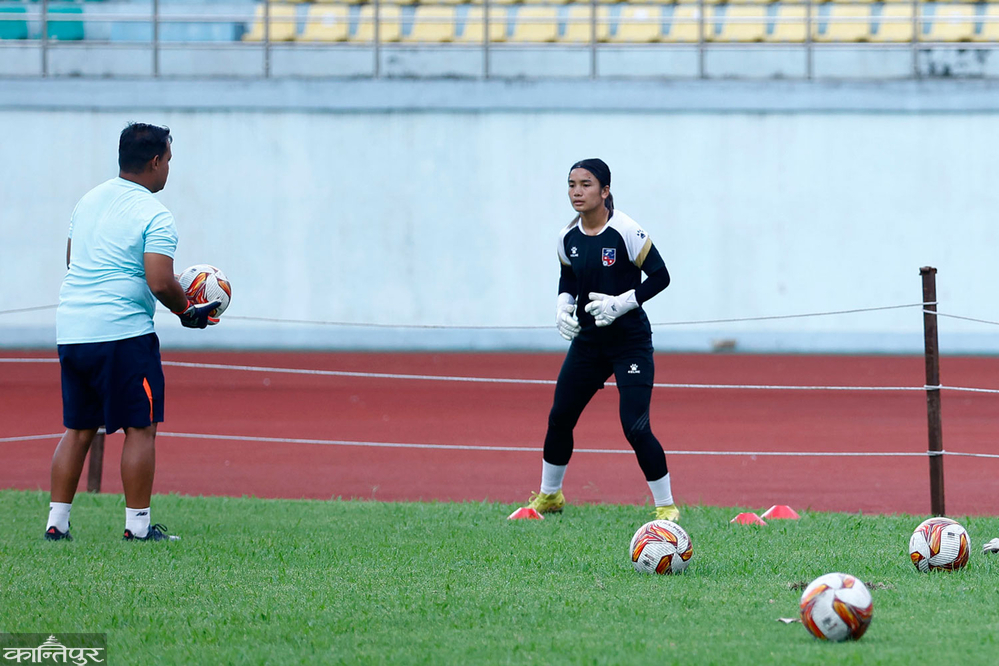
She says, "It is the dream of all of us to play the Women's World Cup." Even my own. Also, we have not even won the SAFF Championship yet. There is also a good history of not winning any major yet. So, to many, it was a bit too ambitious. However, it is not impossible if we plan well and execute it properly. The possibilities of Nepali women's football are really many. That's enough to understand.'

