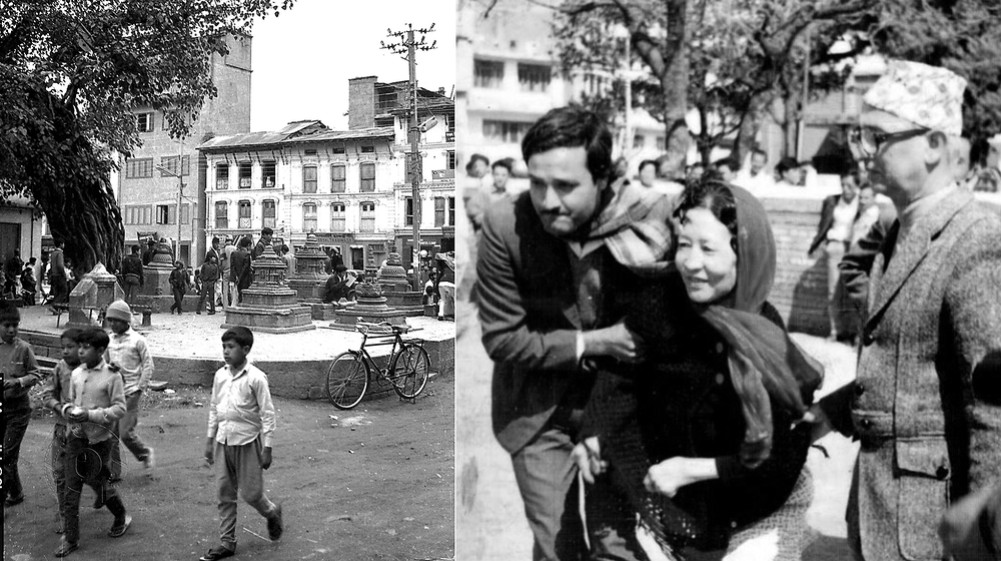
From Rana period through democracy, panchayat, multi-party system to republic period, PeopleBot became a witness of every change. PeopleBot is still here, but times have changed. It has changed, the meeting place of poets and writers. You don't need to hold the PeopleBot just to polish your boot or read the magazine. What story will PeopleBot tell after fifty years?
We use Google Cloud Translation Services. Google requires we provide the following disclaimer relating to use of this service:
This service may contain translations powered by Google. Google disclaims all warranties related to the translations, expressed or implied, including any warranties of accuracy, reliability, and any implied warranties of merchantability, fitness for a particular purpose, and noninfringement.
Writer-journalist Kishore Nepal is rooted in the mind of peoplebot, neurode-nostalgia. This is the same Peoplebot, which was a center of intellectual awakening.
This was the meeting place for poets, writers, journalists and politicians because of the headquarters of the Gorkhapatra publication and the availability of newspapers. Nepal says that the seed of its political consciousness started with PeopleBot. "Even when political parties were banned, New Road was a gathering place for Agraj and Anuj," he says, "The lamp of democracy never went out here." He remembers that there have been many arrests from here. CID-Suraki remained on deployment. The initial plans of political and literary movements used to be made from this gathering.
New Road had become a center especially since Rana period. The organization that opened against the Rana regime was at Ombahal near the Nepal Praja Parishad, where Dharmabhakta lived in Mathe. In this way, PeopleBot became a meeting place for intellectuals. It became a meeting point for writers from the old to the new generation.
At that time, the evening gathering of writers was not just a fair to pass the time. Many dimensions of literature could be expanded from those friendships. In terms of ideology, the writers were on the progressive and democratic side even then, but there was not as much polarization as it is now, Nepal says. In his memory, the most influential poets of that time were Mohan Koirala and Bhupi Sherchan. Koirala is a democrat, Sherchan is a progressive.
Indira Restaurant was opened near People Boat. Poets and writers of elite status used to enter the restaurant. According to Nepal, editors of Rooprekha magazine, Uttam Kunwar, Bhupi, Dwarika Shrestha, Krishna Bhakta Shrestha, famous intellectuals, writers and journalists including Jagdish Mathema, who works at the American Embassy, used to have regular evening meetings at Indira.
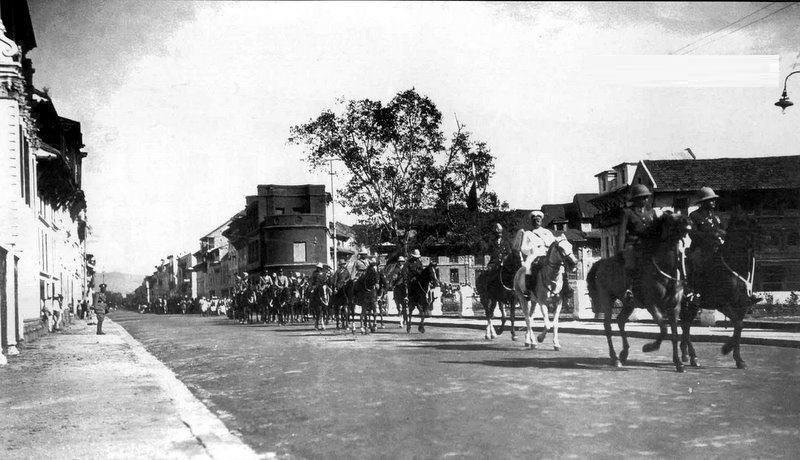
Moti Mahal was the next stop. Writers and politicians were also present here every evening. Among that crowd were Shailendra Sakar, Dhruvachandra Gautam, Upendra Shrestha, Haribhakta Katuwal, Narayan Dhakal, Hari Adhikari, Bhavani Ghimire, Dhruv Sapkota, Kavitaram, Mohan Ghimire, Ashesh Malla, Kanad Maharshi, Toya Gurung, Ommani Sharma and others. "Poets-writers who are passionate about writing used to discuss for hours here about literary writing and life," says Nepal. Amber Gurung Niwas was also the meeting place of
poet-writers. He rented a small house on the north side of the Tukucha bridge that enters Baghbazar. Nepal had the opportunity to associate with Shankar Lamichhane, Bhupi for some time in Gurung residence.
Not only Indira, Ranjana Galli Danfe restaurant, Amrapali, Nepal Bangalore House, Nepal Coffee House, RC Momo, Ganesh Manandhar's shop, poet Vijay Bajimay's shop used to have a literary atmosphere.
Literary and contemporary compilations as well as Indian newspapers are available, so writers used to go to PeopleBot. At the mouth of Ranjanagalli was the Message House. Newspapers like Times of India, Hindustan Times, Statesman, National Herald, Navbharat Times, Amritbazar, Hindustan Standard, Dharmayug, Dinman used to come here. Nepal remembers that literary magazines like Sarika, Kadambini, and Navneet used to be crowded with writers.
Bhupi Sherchan is the character who comes to mind as soon as peoplebot is remembered by the poet Shailendra Sakar. Bhupi from an elite family used to come to New Road dressed in a tie suit. "The picture of Bhupi standing in front of Indira restaurant and watching the people on the street smoking a cigarette is still in my mind," Sakar says, "He used to stand there for a while. Later, when Shankar Lamichhane, Tulsinath Dhungel, Krishna Bhakta, Upendra Shrestha came, they used to go to the restaurant, we used to go to Malhotra's tea shop. Narayan Dhakal, Bimal Niva, Santosh Bhattarai were there.
Sakar, who came to Kathmandu at the end of 2018, kept seeing Bhupi and Siddhicharan around the Peopleboat many times. Rochak Ghimire and Bhairav Aryal introduced him to Gopal Prasad Rimal. Rimal only occasionally came to the peopleboat. As soon as he came, other poets used to tease him that he was crazy. Rimal was unstable, he used to walk wildly,' Sakar remembers, 'I tried to understand many times what he was saying, but I could not understand.' Along with their profession, they were also interested in debates between writers and journalists. Here the shoe polishers used to hang around with small wooden boxes. "There was no other place to polish shoes, newspapers were not available except here," Sakar explained the reason for becoming a PeopleBot center, "Indian newspapers also used to come here. Gorkhapatra used to be hung in Geopark, we used to read it there.'
Journalist Prakash Guragai tells the story of Naya Sadak through the book 'Junction Peopleboat' in this way, 'Vijay Mall used to smoke five hundred and fifty five cigarettes while standing under the peopleboat. Mohan Koirala was often found listening to others. Santosh Bhattarai used to criticize conventional ideas and contemporary beliefs by wagging the 'chaotic' finger. Poshan Pandey was reciting poetry. Many groups of writers were seen standing under the people boat. Many were emotional. Gopal Prasad Rimal, Siddhicharan Shrestha, Govind Malla 'Gotha' used to travel through this road. Writers, politicians, journalists and spies would be found everywhere on the peopleboat from around four in the evening to seven in the evening.'
Regmi, Ratnashamsher Thapa, Punya Subedi, Chittaranjan Nepali, Ramesh Vikal, Manu Brazaki was this place. Dor Bahadur Bishta, Bhimdarshan Roka, Damannath Dhungana, Lokraj Baral also used to visit sometimes. Abhi Subedi, Purushottam Subedi, Bimal Niva, Rajav, Narayan Dhakal, Shardul Bhattarai, Shyamal, Avinash Shrestha, Nayanraj Pandey are still found on PeopleBot.
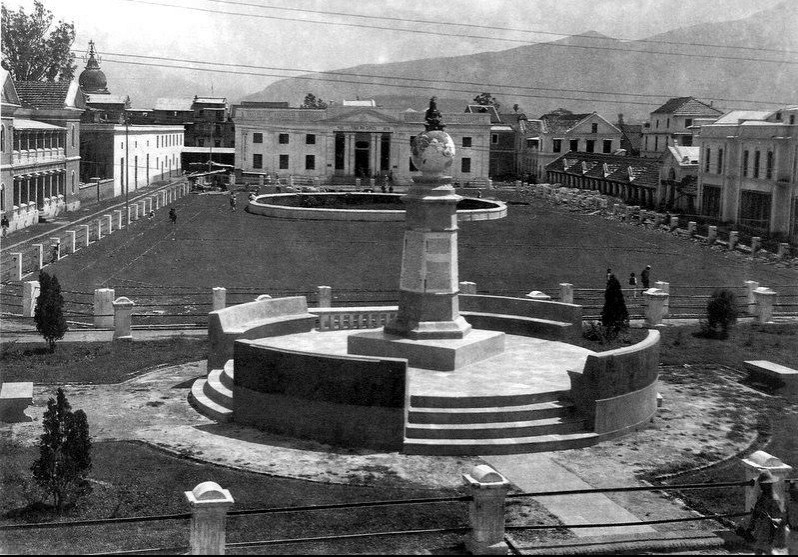
Abhi Subedi got to taste coffee for the first time at Indira Restaurant. "I consider that central part of PeopleBot to be the source of revealing the most important expression of my civic life. Based on that, I have found the basis of philosophy and literature of the West and the West," wrote Subedi in his essay "People Boat".
Especially Mahakavi Devkota used to go to Lupton's hotel in Dillibazar. Even though he had a house nearby, he used to enter the hotel to eat meat and chiura. To some extent, the history of tuition students being taken there as well - student Pravas Gautam has narrated in journalist Sudhir Sharma's podcast 'Ani Ab'. Shankar Lamichhane, Vijay Malla, Bhupi Sherchan, Dharmaraj Thapa used to meet here.
Shambhunath Pandey's house in Naxal opened an entertainment library in 2010 or New Road's American or British library, he had his own role in spreading awareness. Kavi Goshti used to be held at the Nepal-India Cultural Center in Basantpur. Shankar Lamichhane once became the librarian of the centre. Therefore, another meeting place for writers was the cultural center.
British Library also used to show movies. Journalist Kishore Nepal says that the British Embassy has arranged weekly screenings of popular English movies, realizing the growing interest and desire for English cinema in the society of Kathmandu. The fascination of English language was growing among the youth of Kathmandu. Because the medium of cinema and association can help in learning English language, the interest of the members of the Khan family increased towards it. The number of young women enjoying the modern lifestyle was very few. There were even fewer girls in low cut blouses, jeans shorts or mini skirts. Although I was interested in English cinema, I did not have the financial capacity to subscribe to the society,' he wrote in his book 'My Time'.
Writers against Panchayat
Chait 3 is famous as a joint movement of poets and writers against Panchayat. It was an intellectual rebellion on 3rd Chait 2046 in the Saraswati Sadan of Trichandra Campus with a black band around the mouth.
From Parijat to Kamalmani Dixit, Ananddev Bhatt, Yudhprasad Mishra, Krishna Chandrasingh Pradhan, Khagendra Sangraula, Krishnasen Willing, Ramesh, Rayan, Aruna Upreti, Sharda Sharma, Anju Dixit, Harivansh Acharya, Madankrishna Shrestha, Ashesh Malla, Govinda Sanghar, Ahuti and others participated in the movement.
Protesters were taken away by the police in trucks and vans, but they did not arrest Parijat. As he could not sit upright, we arranged for a bed. Parijat Didi tied a black bandage over her mouth while sitting in the mudha,' wrote Harigovind Luintel on Sandhan.com.
According to the poet Sneh Saimy, the 'Sirjana Chait 3 Literary Campaign' was announced on 26th February 2054 due to Luitel's activism. Among them were Luintel and Sayami along with Govinda Prashant, Rajkumar KC and Rajendra Prasad Adhikari. After the reorganization on 20th February 2056, Narayan Dhakal, Bimal Niva, Rajendra Maharjan and Suresh Kiran were added. Khagendra Sangraula and Ramesh Shrestha were the advisors. Sayami's poetry collection 'Bridges and Walls' was published under the title of Chait 3 Kai.
was born in 2026 as a rebellion against Panchaya, 'Amlekh'. Dwarika Shrestha, Krishna Bhakta Shrestha, Bhupi Sherchan, Mohan Koirala, Madan Regmi, Dhruvachandra Gautam, Ratnashamsher Thapa, Bhuvan Dhungana and others joined this movement. At that time they used to publish 'Siundi' literary publication. 'Tea drinkers in Indira have started Amlekh, we found out later,' laughs Kavi Sakar, 'we also started rejected Jamaat.' Along with Sakar, Mohan Ghimire, Dhruv Sapkota, Bhaupanthi and others were involved. At that time, the government had banned all topical compilations/publications of literature. All around, except the Panchayat and Mahendra, it was not heard. Newspapers printed in letterpress cannot be brought without censoring by the dictator,' journalist Nepal says, 'boot polish movement was born as a sign of protest from writers of all ideologies in a country where there is no freedom of expression.' Suddenly Balakrishna also arrived. He actually remembers that he gave 5 new notes each for polishing the shoes.
After the 2036 referendum announcement, 'Street Poetry Revolution' was born from PeopleBot. This movement led by Bhawani Ghimire reached places like Biratnagar, Tanahun, Pokhara outside the valley through Patan, Bhaktapur.
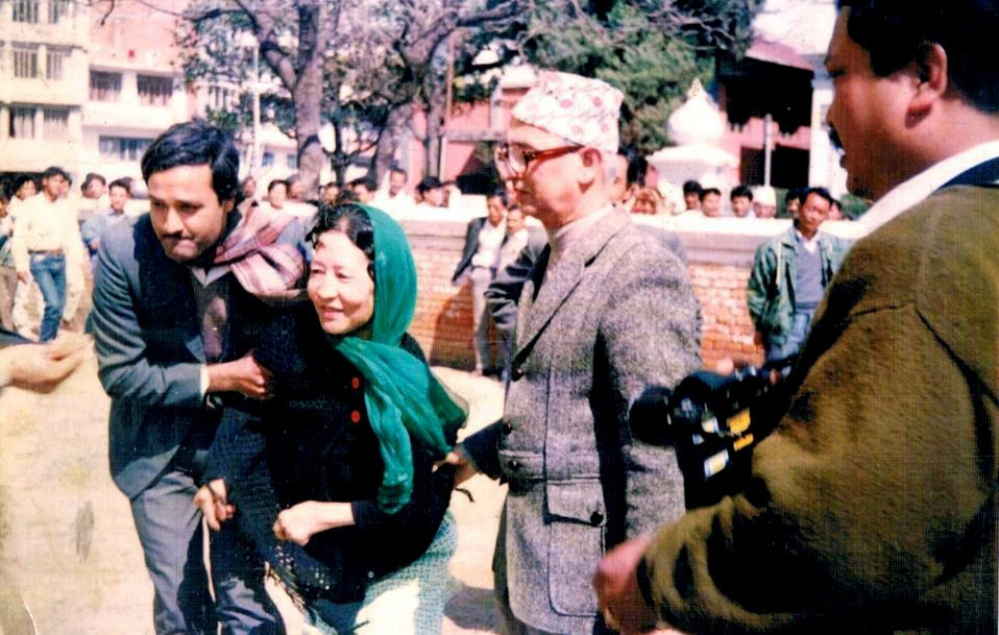
Thus, PeopleBot became a witness of every change. From Rana period through democracy, panchayat, multi-party system to republic period. Peoplebot is still here, but times have changed. It has changed, the gathering place of poets and writers. You don't need to hold the PeopleBot just to polish your boot or read the magazine. What story will PeopleBot tell after fifty years?