6 decades ago, films were brought from India with wheels in a box, one film had two/three reels, covering the chance of 'interval', the film was also played by exchanging reels in two halls.
We use Google Cloud Translation Services. Google requires we provide the following disclaimer relating to use of this service:
This service may contain translations powered by Google. Google disclaims all warranties related to the translations, expressed or implied, including any warranties of accuracy, reliability, and any implied warranties of merchantability, fitness for a particular purpose, and noninfringement.
The 'film hall' in Nepal was not started with any commercial purpose but as a means of court entertainment. After 2006, the cinemas built by the royal family and the Rana family in the palace complex of Kathmandu were gradually opened to the general public.
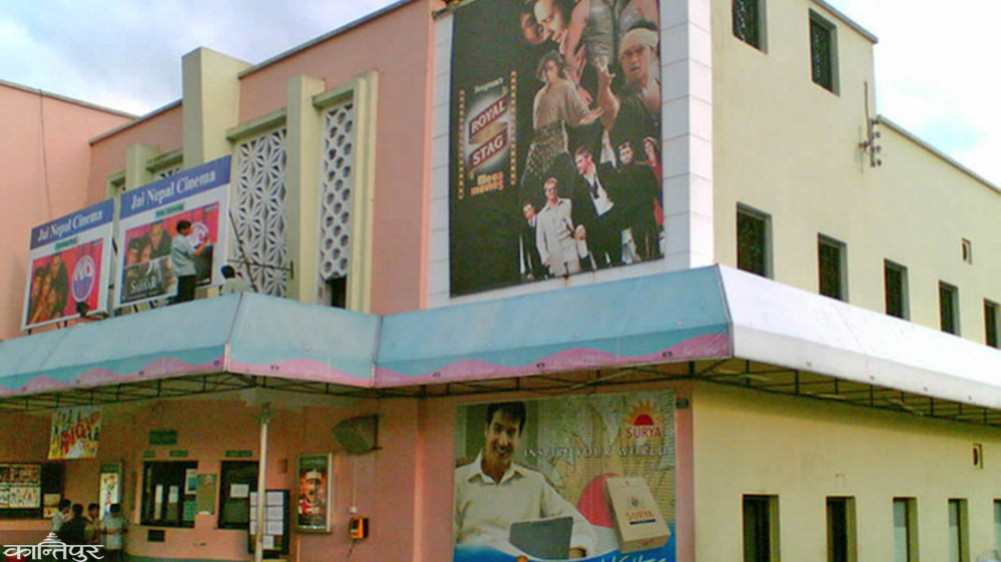
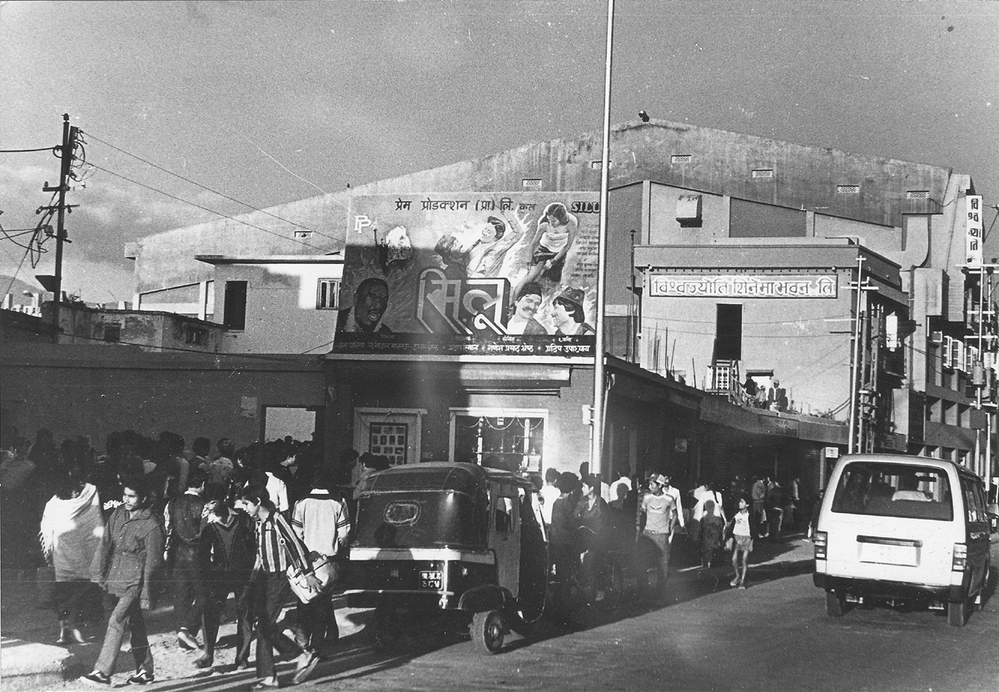
Nepal's first film hall called 'Kathmandu Cinema Bhavan' or 'Janseva Hall' was in Basantpur Darbarchheu, New Road. Jai Nepal Hall was in Narayanahiticheu, Hattisar and Vishwajyoti was in Jamal's White Palace . Halls that have reached the reach of common households through palaces have made leaps in technology, services, modernity, and diversity.
Kathmandu Cinema Bhavan was inaugurated as a public hall on 26th December 2006 with the screening of the film 'Ram Vivah'. As mentioned in Martin Chautari's scholar Lokranjan Parajuli's article 'The Story of the First Cinema House: First Soma Serve Raja', arrangements were made to sell tickets and show movies at Kathmandu Cinema Bhavan.
"In the beginning, cinema ticket rates were set from 50 paisa to five rupees by looking at the category, which is more expensive than now," he wrote, "There were five categories from the first to the fourth and including the box." The box was only for the royal family, the Rana family and high-level employees.' Then cinema houses like Vishwajyoti, Patan's Ashok Hall and Bhaktapur's Navadurga Hall were established. Hindi and English films were played in the hall until 2022 because Nepali films had not been made yet. Some experts say that ``Satya Harishchandra'' was made with the investment of a Calcutta producer and shown in public hall.
Garibnath Saraf, who came to Kathmandu in 2013 for Pashupati darshan, stayed here after hearing the news that the dilapidated hall would be closed in Seto Darbar complex in Jamal. Involved in the film distribution business in India, he saw the golden future of the hall business in Nepal. "My father rented the hall and renovated it, bought seats and projectors from India," recalls Mohan Saraf, who came to Nepal with his father when he was eight years old, "Then Sammi Kapoor's film Vasant was shown for the first time. The film wheel should have been rented from India and should have been returned after showing the film.'
Garibnath says that 70-year-old Mohan bought Vishwajyoti Hall from Devendra Shamsher Jabara in 2017 along with 2 ropani land in Jamal for 4 lakh rupees. At that time, the film was brought from India in a box with wheels. A film used to have two/three frames . There was a situation where those wheels had to be used interchangeably in two halls, covering the chance of 'interval'. "There used to be about 15 employees like gatekeepers, ticket sellers, and managers in the hall," said Mohan.
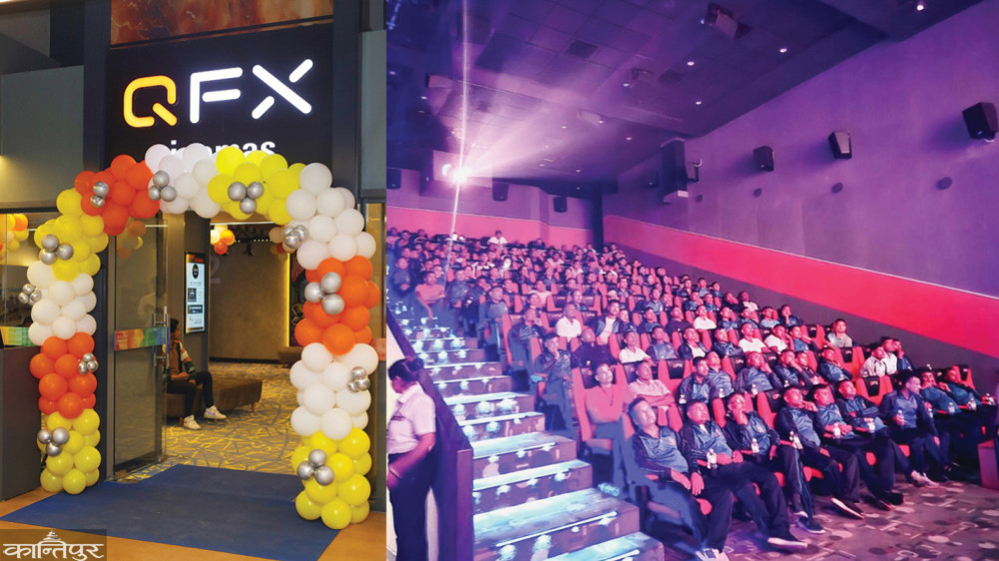
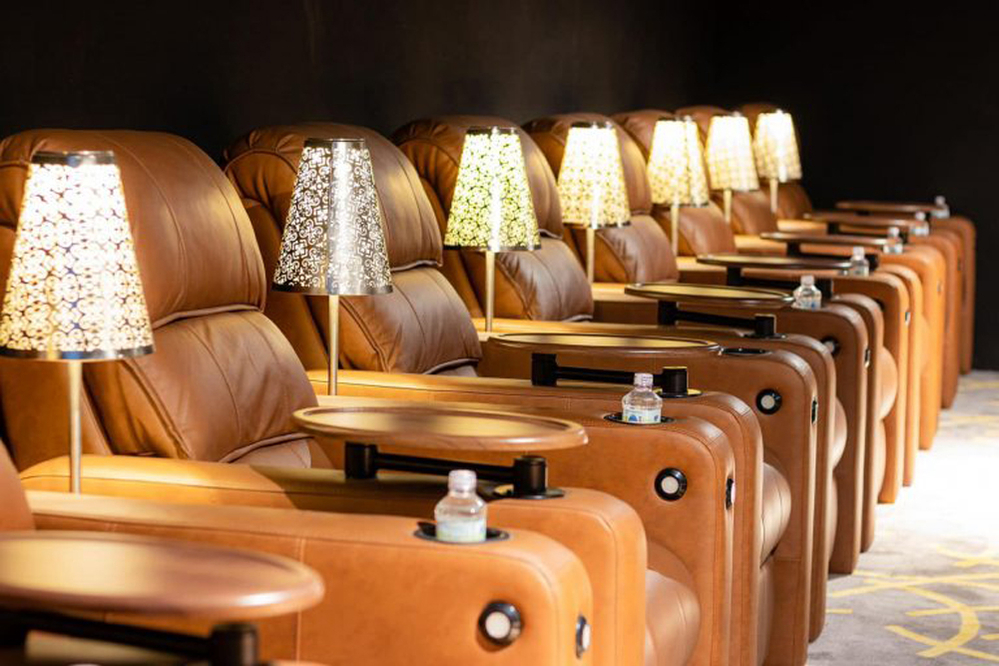
film technology has come through celluloid to analog, then video and digital, and now to laser, four-key digital . The sound system of the film hall has also reached mono sound, stereo through Dolby Digital and now Dolby Atmos. According to Narendra Maharjan, president of the Nepal Film Association, the current multiplex halls can provide a Hollywood-level experience. Recliner seats, premium interior, Atmos sound and digital projectors make it 'luxurious'. "I started the cinema hall business in the year 2050/51 from a single theater using old analog technology," says Maharjan, "and now a multiplex is being operated by upgrading the technology."
multiplexes have facilities such as parking, fast food, soundproof, sofa, AC, attractive interior design, and selfie spots. According to Mohan Saraf, earlier only local soda was sold in the hall. Outside the hall there was an ice shop for ice cream and food. Pansevari, food spices, cigarettes, salai, milk, tea, biscuits, sweetmeats, bread, soda, sweet water, syrup ice cream etc. are sold at the market price without increase in the shop Kawal of Janseva Hall.
Now a restaurant is operated inside the hall. ``Half of the hall's income comes from the food counter,'' says Ashish Tamang, who runs 'Friends Cinemas' in Dharan and Butwal. Nepalgunj's Royal Cinema is of a similar nature, there are water fountains and chandeliers.' According to him, the old high-vision halls outside Kathmandu have been closed. "Upgrading was not possible as digitization became expensive," he says, "It costs 3/4 crore rupees to digitize a single hall." Even with such an investment, there is no guarantee of profit now. In the memory of
poet Abhay Shrestha, at that time there were 6 types of tickets in the halls - dress circle, balcony, special, first, second and third class. "There used to be good or bad seats inside the hall," he wrote in the "Cinema Special" of the Nepal Film Producers' Association. However, these small problems were nothing compared to the joy of watching a movie.' Mohan Saraf, who has spent 7 decades in the
hall business, recalls that the biggest challenges of running the hall were 'crowd management' and 'picture supply'. Giving an example of that, he narrates the story of the film 'Sindoor' being shown at the then Ashok Hall in Patan, "Ashok Hall insisted on running that film alone". The crowd was so much, the hall had to be closed for 15 days after the crowd vandalized it.' He himself also built a new hall to expand the seating capacity of Vishwajyoti in 2042 after the audience had fallen too much. He claims that he started the practice of multiscreen by making the 543-seated hall into 1,157 seats. Besides, he says that the trend of box office also started from Vishwajyoti .
According to Saraf, in the early days, generators had to be run to run the movie hall. The electricity of the Electricity Authority did not power the equipment of the hall. So electricity was needed only for backup. It became easy only after the Trishuli Hydroelectric Project electricity was brought to Kathmandu around 2023,' he said.
The provision of obtaining a license from the Governor to run a movie hall was removed after the establishment of the Ministry of Communication in 2028. According to the Film (Production, Exhibition and Distribution) Act, 2026, a license has to be obtained from the Ministry. Saraf says that after the establishment of the Ministry of Industry and Commerce in the year 2038, the hall business was recognized as an industry.
vs. In the last years of the 2050s, traditional 'stand alone' halls like Manakamana, Tara, Hiraratna, Ashoka, Chamunda, Nagarjuna, Ranjana, Shivadarshan, Gopi, Guna, Vishwajyoti continued to do well . A group of Nakim Uddin, Bhaskar Dhungana and Rajesh Siddi started QFX at a time when the halls were not moving in terms of facilities . After extensive upgrading of Jai Nepal Hall, they arranged to show films through digital technology and launched the 'QFX Brand'.
At that time Manakamana, Vishwajyoti, Hiraratna, Gopi were all doing well, we were just a startup. People used to say that when the current price of tickets was increased from 50 rupees to 175 rupees, they would drown," Bhaskar told Kantipur some time ago, "but the hall at that time was only serving one group of customers, there was no hall for those looking for convenience. Ventilation was not good . There was a fear of disease spreading from dirty toilets. In Jai Nepal, we have provided security arrangements such as fire extinguishers, exit passages, etc., and the hall was packed when we showed Spider-Man.
'Big Cinemas' (currently Big Movies) started a new experiment by operating a cinema hall in the shopping mall from January 2066 . The hall was launched by the Indian company Reliance Works Limited with more than one screen. At that time, most of the film halls in Nepal had been converted to digital technology. In the beginning, QFX, which was operated by showing only English, also started showing Nepali films through Hindi. Hall professionals say that the number of people watching Hindi and English films has decreased.
Yuva Palayan, businessmen say that the audience is decreasing in the hall now due to the convenience of OTT. Nakim Uddin's group, which started QFX Jai Nepal, not a dynamic hall for watching English films, has closed Jai Nepal Hall . Tamang of Friends Cinema has the experience that only Nepali films are sustaining the theaters financially. "If Nepali films had not been made so much, many theaters would have been closed," he says, "but the technical level of Nepali films still does not match the level of the halls." Even though there is Dolby Atmos in the hall, the films are not made in that sound. 60 years after the establishment of
, Mohan Saraf converted Vishwajyoti Hall into a multiplex and handed over the management of 'Vishwajyoti Cineplex' to his two sons Rohan and Riwaz in 2079. Now there are facilities like organized parking, modern elevator, hair salon, fancy shops and fast food restaurants. Saraf, who considers this change to be natural, sometimes questions, "some halls have arranged chairs that can be used to lie down and watch, serve alcohol and massage the back". Why all this in the hall? How to watch a movie while sleeping? In the hall, you will enjoy the cinema.'