Gramophones, cassette players, black-and-white televisions, rotary phones, fax machines, analog cameras, among the latest technologies that have become part of everyday life, such as pagers, CDs, cassette players, floppy disks, iPods, and alarm clocks have disappeared.
We use Google Cloud Translation Services. Google requires we provide the following disclaimer relating to use of this service:
This service may contain translations powered by Google. Google disclaims all warranties related to the translations, expressed or implied, including any warranties of accuracy, reliability, and any implied warranties of merchantability, fitness for a particular purpose, and noninfringement.
Today, files are stored in the cloud, movies can be viewed on mobile, and photos can be edited with a single click. The songs are on the streaming app. From watch to camera, recorder, calculator all in one mobile screen, there is no need to carry a lot. However, there was a time when films were shot on reels, songs were recorded on cassettes, files were moved on floppy disks, there were advanced 'walkmans' of various configurations to listen to songs and a short-sweet message came on the pager - call this number 3614...!
Today's advanced robots, AI, and the Internet of Things (IoT) may seem like technology that has evolved in our time. However, if you look into the past of people who have a long experience in the field of communication and technology, you will know that the wave of technology has brought, changed and even lost many things. Gramophones, cassette players, black-and-white televisions, antennas, rotary phones, fax machines, analog cameras, among the latest technologies connected with daily life, the once 'luxurious' technologies such as pagers, CDs, cassette wheels, pen drives, iPods, and alarm clocks have now been replaced. From
film editing to 3D animation, software development, Karun Thapa, who has always been passionate about technology development in the media and art fields, remembers the smell of reels when he remembers the past. He has seen that the era of slow reels, projectors, clap boards and separately recorded audio, video used in the early days of cinematography - all have now merged into the latest version of technology. He himself also played a role in displacing some technologies. For example, his initiative to digitalize the traditional analog technique of Nepali film editing has been greatly appreciated by the film sector.
"Earlier, film videos were recorded on 16 mm, 35 mm reels, audio and video had to be recorded separately, while editing, the sound was synced with the sound of the clap board," says Thapa, "The film was shown by putting the reel on the projector. Later came the trend of renting VHS wheels and decks to watch movies at home. Films can be stored on pen drive through CD, DVD. Now, all files are stored in the cloud.
Before the advent of the mobile era, Thapa used to walk around with a pager tied around his waist. A message would come from some number, he would wander around looking for the phone to understand the details. 'Phone' is not the current smartphone, not even the old bar phone, but the rotary telephone. To get the phone, he had to wait for 6/7 years after registering an application at the then Telecommunications Institute (now Nepal Telecom). One had to deposit 6/7 thousand rupees to get the phone, that money was worth half a tola of gold, the price of Pokhareli rice was 400 rupees per quintal.
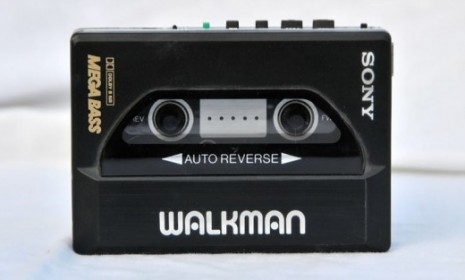
43 years ago today, in 1982, Thapa bought his first computer – the Apple Two. Then Sinclair ran the Spectrum ZX-81. Built by a British company, Sinclair Research, the computer had to be connected to a TV. At that time there was competition between companies and brands like Apple, TRS-80, Commodore to make computers at the cheapest price. In the meantime, British entrepreneur Sir Clive Sinclair launched the 'Sineclair' brand of personal computer and brought it to the market. At the time, it became famous as the first company to sell computers for less than £1,000.
In the mid-1980s, when the computer market was becoming increasingly competitive, companies such as Commodore, Amherst, and especially IBM introduced powerful computers that improved graphics, sound, and user experience. Sinclair fell behind the competition as it failed to offer much innovation. Personal computers have shifted from entertainment to work and productivity. Although Sinclair's computers were popular primarily for playing games, they lacked the features and software needed by professional users. Meanwhile the IBM PC dominated the business market.
Not only computers, technologist Thapa saw the transformation of time with the size of the floppy disk used to transfer any digital file from one computer to another - from 8 inches, to 5.25 inches, to 3.5 inches, and eventually the CD replaced the floppy. After the advent of pen drives, CDs were erased. With the ease of cloud storage, the need for pen drives has also reduced. What will come after the cloud is hard to say now. However, some predict edge computing. As is the case with technology, as advanced versions and systems are introduced, existing systems continue to be superseded, that too at a very rapid pace.
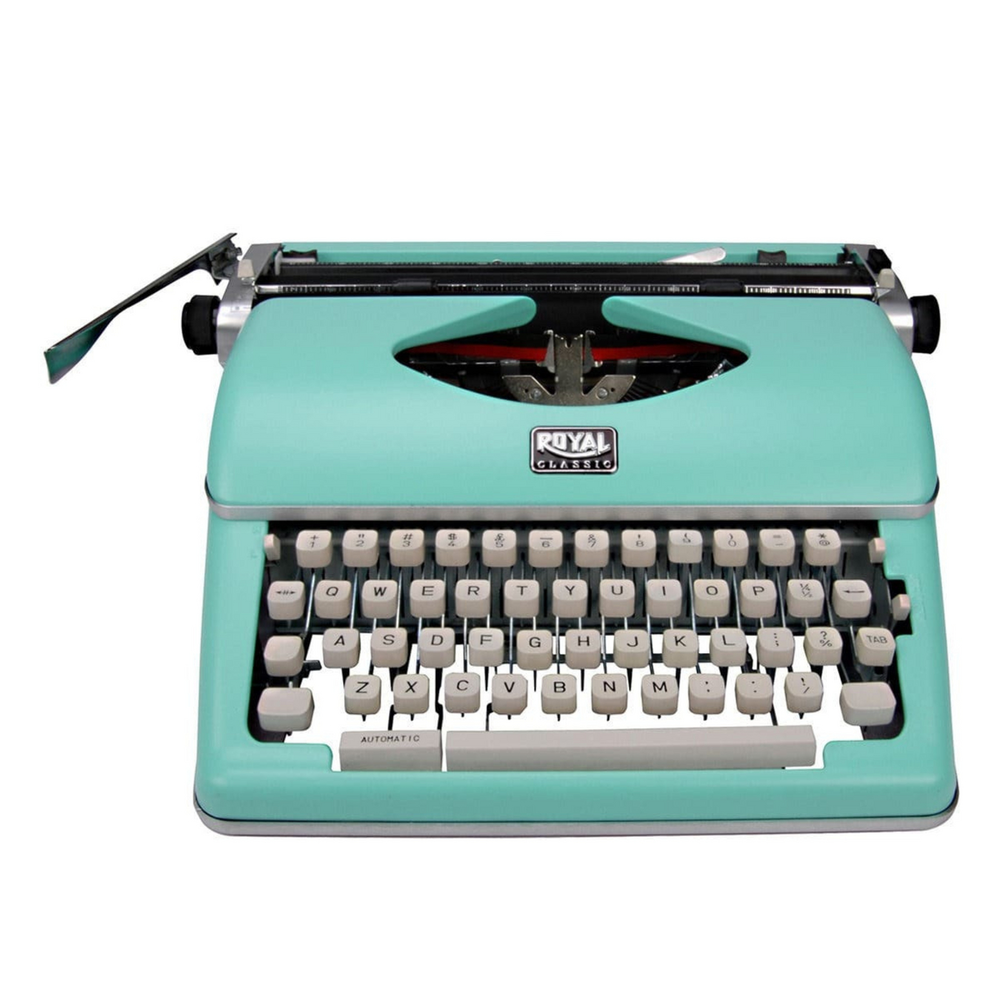
Thapa's technology-travel was not limited to computers. He is a generational celebrity who wields electronic typewriters, fax machines and dot matrix printers. Dot matrix printer is still used in banks, financial institutions, government offices. Thapa says, "It prints bills repeatedly, I also have an old printer like this." Generally, offices now have laser and inkjet printers. Thapa has collected 'legacy' technology at home such as a rotary phone that has to be turned half-funko by pressing Twack, a CRT monitor with a huge back, a dot matrix printer that makes car-car sound, 8.5-inch floppy disk, typewriter, chrome cassette wheel, CD player, DVD player.
Just as Thapa, who demands technology even in songs like 'Ago Lagada Dilaima, Damkal Bolaideu..', measures the progress of cameras, cassettes and computers, senior journalist Kishore Nepal has also experienced the era of historical Macintoshes, Siemens phones, audio recorders almost like suitcases and teleprinters that cannot be edited after typing. He wrote news with a pen, edited in letterpress and also conducted interviews with the devices that were used for the first time in Nepal. Around 2024/25, letterpress and flatpress were used to write and print news. Compositors used to compose handwritten news stories on letterpresses. Small metal letters had to be picked up one by one and combined on wooden or metal 'composing sticks' to form words, sentences and paragraphs. Fingers were cut by lead on metal letters, paper was torn, news was printed, in black and white...
Journalist Nepal grew up in the same environment, when writing 'Shri 5' in any news, there was a risk that the letter '5' would fall out of the type-case and become 'Shri Maharajadhiraj'. Even in such 'silly' errors, the editors of 'Panche' are being prosecuted, Nepal laughs now. After the 2036 referendum, large-scale weekly newspapers expanded in Nepal. Padam Thakurathi handed over a small tape recorder to Nepali journalists who were scared to take it down by hand during the interview. "Before that, you had to carry large tapes instead of micro tapes, people from Radio Nepal used to carry them like suitcases," he remembers, "I didn't need a recorder, I could write by hand." Stanford's contribution to the development of Silicon Valley and computer science is considered special. This university is called by some as the birthplace of Silicon Valley. Professors, researchers and students here have made many inventions in the field of computers and technology. The speech given by Jobs at the convocation ceremony of this university in 2005 is very famous, its video can be seen on the YouTube channel of the university. Steve Jobs passed away at the age of 56 without being able to taste his success, journalist Nepal laments, "Jobs did not experience Apple's special success."
vs. In the first half of the 2020s, it was not difficult for journalist Nepal, who was trained to operate a keyboard at the typing center of Mahankalthan, to get his hands on an IBM computer at Stanford. When he returned from America and started working at Reuters, the era of sending news via teleprinter came. There were five teleprinter cabins in the office of the Institute of Telecommunications in Tripureshwar, he used to enter one cabin or the other. At that time the teleprinter was the only modern means of sending news to foreign offices. It was an electro-mechanical device that looked like a typewriter, which printed letters typed on one device to another teleprinter device. Then typed news was printed thousands of kilometers away. It was not possible to go back and edit it. Couldn't send pictures, graphics anything.
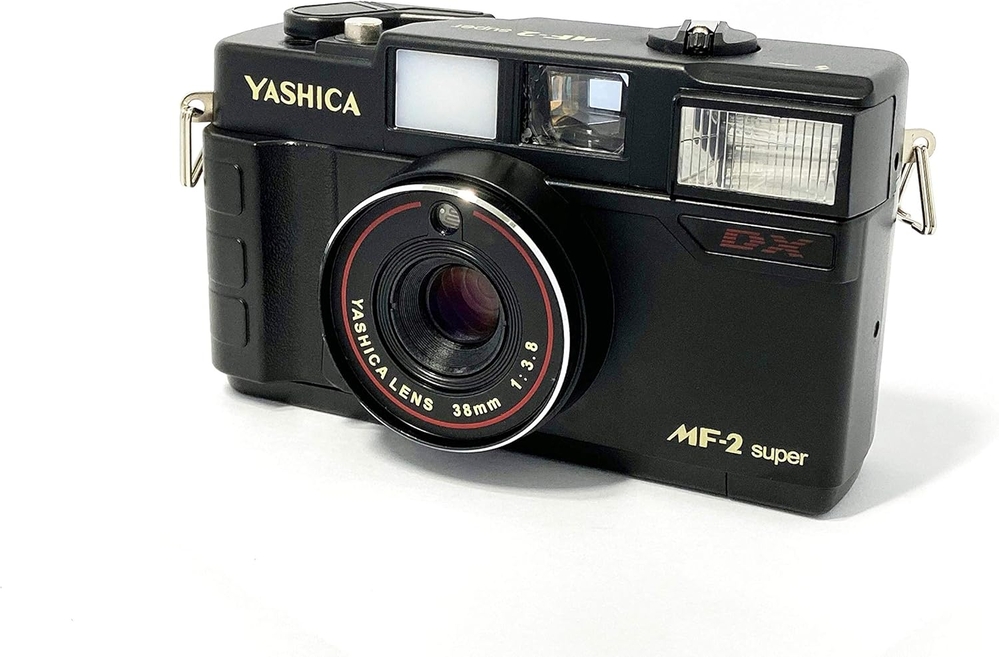
'The words I wrote in Tripureshwar used to be printed in London or Delhi offices of Reuters,' Journalist Nepal remembers, 'My news would spread all over the world along with the sound of the Khat, Khat. I used to report on political-economic matters, Elizabeth Halli used to report on mountain climbing. Reuters had given him a separate teleprinter, which was in his house.'' Journalists like Bhola Rana, Vinod Guruwacharya belonging to international news agencies like AP, FP also used the same teleprinter cabin in the beginning, later some of them kept this device at home, says Nepal.
Many of these technologies of yesterday do not exist today, nor are they particularly needed, because advanced versions of those technologies are now with us. It's like having an electric grinder instead of a grinder! However, the contribution made by old technologies to lay the foundation for the progress of education, communication and overall human life cannot be forgotten. Some of the techniques are now only in the memory of veterans, some are even found in museums. If possible, some samples of all technologies were preserved, it would be easy to remember the past.
Tribhuvan University's Department of Journalism and Mass Communication has preserved a historic Columbian hand press. This model press is believed to be the first iron press in America, built in 1813 by George Clymer. The Gidde Press, the first printing press of Nepal brought by Jung Bahadur Rana from Britain in 1908, is also in the National Museum at the cantonment. Navraj Adhikari, information officer of the museum, says that since it is very heavy, two/three people are needed to lift it. Along with
printing, there have been many changes in sound technology. The earlier acoustic era, electric, magnetic, now digital. Composer Raju Singh never tires of describing the sweetness of recording on spools, reminiscing about the magnetic era. He finds spool recording to be as tasty as dal on the stove. He has kept 6/7 thousand cassette wheels made in the same way in a drawer so that dust does not accumulate. They are not played, but remain as memory records. He has seen how music has progressed from one-track recording to four-track, eight-track to today's HD and immersive methods.
"When four-track technology came, a new flavor was created by ping pong bouncing, moving one track to another, mixing it to another," says Singh, "In analog recording, spools were used. That recording depth just isn't there in today's digital. In that spool with a large gauge, not only sound was captured, but emotions and feelings were captured.' Musician Singh comments that the songs created by AI now have 'vibe' but not 'emotion'. Therefore, he points out that even in today's high-tech era, some world music players are turning back to analog and vinyl records in search of emotion and depth. Singer Sugam Pokharel has presented a small glimpse of it to us. He has recently released a full-length album collecting 9 songs in the era of 'solo tracks', that too in a cassette reel design. Sugam is trying to make his audience 'nostalgic'.
This was the story of the musical world, where today the search for emotion is in sound. While words, music and voices were once being recorded on spools, technologies like data and dial-up connections also echoed in the streets of Kathmandu with robotic sounds like 'Too too too, ttttt...'. Gunkeshari Pradhan's journey with technology begins in that changing environment. ``Kilobytes seemed big at that time, today's gigabytes and terabytes were unthinkable,'' says Pradhan, who is known as Nepal's first female computer engineer. I read the same subject as soon as I heard it.'
She remembers that when she returned to Nepal after completing her graduation in 1986, computer centers were just opening here. People used to take computer training from one month to one year. She then joined the Telecommunication Institute. There was no bill processing system, it had to be sent to the National Computer Center for processing and the bill was returned only after 5/6 months. "That was the situation, we started billing and customer care services by bringing microcomputers to Telecom," says Pradhan, "Internet was started before us by private service providers including Mercantile. Some even laughed when we introduced dial-up internet.'
The now-defunct dial-up Internet technology was the first way to give the common man a taste of the Internet. With the advent of dial-up in Nepal, there was a wave of cyber cafes, now we have a generation that does not understand the word 'cyber cafe'. Let us explain – users used to run internet there by paying hourly charges. For dial-up Internet, a telephone line and modem had to be connected to the computer. After that, after entering the user name and password, a kind of robotic sound would come out - Toon toon, creak, creak... like this! Then the internet was connected. Yahoo, Hotmail etc. were used for email. You could talk to others through Yahoo and MSN Messenger chat rooms. Let's say the social media at that time! A little later, high five came.
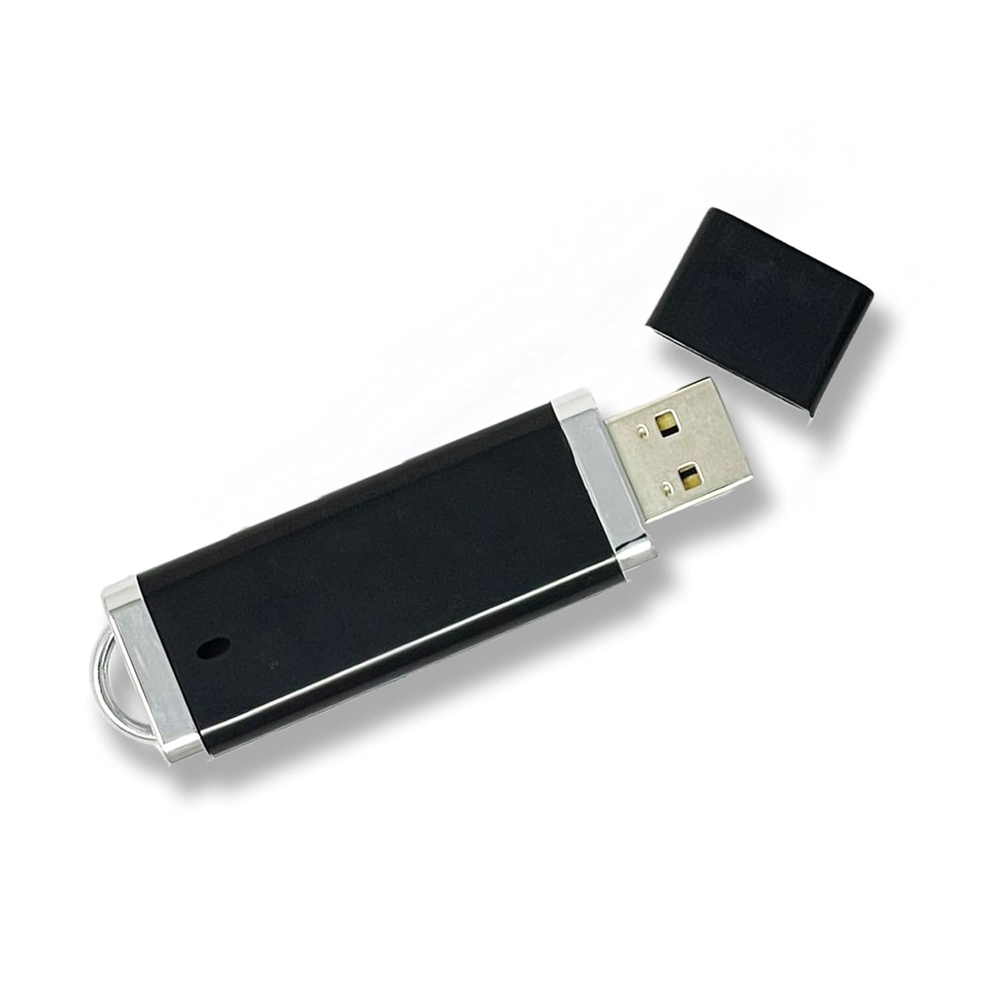
is still fresh in Pradhan's memory, the sound of dial-up internet and the faces of customers queuing from Tripureshwar to Thapathali to get telephone lines. That wasn't the story of cable devices, it was our society's first step into technology.

