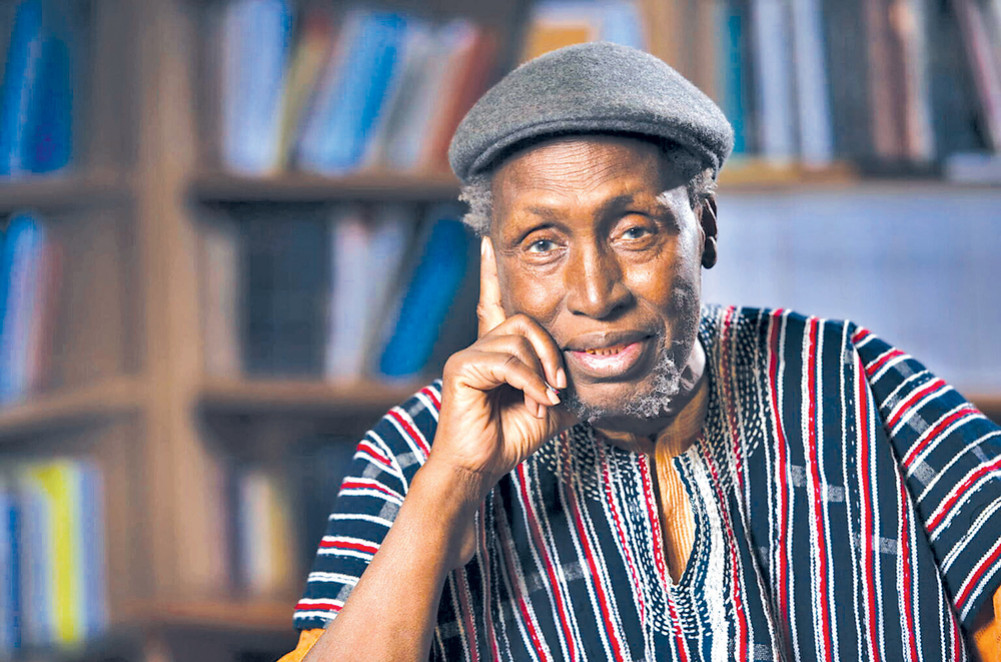
Ngugi left the country but his pen did not leave the African soil, he left the African primitive story alive.
We use Google Cloud Translation Services. Google requires we provide the following disclaimer relating to use of this service:
This service may contain translations powered by Google. Google disclaims all warranties related to the translations, expressed or implied, including any warranties of accuracy, reliability, and any implied warranties of merchantability, fitness for a particular purpose, and noninfringement.
Sometimes meetings with writers are very interesting and unexpected. It was unfortunate that he met his favorite author face to face. However, sometimes the meeting with them is indirect. Sometimes the author is found in a library, sometimes in a footnote and sometimes even on a page of a book. I first read the name of Nagugi or Thiongo in the author Sanjiv Upreti's 'Siddhantaka Kura'.
About 10 years ago, I was looking for material to write my MA thesis, and then I saw Ngugi or Thiongo in one line. I stood there. Googled it, saw his books. Finally, I decided to write a thesis on his 'A Grain of Wheat'. This is how I met Nagugi in the Nepali book. After reading other novels and memoirs after
, I realized that Ngugi or Thiongo has been a giant of African literature. Ngugi, who is known as the warrior of African literature, passed away last May 28 at the age of 87.
Ngugi or Thiongo was born in 1938 in Limuru, Kenya. He was born shortly before the start of World War II. His father, Thiongo or Nduku, experienced the effects of the First World War firsthand. Because he had to participate in the World War, Nduku used to chew herbs to raise his body temperature when he went for medical check-ups.
In his childhood relationship with his parents and sweet experiences, Ngugi has expressed in 'Dreams in a Time of War: A Childhood Memoir', 'Hundreds of Africans were killed in the German East African campaign against Britain. If my father had gone too, he would have been a victim of it. And, I would hardly have been born.
As the struggle against British colonialism intensified, Ngugi went to Kampala, Uganda for higher education. He graduated from Makerere University. He also did a Masters from the University of Leeds. He taught at Nairobi, Northwestern, Yale, and the University of California.
He has written many works on Kenyan culture and the Kenyan struggle against British colonialism. The popular novel 'Weep Not Child' depicts the struggle of a Gikuyu family during the Maumau Rebellion for Kenyan independence. It is also considered to be the first novel written in English by an East African author. Similarly, in 'River Between' there is a story of lovers separated by religious conflict.
'A Grain of Wheat' is Ngugi's third novel published in 1967. A novel based on the environment of Thabai village when Kenya is fighting for independence. A Gikuyu village prepares for a Uhuru (independence) celebration. Although the events of the novel span only 4 days, Nagugi covers the political and social environment of the 1950s and 60s. The main character of a
novel is something fictional. But Jomo Kenyatta is a real character. Similarly, the Mau-Mau Rebellion is also real. Blending reality and fantasy, this novel establishes Kenyan identity and cultural values. Kenya gained independence from British colonial rule on 12 December 1963.
In 1986, Ngugi rewrote A Grain of Wheat. In the 2002 edition, writer Abdulrazak Gurnah has written an 'Introduction'. Gurnah, who was born in Tanzania, won the 2021 Nobel Prize in Literature. A Grain of Wheat is a political narrative. It is political because it shows the evolution of the history of such a consciousness,' Gurnah writes.
Prison-Life and Exile
Jomo Kenyatta was a hero to young Ngugi. Fought for the land rights of the Gikuyu. However, when he became the first president of Kenya after independence, Kenyatta forgot his promises. Therefore, Ngugi wrote 'Petals of Blood' in 1977, strongly criticizing the government. However, in the same year, he was jailed because of another work.
Both of them were jailed for writing the play 'Ngahika Nadenda' (I Will Marry, When I Want) written in collaboration with Ngugi or Miri. The play, staged at the Kamirithu Educational and Cultural Centre, showed the post-independence colonial remnants and the plight of the Kenyan people. The play was staged continuously for 6 weeks until the government closed it down. Both were imprisoned from December 1977 to December 1978. As soon as they were released from prison, both went into exile, with either Ngugi or Miri fleeing to Zimbabwe.
Ngugi or Thiong first went to Britain and America. They were held at the high-security Kamiti prison in Nairobi. Ngugi, who fought for identity, had no name in prison. He was known only by numbers. He says in his prison memoir 'Wrestling with the Devil: A Prison Memoir', 'I have no name here. There is only one number in the
file, K-6, 77. However, the modern governance system and bureaucracy recognize citizens only by numbers. Be it a citizenship number, or a passport. Number is the identity of a person. WH Auden wrote 'Unknown Citizen' based on this theme in 1940. The essence of his poem is that modern polity determines the identity of a person not by his humanity or emotional life but by statistics, records and social discipline.
Back to Ngugi's prison life, he started writing novels on toilet paper in prison. Ngugi wrote his first novel in the Gikuyu language, Kaitani Mutharaba-ini (Devil on the Cross). He said in a 2022 interview with "Paris Review" that he felt sad when he wrote in Gikuyu in prison.
Influenced by Marx and Engels, Ngugi joined the underground literary movement 'December Twelve Movement' (DTM). DTM was an intellectual struggle against the state, which printed and distributed anti-government leaflets and literature across the country. Political prisoners including Ngugi were released when Vice President Daniel Arap Moi became president after Kenyatta's death. Although at first he appeared generous, Daniel also proceeded in a dictatorial style.
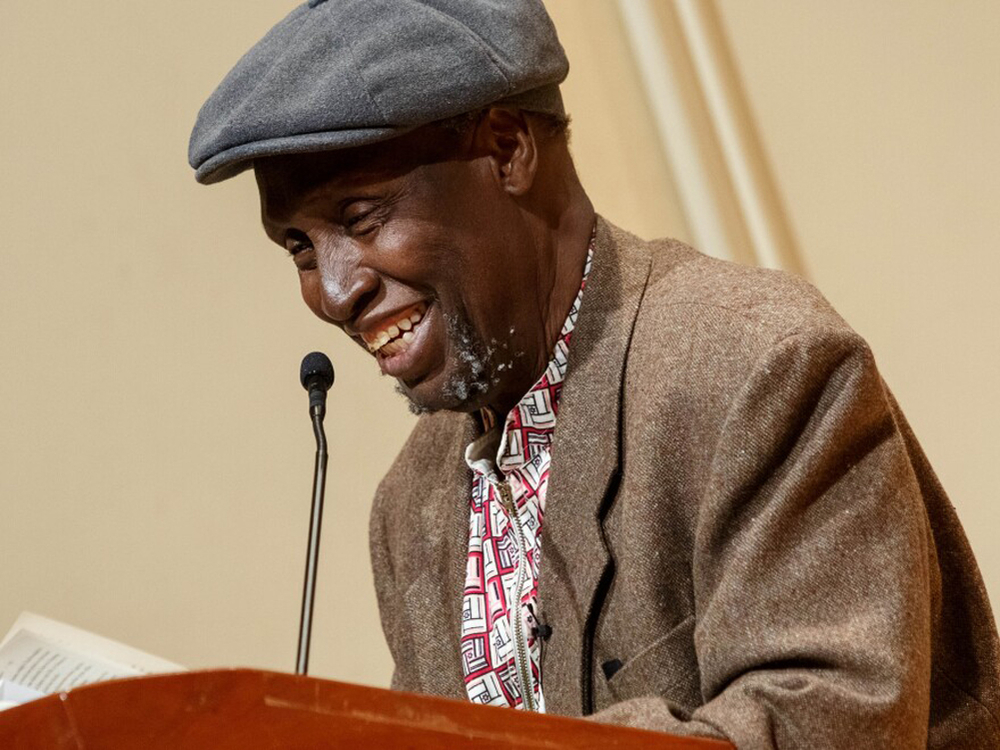
Ngugi returned to Kenya only in 2004 after 1982. By then, Moi had resigned. He came for the release of 'Wizard of the Crow'. He received a grand welcome in Kenya. However, during his two-week stay, he suffered an injury he would never forget. An armed group attacked him. The wife was raped. About that attack, he says, "This is not an ordinary robbery. It was an event that was reduced to discourage us from the remnants of the old regime.
Struggle for linguistic identity
Ngugi is a bit strict about language and says that - bullet is a means of physical slavery, while language is a means of spiritual slavery. Due to the unwillingness to accept linguistic slavery, there have been wars in the world. Be it Algeria's independence movement from French imperialism or the liberation of Bangladesh after the imposition of Urdu from Pakistan, the struggle is a product of linguistic identity.
Linguistic unity emerged as a powerful tool in the fight against imperialism. In the same way, Kenyans began boycotting not only the English language, but also the educational system and festivals for independence. Harry Thuku, Manilal Desai fought valiantly in the Kenyan freedom struggle.
Ngugi also believed that any battle can be won with linguistic unity. He strongly believed that Africans should be united in the fight against imperialism. He used to say - united people can never be defeated.
Ngugi has returned to Africa not only in writing, but also in name. Initially, he published many books under the name of James Ngugi. The first book published in 1977 under the name of Ngugi or Thiongo is 'Petals of Blood'. In this novel, education is not considered as a means of liberation. Ngugi's argument is that, "It is the literate elite who betray the people."
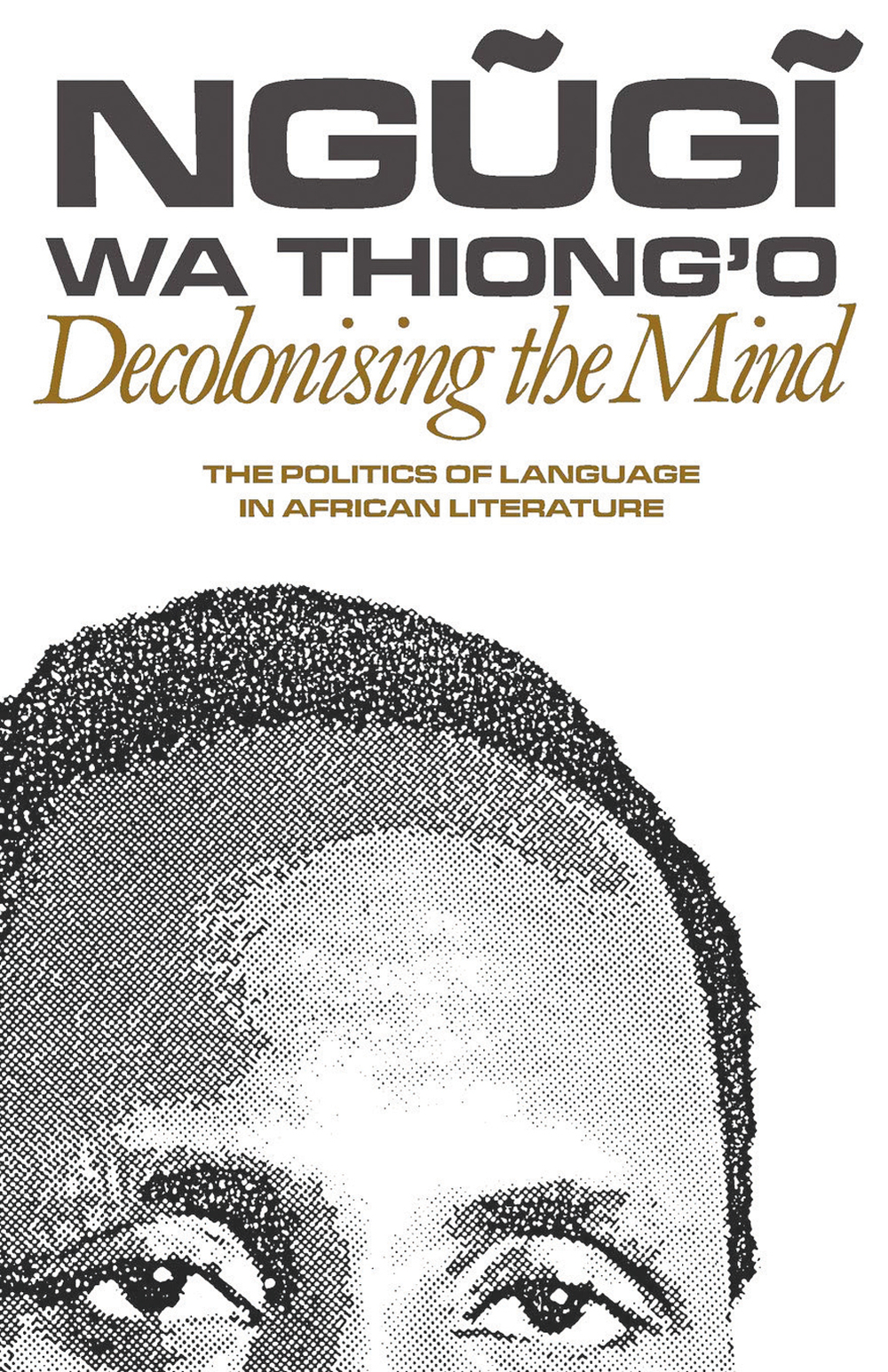
Ngugi's statement in "Decolonizing the Mind: The Politics of Language in African Literature" published in 1986-87. Where he says, after 'Petals of Blood' I said 'goodbye' to the English language in drama, novel and story writing. But this book is a 'farewell' to English from all my writings. From now on I will write in Gikuyu or Swahili.' Many expressed concern that
, which has become popular in the English language, would be limited to the Gikuyu language. James Currie writes in his memoir 'Africa Writes Back': Ngugi was one of those African writers who tried to make a living through words. Limiting his readership to only Gikuyu-speakers would have seemed suicidal from a professional point of view.
The day after the news of Ngugi's death, I spoke with Chika Unigwe, a Nigerian writer and associate professor of creative writing at Georgia College and State University, about language and African literature. She shared her experiences with Ngugi, African literature and local languages.
'English is a language imposed as a burden on the people of the colonized society. But we turned that burden into strength. It is not only our spoken language, but through it we can also communicate with the rest of the world. English is our 'step mother tongue' and we have changed it to suit us.'
Kenyan writer Kerry Baraka spent 3 days at his home in California 2 years ago and had a conversation with Ngugi. Based on that dialogue, Baraka has written a long article in "Guardian", in which Ngugi is asked, "Nowadays, it is being discussed as Kenyan English or Nigerian English No!" Ngugi's answer is, "English is not an African language." Neither are French and Spanish. Saying Kenyan and Nigerian English is nonsense. This is a perfect example of generalized inequality.'
In 1964, in a speech entitled 'The African Writer and the English Language', Chinua Achebe said, 'Is it right for a person to abandon his mother tongue and adopt someone else's language? It also feels like a terrible betrayal. There is also guilt. But I had no choice. I was given this language and I prefer to use this language.'' Achebe and Ngugi remained at odds over language. Ngugi used to say, “I have never personally attacked Achebe. I admire him as a writer. However, the question is how African characters can speak 'perfect English'! Ngugi also alleged that Achebe removed his quote from the book because of his criticism.
Unigwe agrees with Achebe's opinion. “When I write in English, as Achebe once said, I am actually writing in the English of the 'Igbo language'. My syntax, word-choice are all Igbo-leaning. Chikodilli Emelumadu's novel 'Dazzling' is written in English, but that English sounds like Igbo to any Igbo-speaking person,' she narrated her writing experience. She could never agree with Ngugi about writing
in their own languages in the future. There are more than 300 languages in Nigeria alone. We could have done this, but because of colonialism, the vernacular has already been discouraged in the good schools of our country. So a person can speak Igbo fluently, but he cannot write at the same level,” she says. Unigwe also believes that
is a practical and revolutionary way to mold the language imposed on them and write it according to their own. Ngugi was passionate about promoting local languages. And, he had his own arguments. However, Unigwe says that publishing in the local language is a very difficult task.
publishing has a similar problem. Where are the publishers ready to print books in the native language? Let me give you the example of Nigeria, we don't even have an Igbo newspaper. Nobody wants to print in Igbo. Because of colonialism, those who read Igbo can usually read English very well. So what publisher would want to print a book without ensuring enough readership?
Then in 2018, Ngugi's epic verse story in Gikuyu language 'Kenda Muiyuru : Rugano wa Gikuyu na Mumbi' was published. This book presents the folktales, myths and cultural stories of the Gikuyu community in poetic form and is published by East African Educational Publishers. Unigwe said he could not find this book in the Gikuyu language in any bookstore in Lagos. She said, 'East African claims to be the largest publisher in Africa. But, I could not find this book in any bookstore in Lagos.'
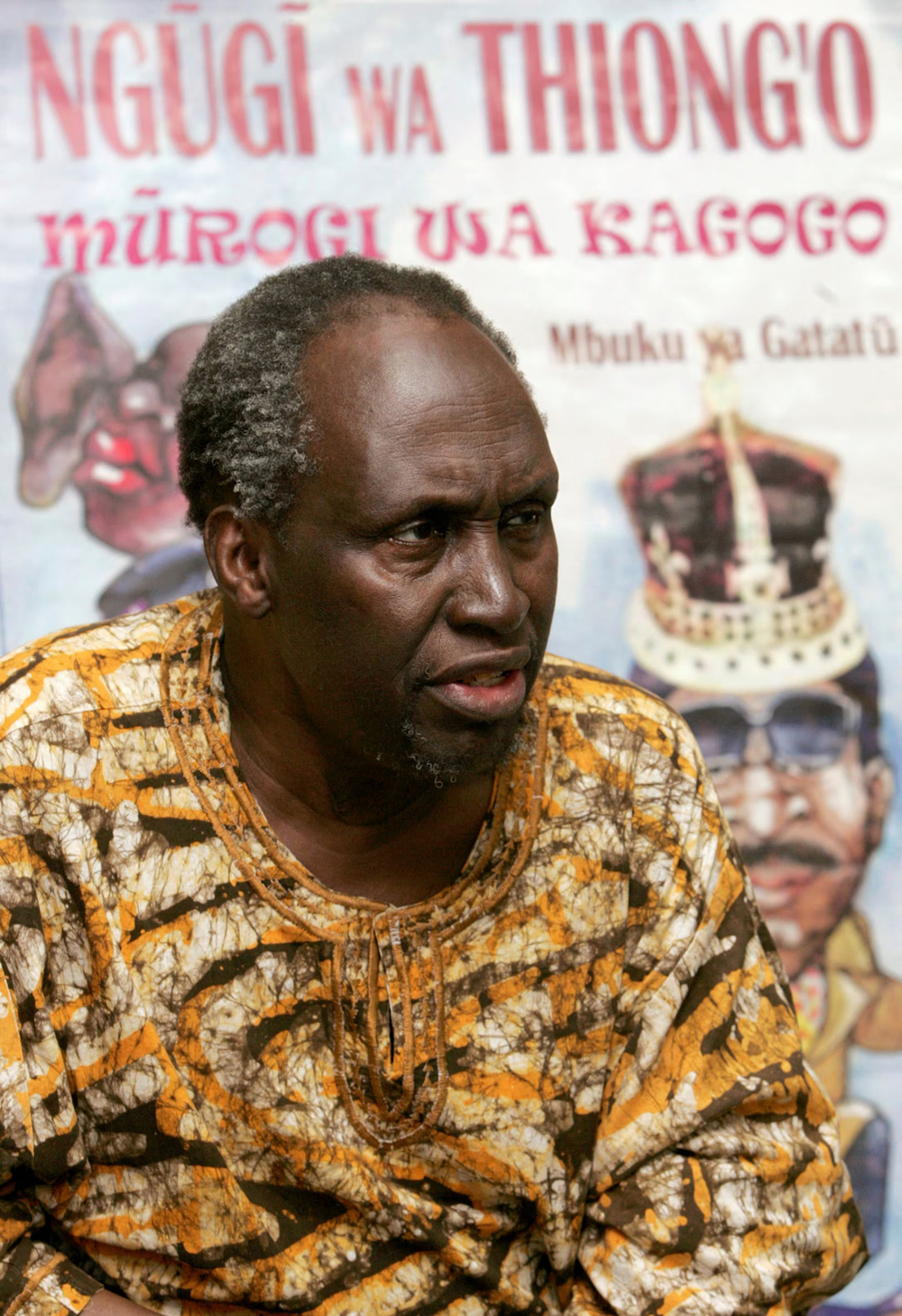
This book was published in English in 2020 by Penguin Random House, UK as 'The Perfect Nine: The Epic of Gikuyu and Mumbi'. Ngugi himself translated it into English. In 2021, it was also included in the "longlist" of the International Booker Prize, although it sold well in the international market. The book is not available in Gikuyu, but it has sold well in English. Ngugi prioritized recognition over
sales and success. In Unigwe's own words – Ngugi became established because he dared to follow his own dreams. The Nagiri has a few years ago published in a few years ago, "Czech, Basse ', said Dennis Language and 60 million, how many books are written in BJu. Dennis are innumerable but insignificant in Guaku. It is about 4 million people, Swedice 90 million but sky-land is different in intellectual production, but the writers complain that the authors do not view them.
always happened to be discussed after winning Nobel-Discussion
Nobel Prize. But there is a discussion every year, even without any new year. The Kenyan writer or the woman belong to one of them. The reviewers also are published as why Nice did not get nobell. Some argue that the political commitment of Nairgi sometimes weakens her writing.
Nigerian Advan Advi A Advari said, 'Writing in Gukhuki Jennifer Machubabi has not been able to rise above the writing writing. Anyway, there is a great factus of African literature. Only Swedis Academy knows why she did not receive the Nobel Prize, as she did not get the Nobel Prize, as she did not get the Nobel Prize. & NBSP;
for a period of 6 decades for a few years ago for a few years ago. He did not walk out that outdoor. In 1995, he was a prostate cancer. The doctors said that you do not live more than 3 months. The heart bypass of the heart in 2019 had to be done. In almial, the kidney failed. I had to pay for three times a week. So for a few years, he was recovering at home in California.
was to meet someone or interviews that the conversation in the telephone. Seminars used to participate in seminars from the house. Despite British colonial reign, he did not ever misset Kenya and Africa to leave Kenyan land and forced to get tinging. Leave the country but the pen of Nairgi did not leave the African soil. He was on his due time to deprive African primitive story. & Nbsp;