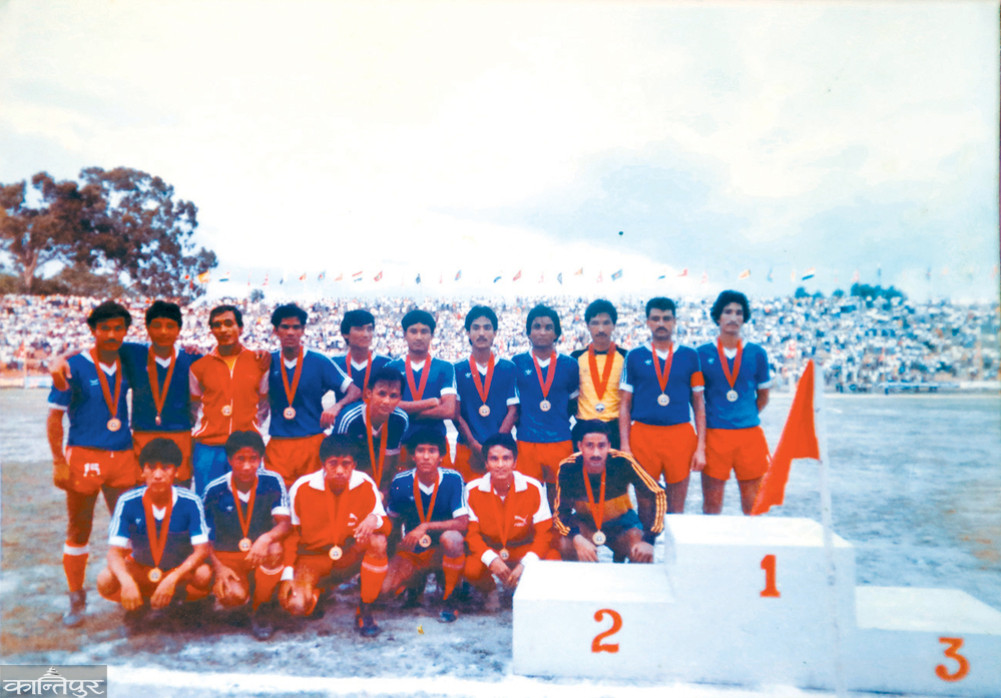
Due to consecutive wins, Nepal and Bangladesh were decided to play for gold, the result of the final match of the league between Nepal and Bangladesh was unexpected for football fans.
We use Google Cloud Translation Services. Google requires we provide the following disclaimer relating to use of this service:
This service may contain translations powered by Google. Google disclaims all warranties related to the translations, expressed or implied, including any warranties of accuracy, reliability, and any implied warranties of merchantability, fitness for a particular purpose, and noninfringement.
Journalist Himesh's recently published book 'Swarna Katha: Nepali Football' says football-report. Few books have been written about Nepali sports, exactly there are no books written only about Nepali football? An excerpt from this book:
1954 World Cup Football. Switzerland hosted the fifth edition of the World Cup. That World Cup is still remembered for its excellent football. From the same World Cup, Germany began to leave its deep impression on international football. This is the first World Cup won by West Germany. The team with the best performance figures in World Cup history belongs to Germany.
West Germany at that time. With this success, a new football culture was born in Germany. John Figi, the old coach who came to Nepal a few years ago, said, "Germany is not only strong in football, but football runs in Germany's blood." He was proud of that claim. Ego too. It is these Germans who in many ways gave Nepali football a modern shape. Among the many foreign coaches Nepali National Football has got, Germans have a large presence.
More specifically, most of the coaches in the early days were German. Figi is one of them. He was born in 1947. He was around seven years old when West Germany won that World Cup. He probably didn't even understand football very well. However, Figi himself was not untouched by the turmoil brought by that World Cup. Since then, he has grown up in the soccer culture that was created in Germany. He eventually made football his life. He does not count as a
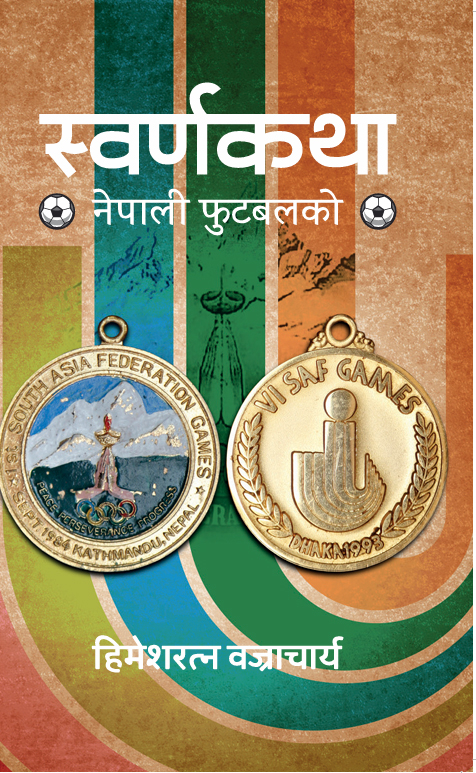
player. Probably well below average. However, the coach turned out well. More than that, he became a good coach of coaches. In particular, he has been a huge supporter of Bayern Munich. Bayern is also considered the best club in the world. Figi currently works as a FIFA/AFC instructor. He travels to different countries and trains football coaches. It is said that he has achieved mastery in this work.
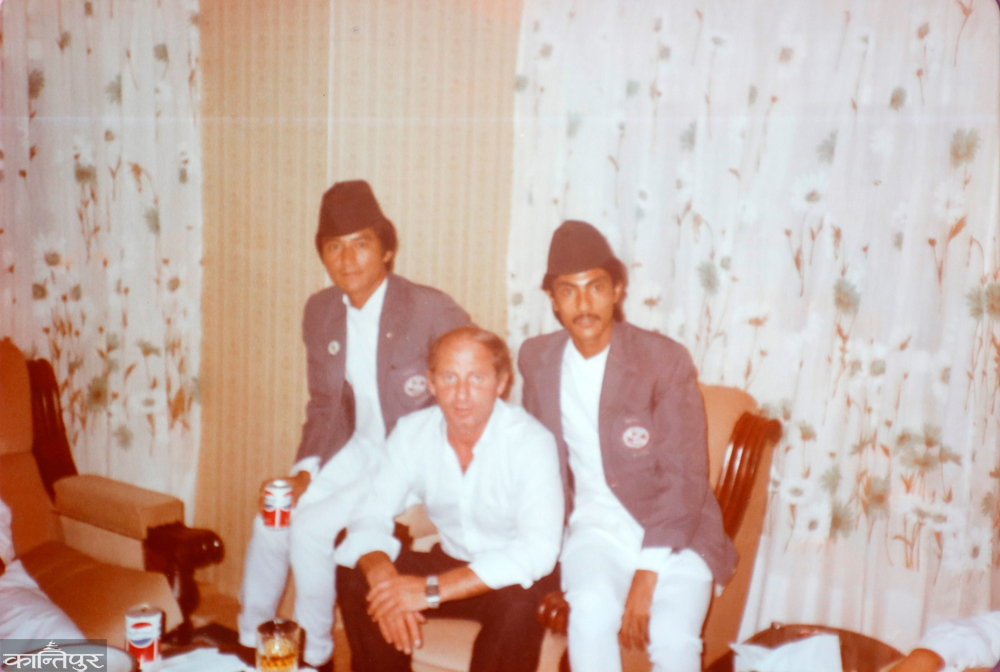
He also came to Nepal long ago as a FIFA/AFC instructor. He came to Nepal again in October 2016 in the same role. At that time, he trained the new generation of trainers being prepared in Nepal. In the program named FIFA MA Elite Course, he said at the beginning, "I am the coach who brought Nepali football the first success." I was the coach when Nepal won gold in football at the South Asian Games in 1984.'' He was also having a lot of fun while announcing this. Balgopal Maharjan to Upendraman Singh and Mrigendra Mishra were among the participants in that event. In helping Nepali football a lot, the then West Germany is really ahead. In the nineties, he sent one to one trainers to Nepal. There are many who say that the current foreign coaches are nothing compared to the coaches who came from West Germany at that time.
especially the old players of that time. One such excellent coach is Figi. Rather than the 1954 World Cup, he wants to connect it with that first Nepali success of 1984. In the early fifties, Hungary dominated world football. Players like Frank Puskas from Hungary used to play. Puskas is considered one of the best players world football has ever produced. At that time, Hungary was a really strong team and was considered a possible winner.
Hungary was called 'Golden Team' at that time. Hungary was in a group with West Germany in the opening round. Hungary defeated West Germany 8-3 in the league match. It was a crushing defeat for Germany. German coach Sepp Herberger did not field all of his first-choice players for that game in Basel. It was part of his strategy. Hungary defeated South Korea 9-0 in the other match of the league stage.
Since then, Hungary have beaten Brazil and Uruguay before reaching the final. So you can guess what the Hungarian team was like. West Germany also reached the final. Before that, they beat Turkey in the playoffs. In the knockout stage, he eliminated Yugoslavia and Austria. When these two teams met in the final, everyone expected, Hungary would win by another big margin. But no, it didn't. Germany won the
final 3-2. It was a shocking result not only for Hungary, but for the entire World Cup. But German coach Herberger felt the final result was natural. He did not give Hungary an opportunity to understand his team by fielding a weak team in the first match. While Germany fielded their real first-choice team in the final, Hungary could not really understand that team. The
was this strategic success of Germany in particular. Figi says, "When Nepal won gold in football in 1984, our strategy was the same. I took the inspiration from that World Cup and started the Nepali team and got the same success.'' Based on the participating teams, the competition was scheduled between Nepal and Bangladesh.
In the first match on September 18, Nepal managed to get off to a good start by beating Maldives 4-0. Bangladesh also easily beat Bhutan 2-0 on the same day. The very next day, Bangladesh also defeated Maldives by a score of 5-0. Nepal said
thrashed Bhutan 5-0 in their second game. With consecutive wins, it was decided that Nepal and Bangladesh will play for the gold. The result of the final match of the league between Nepal and Bangladesh was unexpected for football fans.
Nepal was defeated 5-0 in that match. At that time, there was a big uproar in Kathmandu due to this defeat. Kamal Thapa, who is the president of ANFA, was also not satisfied with this defeat. He tried to have a fight with coach Figi about this. Later, when he came to Kathmandu, he himself was shocked by this incident. He used to say, "The poor president could not understand my strategy." But this result did not make any difference in the competition.
The final is decided to be between Nepal and Bangladesh. However, at the end of the league stage, Bangladesh was at the top of the points table. Back then, a win was two points. Bangladesh has six points. Nepal was limited to four points. The final took place on that historic day of September 9. A record 30,000 spectators attended that final at the Dasharath Stadium. Rajukaji Shakya took charge of the defense in the team.
This is how he got the opportunity to debut from the Nepali national team. Nepal took the lead in the fifth minute and it was Bangladesh's own goal. Ahmed equalized for Bangladesh in the 35th minute. At the end of the first half, the game was tied at 1-1. At the start of the second half, Nepal scored two goals within two minutes and this turned the game in favor of Nepal. YB Ghale scored in the 51st minute and Suresh Panthi in the 53rd minute.
Ghale himself added his second and the team's fourth goal in the 68th minute. In this case, Nepal's victory was certain. Ahmed scored another goal in the 85th minute. The result of such a final was 4-2 in favor of Nepal. This was also the fourth gold won by Nepal in that edition of the South Asian Games. He adds, "Bangladesh was our main rival. The Bangladeshi players were physically strong. He was also tall.'
"I watched the Bangladeshi team since I came to Kathmandu," he says. Since Nepal had reached the final before the match against Bangladesh, he prepared such a strategy, which surprised the Bangladeshi players. In the last league match against Bangladesh, he rested his key players and fielded a reserve team. After winning that game, the Bangladeshi players became arrogant. They started taking the finals lightly. It was at this time that the Bangladeshi team fell into the trap laid by Figi.