'Lost and Found' has set the complexities of the present day in the pre-Buddhist society, where the characters are wandering to find themselves.
We use Google Cloud Translation Services. Google requires we provide the following disclaimer relating to use of this service:
This service may contain translations powered by Google. Google disclaims all warranties related to the translations, expressed or implied, including any warranties of accuracy, reliability, and any implied warranties of merchantability, fitness for a particular purpose, and noninfringement.
Siddhartha left the palace in search of enlightenment. Bhumi left 'society' for freedom. Sagar is leaving his wife. And, in search of peace, he arrived - Lumbini, the birthplace of Buddha.
Everyone is going through some sort of crisis. Family, social or state created crisis! The land has a crisis of 'identity', the sea has a relationship. The play 'Lost and Found' in the Shilpi Theater shows the complexity of the present in the pre-Buddhist society, where the characters are wandering to find themselves.
Bhoomi is not only telling the story of Yashodhara and mother Rajini, standing in the middle of history-present, she is also taking out the anger and anger of the anagarik. A number of children raised by single mothers are stateless, unable to receive higher education and deprived of jobs.
The play begins with the scene of Cafe Plus Bar, where Sagar came from Canada to Nepal in search of peace after escaping from the family breakup, and the tourist guide land . Their past, which can be intimately talked about in the first meeting, also opens up.
The arguments between Sagar, who is dissatisfied with married life, and Bhoomi, which has gone through family complications, explore many dimensions of relationships and society. There is a debate about Buddha's life and philosophy. The emotional/psychological spasms of the characters can be felt in the drama based on the four noble truths of Buddhist philosophy, such as the truth of suffering, the truth of community, the truth of non-existence, and the truth of non-existence of the path of suffering.
The present will be a story to be seen/experienced. The prequel of the play is thought-provoking. By listening to Sagar-Bhumi, we suddenly reach 2600 years ago . The story revolves around the conflict between Yashodhara and Siddhartha, the pressure of the court to have children, the pain of being uncivilized and the state's discrimination against the children of single mothers.
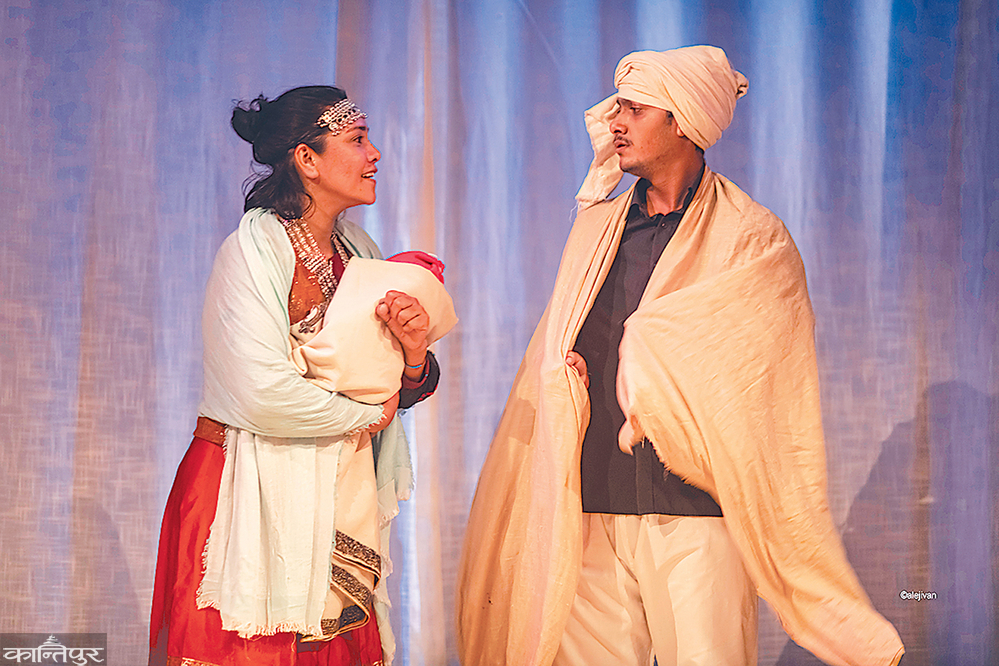
We read, understood and thought about Buddha from many angles. Writer/director Ghimire Yuvraj has reinterpreted Yashodhara from a gender egalitarian angle in the play . His manufacturing-art seems strong and effective. How did Yashodhara cope with the stress of not having children for 13 years and the desolate days when Siddhartha left her? However, Yashodhara Akinchan is not in the play . He doesn't seem depressed, nor does he have any concern . 'You are going to leave Siddhartha, why should I be sad?' Ghimire has shown Yashodhara to be confident and fearless.
'Every man should be told the importance of being him . He should be praised for his efforts and deeds. But, we spend our lives without accounting for our work and contributions,' Yashodhara says, looking into Siddharth's eyes, 'We don't even look like us. We are not heard even when we speak. No one will see me after you're gone. I will be known only as the mother of your son . In such a terrible paternal power, the existence of children who are not accepted by the father will be weak . I will give this child a name, but I am afraid - after you, his existence will disappear.' Bhoomi has no fear of society, state and any bonds since
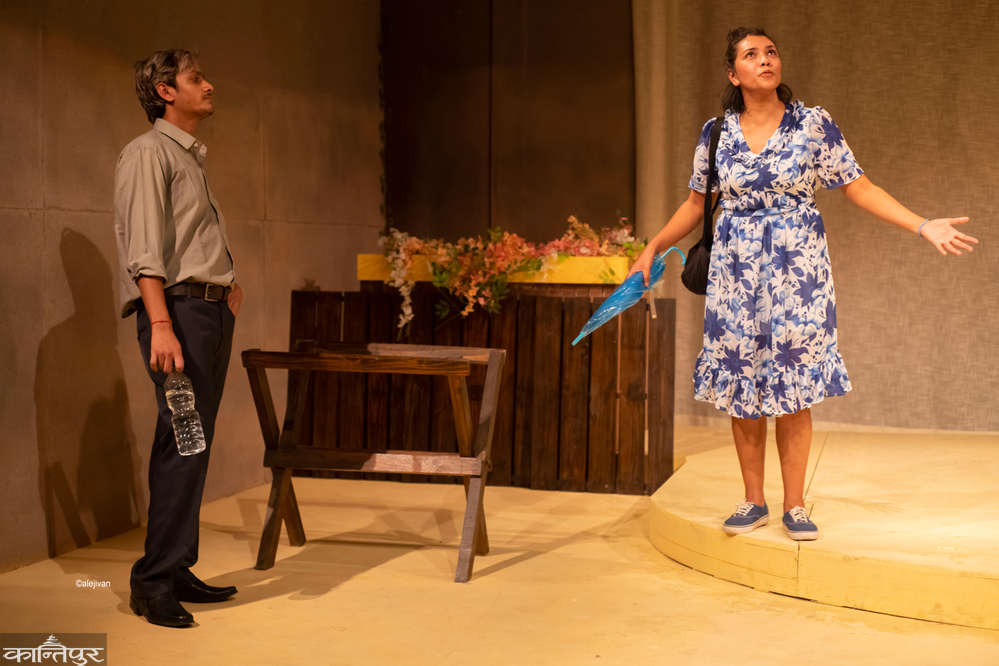
. However, the fight continues within him with the anger of being uncivilized. Gathering courage from Yashodhara, she is taking steps with the love of her mother Rajini . Don't know who is Bhoomi's father? However, in search of 'self', she wants to build her own dreamy world even in the midst of many shortages and vacancies. He doesn't have full faith in men and love, but his mother has great faith. The conspiracy to make people of the same state citizens and non-citizens does not suit him . Bhumi wants to break the perceived boundaries and sings John Lennon's song- Imagine there is no country... . The risk of a
crisis will intensify the search for identity. Sagar lived abroad for several years, but after a family crisis, he returned to Nepal. He regrets not coming to Buddha's homeland for so many years. He talks about his soil, the festivals and culture that have drawn him.
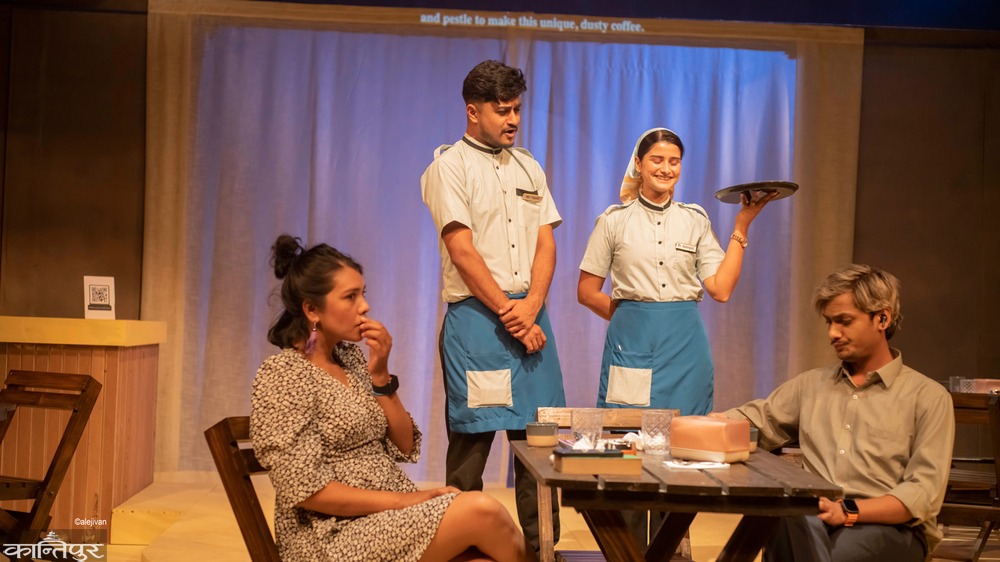
Both of these characters are affected by emotional pain, we can see it as a part of suffering based on Buddhist philosophy. That's why they want to move forward on the journey of another way to stop suffering. Their aim is to find peace and freedom from life's dissatisfaction and restlessness.
Bhoomi Bathi Chhe . He is interested in spirituality and is interested in the deep questions of life. To a certain extent, she has become an assistant to help Sagar's troubled mind find direction. The sea is on a spiritual journey while the land is materialistic.
'Three-three Buddhas have been born here, Buddha was born in India,' the blood of nationalism heats up in Sagar. The Buddha takes soil from the land and talks until it is inoculated every morning. However, the land is neglected. It is not necessary to give citizenship to Buddha. Neither Sita nor Lavkush need citizenship,' he says even louder, 'Many young people born in this land need citizenship, who have been made uncivilized by politics and law.'
A state is a group of common citizens . But, why can the same state make a non-citizen contract for people born in their own country? Will legislators who make laws listen to the voice of the land?
He didn't like making Buddha God. Says, 'Shakyamuni Buddha broke people's superstition and ignorance towards God, but people made the atheist Buddha God.'
Why does blood flow on Buddha land? Why is the settlement around Lumbini restless? If most of the children here cannot go to school, how can the light of knowledge shine in Buddha land? Why many corruption scandals of leaders are coming out in this country? 'Lost and Found' question is also a search question when lost .
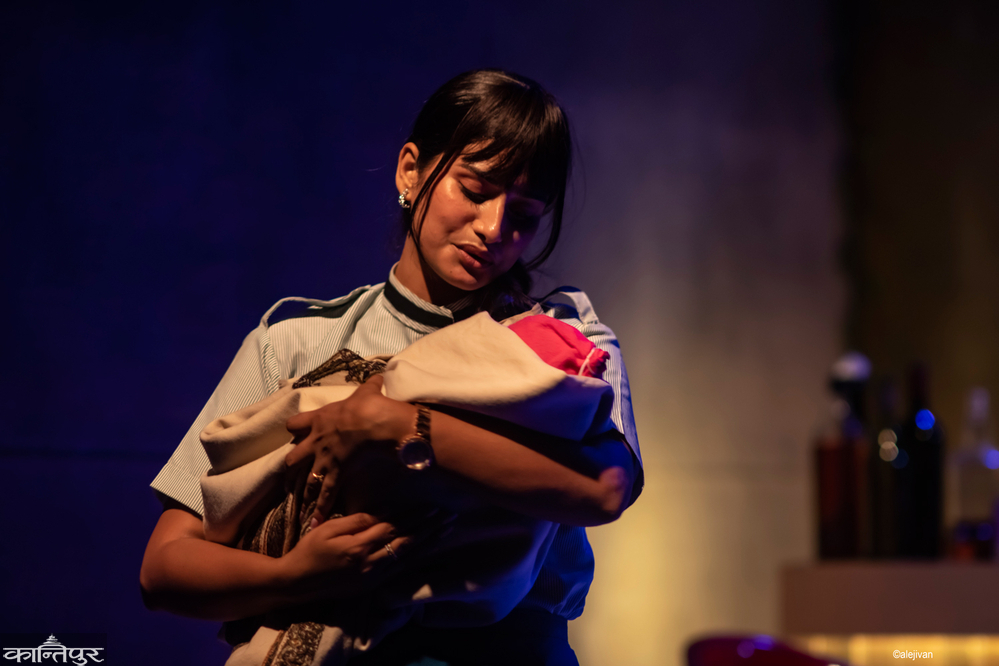
Waitress Sujata's husband is in jail. She carries the little girl and begins to sing—
I have an illegal dream I have
Have you ever heard a dream cry ?
Have you heard the song sung by Kalili Ama ?
Who has a budding dream in his arms
Who comes and asks - What is its name ?
Sujata, who is unable to name her daughter, tells Bhumi Anat, "You are her creator". The beggar, God . No one has the right to name him except you. As my mother named me. She taught me to dream. To firmly stick to this land.'
Bhumi is stuck in the mood of mother and Yashodhara. At times he trembles and starts talking about the past and calms down by bringing himself to the level of destruction . "Multiple Personality Disorder" is not a problem for him but also a means of telling the past.
Bhumi or Yashodhara seems powerful, talkative and confident. It seems that the director has worked very hard to mix three levels in the character . The flashbacks and character 'transformation' are done so smoothly that no gaps are felt . The stage has become beautiful with a neat set design. Lumbini's scenes on the surface through multimedia and English subtitles have made the play practical . "Lost and Found" will become an important work in the Nepali theater where there is a drought of
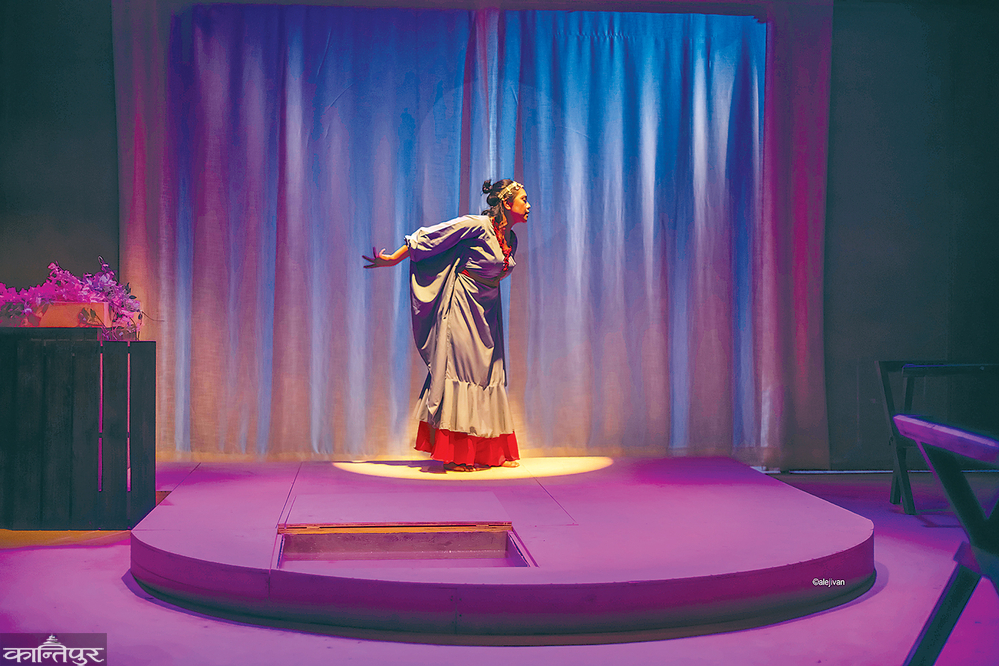
original dramas. Coming in the form of a book is another gift. The acting of Pavitra Khadka (Bhoomi) is so polished, where there is no reason to lie . Sumit Bhandari (Sagar) seems proficient. Govind Oli (waiter) and Suhana Acharya (waitress) did not disappoint the audience throughout the play.

