Seeing a 'glimpse' can be fruitful for parents. Aren't we trapping children in the quagmire of digital addiction in the name of cheating and inflating?
We use Google Cloud Translation Services. Google requires we provide the following disclaimer relating to use of this service:
This service may contain translations powered by Google. Google disclaims all warranties related to the translations, expressed or implied, including any warranties of accuracy, reliability, and any implied warranties of merchantability, fitness for a particular purpose, and noninfringement.
How many films were made on children in Nepal? How many directors have the ability to tease their psychology? If you think about it seriously, they are very insignificant. Only a few directors have tried to spin stories on children's themes.
'Aina Jhyalko Putli' directed by Sujit Bidari, 'Chhaya' directed by Manoj Pandit or 'Sarang' directed by Prashant Tamang! At this time, 'Jhilko' has occupied a new place in the list of these films.
Yadav Bhattarai, who directed the film 'Jhola' on sati, made his second film 'Bhor'. However, the hype of 'Jhola' followed him for a decade. The film released 10 years ago and received very good reviews at that time. Making a film about history is very challenging. Depicting the time, the characters' lives, the place is not a good thing.
director Bhattarai made that film using his directorial skills. "Bhor" did not meet the expectations of the audience from the direction of "Jhola". Many disagreements were born on the story of this film made on the dowry system. Now, after putting the weight of the 'bag', he is trying to light the 'Jhilko'. Since last week, 'Jhilko' has been burning in the halls, but how? Dim or bright? Let's discuss it.
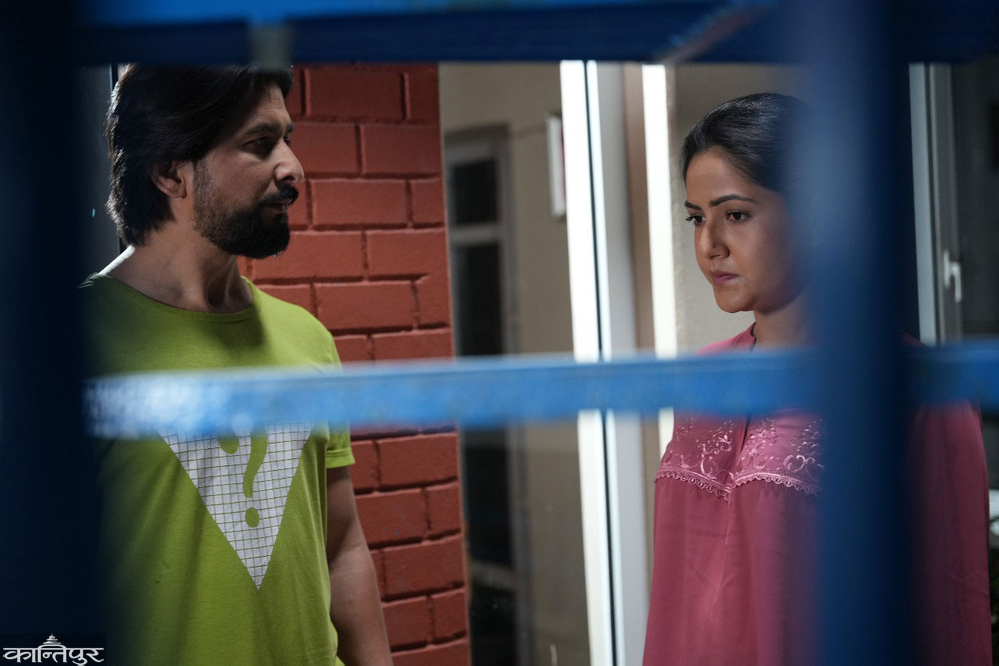
Getting out of the virtual world is a big challenge for people. How harmful is it for young children? The director has tried to tell this subject by grasping the contemporary context. It is a realistic film.
It is the strong point of the director to think about this fire that is burning so widely. However, the thread of the story that the director has taken to tell the story is weak. The audience doesn't get to have an emotional conversation with the characters in the weak screenplay. Can't feel their mood. A character's laughter, crying, or anger has no effect. The moods and performances of the characters throughout the film may seem merely dramatic.
The story of 'Jhilko' in one sentence is the crisis caused by mobile addiction in a family. Do you think mobile addiction caused the crisis until you see the movie? The film deviates from the main plot. The story holds no momentum. The characters are confused about their problems. When the message dominates the story in a film, the art aspect is overshadowed. Same goes for 'Jhilko'. In the film, the message is only tried to be piled up in the name of mobile issue. This sequence continues from beginning to end.
The story revolves around the family of a media house owner. Chetan (Vishal Pokharel), Aarti (Varsha Sivakoti) have a daughter Aastha (Ayushi Dhakal). Chetan keeps searching for viral content in his media. Most of the time of the housewives Aarti is spent in Tiktakam. Daughter Ayushi needs a mobile phone while feeding, lying in bed or going to school.
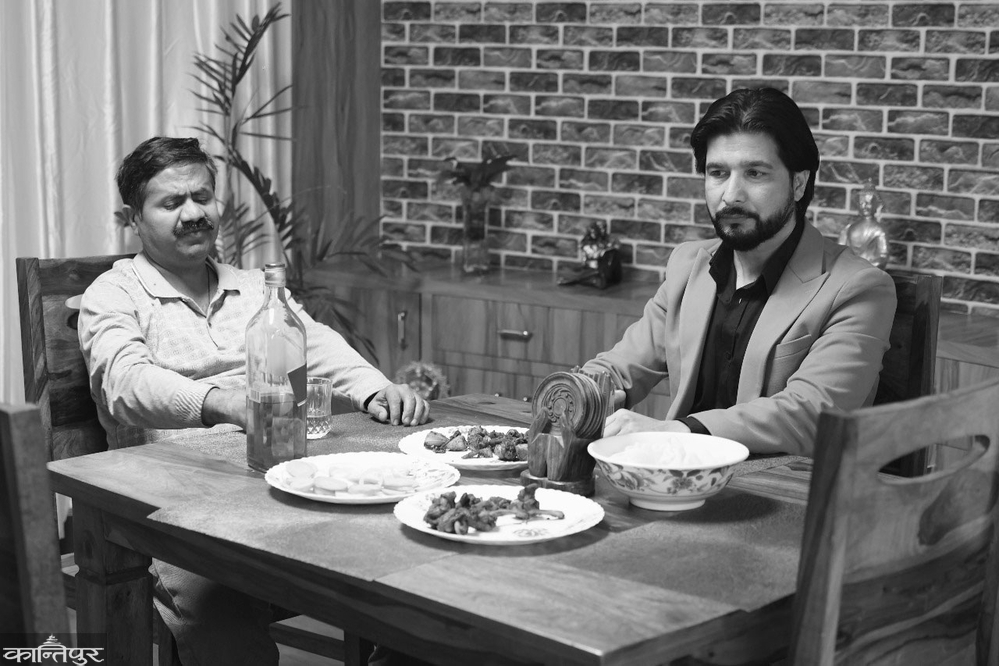
It is tried to show in the opening scenes that the family is addicted to the virtual world. However, it is not established anywhere that mobile addiction is the cause of family conflict. Instead, the characters' other problems take over.
Those problems lead to family breakdowns and accidents. Astha, the main character of the story, has digital autism. However, his psychology seems to be affected by something other than mobile. If the main plot of the film is kept aside and the subplots get bogged down, the story will not come together. The
film has a reference to a news story written by a media house. A teenager who killed his mother is serving his sentence. The director is trying to present what has gone through the legal process as a media trial. This is not obvious. In the
film, the psychology and purpose of the characters is not clear. The scene has not established the issue of how the distance between the husband and the wife has become in the story. Neither has an emotional relationship with her daughter. The climax and ending of the film is also not believable. The characters go through great problems and moods. The struggle of a character trapped in a big hole to get out is interesting in the story. However, the struggle to get out of the problem is missing here. Therefore, the transformation in the characters is not felt. The question comes, 'Is the solution to the problem so easy?' Painter Sunil Pokharel, who has produced many artists through painting, has done a great job in the film. Faith in the film can bind the audience with the character's mood. Ayushi Dhakal has proved her acting skills through this film. She is immersed in the
character's character and state of mind in such a way that the audience can relate to that character's pain. Actor Vishal Pokharel and Varsha Sivakoti's acting is average. Some scenes are such that their acting seems out of character.
However, while watching the movie, the audience will try to watch themselves back. You will feel the change in people's behavior with the digital leap. Even for parents, watching this movie can be fruitful.
In the name of unknowingly deceiving children, are we not leading them to the swamp of digital addiction? The film uses contemporary events and facts to tell the story. So this story is somewhere close to us.

