We use Google Cloud Translation Services. Google requires we provide the following disclaimer relating to use of this service:
This service may contain translations powered by Google. Google disclaims all warranties related to the translations, expressed or implied, including any warranties of accuracy, reliability, and any implied warranties of merchantability, fitness for a particular purpose, and noninfringement.
Local is Glocal'. If we look at the trend of Nepali films that have been shown in the last few years, this line of English language does not seem old. For some time now, the eyes of Nepali filmmakers have started falling on local stories. As a result, the identity of Nepali films did not shrink within the many imitated films of Bollywood.
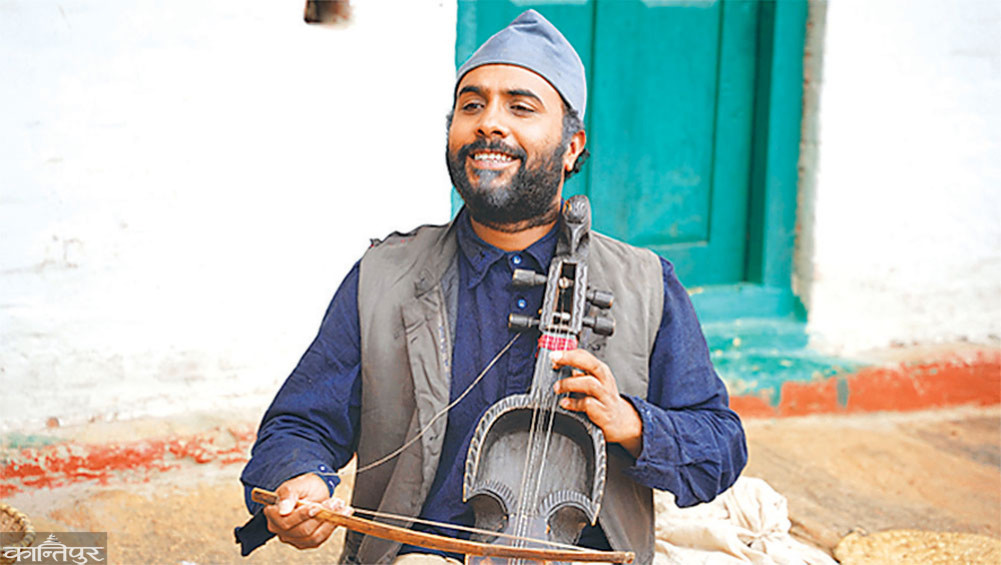
Nepali films are being given a distinct identity, taste and color with the new practice of digging up the original story and trying to incorporate it into storytelling. Audiences have also loved Raithane's story - the box-office record of 'Poorna Bahadur Ko Sarangi' is an example. Watching these films, it seems that Nepali soil has become fertile for original film production. Let's look back at
2081 itself. In the month of Baisakh, a film like 'Boksi Ko Ghar' was released, where witchcraft was covered. The production team made a film on the never-before-told story of 'Virgin', and the audience liked it equally. Keki Adhikari gave a strong answer to those who said 'heroine's face doesn't work', the female star-centric film entered the crore club at the box office.
Not only 'Boksi Ko Ghar', but also 'Mansara', which was released in Baisakh, told the story of a single mother and a childless couple, mixing lemon balm in two different communities. These are the latest results of last month.
Indie films like 'Khel', 'Bhuthan', 'Jhilko', 'Jar' and 'Oonko Sweeter' included an organic story. 2/4 songs, powerful action scenes and the love of the hero/heroine, apart from the love of the hero/heroine, there was an awareness among the filmmakers that the story of Nepali society, geography and community could be captured.
In 2081, 'Arthouse' films like 'Shambala', 'Gaon Inya Bato', 'Rajaganj' made a strong presence in the world market. The stories of 'Shambala', which was selected in the main competition of the Berlin International Film Festival, 'Rajaganj', which premiered in Venice, and 'The Road to the Village,' which reached Toronto/Busan, were original.
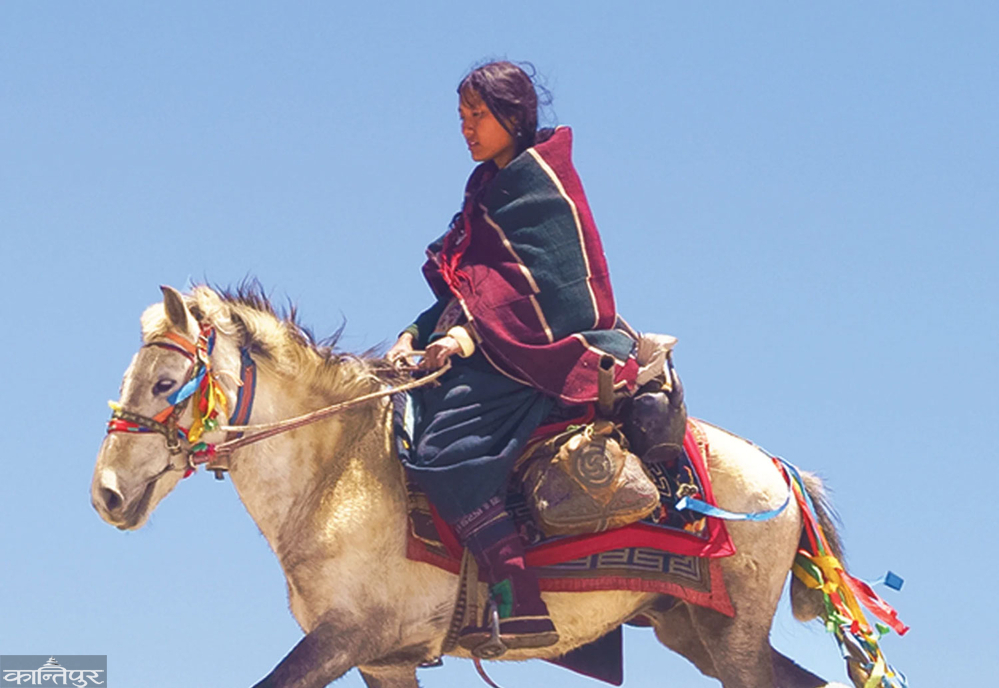
The fragrance of our soil, Nepali society and the people of the soil are the main reason why these films reach the platform of the world market - the 'local content' in the story, which made these stories 'glocal'.
Director Navin Subba, who has directed films like Numafung, directed the film after almost 2 decades, Gaon Inya Bato, was released last May. Through the film, along with father-son relationship, questions were raised about distortions and inconsistencies introduced in the village in the name of development. Also, Raithane's taste, culture and values, which were disappearing between the concepts and achievements of development, were included in it. The story of Nepali society, where Coke and Sprite replaced Raithane Rxi/Chyang, became a 'global' topic.
In any village in the world, have Raithane values and skills been displaced in this way? Or in the name of development, organic skills have been lost? The story of 'Shambala', which shows the struggle of women for their existence, has become the story of all those women, who are constantly on the journey of finding themselves by pushing aside the walls of society.
How those in power oppress the powerless, the voiceless and oppressed would be able to embed themselves in the grief of the Madhesi character of 'Rajaganj'. Arthouse films were still capturing Nepali stories - 'Halkara', 'Rato Suitcase' etc.
However, the biggest achievement of this time is that even professional filmmakers have abandoned imitation of Bollywood and searched for original stories. Whether it is a film that has not been shot or a film that has been scheduled to be shown, those films have captured the story of Nepali society. Let's look at the performance of last May. Films like 'Pujaar Sarki' also came out at that time, where the issues of Dalits were raised.
Earlier Dalit characters were limited to small roles in films. Making 'Pujaar Sarki' on the pain and oppression of the proletariat, which is not considered a film story, means that the filmmakers are looking for a fresh story. However, while making this film, the production team had to face questions from the Dalit community. We will talk about that later, but for now, let's look at the theme of 'Ghar Zwayin', which was released in June. This film was also popular due to its fresh story. On Dasain, "12 Villages" and "Chakka Panja" created a stir.
'Poorna Bahadur's Sarangi' made history as the highest-grossing film. This film also carried the story of a father and son from the lower class. What kind of struggle does a poor father have for his son? With the film breaking the box office record, the story of the community at the back of Nepali society has now left a deep impression on most of the filmmakers. Its shadow can also be found in the stories of the films that have been announced.
While arthouse films are capturing Raithane's story, director Sujith Bidari feels that awareness has spread among commercial filmmakers as well. Who has established the belief that Raithana should find the taste? That is to say. It cannot be said that commercial films started this way because festival films guided them. We believe that films that go to
festivals are not commercial. But I think the film reaching arthouses/festivals played a role in establishing that Raithane's story should be told,” says Bidari. Agreeing with Bidari's words, director Razila Shrestha adds, "This awareness has come to us because of the film that reaches the festival and the open film school, the world film."
Be it last year's 'Karsang' or 'Missing: Girl Missing Notice', the horror genre 'Mommy' or the biographical 'Anjila', these commercial films have given Raithana a taste. 'Aina Jhyalko Putli' director Sujit Bidari says that although films are being made on local subjects, the number of films on Raithane story has increased rapidly since commercial films have also followed the same path. Films were being made on local stories. The interesting thing is that the local stories are also included in the so-called commercial films, he said.
Young filmmaker Razila Shrestha says that there has been a change in the process of making films in imitation of Bollywood. Razila is of the opinion that the wave of original stories started when filmmakers began to believe in their stories. Our complaint was that the film was made by copying, now it has changed a lot. We have now started to believe in our story,' she said, 'commercial filmmakers have also started to believe.'
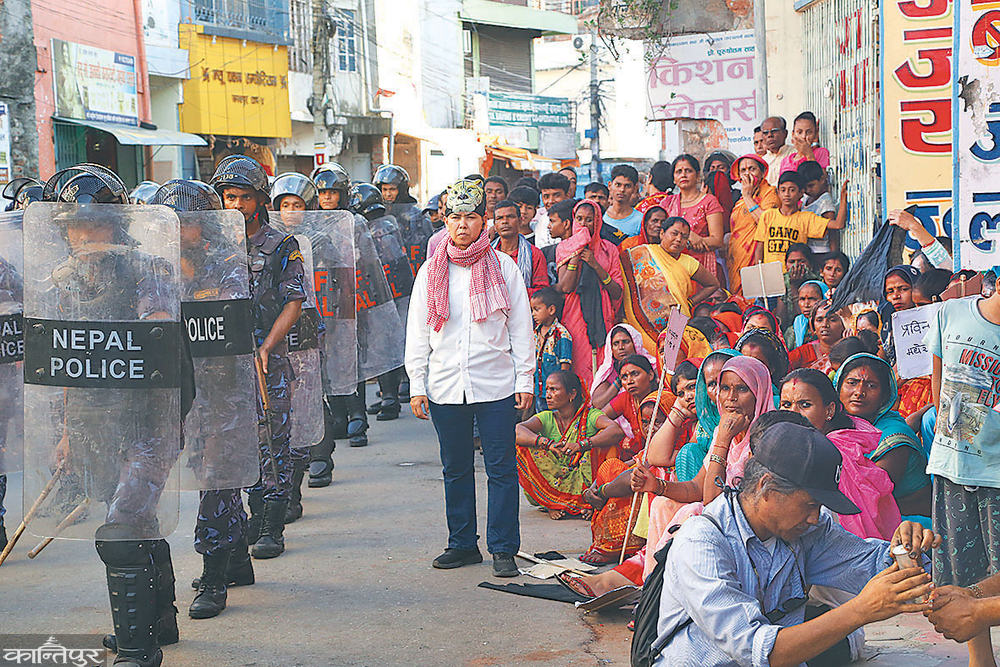
Raithane's special reason for catching the taste is the market. If we look at 'Loot', the film based on local stories was also accepted by the audience. 'Loot', which was screened when the emergency was announced, started a new trend in the Nepali film industry.
For the first time, the Nepali audience got a very different story from the Bollywood copy. Where, the characters looked ordinary, the theme was just as organic! After 'Loot', Rambabu Gurung's series of 'Kabaddi', 'Jatra' and 'Chakka Panja' received equal support from the audience. It also happened that local content will be played when that film is played. So it gave the producer the courage to take risks,'' says Bidari.
The change brought by 'loot' in the Nepali film industry was so strong that now, to calculate the progress of the film industry, it is separated as 'before the loot' and 'after the loot'. There was a time before 'Loot', the quality of Nepali films had dropped to a low level. However, now, as the system of keeping stories of different genres and original themes has started - these are all achievements after looting.
'Telling the story of your roots, including the culture is the best part. Art is about identifying the roots,” said director Bidari. Director Bidari suggests that even if the film is based on the original story, the craft of telling the story should be improved. I see that filmmakers are aware of the need to tell their own stories. But the way the story is told is the craft. It seems that the craft still needs to be improved,' says Sujith, 'Although we are aware of choosing content, we are making mistakes in the craft.'
Although the audience likes the original story, director Shanta Nipali still sees problems in the way it is told. "Looking at the arthouse film, the commercial also captured the original story. The trend of capturing the original story has already started. However, there is a doubt as to how deeply it has been said,' said Shanta.
Shanta feels that commercial films are not honest about the sensitivity of the original story. "They are making films with original stories and settings for the purpose of making money," she said, "but are they really sensitive to the content of the film?"
Making a film on women's issues, creating a commentary on women's issues through a film is also a debate in society. However, she is of the opinion that the film should be sensitive when raising such an issue. 'Pujaar Sarki' is a film about Dalits, but recently voices have been raised saying that wrong commentary has been created in this film. Like
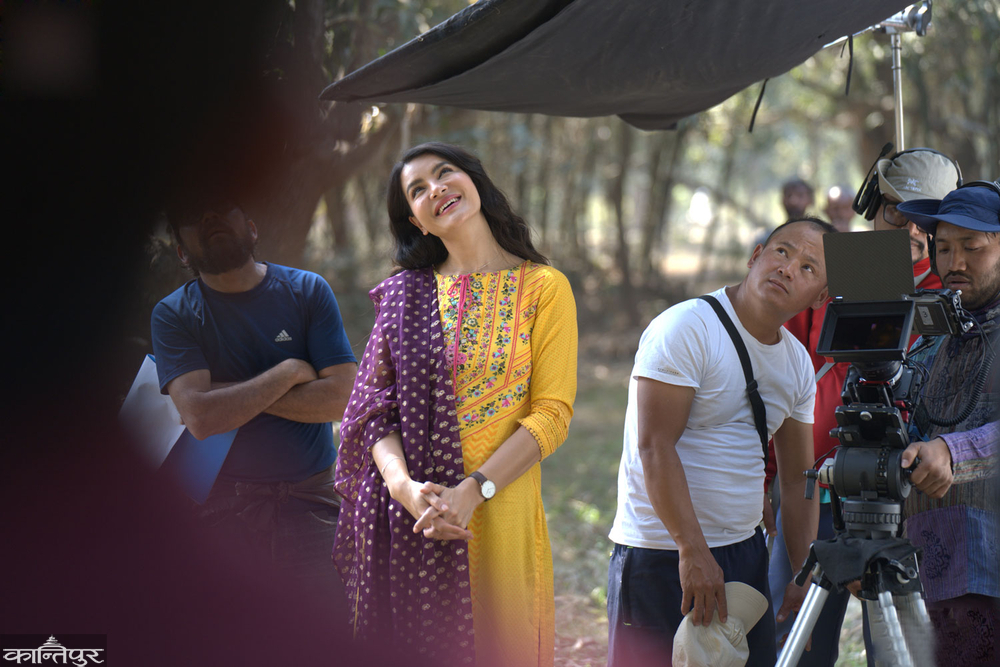
, the film was written by a supposedly upper-caste director-turned-writer as a 'Dalit story'. Few films are made on Dalit subject, it is positive to raise the story of such a community in a film. However, when the voices of those who have been oppressed in the society are being shown through the film and presented superficially, a question was raised about making a film on that theme
. As the 'so-called upper caste' could not show their pain and suffering in the story of the Dalits, many questioned - are you a narrator worthy of telling the story of the Dalits? However, when the sensitive issue of Dalits was being raised, whether it was 'Pujar Sarki' or 'Poorna Bahadur's sarangi', this kind of sensitivity was rarely found. By not being sensitive to serious issues, the essence of the story was lost. Therefore, director Nepali suggests that filmmakers should be responsible and tell this kind of story. Director Bidari adds, "The audience seems ready to listen to stories they have not heard, to know about the new society."
This year, the new year 082 started with the release of an 'independent' film like 'Khel'. Even going back to the last year itself, many 'independent' films were found weaving stories on original themes. 'Ankha', directed by John Yonjan, won an award at the Nepal International Film Festival. Although this film, made on a low budget, had to satisfy a little at the box office, the 'eyes' were not lost in the narration of the story. The
film showcased squatter characters and explored the seemingly ordinary lifestyle of squatters, the dimensions of their suffering and the beauty of life. Even in 'Sano Sansar', the life of a middle-class family, from the point of view of women in a patriarchal society, it struggled for it in the big world of box office by capturing the elements of marriage, family and property.
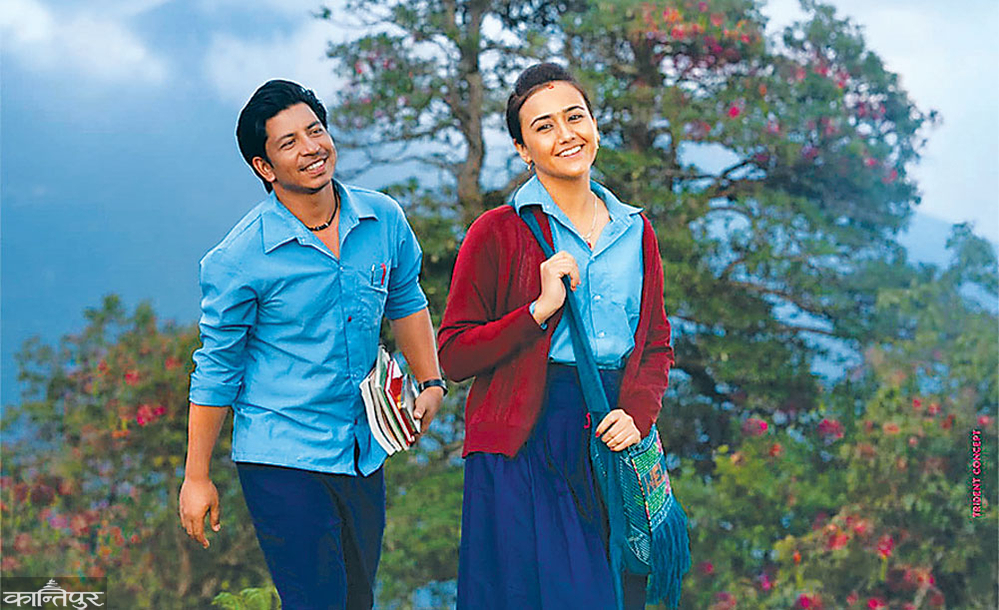
Filmmaker Pukarmani Rai says that even though 'arthouse', 'commercial' to 'independent' films have made local story films, the 'collective fight' (collective purpose) to boost the Nepali film industry is not present among the young filmmakers.
The generation before the looting could not bring Nepali films to a good state. After the robbery came another generation. Now Nischal Basnet, Dipendra K. Khanal, Rambabu Gurung, Prachandaman Shrestha are dominant. They had the vision that Nepali films should be taken here,' says Pukar, 'They had the frame that we should tell our story. But, our generation does not have that kind of collective purpose. He says that this trend, which was caught by the
generation, is a challenge for the new generation. "The new generation has a crisis - the generation before us has done well, now what should we do?" There is a good platform for us, but there is also a challenge to compete with them creatively.'