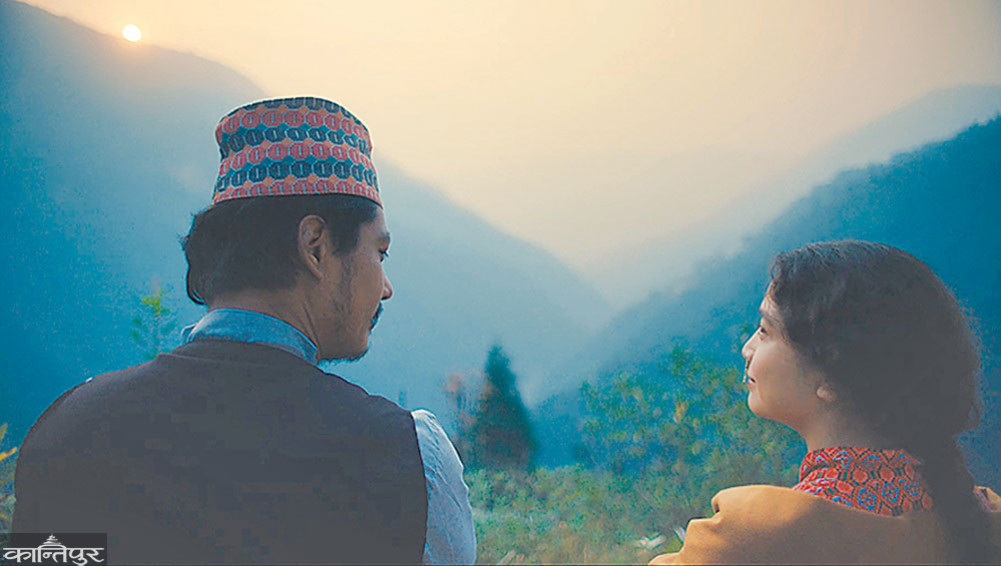
'Jar' is a vivid story of how the incident after entering a relationship led to a social-cultural-legal crisis.
We use Google Cloud Translation Services. Google requires we provide the following disclaimer relating to use of this service:
This service may contain translations powered by Google. Google disclaims all warranties related to the translations, expressed or implied, including any warranties of accuracy, reliability, and any implied warranties of merchantability, fitness for a particular purpose, and noninfringement.
Indra Bahadur Rai came to mind again after the trailer of the film 'Jar' was released on YouTube. Binabadhita is one of the Nepali stories that I have read many times, 'Jar: A Story of Happening'. I bought all the five books of 'Indra Sampurna', attracted by Indra Bahadur Rai's intellectual writings, about two decades ago.
Some of his stories were read repeatedly because they were in the syllabus. However, there are various reasons and contexts to keep remembering 'Jar: A Story of Happening'. Sometimes I remember the context from the story, sometimes the story from the context.
When I first read this story, I remembered my village. When I was young, there were sometimes quarrels between relatives in the neighborhood. And, the mothers would say - 'Why do you want to kill your own family members like a jar?' I asked my mother about the jar at that time. I got the answer - 'The one who brings another's wife is called a czar by the former husband. After
, I found out that not only in my village, but also in the neighborhood, there are dozens of jars. And, I wondered—how do they treat each other? Some of them have been staying in Ormaparm-Chadbad while eating at home. Everything looked normal. I thought, when was that 'Uhile-Uhile wali' of cutting the jar?
I remembered that story for the second time in the middle of 2071, when the play 'Jar: A Story That Happened' was performed at Mandala Theatre. The initiative to remember the story continued even after the unedited footage of the uncensored Q&A by gathering "Jar-Jar" for the sake of momentary discussion started appearing on YouTube. The next time the same story happened, in 2074.
A Tamang young man who is my relative chased away the mother of a girl from his own community. The crowd of Ramites at Suryavinayak Chowki divided into two parts to discuss the incident. One for the girl's husband, the other for her lover. There was a feeling that the two days of tug-of-war with double clashes inside the post had called for a big clash. The supporters of Logne were seen in a stand of not accepting the 10-15 lakh rupees. The police officer of the checkpoint said, "Finish it quickly." I asked the police officer, 'Sir, is the provision of paying installments in the current law?' We have to turn a blind eye.' In front of the police, it was being said, 'You can cut the jar.' I remembered the same story in this case too. Even while watching the film 'Jari' directed by Upendra Subba, I remembered that story again. Perhaps the effect of a good composition is to be remembered again and again.
There are many examples of excellent cinema being made on Kamasal literature and Sardar cinema of excellent works. However, because director Furwachiring Lama did artistic justice to Indra Bahadur Rai's magnificent story, 'Jar' has become another mode of excellence in Nepali cinema-history. This film has shown the old period of Nepali society in such a way that even the new generation who do not know the meaning, culture and history of Jar can be well informed. Stories of czars come in different forms until the institution of
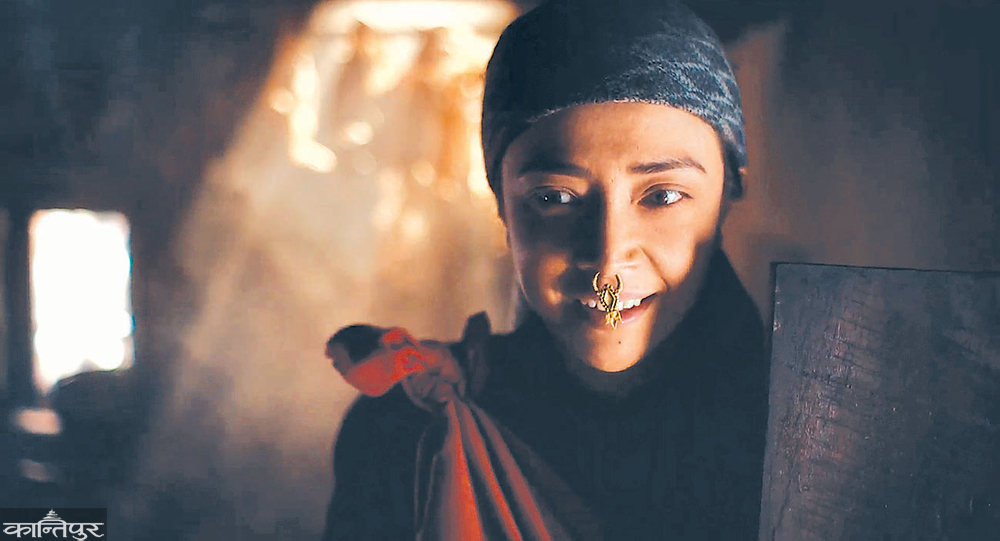
marriage is recognized. However, reading the history that during the Rana period there was a legal provision to be able to cut the tsar, one is surprised at today's point of time. Since Jung Bahadur's civil law itself was based on the caste system, there were different punishments for the same 'crime' according to the caste. A large part of the Civil Code of 1910 was devoted to untouchability and sexual intercourse.
Because that act added many levels of injustice to Dalits, tribes and women, even today their economic, social and cultural status in Nepali society has been reduced to the second rank, while the cultural practices of tribal tribes are not looked down upon. If so, the face of Nepali society would be really beautiful. Approaches to and analysis of culture and history may differ.
What seems legitimate from one angle may stand as extreme injustice from another angle. These words spoken by the narrator at the beginning of the film 'Jar' start to wave many waves of meaning in the mind of the audience - 'Sometimes it seems that customs and habits can be avoided even with easy excuses. However, all of them are unfair and inappropriate. Sometimes, not often but occasionally – the eccentrics and extremists seem right. Sometimes everyone is wrong.'
is the story of the character's psychology, his hard struggle and sacrifice, caught in the three furnaces of culture, law and love - 'Jar'. However, this is not just the story of a Ghale Gurung character. He is also a representative of the family, community and entire society associated with him. Ever since the expansion of the Gorkha state, the Gurung and Magar communities have shown 'bravery' in the paltans, so even today they are 'respectfully' given separate paltans.
Ubela also has a 'Kali Bahadur' platoon for Gurungs mentioned in the movie. 13 years after the death of Jung Bahadur, who made a slight difference to the rule that the jar can be cut vertically, the cinema catches the rhythm of its story since a Gurung family migrated from the west to the east. The reason they moved east was that the eldest son, Rudraman, was the laptan of Kali Bahadur Paltan in Ilam, and the Magar family of acquaintances was already there in the village they had migrated to. Although the story seems to focus on these two families, these families are only representative.
Through these families, cultural glimpses of Gurung-Magar are shown in the cinema, although the purpose of the cinema is not only to expose the culture. This movie seems to aim to tell history even if it speaks less. After depicting the environment with long scenes, Gurung Patra tells his past - 'I was a 28-year-old young man at that time. It was during our Gurung Lo Sapri. From here we went to India under Jung Bahadur. We have come to save Lucknow from the rebels.' Along with this, another serious thought comes - 'How much will our Gorkhalis have to fight for others like this in the future? Done.'
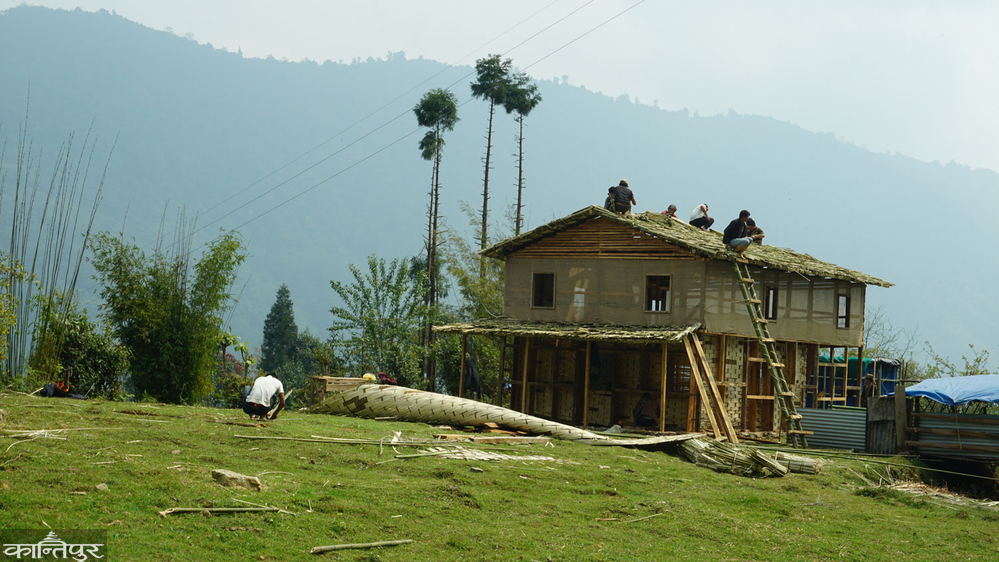
Since the first dialogue between Bhupu Paltane is focused on fighting, it seems that the cinema is trying to drag the audience to that dark corner of history, where we were forced to fight even for the sake of hollow appreciation of heroism. It seems that none of the scenes or dialogues in the cinema are meaningless.
Regarding the relationship between the Gurung-Magar family, it is said that - 'The sign of this brother-in-law-daughter-in-law is very bad. "There is a fish tail in our west, its two peaks are called brother-in-law and daughter-in-law." There is an indication that the family is emphasizing on friendship. The psychological complexity of the character in the Chepuwa of this sign has intensified the conflict in the story of the cinema. In the movie, between these two families
The ups and downs in the relationship from harmony, intimacy are shown in a very artistic way. How the events after Miteri Saino entered the love affair between Laptan Rudraman and Thuli led to a socio-cultural-legal crisis and how the battle between Harshjit and Rudraman as well as the clash between mountains of prestige and disdain. 'Jar' is a vivid story of life and death. This movie also reaffirmed the fact that in a male-dominated society, it is usually women who fight in the name of ideals, prestige and love.
In Nepali society, the endangered Miteri-Sino culture has been carefully depicted on the screen, so the cultural importance of 'Jar' is high. The conclusion of cultural experts is that friendship is a dynamic relationship where two different people, geography, background, family and society are connected. And they love each other. Such valuable culture has become almost like a fairy tale in our society. In formalizing the friendship between Maiti and Devi, both are forced to kneel and exchange company rupees and pachaura marks.
Such rare scenes have made cinema a living heritage. They are united by the chemistry of cultural ties that are mutually unrecognizable. And, because of that relationship, two families become one. If there is a fight between them to the death, marriage is prohibited. If they married in friendship, they were considered to be scumbags and were 'excluded' from their children. It has submitted a poignant example that it would burst. In the
movie, there are Mojinna-Khiwangna's Yakthumba, Maheshwar's Tamang, Paruhang's Zimidar Kirant, which introduces a culturally diverse society. Not only this, the fact that the rulers in Nepali society have adopted the policy of 'divide and rule' by creating many 'castes' even within the tribal tribes who do not believe in the caste system, either by writing fake genealogies or by issuing Urdu, is a fact that will add strength to history. The context is also in the film.
In one scene, 'four castes, sixteen castes of both types of Gurungs, seven types of Magars, twelve Tamangs, eighteen castes and all those with other opinions' gather and make Rudraman the king. This scene presents the reality of an ancient tribal society in which the caste system has penetrated, which is now a subject of intellectual debate. The most important thing is that while the tribals have their own customary laws and judicial practices, this scene also points to the fact that tribalism has been stifled when the state imposes penal laws based on caste hierarchy.
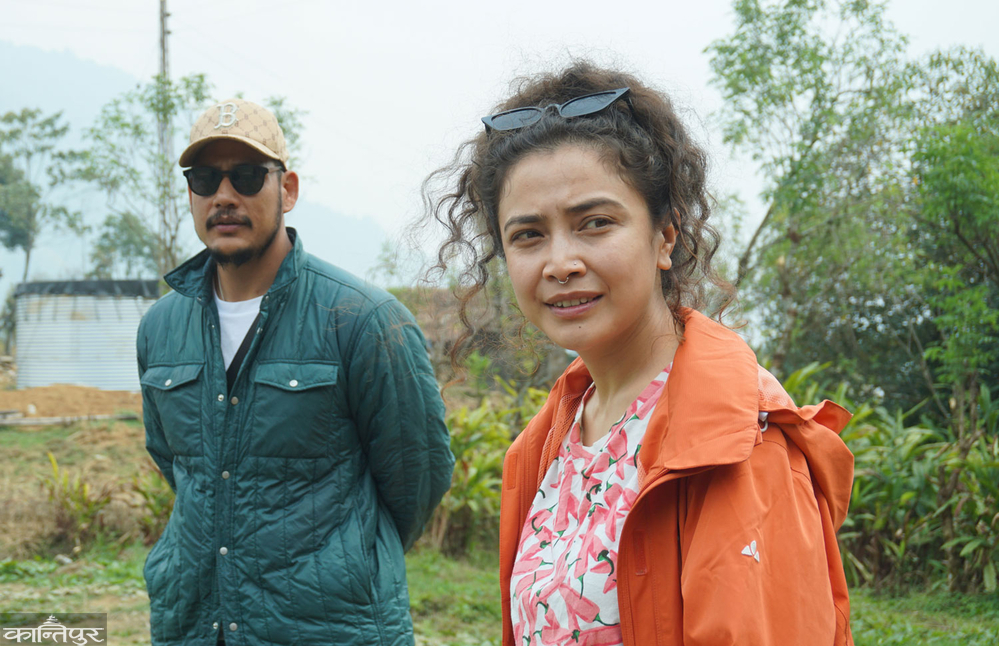
'Jar' is not only important from the point of view of the subject, but also from the point of view of presentation has become equally superior. The fact that this movie prioritizes visuals over dialogue to tell the story further proves that cinema is a strong visual language. Let's say – while visuals, sounds and gestures can be conveyed, dialogues are only auxiliary. One of the strongest aspects of this movie is the music. The level of effort that Jhuma Limbu and his group have put into music is not only commendable but also exemplary for Nepali music and Nepali cinema.
In some scenes, it seems that music is in the driver's seat of the cinema, and music is at the center of the song. As the story progresses, the music keeps the audience so mesmerized, as if we are freed from the noisy control of the city and are momentarily touched by the enchanting song of birds near a waterfall in the middle of an unspoiled forest. The only reason for this is the use of stringed instruments for music. Another important aspect of strengthening music is poetry in words. With the collaboration of wordsmiths like Bhupal Rai, Swapnil Smriti and Harak Saud and music-savants like Jhuma Limbu and Ganga Thapa, the music in this film has got life and soul.
Movies like this, which turn the old pages of history, have to work very risky in cinematography. While making a movie about historical subjects, there is an obligation to play with the limitations of color, studying which colors judge the time and environment of the story, rather than sticking some objects in the scene that comes in the framing. It takes more effort to not get stuck, which is challenging in today's changing technology-proliferation era. Judging from this angle, cinematographer Saravanan Ilavarsu has come true with one exception.
Often the scenes themselves are like beautiful paintings and sweet poetry, so that the audience can reach from the revealed setting to the hidden layers of meaning. Director Furwachiring Lama formulated the idea that the poetic power of cinema is to be able to say a lot with little. From the color combination to the sound combination, it is easily felt that a lot of effort has been put into it. It seems that the cinema has played sweetly with the colors that have made the story more realistic.
Saugat Malla, who is the lead actor, has registered 'Jar' as another milestone in his acting journey. He has spared no effort in judging his merits. Saugat Malla has proved a strong example that the actors who have worked on the stage can also take the cinema to a higher level with this film.
Gitanjali Thapa's acting is another strong pillar of this movie, which made 'Jar' a 'Jar'. If she continues to act in Nepali cinema, it will be a happy achievement for the Nepali audience. Anupvikram Shahi is right in his eligibility. In Anup's acting career till date, this movie will give him a different but strong introduction. The work of the 'VFX artists' who worked for the tiger scene is commendable.
becoming such a serious and meaningful movie is a matter of pride for Nepali cinema. Appreciating the entire 'team' of 'Jar' cinema for the proud work is encouraging even the newcomers who want to do good work.
Earlier, I used to remember the story of Indra Bahadur Raikrit, but after watching the movie 'Jar', I got a chance to understand the story from different angles. In addition, the desire to study more about other dimensions of culture and history also increased. It would be preferable to call this power the quality of excellent cinema.