It is necessary for the transformation of society and formation of ideas - literature festival. Language and knowledge are the cornerstones of human progress, welcome all over the world - knowledge festivals.
We use Google Cloud Translation Services. Google requires we provide the following disclaimer relating to use of this service:
This service may contain translations powered by Google. Google disclaims all warranties related to the translations, expressed or implied, including any warranties of accuracy, reliability, and any implied warranties of merchantability, fitness for a particular purpose, and noninfringement.
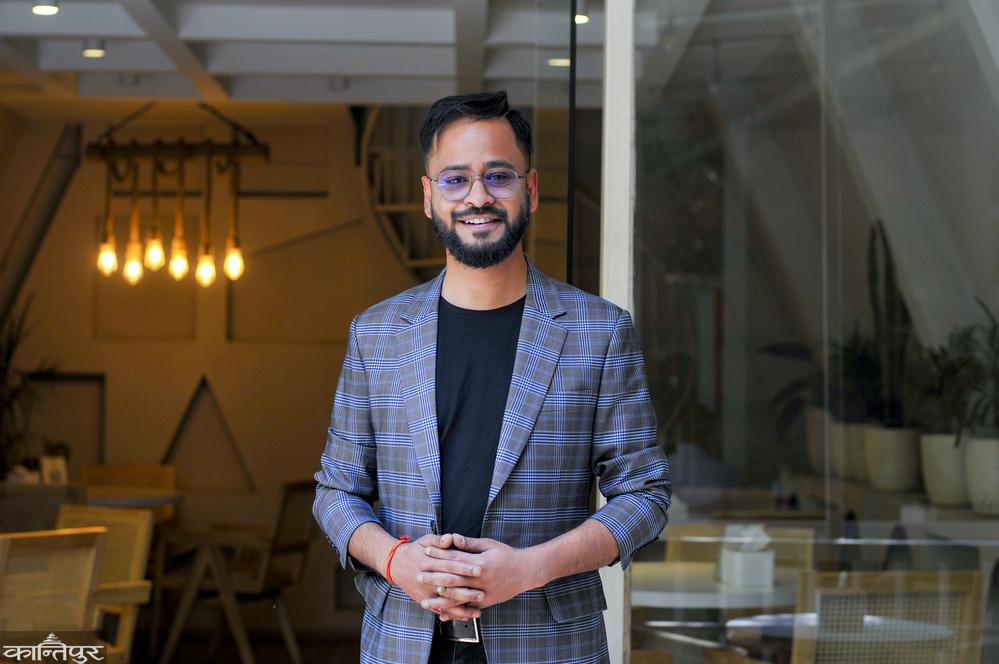
Right now, Rishi Ram is standing in the courtyard of Vasantpur, the palace area of Kathmandu, looking towards the home of the living goddess. The dream of the seventh edition of 'Kitab-Jatra' is hanging, in the bardali of his eyes.
Sweet lust is coming to Madhupavan today
Youta Thunga is smiling somewhere towards the forest
- (Vaisakh/Poet Madhav Ghimire)
The slow vein of 'Madhu-Pavan' of 'Vaisakh' has climbed to the city. And the city, as it were, is looking for a festive monsoon. And, the valley wants to indulge in pilgrimages. Cultural festivals have their own importance, as do festivals in contemporary society. Its organizer - Rishiram Adhikari is working round the clock to advance the chariot of the literary festival.
Right now, Rishiram is standing in the courtyard of Vasantpur, the palace area of the Malla period in Kathmandu, looking towards the home of the living goddess. The dream of the seventh edition of 'Kitab-Jatra' is hanging, in the bardali of his eyes. Nepali Literature Conference was held for the first time in 2004. Hriday Chandrasingh Pradhan, Lakshmi Prasad Devkota, Balakrishna Sam were active in the literature festival held at the literature-dham Saraswati Sadan in Kathmandu. The cloud of horror that hanged the four martyrs had not lifted from the city. It was a completely new event in the 'tragedy' - literature conference. After that, the first national poetry conference and intellectual conference was held in 2009 at Karfolk Secondary School premises in Ilam under the initiative of Mahanand Sapkota.
The big wave of ambitious literary festivals in Nepali literature came in 2011. The canvas of the literary festival in Nepal has become very wide when the large and grand 'Nepal Literature Festival', held for the first time at Jhan Mandala in Jhamsikhel, has reached its 12th edition. After that festival, many projects celebrating literature and writers like 'Janakpur Literature Festival', 'Kuda Karnalika', 'Nepali Literature Festival', 'Tikapur Literature Festival', 'Ilam Literature Festival', 'Art-Literature Festival', 'Kathmandu Festival', 'Kalinga Literature Festival', 'BP Literature Festival', 'Rolpa Creation Festival', 'White House Literature Festival' are held every year in many districts. are Not only that, various municipalities have also started allocating budgets for such festivals.
Ajit Baral, director of 'Nepal Literature Festival', is extremely happy to see dozens of literary festivals going on from Mechi to Mahakali. "Such festivals not only enrich Nepal's tradition of literary, cultural and intellectual discussion, but also play an important role in the development of an advanced democracy by widening the scope of public debate," says Ajit, "so the more such festivals, the better." And what kind of innovation has been found in the 'Book-Jatra'? Rishi Ram says, "We have prioritized innovation as much as possible. In the first edition we discussed reading culture. Over time, we also realized that our target is children, not adults. Children's corner has been added this year.'
In Ajit Baral's opinion, no festival can leave its impact without bringing thematic innovation and relevance. "Therefore, the efforts of the organizers of all literary festivals should be to bring thematic innovation," says Ajith.
Rishiram thinks that it is important for everyone to read whether they are artists or businessmen, leaders or government officials. Until the 1980s in Russia, a large number of people could be found reading books of their choice on buses, trams, metros and even in parks. It is not by the order of the government, it is a tradition spread by hundreds of years of study and practice in the society.
The author has written a book by doing many researches and spending years. Readers don't have to spend many days to enjoy it, and even spending five hundred to one thousand is enough. It is necessary for teachers and parents to explain that with that much money, you can achieve invaluable knowledge, entertainment and thought-provoking things,' says Rishiram, 'Literature or philosophy or history - that study provides the skills to look at life in a new way.' He walks through the city every day, soaking up its legends and stories. Walking with him is restlessness, restlessness and curiosity. Finding venues, sponsors, advertisements to make the festival a reality is a daunting task. No small force is enough for any organizer to withstand that stress. Surrounded by the 'tensions' and 'tensions' of the festival, different sessions, presentations and topics are also being thought of. How stressful is the eve of the 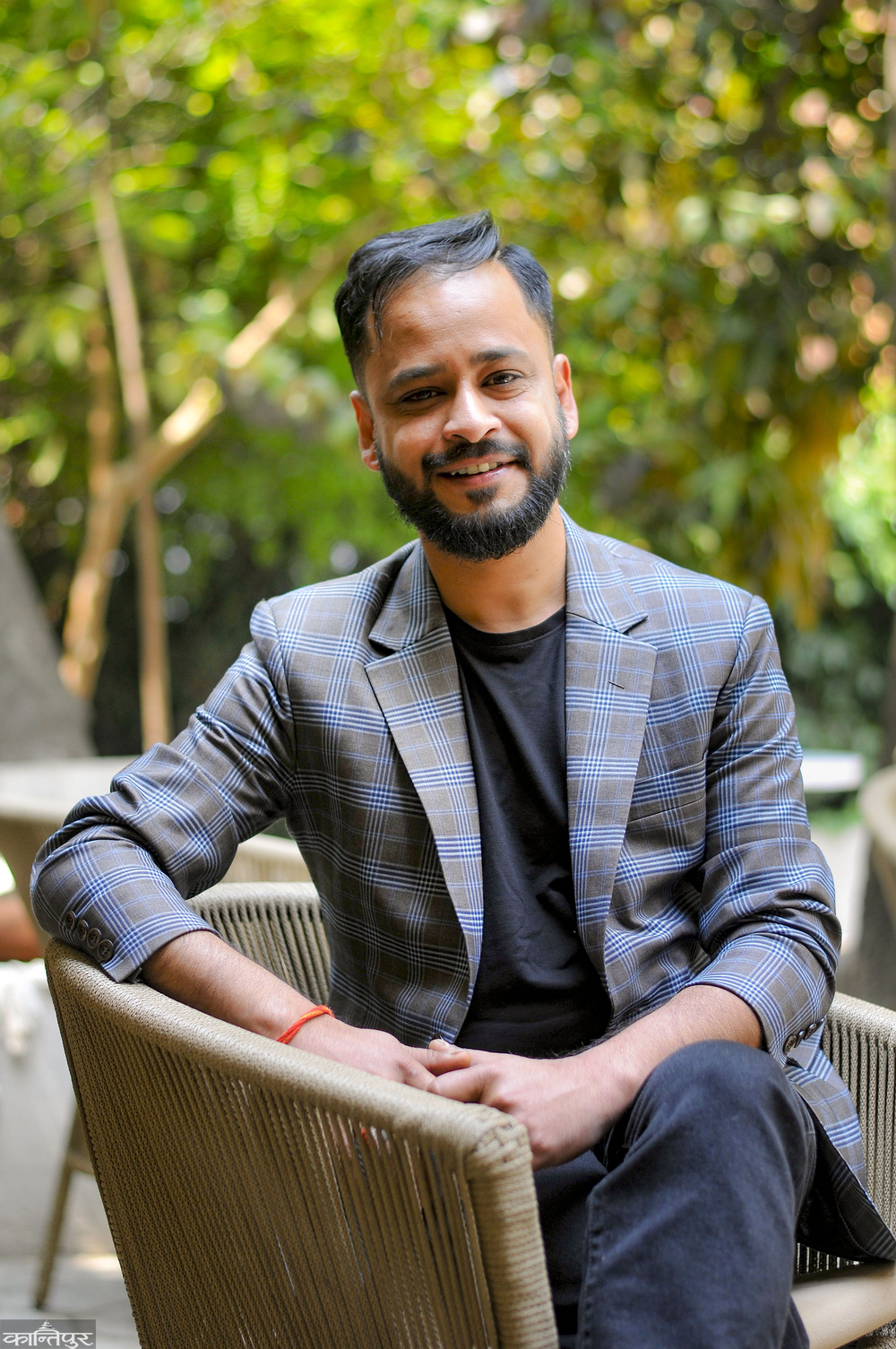
festival? One evening after the end of the festival, Ajit Baral said in his own words in Pokhara, "Tension is not enough." If you were to scold someone, you would tell him to hold a literature festival. Every year during the festival, I lose 5-6 kg!'
The reason why Rishiram came to Vasantpur in the midst of 'tensions' is the search for the characters of 'Kitab-Jatra'. He wants to narrate the life and world of Kumari sitting at the butte window watching the city and the people. And, he wants to see a rainbow of joy swinging in the 'Kitab-Jatra' - there should be millions of people dancing wearing colorful masks, the strumming of sarangi and the strumming of guitars in the colorful hall of seven-colored lights. Genji is 'sharing' his dreams, dreams, joys and sorrows. Listen there – the chanting of the ‘Akashai Bandhu – Patalai Bandhu’ mantra of the Jogis who bring ‘Feri’ to the city from distant villages. Some Phedangba Mundhum-reciting a story in shloka. Someone is humming. Karnali's folk tales and folk dance artists are reciting their alap. In Kathmandu's Falcha or Dabili, the old man with flowers in his ear is narrating a story as old as this ancient city.
Dressed in Hakupatasi, with long vermilion on her hair, red lipstick on her thin lips, and gunkeshari cut in her hair, the story of the young woman 'Rajmati' from Itumbahal is told by a storyteller. An old man carrying kharpan towards Bhaktapur will be entering into the legend-folk of the 8-decade-old legends of Bhaktapur city, people who keep coming to myths and legends. And, after hearing/seeing all of them, the intoxicated audience gets lost in the vein of the stories.
Mahamanjushree's kastamandap living with the khadga dob is special and distinctive. When he arrived here, Rishi Ram's eyes were filled with happiness, sadness, laughter and dreams. He looks at the bells ringing in the old streets and temples of Nepal-Mandal. Even the children of this city, the abode of the gods, cry in tune, the rain also falls in the lake, he feels like that. To hear the tabla-harmonium and hymns resounding from the evening near the temples, it seems that the deities themselves roam here. At the same time, one is engrossed in the beat of music – the old Newar settlement of the city. After arriving at Indrachok, Rishi Ram asked - who brought so much music and filled the soul of this city?
Rishiram, who was born in Lalbandi in Sarlahi, goes to a flashback while walking towards Indrachowk, who drowned the life that stood before him in the love of books and letters. Having seen the colors of the Terai, he is studying the culture of Kathmandu city. Father Premprasad migrated to Lalbandi from Kathmandu Pingalathan. The age difference between father and mother was 50 years. Rishi Ram was 14 years old when his father died at the age of 89. The dream of spending more time with father in life remained unfulfilled. He has also written a poem on that unfulfilled wish –
...
At that time 'Ba' was/had no gifts to give
Now there are many gifts/there are no 'ba' to take ...
There are no 'ba', but there are Ramayana books that he recites. Rishi Ram, the ``fictional character'' of ``Ramayana'' and ``Mahabharata'' whom his father recited morning and night, felt miraculous. It is about Lalbandi - there was a shop connected to the highway, where literary books were available, but the books found in big cities were not easily available. "It was easier not to get the book than to get it," he remembers, "It was a period of learning, when I remember it now, that's why the map of the future was drawn." After the death of the father, the sage saw the struggle of the mother. Mother was 39 years old when father passed away. Remembering her tears, Rishiram gets even sadder. Prem Prasad, who came to Lalbandi after getting bored from Kathmandu, used to always say to his 'beloved' younger son - father, do everything, but never go to a place called Kathmandu. However, in the last year (year 2066), Rishi Ram came to Bhupi Sherchan's 'Chiso Estre' with some money in his pocket. When he entered Kathmandu for the first time, he did not look for a college, he looked for a library. There he searched for 'life' in the pages of books - in Sarubhakta's 'Madden' and Che Guevara's biography. He then thought, 'There is money in the city and also books. Even if you had money in the village, you couldn't buy books.
In Kathmandu, he took money and started teaching tuition, while he studied on a scholarship. 11 used to teach tuition to eleven students. If the student did not understand the question, he would ask the teacher at the college the next day and tell the tutor later. Having studied management, he used to teach accounts and mathematics. After Plus-2, I thought- I should study CA. Harsh comments about CA were heard in the city – even Christ would have failed if he had studied CA. He prepared to become a 'Jesus' and went to New Delhi. He toured Delhi full of enthusiasm and curiosity. That was, living life differently - journey.
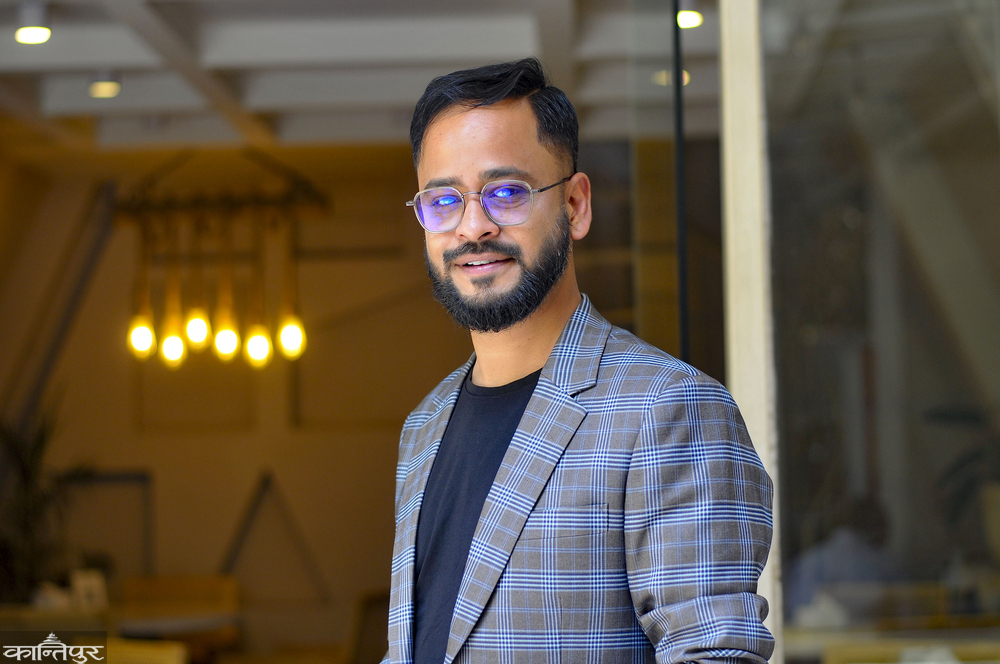
Strange place, strange friends! I was surrounded by the feeling that the reel of life was spinning fast. The days of visiting Delhi's old forts, visiting book fairs are now an unforgettable memory. CA class, the unique rhythm of the city and the lively world! That creative time made Rishi Ram creative. Going to the library, delving into books became a daily routine. Started writing some stories in between the urban rush.
Didi Saraswati Adhikari was in Nepal to take part in drama, she used to teach school. She used to send as much salary as she could to her brother who was studying in Delhi. College expenses began to rise. Rishi Ram, who thought that he should study at his own expense, now took on the avatar of a chorus singer in restaurants in big cities like Haryana. 500 was paid for singing the chorus. Literature entered life, songs entered, books entered. Between imagination and reality, 'life' was searched. After the second level of CA, Rishi Ram dropped out. Those dropouts began to spread throughout the literature-world. And, the 'idea' of online book business came to mind. "Let's do door-to-door delivery of books" thinking "dropout boy" Rishi Ram returned to Nepal from New Delhi with four sacks of books.
In the dichotomy of 'online book business running or not running?', his confidence was boosted after the business started in 2017 got a good 'response'. As per the order, the book started arriving from house to house. Books were delivered not only to Nepal, but also abroad. Rishi Ram breathed a long sigh of joy when orders for eight to nine hundred books started coming in a day. However, soon covid started. And a tense twist came in the story. However, Rishiram and brothers continued to work despite the stress! Even before that, there was an online book trading station in Nepal. Currently there are 'Thuprai Dotcom', 'Ratna Pustak', 'Books Mandala' among online book traders in Nepal. Rishi Ram considers this to be reasonable. He says, "After competition, customers get better services and facilities."
Why did Rishiram, who was enjoying 'Kitab Yatra.com', have to carry the burden of 'Kitab-Jatra'? Looking for a future in books, he was also encouraged by the magnificence of the 'Nepal Literature Festival'. After the 'Nepal Literature Festival' moved from Kathmandu to Pokhara, his spirit became even higher. While strolling towards Basantpur, where the intoxicating air blows, he realized that there are so many cultural fairs held in this city, why not book fairs? As soon as 'Idea' came up, his heart was shaken.
People who were lost among the withered books in the city library started coming to 'Kitab-Jatra'. Rishi Ram says, "Along with many literary festivals like Nepal Literature Festival, Janakpur Literature Festival, the book fair is also a window into the city's contemporary book culture."
Such festivals are definitely having a meaningful impact on the society. All festivals have their own attractive way of organizing. It is evident that every year the organizers have meaningfully designed the festival to make it great and memorable. 'Kitab-Jatra' also has a different design. It also combines theatre, music, culture, entrepreneurship and calligraphy along with literature. About the content of literary festivals in Nepal and their impact on the society, poet Biplav Prateik says, 'I have been to places like Janakpur, Surkhet and Tikapur for the festival, the most remarkable thing is that I have seen the presence of 90% youth there. This is a special achievement of the organizer. I believe that most of the participants have developed the habit of reading as a culture. Credit to the organizers.'' This trip is not limited to Kathmandu. He has reached New Delhi with 'Kitab-Jatra', four editions have been completed there till 2024. Also in UK in 2023. While doing the festival there, Rishiram felt that wherever Nepalis are, they want to be close to Nepali language, art and literature. So far, 12 editions of Kitab-Jatra have been completed across the country and abroad.
is not only that, now the country is colorful with the festival. Isn't it enough to have only one divine festival related to literature? Rishi Ram says, 'Nepal Literature Festival reached Pokhara, Kathmandu was empty. And, we did Purak-Kama. We started by learning from that festival that we could do better things - Kitab-Jatra. It is nice to have a festival in Janakpur, Tikapur, Ilam, Surkhet or all over the country. Why can't it happen? Gathering of writers/poets and thinkers in those places, debates have a meaningful effect on people, isn't that a commendable thing? What message does the wave of literature festivals across the country convey? Rishi Ram is not in two minds. They say, 'The more festivals are held, the better and the quality of the effect it will give to the society over time will be less.' But, stability? I should not even take the pain of that. No matter how many mountains to climb, some organizers will continue to do so. Because they came with a vision. Everyone will continue as much as possible," says Rishiram, "The festival needs to be supported by local and national corporate houses with priority financial support. So that corporate houses can be proud to be partners in the virtuous work of transforming society through literature.'
People use their inquisitive nature to perceive objects, situations and participate in knowledge fairs to sharpen their intelligence. He can even surround people from the other hemisphere of the world with thoughts and feelings. It has its own language, religion, borders and nation. He made language and knowledge the pillars of his progress. So welcome all over the world – Knowledge Festivals.