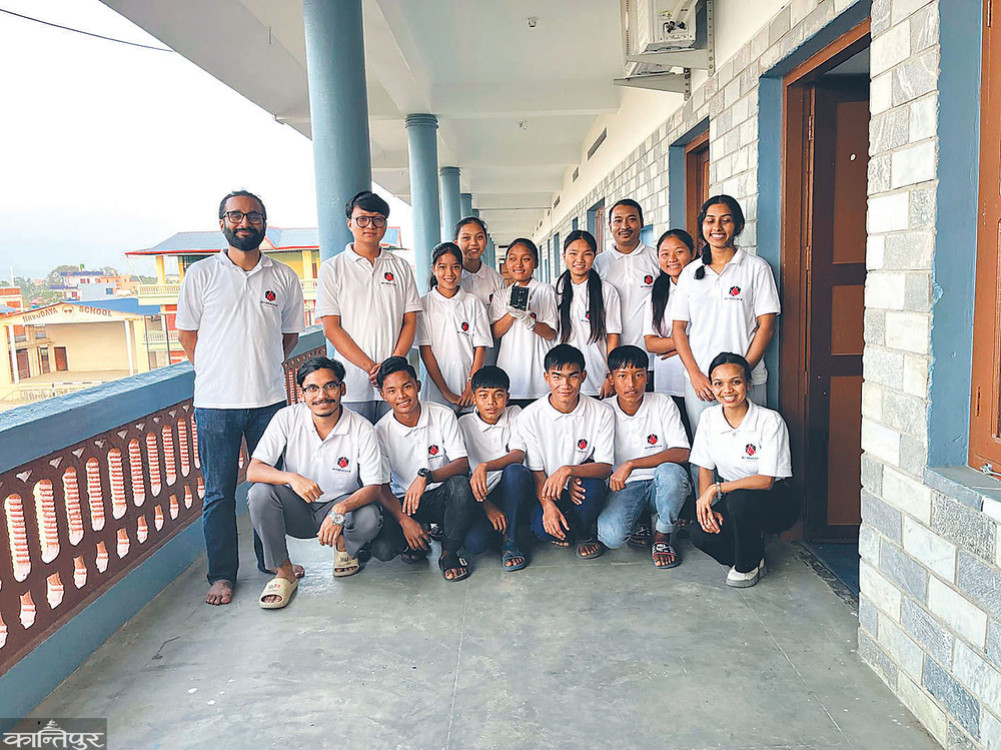
”Slipper to Sat” means the creation of a satellite by the youth of Chepang community, who are desperate to buy slippers! This satellite will orbit the Earth this year.
We use Google Cloud Translation Services. Google requires we provide the following disclaimer relating to use of this service:
This service may contain translations powered by Google. Google disclaims all warranties related to the translations, expressed or implied, including any warranties of accuracy, reliability, and any implied warranties of merchantability, fitness for a particular purpose, and noninfringement.
Prince Bernhard of the Netherlands came to participate in the WWF-1001 Club program at Tiger Tops Hotel in Chitwan in 2034, which was coordinated by the then Crown Prince Gyanendra Shah.
At that time, the pitiful condition of the Chepang settlement was shown to King Birandra. A Chepang leader said, "Mr. King, we are the people," and the king agreed. In the same year, a large Chepang conference was held for the first time at Jamire in Makwanpur. The then Central President of the Nepal Red Cross Society and Crown Princess Prinsep Shah announced that 'from today you are not Chepang, you are a citizen'.
The Panchayati government introduced the Praja Vikas program in the same year. Then the Chepangs started writing their surnames as 'Praja'. However, he wrote 'Chepang' again because he was worried that his identity would be lost after the multi-party system. The Chepangs seen by King Birendra were very self-sufficient in forest, land and animals – in lifestyle. Hunting in the forest, farming on steep land, killing fish and bats, eating tubers, malnutrition-poaching, and child marriage made their lives difficult.
There hasn't been much change in Chepang's situation yet, but life has become somewhat easier. From the last two generations, they have started building houses using bricks, wood and zinc. They have given up hunting and are taking up agriculture and other occupations. However, 90 percent of this community still lives below the poverty line, with an annual income of less than Rs 10,000. However, the Chepangs have now started writing a new history through education and technology.
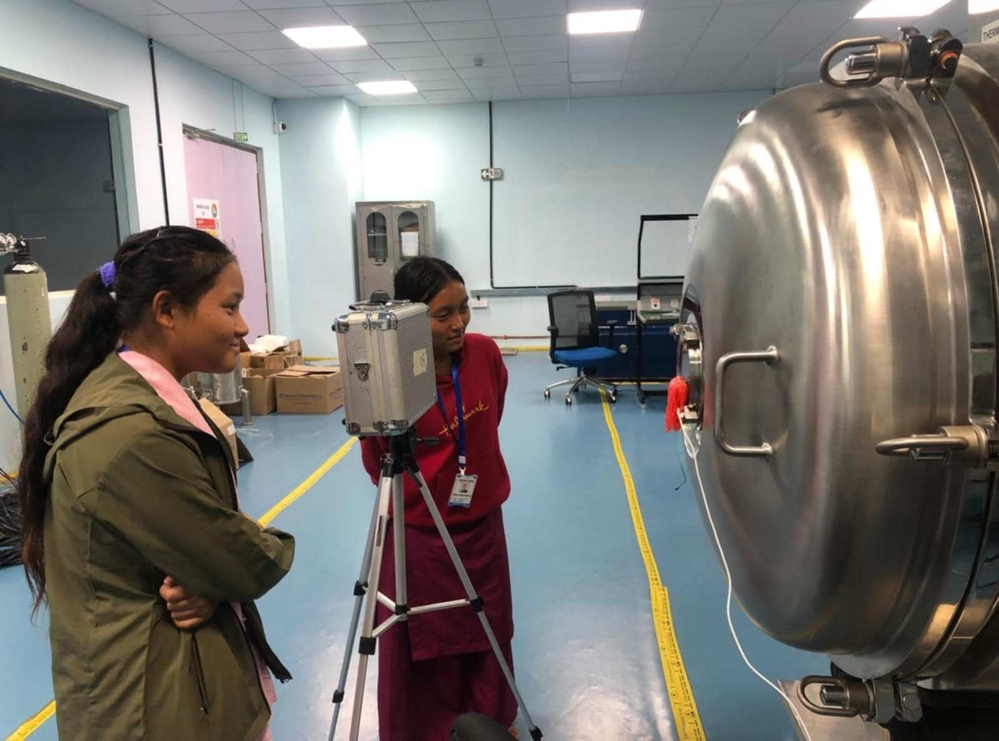
The Chepangs are now building Nepal's third cube satellite to be launched into space. The students of class 7 and 8 of this community are busy making satellites. In this work, the creator of Nepali SAT-1 and the head of the Space Institute of Nepal Dr. Abhash Maske has engaged them.
The mission has been launched with the theme 'Slipper to Sat', i.e. 'the journey of people from the community who have to buy a single pair of slippers to build a satellite'. A Chepang student-built satellite will orbit the Earth this year. There is a plan to make students excel in technology by developing the One-U model CubeSat. Along with free education for 3 years, students will also build satellites. For that, 6 engineers of the institute are working on the design and development of the satellite mission, said scientist Maske. The engineer is also training students about satellites.
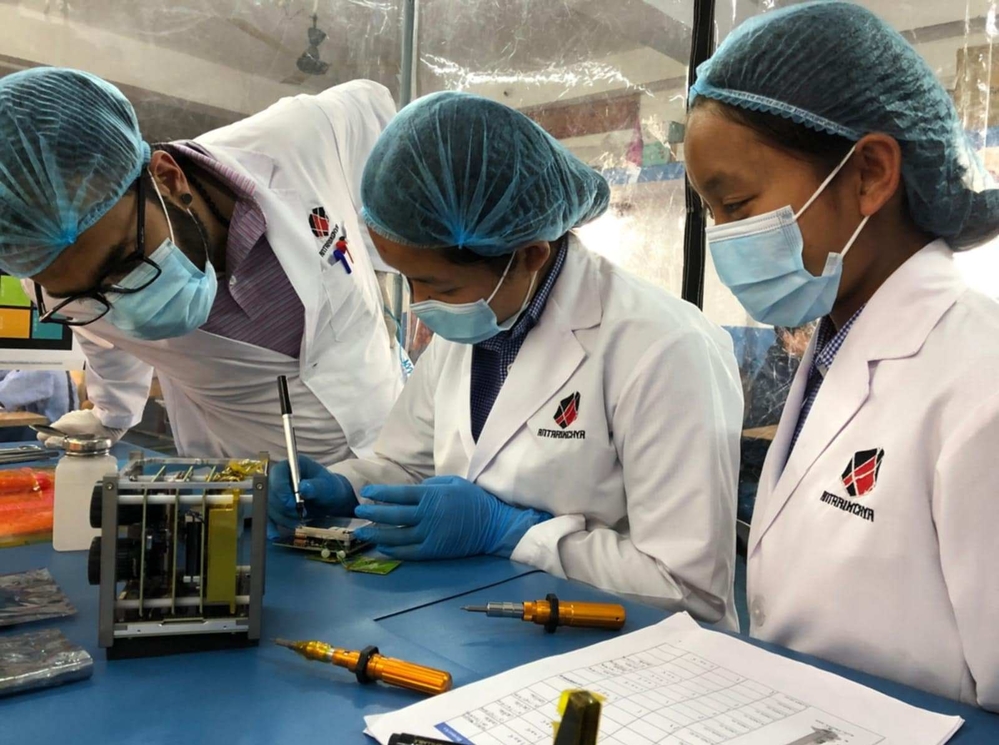
Under Maske's 'Vision 2050', the goal is to send the first astronaut from Nepal into space by 2050. And, Maske is spreading the knowledge of space technology at the school level. Under the same campaign, 10 students from Chitwan, Makwanpur and Chepang Basti of Lamjung are busy in making satellites. It has been a long time since Chepang started to replace the hunting items in his pocket. Now there will be satellites orbiting the globe. This satellite mission launched by Maskey Space Foundation Nepal aims to provide education for the upliftment and encouragement of the marginalized, disadvantaged and tribal communities of Nepal.
From space lab construction to space flight
In 2023, Maske's team organized a 4-day training on "Radio and Satellite" in various schools of Lamjung, Makwanpur and Chitwan. After the workshop, 10 students were selected based on their interest and ability, said Rishabh Adhikari, engineer of the institute. Space System Laboratory at Navodaya School to train students to make satellites
(SSL) is installed. This satellite is scheduled to be launched within the year 2082. Another objective of this mission is to design and develop cubesat operated by amateur radio in the country, said the managing officer of the sat mission.
This satellite associated with Chepang students will be the third CubeSat of Nepal. It is a 'Satellite Bus' system designed in Nepal at the initiative of the Satellite Institute. In this system, the electrical power system (EPS), on-board computer (OBC) and communication system are included on a single circuit board (PCB). It has been designed in a more advanced manner adopting the technology used by Nepali-Sat One and Munal satellites. Due to this, sufficient space will be available for other purposes within the CubeSat, says the engineer officer.
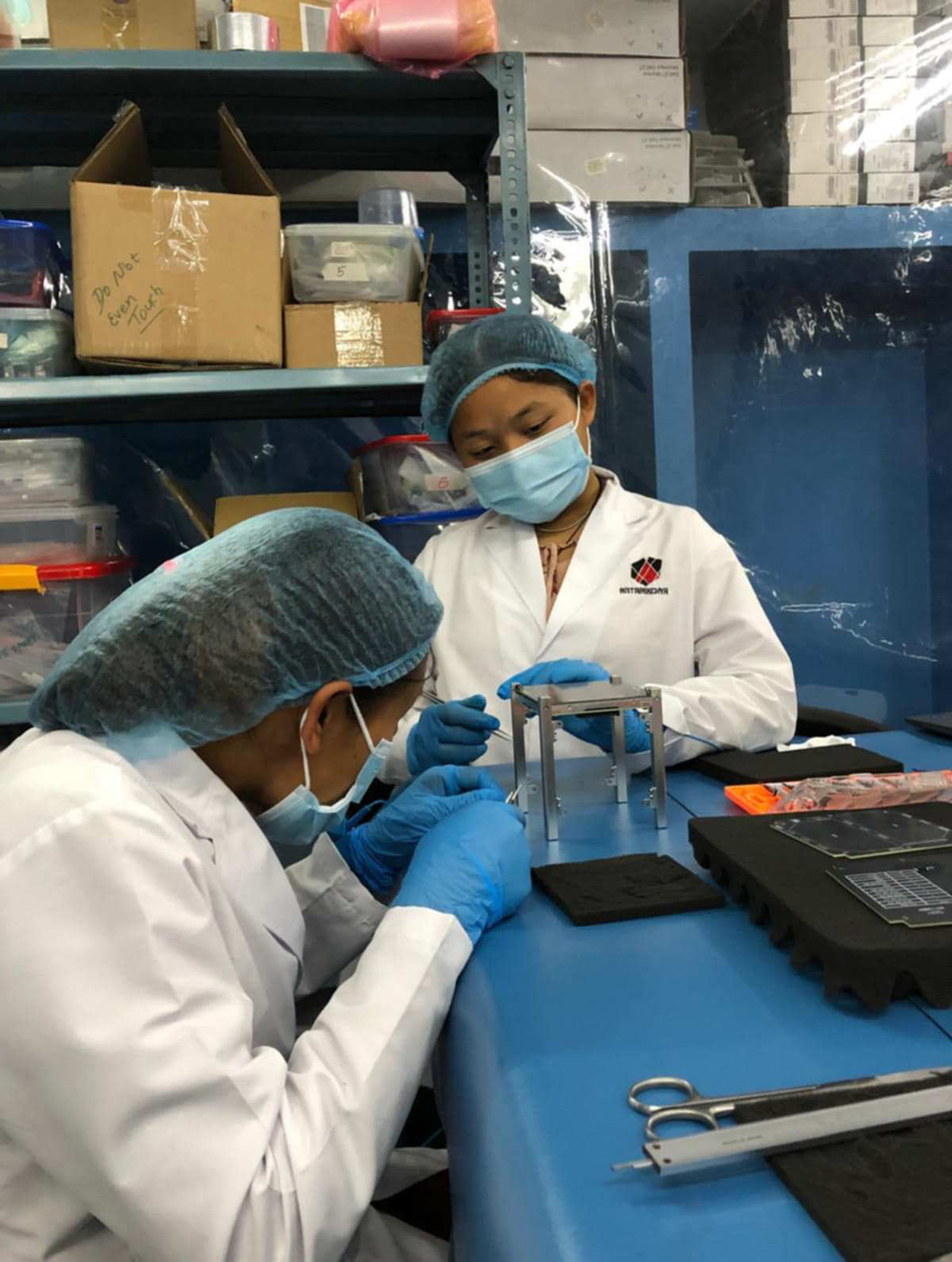
The 'Slipper to Sat' mission is expected to assist in the transmission of data required during natural disasters. Also, this satellite includes the Digipiter mission, in which the satellite replays signals transmitted by radio waves around the world. Mentor Kriti Dahal, who is facilitating the students, said that this satellite will create a database of the Earth's water surface, under which infrared and RGB cameras are placed on the satellite. The ``Normalized Differential Water Index'' (NDWI) is calculated by observing water levels using the three. Dahal said that this will help in creating a database of water resources.
This satellite will also be used in seismic studies. A boomless magnetometer is installed to detect subtle fluctuations in the Earth's magnetic field. Boomless technology consists of four magnetometer sensors, referred to by the establishment as 'Quad-Mag'. It can detect very low frequency (ELF) and ultra-low frequency (ULF) waves in the Earth's magnetic field. The manufacturer claims that the data obtained from it will be used as an earthquake warning. It consists of communication system, camera mission, control system, electrical power system, communication system, on board computer system and attachment system.
Shivkumar Chepang, Sajina Chepang, Suhan Praja, Elisa Chepang, Binamaya Praja, Ranasingh Chepang, Sheetal Praja, Amrit Chepang and others are involved in the construction of this satellite project. His sister Kalpana picked up the phone when he contacted Amit Praja, who had recently given the SEE exam. She said that she could not believe that her brother was making a satellite. She said that she and her family never thought that her brother would be able to do this. Training has been conducted in various schools and colleges of Nepal under the 'Vision 2050' program. They are training in space science and technology Educational Dissemination.
How did the Chepang community get into satellite construction? Abhash was inspired by Biswas Chepang, a researcher from Chepang community who is studying MPhil at Kathmandu University. Vishwas says, "Abhash Dai also involved students in the Munal satellite mission. Seeing that, I advised him that getting Chepang children involved in satellite construction would send a good message.' Satellite Katha is a moving example of how talent blossoms when given an opportunity and a platform. "Chepangs with basic education can do great work," Biswas says, "If King Birendra could have heard the news that Chepangs made satellites by hunting wild animals, living in apple houses, and eating crickets and bats, he would probably bite his tongue!"