Now the song 'Chalna' is sung, for fun it is fine. But, those who want to stay in music, must have deep knowledge of music - Nisha Deshar
We use Google Cloud Translation Services. Google requires we provide the following disclaimer relating to use of this service:
This service may contain translations powered by Google. Google disclaims all warranties related to the translations, expressed or implied, including any warranties of accuracy, reliability, and any implied warranties of merchantability, fitness for a particular purpose, and noninfringement.
About 500 songs have been recorded - by singer Nisha Deshar. About 200 are Neva: language. Neva: His songs in Bhasha are super hits. These songs are especially sung in Newari festivals, dances and festivals. Visitors to the restaurant to relish Newari dishes 'demand' Nisha songs sung in the Newa: language.
Like the popular song sung by Nisha recently - 'Aila Luwaya..'. That song means - I came to drink alcohol.... For decades, Nisha has been singing the song 'Aila'.
The song 'Aila Luwaya..' has been watched by more than 16.5 million people on YouTube alone. The song has lyrics by Rozman Maharjan, music and vocals by Nisha and Rozman. The audience also liked the video of that song very much.
...
If there was no musical atmosphere in the house, today you would hardly meet Nisha Deshar from Godavari Bajbarahi, Lalitpur. His son Ramlal used to sing hymns. He was a guru, who taught others to sing. Ramlal introduced himself in the hymn.
Sons Gyanlal and Prem Bahadur also walked in the path of their father, by learning to sing and singing hymns, they mesmerized the village and the community. Ever since Nisha found out, there was a musical atmosphere in the house. Which area will the environment choose? He didn't have to walk around looking for alternatives. From childhood, Nisha honed her voice, used her fingers on the harmonium. However, uncle Prem Bahadur passed away before his voice could fade away.
Many songs of Prem Bahadur have been recorded in Radio Nepal. Bhajan, ghazal and Neva: Five years ago, father Gyanlal also left his daughter forever while raising her profile by singing Bhasha songs one after the other. Within two years of father's death, mother left Chirimaya, on a journey of no return.
"Since my childhood there was a musical atmosphere at home, my attention was drawn here," says Nisha, "I have become known to everyone because I chose the field that was embraced by my father and uncle." Her struggle story as a singer is somewhat different. Earlier Radio Nepal used to play FMs on 100 MHz. She used to listen to most of the programs played on that FM. There was a phoning program on the radio. One could order a favorite song by reading a long list of friends' names. In some programs there was a competition of singing songs from the phone. It is about the year 2057. One of Radio Nepal's 100 MHz FMs conducted a song contest in Neva: Bhasha, that too on the phone. Nisha also participated in it.
'I won the competition, I got to record the song for free,' she recalls, 'The competition was organized by Kalash Media, the program was run by Pavitra Ka:sa.'
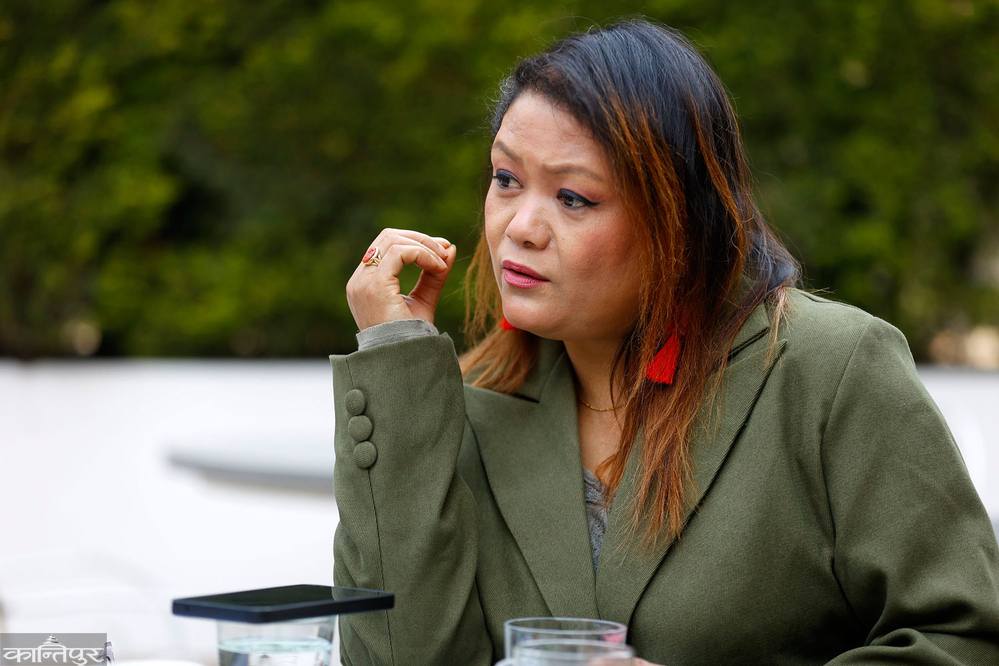
'The song was recorded, how it was made, how it sounded after it was made,' she says, 'the song started playing on the radios: I was shocked when everyone praised it for its sweet voice.' The excitement grew. The founders of Baje-Bua's age used to meet at home after listening to the song. "Everyone used to be surprised when they met me, some of them would say how young you are, how well you sang at this age," she remembers old times, "I used to call them when there were programs about bhajan singing."
Thus she reached Patandhoka, Nagbahal to sing songs and bhajans from Bajbarahi several times. He also recorded hymns in Nepali language in 2057. While studying music at Nhuy Bajracharya's Doremi Music Center in Jamal, he was offered a bhajan record. The song 'Prabhu Timrai Ek Darshan Paye...' with music by Ishwar Amatya and lyrics by Radhika Shrestha was recorded. Its video was made by Nepal Television. It was being broadcast on television every day. Later she recorded one after another Neva: language songs.
...
Until 2062, she did not sing many songs. Neva: Language songs are not only sung in bursts. Due to her addiction to music and her home situation, she only studied up to 6th grade. Even if the daughter didn't read, she didn't care much. She also fell into the same neglect. After getting married in 2059, her husband encouraged her to study. After that, she enrolled in Prerna Women's Secondary School in Satdobato and started studying in class seven, where sisters who missed out like her were enrolled and studying.
The story of Nisha's marriage is interesting. She had a love-marriage with journalist Yumash Sherpa. "I used to call radio stations, send letters and request songs, he also used to send stories and poems to the radio," she says, "when sending letters to such programs, sometimes he would ask me to play songs on the radio in my name." Later, in 2057, he met Yumash while studying music in Doremi. Doremi reached Doremi to interview Gurudev Kamat and Ishwar Amatya – Yumash. Although his ancestral home was Khumjung in Solukhumbu, Yumash was born in the Jatha of Thamel.

'After marriage, my husband inspired me to study,' she says, 'even though I studied late, now I have graduated in music from fine arts under humanities faculty from Lalitkala Campus.' Now she has a 20-year-old daughter with Yumash-Nisha. He received a call requesting him to participate in the modern song singing organized by Radio Nepal on the occasion of his SLC exam. "Manoraja Nakarmi called from Radio Nepal saying that I should participate in the competition this time, but I was too embarrassed to say that I have SLC exam, I couldn't refuse the heartfelt request," she says.
"In the audition, 62 people were selected from all over the country, the names of those selected were pasted on the wall outside the Singha Darbar," she says, "I look at the name from above, but I don't see it, as I look, my name is on the last number 62." Winner or not? How to sing? Fear haunted Nisha. During the competition, singer Meera Rana, music composer Deepak Jangam, singer Fateman were judges.
'2066 On Chait 16, everyone reached the radio in the morning and sang one song after another. In the news at 6 o'clock in the evening, who was the winner of the competition, the results came out, the name of the winner went from the fourth to the fourth,'' she says. In the end, I was surprised that Nisha Deshaar became the first, it felt like a dream. At that time, actor Dayahang Rai was also there. He was at the stage of struggle.
'His wife Benuka Rai is my friend, she was also a competitor with me, she used to love Dayahang songs very much,' she says, 'He was so happy that I came first that he carried me around three times, no one looked happier than him.' She bought a harmonium with that money. After 2066, his presence became more and more popular in music.
...
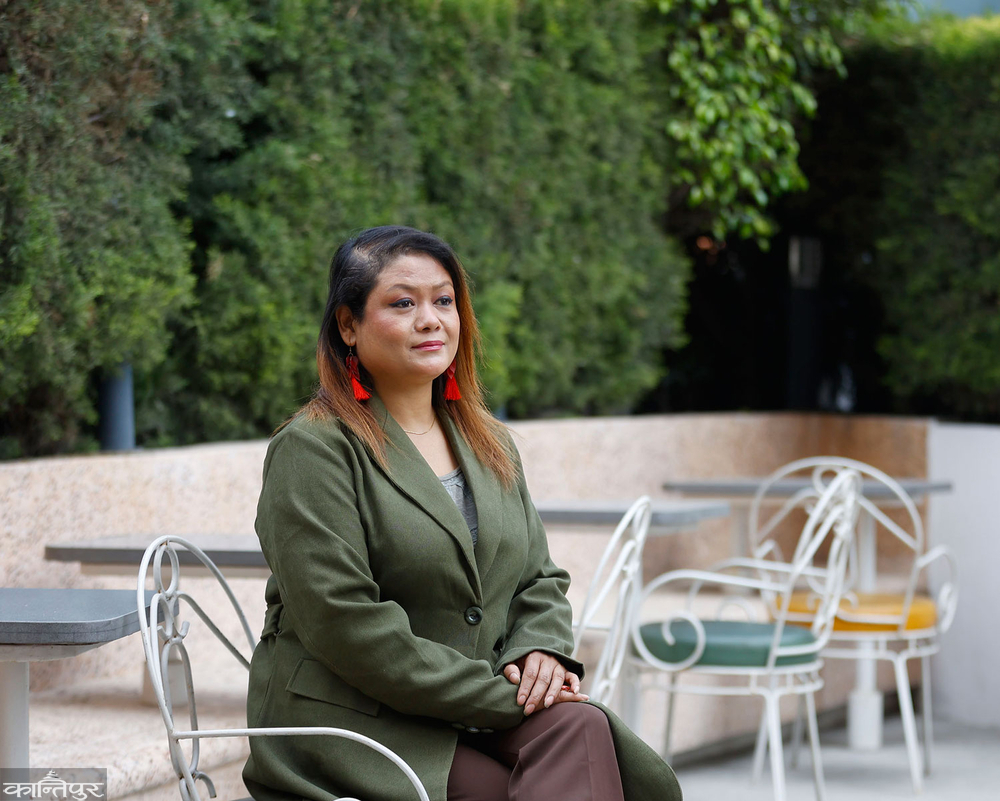
After coming first in the competition organized by Radio Nepal, musician Suresh Gayre offered him to sing a ghazal song. She recorded Madhav Dhakal's song 'Timro Mero Sashabko Barcha..' in a woman's voice. That song was already sung by singer Deepak Limbu. She then sang a song with the lyrics 'Zamana Bada Cha...' with lyrics by Krishnahari Baral and music by Gayre, which garnered a lot of buzz. Many liked it. Again, Baral's words and Mahesh Khadka's music, 'Timi kun zamamana shym...' was recorded in his voice.
This ghazal-geet gained more attention. His songs became hits one after another. Anand Ratna Bajracharya's lyrics are also in the song 'Ma Ta Ajnabi Hoe Chu..'. She also won Image Award for this song. This award was not the first for him. His voice can also be heard in Nepali films. Maruni Bhaka's 'Saunko Big Jhari...' in her voice from the movie 'Rahdani' was very popular. His voice is also in the item song 'Chal Mero Nagbeli...' of the film 'Adhakatti'. She also recorded a song titled 'Timi Binako...' with music by Deepak Jangam and lyrics by Anandraj Khanal. In the words of lyricist Rajubabu Shrestha, 'Timlai Maya...', Anand Adhikari's song 'Rashtra Devo Bhava:...' also features his voice.
Let's not talk about 'Aila Luwaya..'! "Rozman has made a double type of Newa language song, you told me to listen to it once and sing it as I like it, I liked it very much," she says.
It is his understanding that the song is liked by many people because the voice, words, music and video are all good. ``Neva: There are less dance songs in the community, now a lot of Hindi and English songs are played at parties,'' she said. "Nowadays, when going to a fair, the audience demands to sing 'Aila Luvai..'," she says. Another song 'Makhn Twa : Ya Gwa :...' with the voice of both of them is also a hit. Nisha has also sung a lot of Krishna and Shiva bhajans.
'Music has seven chords, again this is a very deep subject, nowadays songs are sung as they are sung, that's fine for fun,' says Nisha, 'but, those who want to stay in creative music, they have to learn music.'

