Chuden Kavimo's life-story is like a mountain- full of ups, downs and ups and downs. Like a river flows from the chest of a hard mountain - his writings and life.
We use Google Cloud Translation Services. Google requires we provide the following disclaimer relating to use of this service:
This service may contain translations powered by Google. Google disclaims all warranties related to the translations, expressed or implied, including any warranties of accuracy, reliability, and any implied warranties of merchantability, fitness for a particular purpose, and noninfringement.
"Everybody everywhere" has dreams and some struggles to get there. Struggle is a little easier for some, while for some, the dream continues to torment them throughout their lives. A person's sorrow, happiness or celebration is a struggle-journey to reach his own dreams. And, man walks his age to cross that distance.
Storyteller Chuden Kavimo, who arrived in Kathmandu from Kalebung with the raw materials of writing in his brain, is also counting his age, torn somewhere between dreams and struggles. They say, 'Life is another name for the journey that must be kept on walking the distance between struggle and dreams.'
Actually, life goes on in simple memories and
s. Chuden has entered this city of Kathmandu by flowing in the story-series in the memory-tank, who are now out on 'foot surfing' towards Patan's archeological squares, doubles, alleys, and bahaal. Walking together - storyteller Kumar Nagarkoti, poet Vimala Tumkheva. Surfing the Pada is Nagarkoti-Queening, who is our 'guide' and like a city-knower is narrating anecdotes-stories-myths of Patan. Nagarkoti is saying, 'Patan is glittering with art and cultural heritage from the seventeenth century and people are in awe of it.'
Chuden's new novel 'Urmal' takes you on a journey through the sighs and dreams of those tea workers of Doors, it tells the life-story of Somari, Budhuwa, Aitmari who are struggling to reach their dreams and counting their age while drinking tea in tears.
Earlier Chuden's novel was Fatsung. That was the story of soil. The novel, written on the Gorkhaland movement in the northern part of West Bengal, recounts the friendship of an unknown narrator and his friend Ripden.
Chuden has dedicated 'Urmal' to the tea picking workers of Doors who 'live a dark life under green tea bushes and never stop dreaming bright dreams'. In Chuden's opinion, 'writing new things is also learning new subjects.' Therefore, in this novel, he has entered a new geography and new content, 'there is such a longing, to connect with a new place, to stand in the lap of history and to fill the flight of imagination, love for that place will also grow.' Where the crisis of identity will be removed, the existence of tribals will not disappear and the tea workers will not have to fight for Hazira - Chuden's dream Darjeeling like every Darjeeling resident is like this. "What kind of government are you in favor of?" Narrator Gabriel Garcia Marquez said in this question, "Imagine that government, which will keep the poor people happy." According to Chuden, the dream of a separate state seen by Darjeeling is also like Marquez's imagination.
"The language movement not only made the Indian Nepalese who are experiencing an identity crisis aware of the language, but also helped them in the fight for identity," Chuden says, "Getting constitutional recognition of this language was an important milestone in terms of Nepali identity. However, after the recognition of the language, it has not been implemented in the way it should be.' One morning in Chait, he met at Moolpani Niwas and narrated his reading and experience of 'Fatsung' and 'Urmal' in this way, 'Bhramar' by Rup Narayan Singh, 'Aaj Ramita Cha' by Indra Bahadur Rai and Peter J. I am a reader who was overwhelmed by reading Karthak's 'Every place every person', I am the same reader who enjoyed reading Chuden Kavimo's 'Fatsung'. And, after reading 'Urmaal', I am equally happy.'
According to Shailika Chhetri, a writer from Darjeeling, 'Urmal' not only reflects the complexities of the Doors' tea plantations, but also speaks the voice of the marginalised. This book is a symbol of the carefully picked tea leaves and the repressed dreams of the workers. Kavimo humanizes the struggles of the tea plantation workers. He makes his stories visible and his voice audible', Shailika says, 'Kavimo's books are proof of the turbulent history of Darjeeling, where the faces of people who are going through agitation and unrest are visible.' After writing the book, he felt that Duars is no longer only in geography, but in his imagination and books, and in his mind. Therefore, when you see an indigenous person walking with firewood on his head, his 'belonging' is suddenly reflected in him, he is bound by the feeling of meeting his family. Somari of 'Urmaal', the old women keep telling the primitive stories of their sorrows.
According to Chuden's idea, 'Writing a novel is like water flowing in a mountain river, which makes its own way.'
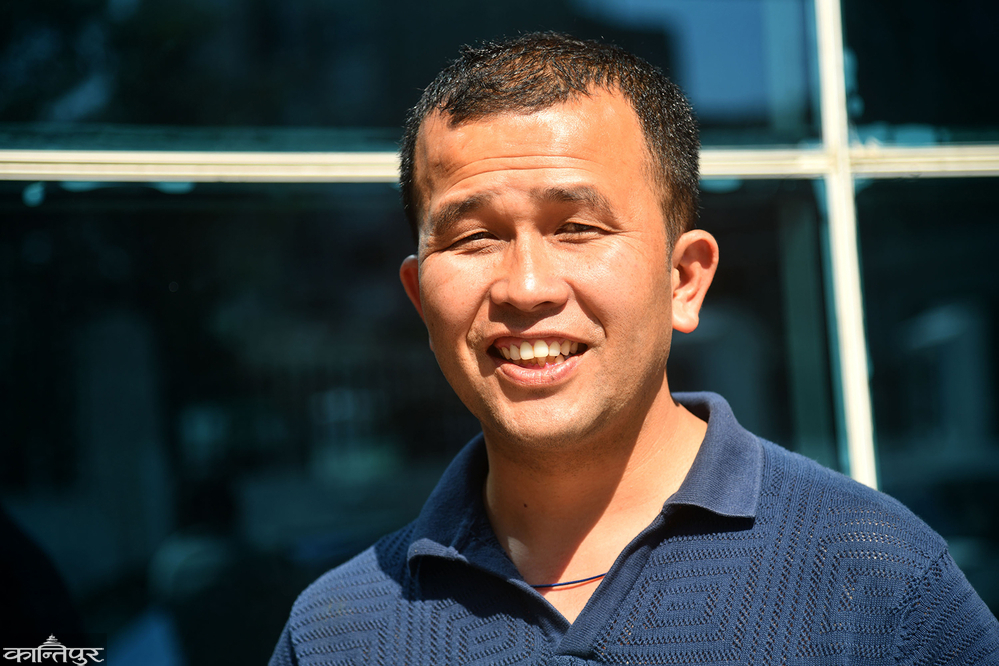 Human life is like the water in the river, shapeless. It is shaped by feelings, experiences, experiences and struggles. A dark evening after reading Chuden Kawimo, I thought, A writer's style and sensibility are formed by experience. He likes to tell the stories of the voiceless, the working class and the tribal. Because she is also a voiceless, laboring and tribal.
...
A 'memoir' of Chuden was published - in the Annapurna Post 'Fursad'. It was probably his first essay in a Nepali newspaper - 'Pustakalaya Jaleko Sanjha'. Where he has written the story of how after the Gorkhaland movement ignited in Darjeeling, it reached his village Malbung and destroyed Chuden's mother's beloved library in Nimbong village, two hours away.
Looking back to the distant days of his childhood, Chuden sees - the scene of the village people reading the same novel in despair! His mother was one of those who read the novel. The book-filled library above the village was his mother's favorite place. In the library, she found the 'fountain of books'.
After reading 'Pustakalaya Jaleko Sanjh', I have followed Chuden After that, even if the name is hidden, I can recognize 'Chuden-Signature'.
...
'Mother loved love novels, Prakash used to read Kovid, while reading, mother fell in love,' Chuden recites his mother's love-greatness. To hear that old love story, let's tour Malbung in his village Kalebung. Even before Chuden was born, the Mahabharata had already been created in his family. Because his mother was Bhakti Kshetri and she married Nima Chiring, a Lepcha boy who eats bull.
At that time, the mother was not even 15 years old, when she married her father from Chuden for love - in 1988. Those were the times, inter-caste love was a complicated subject and not accepted by the society. After the marriage, a thousand attempts were made to separate the parents. After preparing a Chhetri boy, he was chased to separate the couple, dozens of panchayats were settled. However, Chuden's parents did not separate.
Next day half day he returned home empty handed. Shocked, he took the money and bought a few things and reached his in-laws' home for the first time. Chuden's grandmother did not care about her parents who were in the house. But who will stop one and a half year old baby Chuden? He jumped out of his mother's arms and sat in Bajai's arms. Chuden's mother still says, "Bajye has killed the anger and reed that he has been harboring for years with one hug."
...
From Malbung in the far corner of Kalebung, a village in Chuden, at that time we had to walk at three o'clock in the morning to reach the road where the car could meet and reach Jorline. There was nothing but one primary school in the village – Second Dalpachand Primary School. In the school lived Shakuntala Guruma and Tikaram Sir, who were husband and wife, sketched by Chuden in Phatsung. Chuden was always first in his class. I am where I am today because of Guruma's love. "If I had not met Miss at that time, I would have missed many things in life," says Chuden.
Sir made Chuden interested in football. While playing football, a new game was added to the village - baton swinging. Now he understood that the (Rashtriya Swayamsevak) campaign of the RSS had started in the village. Then a new rumor started to be heard – Shakuntala teaches Christian hymns in Guru. The 'Chuden' thought the hymn 'God is in heaven' was fine, but the 'RSS' didn't think so. Suddenly a new school of RSS was born in the village - Shishu Shiksha Kendra. The 'chuden' had to go to that school too. They used to go to the Shishu Shiksha Kendra of RSS in the morning and dreamed of connecting India-Pakistan. In the afternoon, he used to reach the government primary school and join his voice with Guruma - God is in heaven. However, the students were confident.
However, unrest had already started in the village. The battle between Hinduism and Christianity had already begun. Guruma was accused of proselytizing. But Chuden thinks, Guruma had little to do with religion as there was a photo of Buddha along with Jesus in her room. However, due to religion-infused politics, riots started slowly in the village. At that time, rumors spread that two houses had converted to Christianity. The 'RSS' incited the villagers and surrounded them for three days, saying, 'They should return to Hinduism.' Those who became Christians did not become Hindus. Instead Sir and Guruma had to leave the village.
Malbung still has no paved roads and no high school. The new generation of the village is forced to drop out as they rush to school. Chuden says, "I haven't been able to open a school, but I have a dream to open a library in the village." I feel sad seeing my own suffering.
...
When Chuden was born in 1989, the first phase of the Gorkhaland movement was over in Darjeeling. His childhood was spent listening to movement stories.
In the 90s, TV had not arrived in the village, few people had a radio in their homes. He also had a very old radio in his house. After a while it became a habit, I couldn't sleep without listening to the radio. He used to have a novel on his pillow, a book in his bag when he went to graze the goats.
He fell in love with a girl who studied together for the first time when he was studying in 9th grade. It was more attraction than love. Convinced by attraction, he wrote love letters day after day - two years of letter writing went on. Love letters were the talk of the school, girls would gather and read the letters he had written. However, when a girl passed by, he would get nervous, his limbs would shake, his eyes would twitch, his voice would get stuck in his throat. Wrote hundreds of letters in two years, but not even twice could he make eye contact with him. Does life run only with letters? The girl thought so and they parted.
When Chuden was a child, the villagers were called to their homes in 'Namsung' and were fed millet stalks, meat and rice. The elders were busy pulling millet stones with 'chho' cooked with chicken and ginger. The children would sit around the blanket and listen to the story of the village. Chuden thinks, 'Is the story-love in me born from that story?'
Chuden's father passed his life like thousands of people in the village by looking after cows and goats, plowing fields and cutting grass and firewood. His mother used to add Hanse to it. Once upon a time, Apa used to pick ginger and chillies from the village and take them to Odlabari. And, mother used to sell home-made jam. When the world was going well, Apa fell asleep for a long time - he couldn't sleep all night, his hands and feet were cold, he was constantly falling asleep.
In a village where there is no hospital, Dhamijankri is the one who comes to treat someone who is sick. Jhankri came home. They are Bhutanese refugees who arrived in the village of Tarser Chuden after the outbreak of cholera in the Beldangi refugee camp in Nepal. He used to work in iron, he used to do Fakfuk. After Jhankri said, Chuden realized that his wife, who had died, has been taken away by her husband, and it is difficult for her to live now. Jhankri used to worry till twelve o'clock in the night, he would beat the drum, put a pigeon in his palm and say - this pigeon must die, otherwise it will take away the disease.
Chuden was more afraid of the jhankri and jokhana than his own illness. However, after almost three years, he recovered. He kept on saying until later - that Zhankri was taken away by America, but it was Lungsel's mother who fixed me, not Zhankri.
Chuden's baje was fingerprinted but brave, who walked around shaking people. The old man, who trembled at the sight of letters, used to tell the stories of his life with joy. He himself was the hero of Bajeka's story. Like a Nepali film hero, he used to beat people with wrong intentions. He used to tell the story of how the goats were left in the forest and grazed all day long. I have written the story of Doors in Urmal also because Baje used to tell the story of Hashimara of that place, he always used to tell the story of Odlabari. A little of the story inside me is also enhanced by the story of Prem Baje,' says Chuden.
She is the first in the village to pass the secondary level - Chuden. He had to walk three hours to reach Barbot High School from his village. He walked that distance continuously for five years - three hours in the morning, three hours in the evening. At five o'clock in the morning, he would put yams in a bag and walk to school. In that ups and downs, he imagined a beautiful future. At that time, teachers in Darjeeling hills received a monthly salary of 3400, Chuden's dream was to become a teacher. As a teacher, he thought he was paying off his debts, and he would change the roof of his dilapidated house. It was those small dreams that gave him a pleasant feeling even when he walked for 6 hours a day. He thinks that the habit of imagination probably helped him to write fiction.
Chuden was very lonely when he was young. He used to read a lot of books and write a diary. However, he never thought of becoming a writer. He felt, "A writer is a very sad creature." Growing up with him - some restlessness. He used to get emotional every time he saw the setting sun. I still have that disease. I don't know what kind of love I have with the setting sun! Why do I keep getting sad and restless looking at the setting sun? The answer is no', says Chuden, 'that restlessness, sadness has now started to seem like a part of life.'
When studying in primary school, Chuden remembers a terrible incident on a day when the sun was setting. He was playing with his brothers and sisters in the fields. At that time, suddenly the sister started screaming. He saw that his sister's clothes were on fire. There was no one around. He was the elder brother, but when his sister's clothes were torn, he became more frightened and started running away screaming. When her sister's whole clothes started burning, the brother showed more courage - he put out the fire by hitting apples and mungros. Hearing Chuden's scream, Apa came running from the field. By that time, the sister's back and some parts of her body were burnt.
The sister was taken to Kalebung Hospital - carried on a sack 'stretcher'. After walking for three hours, the road came out. After that, our world became even darker. For months the sister struggled with life. In the end, her courage won and she recovered,'' those dim days danced in Chuden's eyes, where her sister's boundless love was, 'sometimes even now it comes with a feeling of sadness. Every falling sun makes me so sad, a kind of sadness. Is that the root of that sadness and frustration?'
...
Chuden feels shy in gossip. He was just as shy till the early days of college. In those days, he used to write ghazals - up to seven ghazals were written in a day. Does this happen? However, that would happen and all the ghazals written again would endanger themselves. Nowadays, Ghazal Fureka hides stories. That is why my ghazal writing friends from Darjeeling-Kalebung have been scolding me for hours sometimes. He went to the story and told the ghazal. Especially not like that, I am very ashamed to remember the time of writing that ghazal,' says Chuden.
However, he was already published in the newspaper. Even though he reached the stage trembling, he still had the illusion of being a great ghazal artist. He wrote the first story in the middle of that confusion - of love. The story of Kalebung and the writer-singer from Kathmandu, read by her school's English teacher, is wounded. Sir read that story in the assembly and declared, 'I have never read such a sweet story.' Yes, on the same day the ghazal writer in Chuden was 'overtaken' by the storyteller. After writing dozens of ghazals, a single story awakened the confidence that did not age. And, on the same day, his path changed.
By the time he reached Kalebung College, he had become a well-known storyteller. However, studying in college was not easy. He wanted to study while working in someone's house. He was not getting such a house either, Apa and he wandered for two days towards Bongbasti in search of a house. And got the opportunity to live in Kalyan Ashram.
was an ashram – a branch close to the Rashtriya Swayamsevak Sangh (RSS), a branch of the Bharatiya Janata Party. It worked for tribal students. Now she would be able to go to college by staying in the Kalyan Ashram and tutoring the children of the younger classes there. The childhood slogan 'Garva Se Kaho Hum Hindu Hai' came in handy.
The 'RSS' used to show the 'Chuden' the dream of a Hindu nation, but by then the 'liberal' writer in him had probably started to grow. The branch head of the RSS was a Bengali, who spoke of a united India. He imagined that Pakistan, India, Bangladesh would be one country. Showing the old map, he said, 'Until 1947, it was in India, one day it can be one again.'
Now Chuden thinks, if he had not reached the Kalyan Ashram, his college dream would have remained incomplete. However, he could not continue following the path of 'RSS'. He felt that a writer cannot grow in the midst of any fanaticism. I used to think that whether it is caste or religion, caste or community, it is necessary for a writer to have complete love for everyone. The day that love turns into fanaticism instead of generosity, the writer dies there.'
He did not kill the writer in him.
...
'A writer is not something that is made by dreaming' Chuden thinks, 'struggle, lack and discomfort made me a writer? Maybe I became a writer trying to show what I couldn't say through words?'
Chuden's life and experience speaks, 'There are many people who live in poverty like me, they don't have their own 'language and literature', I will be very happy if I can tell their story.'
'Urmaal' is a story written for that happiness. However, he should not write a non-narrative about the tea plantation workers. The reason is clear - non-narrative can tell your world, but what should the narrative be like in the world you live in? He dares to say that', Chuden says, 'that's why the fun of enjoying the story is very beautiful. Not only when writing but also when reading, a separate world is created in the mind and a story creates many worlds.' He is 'clear' about his content - the scent of soil, sweat and blood should come strongly in the story.
Chuden prefers to write on regional issues, like 'Fatsung' and 'Urmal'. How to make a regional issue 'universal'? It has 'focus'. They say, 'Are we thinking narrowly about the subject?'
He is aware of the issue of contemporary Nepali literature, but he is sad that our literature is stuck in primary issues like 'trees should be planted'. His understanding is, ``There is still a strong narrative focusing on rivers, streams, streams, trees, forests, animals and birds in Nepali literature.''

