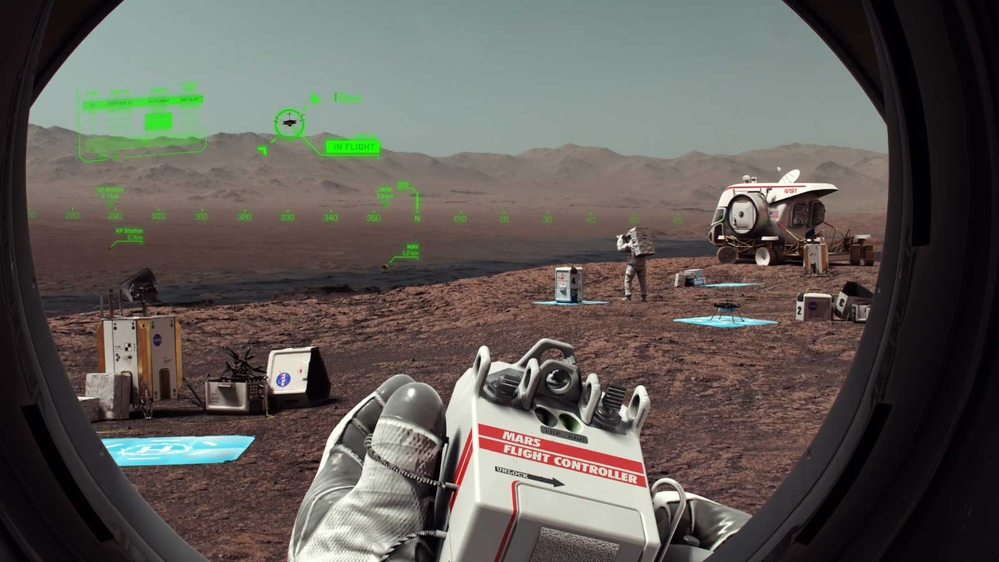
For those interested in space, a trip to Mars is becoming a matter of curiosity and mystery. The book 'Mars' and the film 'A Trip to Mars' first debated the possibility of life on Mars.
We use Google Cloud Translation Services. Google requires we provide the following disclaimer relating to use of this service:
This service may contain translations powered by Google. Google disclaims all warranties related to the translations, expressed or implied, including any warranties of accuracy, reliability, and any implied warranties of merchantability, fitness for a particular purpose, and noninfringement.
Brian Cox, a British physicist and music professor, has revealed some interesting facts about the universe in a podcast with Joe Rogan. He said that two things in the universe, which is considered to be about 94 billion light-years long, are of an aspirational nature. "In one universe so large that life is possible only on Earth, and in another universe so large that life is possible beyond Earth," Cox said.
His allusion was aimed at the debate now raging about the possibility of life and civilization beyond the confines of Earth, on the Moon and especially on Mars.
In 1895, Percival Lowell wrote the book "Mars" and the film "A Trip to Mars" made in 1910 started the discussion about the possibility of life on Mars. Since then, it has been a constant source of curiosity for those interested in space. In 1920, a journalist from the London Daily Mail asked a question to the scientist Albert Einstein. It is said that he replied that there could be some kind of life on other planets including Mars and that there could be more than one universe in the world. He said, 'There is no special reason for life to exist or exist only on earth. Other constellations or universes can also have their own planets like Earth.'
Ever since the Viking Lander-1 landed on the red planet Mars in 1975, people have been trying to find the remains or any other signs of life there. Newly elected US President Donald Trump and his colleagues and the world's richest billionaire Elon Musk have added fuel to the human aspiration to reach Mars. In his presidential inauguration speech on January 20, Trump announced plans to plant an American flag on Mars. In a recent press conference, he announced that human life on Mars would be possible within the next decade. "America will lead the world in space travel and we will reach Mars before the end of my term," he said.
Tech billionaire and Space X chief Elon Musk, who is with Trump, has also agreed with the president's statement. He has set a goal not only to bring people to Mars, which is about 225 million kilometers away from Earth, but also to establish a colony. "We will take the department of the US government that I lead to increase the efficiency of the government to Mars," says Elon, "We are going directly to Mars, the moon is only an obstacle." Musk thinks that going to the moon is a distraction in the space mission.
Musk has also been asking the US space agency NASA to abandon the moon mission and go to Mars. NASA says that sending people to Mars is much more difficult than sending people to the moon. Studies have shown that space radiation, distance from Earth, effects of microgravity and complexity and staying in a closed environment inside the spacecraft for months are uncomfortable for astronauts. According to NASA, it takes 6 to 9 months to get from Earth to Mars. It is estimated that it will take about 2 years to reach Mars and return to Earth even when using the 'Homan Transfer Orbit', which is considered to be the most convenient and energy-efficient route.
Even though the American leadership has announced the plan to reach Mars in public, the space agency and scientists have been saying that it is technically and practically very difficult to reach there and make life possible. They say that the list of financial and other difficulties for this is long. The famous American astronomer Neil deGrasse Tyson, who came to Bill Maher's television show last November, said that the possibility of human life on Mars is very weak and there are many ethical, technical and procedural questions.
Distance, Time, Energy and Cost
Distance is one of the most important aspects of the journey from Earth to Mars. Although visible from Earth, Mars is about five and a half times farther away than Venus and orbits the Sun at an average distance of about 225 million kilometers. Traveling from Earth to Mars should cover the chance that Mars comes close to Earth. The farthest manned spacecraft have ever traveled from Earth was the Apollo 13 astronauts who reached the far side of the Moon. It is only about 400,000 km away. In this way, traveling to Mars will have to reach about 16 times farther, for which scientists believe that new, highly advanced, expensive and improved preparations will be required.
Some spaceships, orbiters, rovers and other spacecraft have been sent to Mars, but the journey with humans is not as easy as sending these spacecraft. There are also skeptics because it would be too long and expensive. According to the current technology, including the time to reach Mars, stay there and return, it seems that a single trip will take at least two years. Compared to the moon, which can be reached in three days, it is thought that it will be a challenge to arrange the fuel, medical materials, food, clothes, and many other basic aspects that are needed to reach beyond this without spoiling for months. NASA's website mentions that there is no possibility of resupply or rescue in the event of some problems and it takes 20 minutes for a message to reach Earth from around the orbit of Mars.

NASA's human research program is now trying to figure out what complications might arise while staying in space for more than 6 months and how to prepare for it. In June last year, 4 volunteers created a simulation of Mars Dune Alpha and lived there for a year. This experiment is being repeated in 2025 and 2026 to see what effect human health and food can have on going to Mars.
On the one hand, there is the challenge of how to protect the human body from the harsh radiation of space for months and what kind of safety measures to adopt for that, on the one hand, the participants may also have to face the mental pressure of a continuous journey of almost 2 years. Also, since humans have never traveled as far as Mars, it is assumed that microgravity, along with dust and surprising aspects of space, could cause disruptions. Similarly, Mars has only 1.3 percent oxygen that is not suitable for humans. How can people live like this?
Scientists are trying to solve the problem of lack of oxygen on Mars. For this purpose, in the year 2022, the 'Mars Oxygen In-Situ Resources Utilization Experiment (MOXY ROBOT)' was sent to Mars. Since then, the Moxy robot has been continuously producing oxygen and has produced 122 grams of oxygen as of last year, according to NASA. Just as plants on Earth take carbon dioxide from the air and release oxygen, the robot on Mars is extracting oxygen from the carbon dioxide that is 96 percent in the atmosphere of Mars. Now it's a prototype, and scientists plan to eventually send a similar robot to full capacity to pump out hundreds of grams and pounds of oxygen every hour.
It has been pointed out that another major challenge in the effort to get humans to Mars is technology. So far, it has not been decided which and what kind of energy source to use and how to manage it. In addition, scientists understand that the process of entry, descent and landing (entry, descent and landing) into Mars orbit will be complex. Mars does not have a dense atmosphere like Earth's to stop the spacecraft during landing and help it land safely. Therefore, NASA and Space X are ready to manage it with the help of heat shields, large parachutes, inflatable landers, etc. It can be read on the website of these organizations that they are also engaged in the design of advanced spacesuits than those currently available because of the long exposure to the sun and space radiation.
Space X's lead
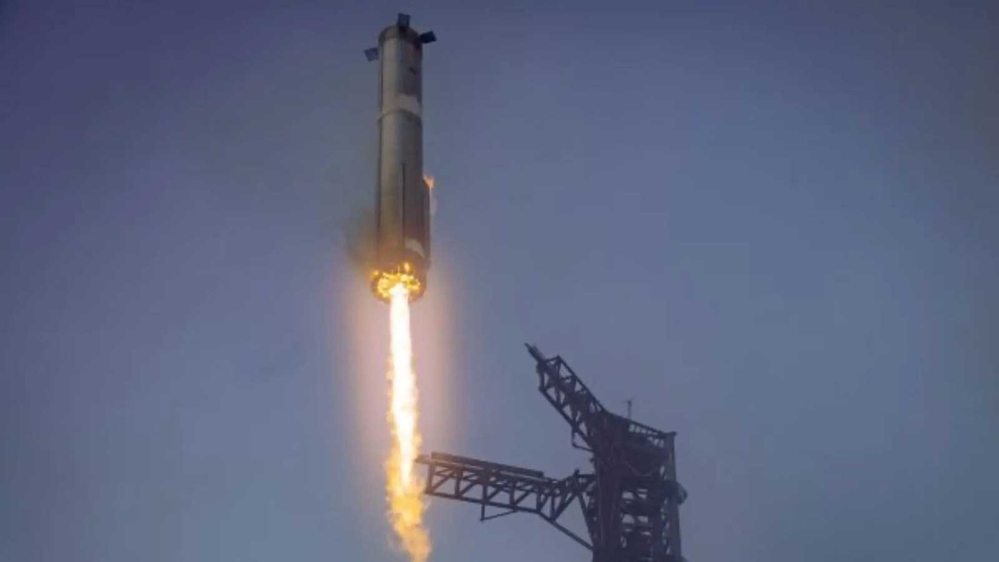
Space X has very ambitious plans for building the technology needed to reach Mars. For this they have worked on starships and super heavy rockets. It is hoped that these two major instruments, which are currently under testing, will facilitate the journey of humans to Mars. The Super Heavy rocket is one of the largest rockets ever built. It is 70 meters tall and completely reusable. It is twice as large as NASA's Space Launch System currently available.
The rocket, which is considered to be useful for escaping the gravity of the earth, is designed to bring its vehicle to the target location and return to the earth and even land on its own. Similarly, the Starship under test is about 50 meters long and wide. It can carry about 100 passengers or 100 tons of material at a time. Unlike the small and narrow aircraft seen elsewhere, this aircraft is spacious, comfortable and has large windows. SpaceX has also made the 33 Raptor engines used to lift the super-heavy rocket up from Earth reusable and twice as powerful as those attached to the Falcon-9 rocket.
The question of how fuel can be arranged for a 2/3 year long journey to Mars is considered important. For this, Space X is also trying to arrange to fill the starship with fuel by reaching the Earth's lower earth orbit, i.e. the atmosphere. If that is possible, the risk of excess fuel carrying a starship during launch may be reduced. Space X has said that it will try to develop the elements available on Mars as fuel as much as possible.

Water and 96 percent of the carbon dioxide available on Mars are being developed in the form of oxygen and methane. Scientists believe that if they can do this, they will not only be useful during their stay there and return to Earth, but also reduce the weight they have to take with them from Earth. Former NASA chief Jim Bridenstine said in an interview that they should think about using nuclear energy to propel rockets. According to him, it will dramatically increase the speed of the journey to Mars compared to current rockets based on chemical fuel. Musk, the head of Space X, has been thinking that we should gradually think about a fuel plant on Mars, and if not, the plan to settle a settlement there will not work.
In this plan, which is considered very complicated and difficult, Space X is trying to reduce the communication distance by building a satellite-based communication system called 'Marslink'. The company said that by establishing a satellite network around Mars, a high-speed data relay system can be established between Earth and Mars through laser communication technology. SpaceX presented the concept to NASA's Mars Exploration Program Analysis Group meeting in 2024. NASA is also looking for the option of manufacturing advanced machines, including 3D printers, to build habitable places on Mars.
The challenge of financial management
Another very important question in the dream towards Mars seems to be financial management. At present, it is estimated that it will cost about 5 trillion US dollars to land a manned spacecraft on the surface of Mars for the first time. This amount is greater than the gross domestic product of 167 countries out of 195 countries in the world.
Musk's company, which has announced that it will build a city or settlement on Mars, has estimated that an initial investment of around 10 billion US dollars is needed for that work. This amount is more than most of the world's major economies, the approximately 6 trillion US dollars that NASA has spent since its inception in 1958, and more than the actual value of it at the present time.
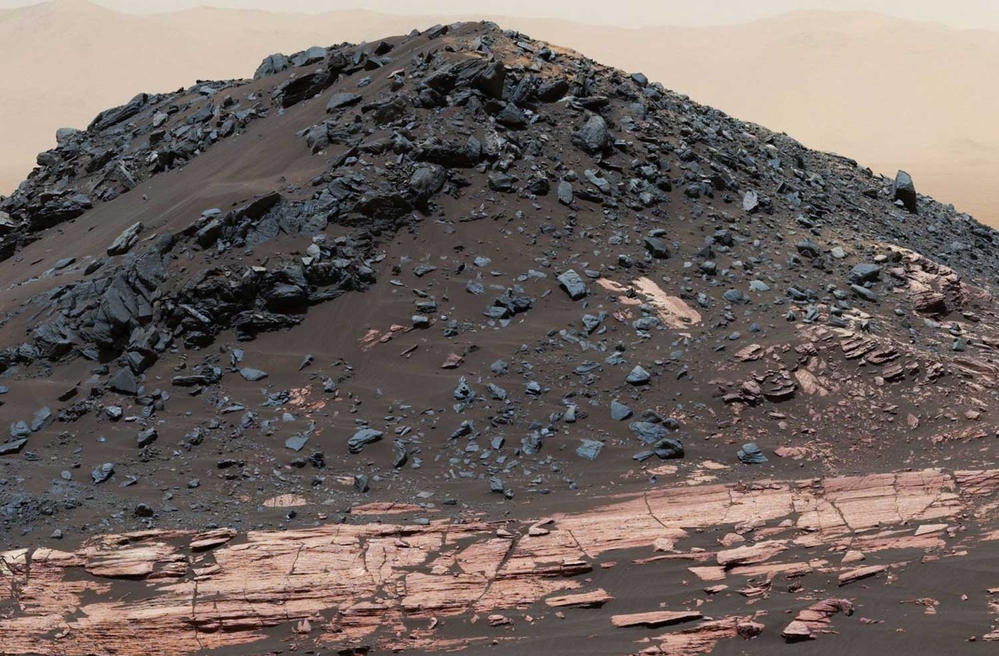
NASA sent the Perseverance rover to Mars in February 2020. It is searching for signs of ancient life on the Red Planet and collecting rock and soil samples to bring back to Earth through future missions. In July 2020, China also launched the Tianwen-1 mission to Mars. As part of this, the China National Space Administration (CNSA) informed in 2021 that Zhurong Rover, sent by China, traveled 1,64 meters on the surface of Mars.
With this, a third rover called 'Curiosity' is also running on Mars. There are also funko-killing orbiters in the Martian sky. Along with NASA's MRO and Mars Odyssey, the European Space Agency's Mars Express is orbiting Mars. The first spacecraft to reach Mars was Mariner-4, which was launched in November 1964. When it flew by Mars in 1965, humans were able to see the red planet after sending images of its surface.
The intent to send humans to Mars
The intent to send humans beyond the International Space Station, which closed with Apollo-17, has suddenly become aggressive in the 2020s. There are also competitive and geopolitical aspects to this. Astronomer Neil deGrasse Tyson, in a conversation on the Bill Maher Show, questioned the nature of such large investments and risks, saying, "We do very large and grandiose works when our competitors are about to find them or when geopolitical aspects are awakened."
China has announced that it will return the samples it collected to Mars by 2028 and send a manned spacecraft to Mars by 2033. It seems that the US is also becoming aggressive. Some are of the opinion that issues such as two large countries establishing long-term settlements on a separate planet or establishing their dominance there are against the 'Outer Space Treaty'. This treaty was ratified by 111 countries in 1967. It has ensured that no country can dominate or occupy the moon and other planets and satellites and the activities there should be for completely peaceful purposes.
The latest announcement by the US leadership has started a day reminiscent of the 1960s space race between the US and Russia. Now, China is seen as a new player in this venture, while Europe, Russia and the United Arab Emirates have also shown interest. America is trying to outdo everyone. China has announced that it will not only send a manned spacecraft to the moon, but also establish a base there by 2035. Starting from 2033, China claims to land manned spacecraft on Mars in 2035, 2037 and 2041. China's space budget, which is $8 billion annually in 2020, is constantly growing. Chinese President Xi Jinping has openly praised China's space achievements in his public speeches.
Xi said, "We must move towards the path of discovering the latest technology independently," Xi said, saying that there should be international cooperation in the search for space. NASA also aims to have a manned spacecraft orbiting Mars by the end of this decade. It remains to be seen how far Trump and Musk's haste will push NASA, which is thinking of having a long-term presence on Mars only in the middle of 2030.
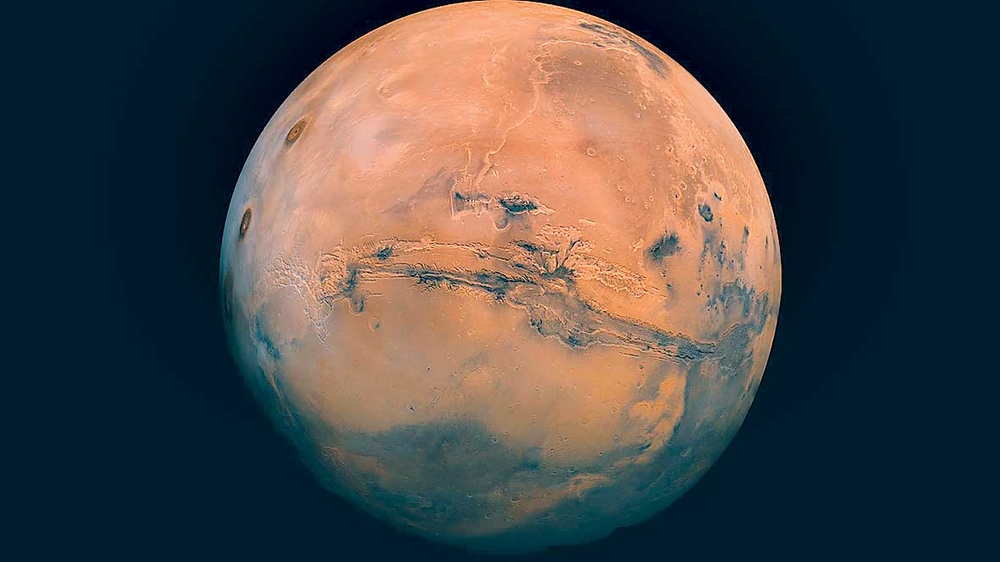
Mars is said to be 96 percent carbon dioxide and 0.13 percent oxygen. 21 percent of the Earth is oxygen. The average temperature there is minus 63 degrees Celsius. Temperatures range from 20 degrees to minus 125 degrees Celsius during the day. Because it does not have the same magnetic field and atmosphere as on Earth, it is thought that prolonged stay there may cause health complications due to solar heat and other astronomical radiation.
Since ice and air have been found in some places on Mars, it is expected that food, water and breathable air can be produced there. However, the intense dust storms that plague Mars for weeks and months are thought to pose a major challenge to Earth-bound instruments and future human exploration.
What are the benefits of traveling to Mars?
If there is a competition to go to Mars, it has been analyzed that the expenses and the economic activity that it will increase and the technical jobs that will be created will be a positive part. Another advantage, it is thought, may be in the field of latest technological developments. It is expected that the journey to Mars from the existing fuel can be risky and it will be beneficial to the human world when new technology emerges from research in terms of food, medicine, nutrition etc. to be preserved for years.
When the journey to Mars or the Moon is regular, it is considered that the space tourism and the space tourism will grow in the field of discovery. Since this level of campaign cannot be done by any government or private sector alone, it has been analyzed that it will be easy to know many things in detail about the future of the earth when searching for the red planet, which is believed to have life at one time, along with the international cooperation and coordination that can be established.

Elon Musk says that if there is a permanent presence of humans on Mars, humans will be "multiplanetary" beings, that is, we will be present on more than one planet. He believes that this is the biggest achievement. The famous scientist Carl Sagan wrote in his book "Pale Blue Dot", "A plant of grass growing on the surface of the Earth is very common here, the same thing can be a miracle on the surface of Mars." I think that our future generations will understand the value of life to live on Mars one day.'
The words of astronaut David Scott, who reached the moon through the Apollo-15 mission and kicked the vehicle taken from the earth for the first time, are also relevant here. "Mars is that planet, which has always been able to keep people's imagination around it," he said, "it can give not only immense facts and possibilities, but also the beginning of a new beginning."
On December 17, 1903, the Wright brothers said for the first time that a man could be made to fly. Less than 66 years later, Neil Armstrong's team landed on the moon and was seen live on TV. If people work hard with innovative thinking, trying to make life possible on more than one planet is not impossible. At the South by Southwest Conference held in 2013, Elon Musk said, "If possible, I would like to go to Mars and die." The current plan shows that his wish will be fulfilled.
with the help of
agency