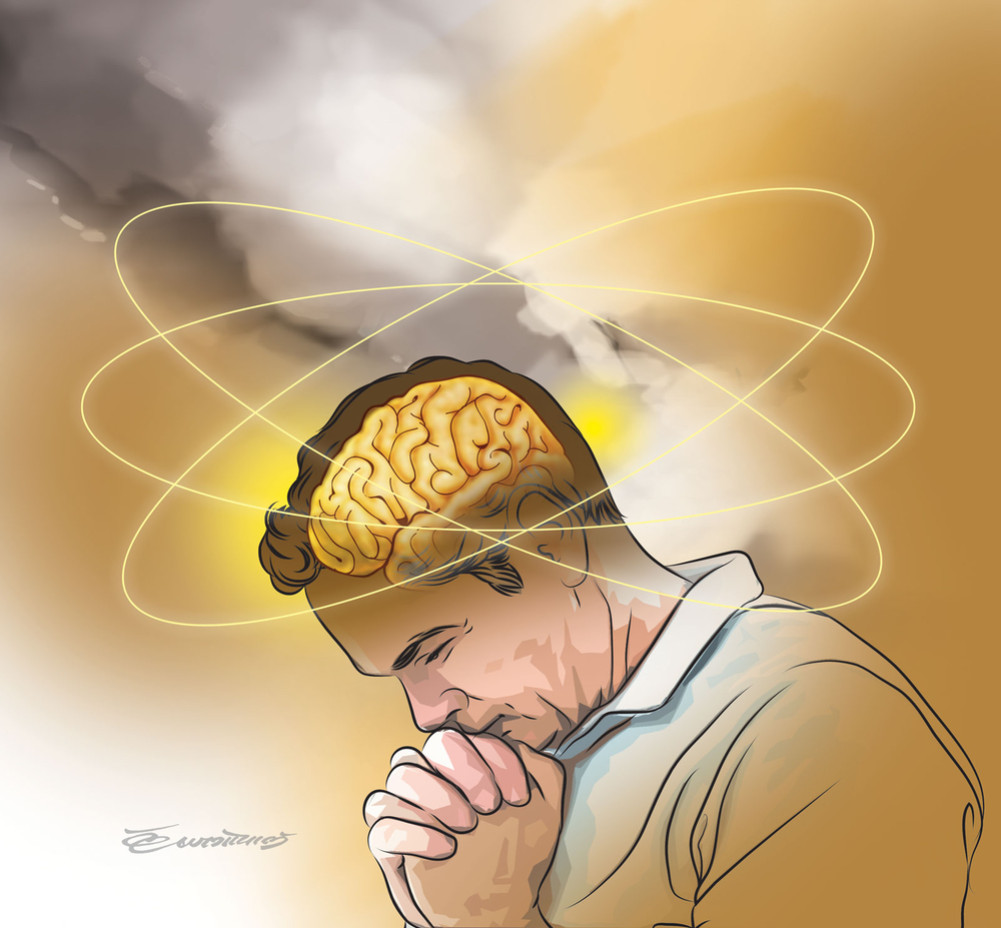
What we do, is it done freely of our own free will or because nothing else is possible under the circumstances? Is there another 'self' within us that 'regulates' the thinking process that we freely say we 'think', or is it automatic?
We use Google Cloud Translation Services. Google requires we provide the following disclaimer relating to use of this service:
This service may contain translations powered by Google. Google disclaims all warranties related to the translations, expressed or implied, including any warranties of accuracy, reliability, and any implied warranties of merchantability, fitness for a particular purpose, and noninfringement.
One evening in the month of Pohor, when I was looking at the horizon, the sun was about to set. There was nothing to be done immediately. I sat in the position I was sitting in and let the sun sink completely from me. Looking at the sun sinking in the far horizon, I have also sunk under the hill with him. When I got there, I suddenly remembered a book that was years old. And, with that rounded ritto, Zanak got angry.
When I came to this stage of life until the evening when I was able to remember it, what I thought was that the history of man in this world is roughly like this, which has been read. This country-society and religion-culture have been formed and broken by the coincidences of history, it is well understood.
There are series of terrible inequality and injustice created by people themselves in this world. However, regardless of whether I do something or not, millions of people are working to fight against that inequality, some say democracy and social justice, some say Marxism or something else, or some say religion and social service. As the
was happening, there was no logical reason for me to 'worry' about myself, let alone the world. There was nothing in life that it would be wonderful if it happened now or it would be terrible if it happened. However, when I said that I was in such a mode, I was suddenly interrupted by a joke from years ago, which is entering the topic of this article.
It's common to be interested in what people think about things. I was more concerned with why people think what they think than what they think. Because he could think in a different way about whatever he thinks or reacts to. To 'criticize' the thinking of others, my main intellectual hobby used to be to 'blow up' myself as to why I thought what I thought. And that was the root of the problem.
That is, as much as I tell myself that I make up my own thoughts, am I really free in how I think about most things? By the time I 'understand' myself, have I become such that what I think is in no way predetermined, over which I have no possible complete control?
Now let's finish the story that started above. I was maybe 6-7 years old. It was dusk on the hill where my house was. I don't remember it being June light outside. The inside should be slightly burnt. Being the youngest member of the family, I was initially called 'Khana Khan Aiz Babu' by my mother.
I was looking for a reason and was doing it in generations. After my mother called me two or three times, the nine- or ten-year-old sister came to my place and said, ``Why didn't you go to eat?'' After my sister whispered, "Don't tell me what happened," I uttered the word "empty" in a tearful voice. I told them to go on hunger strike until they get empty.
The dual strategy of parents, sometimes cheating, sometimes shaking, did not work in front of my daughter. It seems that Didi whispered in her ear, "What wisdom do you have?" To all those who are saddened by being lazy when eating at night like this? Where are you going to look for a ritho now?' The father seems to say, 'There is a ritto somewhere in the yard, look.' The sister seems to say, 'No, father, I have finished searching. It must have seen who played at (neighbor) Jamune Dai's house before. That is why it is needed now.' No matter how much
I tried, after I took the bed without eating, my mother and sister lit lanterns and went to Lamini thuliamako for fifteen minutes, and I went along with them. Lamini's grandmother's house had a red roof. I remember the moment of surprise when I was empty handed. By the time he returned home, it was late evening. The rhythm of the evening merged with everyone who had eaten and wanted to sleep after a long tiring day. That night, I must have slept with the same piece of paper torn as if I had done it terribly. I didn't know then, and I still don't know why Ritto was needed to see who played in the afternoon or for what reason.
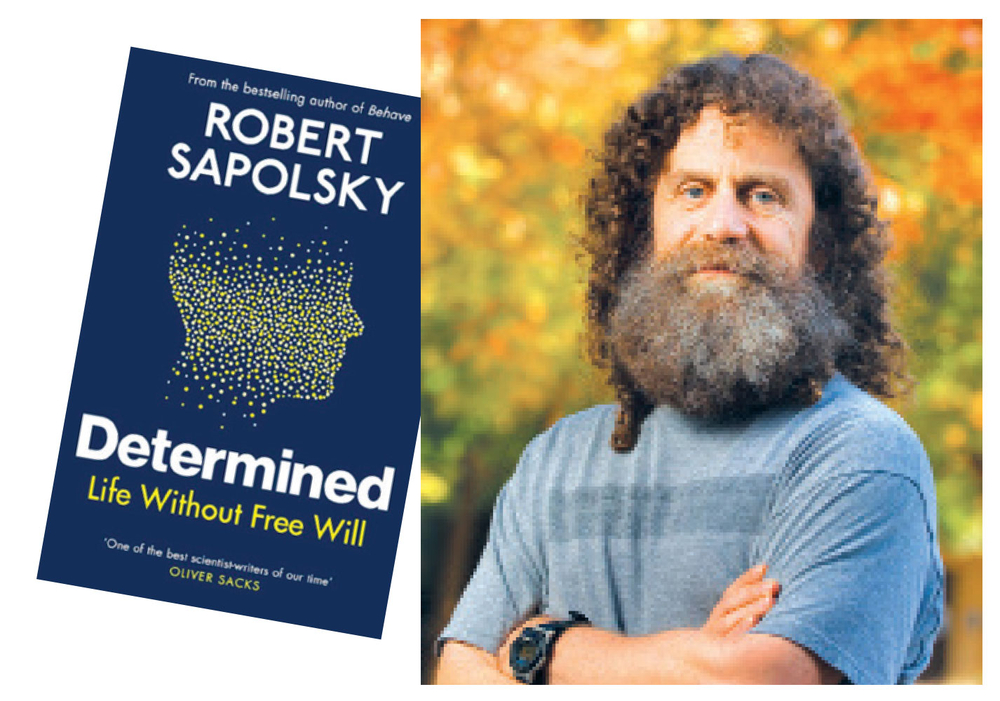
Stanford University's famous scientist Robert Syapolsky published a year ago "Determined" was a book that many have been waiting for months. The main reason why I was one of those waiting was the influence of his masterpiece book 'Behave' published five years ago. No matter how much you think you 'understand' about yourself, some of your own behaviors used to surprise you, about which 'behavior' explained a lot. Yet again new questions were created.
one of which was about the same Ritta. Why that story is important to this discussion is that even now, every two to four months, some random evening or other time of the day, I develop an 'obsession' with some 'Ritto'. Sometimes that thing is a new book, which you don't have right now or a place you want to go or sometimes it is something of a complicated nature.
If you think logically, how many complications are there to get it, it is not unknown and even if it is found, it is also known that it is a blank than in the image. Realizing the inconsistency of such an 'obsession', what stops one from making a conscious decision to let it take over? Why are you suddenly worried about some things that you don't worry about? Where does the knowledge that is said to have understood so much go at that time? Are these types of behavior and thinking of mine really not predetermined or 'determined' somewhere?
I find such complex subjects, which combine many genres of neuroscience and philosophy, easier and more enjoyable than through stories and memoirs. Now if we remember the story of Ritha that I told earlier, we will know that we have entered the central thesis of 'Determined'. Rather than a 'metaphor', at this point you should all remember your own lives once. And, if you consider your thoughts as 'your own', think that whatever you think, always think as 'I' want and you are excited without knowing how you are happy, under what circumstances, what you are looking for in life, that is what you are looking for in life. If you think you're being presumptuous, you need to be more mindful of what your choices are.
Because Syapolsky's 'Determined' presents a compelling philosophical and neuroscience argument that the thoughts we call 'ours' are not independent. That is, it submits its conclusion based on the arguments made in philosophy so far that saying 'free will' is an illusion.
It would be interesting to refer to what people have been thinking about in which era of history and what they have been understanding and defining themselves. In the course of the history of self-understanding, where has the philosophy of people understanding themselves reached in recent times? I will follow with interest what the latest theoretical 'trends' will be. Following Syapolsky in that sequence, many philosophers not only find new perspectives on how to approach questions of a spiritual nature.
There is not much room for argument with those who gossip in the name of spirituality and pretend that they have attained 'Nirvana'. However, I find the head of the Vedanta Society of New York, Swami Sarvapriyananda, a great scholar without really sounding like a 'Swami'. Although he is an exponent of Advaita Vedanta and Brihad Hindu philosophy, he can also openly 'criticize' the popular concept of 'God'. During a lecture, he mentioned 'Determined' and said, 'This book by Sapolsky is very 'unsettling' (shaking the understanding of the knowledge tradition so far).' Looks like a sage.'
Philosophical discussions about whether humans have 'free will' or not have been going on for two to three thousand years. What we do, is it done of our own free will, or is it done because there is nothing else we can do in the circumstances? Is there another 'self' within us that 'regulates' the thinking process that we call our independent thinking, or is it automatic? Does a thought or desire arise from this 'wind' or is there a background behind it, which the person concerned can never understand?
What about the opinion of the thinker who does not have 'free will', the way I have become myself, the 'agency' I have as a person, which I say I run by myself, is an illusion. Neither did I get to choose what 'genes' I was born with, nor what kind of family I was born into. Apart from that, even if we come to the current context, rather than the cosmic or mundane things of a person, he is made up of a network of such interconnections, all his immediate thoughts are not born from any 'zero'. On the
surface, a person can say that he himself has thought about a topic he has just thought about. However, it may have been predetermined in a way that he would think that way. It could be another thought a second ago or an event around you, an event a minute ago, your mother's financial status when you were in the womb or even a 'gene' from thousands of years ago. The personality that we know as 'I' is only a passive externalizer.
As soon as we enter into the philosophical question of who are we or who am I, we enter into 'free will'. That is why this topic has been discussed for centuries. Advances in neuroscience in recent years have made this topic for philosophers as much as for scientists. However, any type of knowledge becomes monotonous after reaching one level. Once there, there is no need to distinguish between philosophical, scientific or spiritual. Although it is science based on academic expertise, Syapolsky's 'Determined' can be placed in philosophy when it is separated into broad categories. As
says above, the traditionally philosophical and spiritual question of whether 'free will' is possible is taken a few steps further by Szapolsky on the basis of 'biology' - that we have no second 'self' or 'self' within us that makes our bodies do what they do. can say, who can tell our mind to make such a decision. When we do not have such an independent 'self', it is not possible to have 'free will' or to think and desire as we please.
We are made by the historical coincidences of so many elements that after discovering the sources of our thoughts and desires, it is no longer possible to say that I will, think, want such and such a thing. Our present is predetermined by our past. I am free to make as easy a decision as possible by logically thinking about the legal, ethical and practical aspects of what I should follow or not. However, making decisions on the basis of these rules means not having 'free will'. Rather than a
'synthesis', in this book Syapolsky documents what our consciousness is and how it works. How the human ability to think logically and the emotions it creates interact subtly continuously and how we react to certain things at a given moment, the process of how we think is as complex as it is intellectually 'fascinating'.
What are the sources of our morals? How does the concept of good and bad begin to live in our minds? The way he constructs human beings, based on how human habits are formed, based on which our thinking processes are formed, it seems to me that it is like Jacques Derrida's language and creation of philosophy and Western thought system.
'Who am I?' is not the question of today. It probably dates back to the time when humans were able to think clearly. Then the question of Upanishad or Bhagavata Gita, Advaita Vedanta or Western philosophy, the method of self-knowledge as explained by Buddha or the Buddha's 'Void' as explained by Nagarjuna, 'Know yourself first' is something that religious sects around the world have been saying forever.
What Syapolsky's philosophy is trying to convey is that this concept of 'knowing oneself' is an illusion. Because there is no fixed, stable, definable 'I' within any 'self'. This 'I' is not only formed by many processes and coincidences of history, but it is constantly being formed. If you say you know yourself today, tomorrow it will be different.
Whatever device we have to understand or feel ourselves – mind, brain, inner soul, consciousness whatever – it is a part of that self. And what one part of itself understands about other parts of itself cannot be independent. Because in doing so, the device that is looking at itself, the device that sees itself is outside of that 'self'.
In this way, Advaita philosophy has a concept of a fourth self within itself, 'turya' or consciousness, which observes ourselves, is not possible. Syapolsky did not bring up the issue of non-dualism, but what we are is a coincidence from biology to 'quantum physics' to social interaction, which we do not determine.
Until reading this, the question may have come to some people's mind, people are still moving! Yatra is still ruling the world, everything from Vada Siddhanta to songs and ghazals has been written. If people's thoughts are not free, then how did Karl Marx write the 'Communist Manifesto', how did Einstein present the theory of relativity? Does Syapolsky not care about such 'normal' questions? To say that there is no 'free will' does not mean that a person cannot 'functionally' make independent decisions about daily activities.
He has a 'logical' mind. The concept of 'free will' is a little deeper than this. Like, I decided to write this article myself. Isn't this 'free will'? It is my 'will', but the question is whether it was 'free' or not. In particular, the thought process that I went through and the article that has been prepared with such a preface, was not determined by me. I am only a 'functional agency', as Marx was or you are. More understandably, KP Oli could become UML President and Prime Minister on the basis of his 'logical' or 'functional agency'. However, from the inside, his wish that he should be the only leader as long as he lives has been determined.
Here comes the reference to rules and laws. That is why we need constitution, rules and laws, religion and discipline. Laws and society activate the 'logical' mind of man and we try to 'behave' so as not to get into trouble. By nature man is neither moral nor immoral. He is everything. We only seek to be moral because there are many 'benefits' to being moral, not because morality is our inherent nature.
How difficult it is to 'visualize' a million or a million or to think visually. Let's think that our brain has an average of eighty five billion neurons. In order for a neuron of a desire or thought to be activated, what relationship did it have to another neuron, and another to another, and another to another? And how much of these neurons' relationship with each other was determined by the mother's economic-social situation while we were in the womb, and how much came from 'genes'.
When a child is born, his behavior and health for the rest of his life are already determined so much that when I read Syapolsky, it came to my mind - they say that the future will be written on the sixth day. The future may not come and write that day, but by the time the baby is six days old, many aspects of how his life will be have been determined. Then, how the 'prefrontal cortex' (also known as purpura) develops from childhood until we are 15-16 years old determines what our future 'personality' will be.
What can be said with certainty based on what 'neuroscience' and philosophy knows so far about how this all happens is that you cannot determine 'by yourself' what kind of dream I will have tonight (because it is determined by its own process, (to which our conscious mind does not have 'access'), so it is not possible to successfully determine what you are thinking now, and what you are going to think next.
Just as I cannot determine what I am thinking about next, I cannot say that I am free to have my desires, that is, my 'wills'. Yes, everything that arises in your mind is said to be your own. However, this does not mean that all of them have been decided on their own. Based on all of this, a funny conclusion can be drawn that there is nothing to come to this world and recognize yourself.
Those who are telling others to know themselves, do not even know themselves. Because it is not who you call yourself. Just as Derrida said in the 'principle' of production that the thing called language itself is like this, it destroys itself and the quality of doing so is in its natural character. And you know, life is something like that which makes itself something forever. Even by saying no, he is becoming everything ?